How Fast a Goldendoodle Can Safely Lose Weight
It’s a common scenario: you love your Goldendoodle to bits, and they're just so fluffy and cuddly that you might not notice those extra pounds creeping on until suddenly, their harness feels a bit snug, or they're a little slower on their usual zoomies. Trust me, you're not alone. Goldendoodles, with their luxurious coats and affectionate personalities, are masters at hiding weight gain. But those extra pounds aren't just cosmetic; they can lead to serious health issues down the line. This guide is all about helping you understand how to safely and effectively help your Goldendoodle shed those excess pounds, turning that fluffy couch potato back into a vibrant, healthy companion.
Recognizing Goldendoodle Weight Gain Under All That Fluff
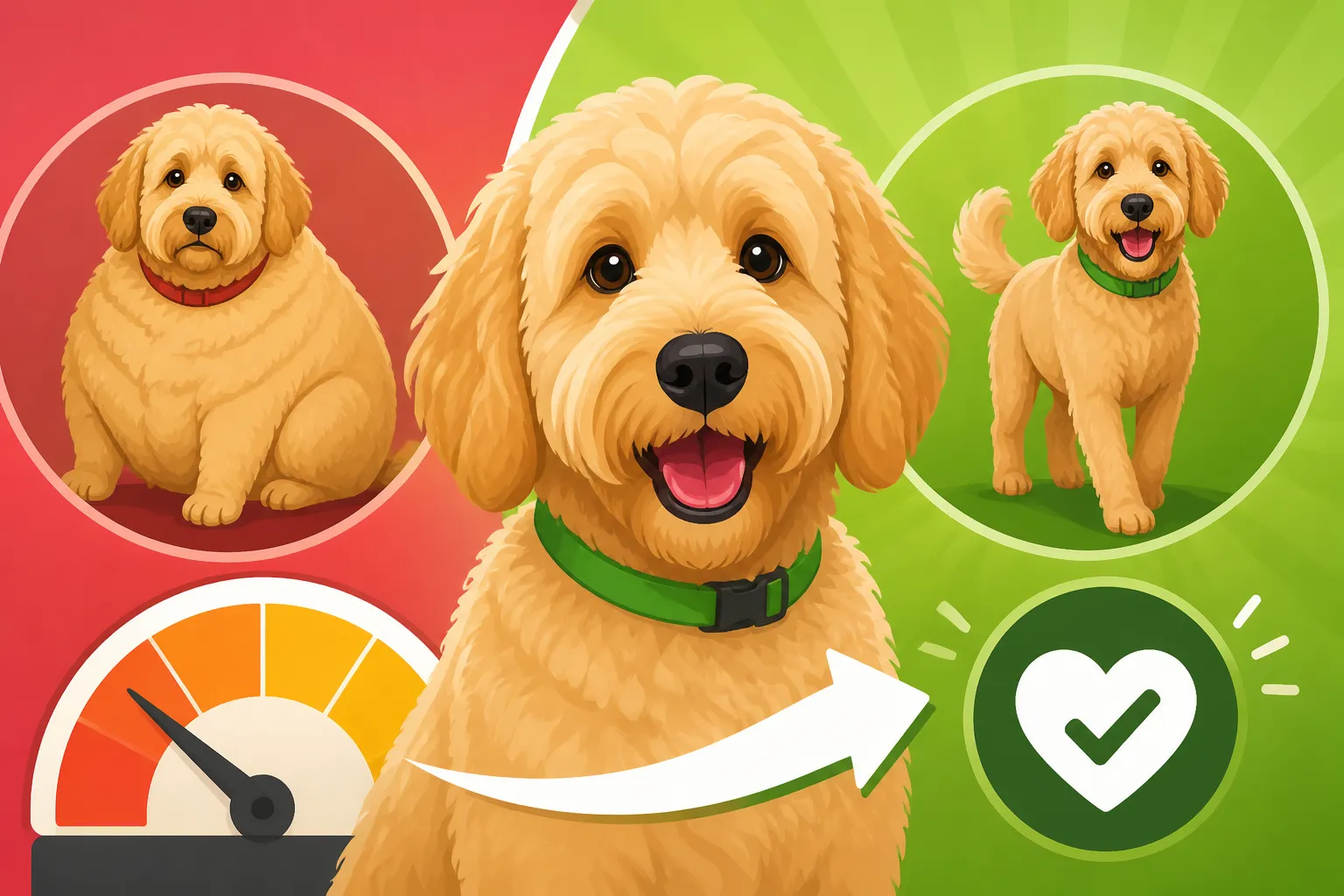
One of the biggest challenges with Goldendoodles is that their beautiful, often dense coats can be incredibly deceptive. You might think your dog is just extra fluffy when, in reality, they’re carrying more weight than is healthy. This visual illusion can make it tough for even the most attentive owner to spot weight gain early on, often leading to a significant health issue before it's properly addressed.
The Illusion of the Fluffy Coat
Imagine trying to gauge someone’s true build when they’re wearing a huge, thick winter coat all the time. That’s essentially what it’s like trying to assess a Goldendoodle’s weight by sight alone. Their curly, wavy, or even straight-but-dense fur can easily mask a thickening waistline or extra padding over the ribs. What looks like a robust, well-fed dog can actually be an overweight one, and by the time their belly starts visibly sagging or their gait changes, they might already be substantially beyond their ideal weight. This is particularly true for Goldendoodles with woolier, denser coats, where the sheer volume of hair creates a protective layer that hides subcutaneous fat. It's a visual trick that many Goldendoodle owners fall victim to, making it easy to unintentionally let those pounds pile up.
Hands-On Body Condition Scoring
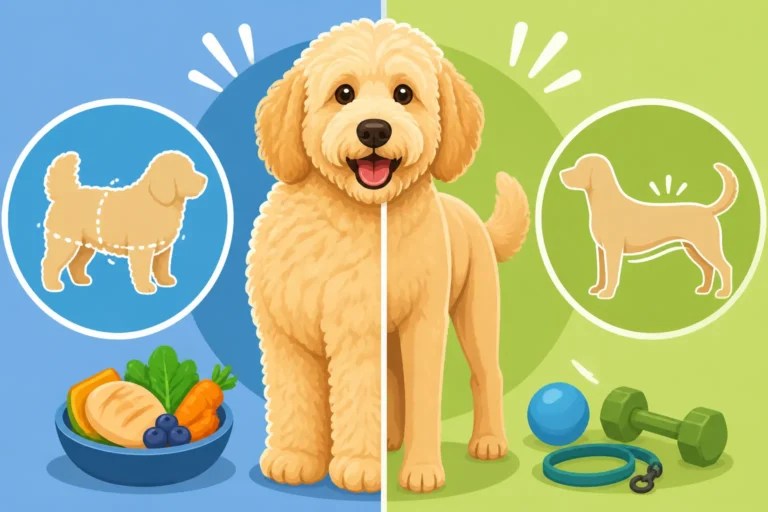
Because looking isn’t enough, you need to get hands-on with your Goldendoodle regularly to truly monitor their body condition. This isn't about being judgmental; it's about being proactive for their health. You'll want to gently feel their body, getting past the fluff to assess what's underneath. Finding Ribs Through Two Inches of Goldendoodle Hair can be tricky, but it's crucial.
Start by feeling along their rib cage. You should be able to easily feel individual ribs, much like feeling the knuckles on your hand, but without pressing too hard. If you have to dig your fingers in, or if it feels like a soft, padded surface, your Goldendoodle is likely overweight. Next, move to their waist. When viewed from above, your Goldendoodle should have a noticeable tuck or hourglass shape behind their ribs. From the side, their abdomen should tuck up, not sag down. Lastly, feel along their spine. You should be able to feel the bumps of their vertebrae without them protruding sharply, but also without them being buried under a layer of fat. This tactile assessment is far more reliable than just looking and should be a routine part of your Goldendoodle’s care, ideally done weekly, especially if you suspect they’re gaining weight.
| Body Condition Score | Ribs | Waist (Top View) | Tummy (Side View) | Goldendoodle Interpretation |
|---|---|---|---|---|
| Too Thin (1-2) | Easily visible, no fat covering | Extreme hourglass | Severely tucked | Visible bone structure, unhealthy. |
| Ideal (3) | Easily palpable, slight fat covering | Distinct hourglass | Clearly tucked up | Ribs felt easily, good tuck, healthy weight. |
| Overweight (4) | Palpable with difficulty, moderate fat | Less defined, somewhat straight | Slight tuck or flat | Ribs hard to feel, less waist definition, carrying extra. |
| Obese (5) | Not palpable, heavy fat covering | No waist, rounded | Sagging abdomen | Ribs impossible to feel, no waist, significant health risk. |
Setting a Healthy and Sustainable Weight Loss Goal
Once you've determined your Goldendoodle needs to lose weight, the next critical step is to set a realistic and safe goal. It's tempting to want quick results, but when it comes to canine weight loss, slow and steady truly wins the race. Rushing the process can do more harm than good, impacting their metabolism, muscle mass, and overall well-being.
Why Crash Diets Are Dangerous for Goldendoodles
Just like with humans, crash diets for dogs are rarely effective long-term and can be detrimental to their health. Rapid calorie restriction can lead to several problems for your Goldendoodle. Firstly, it can slow down their metabolism, making it harder to lose weight in the future and more prone to regaining it once the "diet" ends. Think of it as their body going into starvation mode, holding onto every calorie. Secondly, extreme calorie cuts often result in muscle loss rather than fat loss, which is counterproductive. Muscle is vital for joint support, mobility, and overall strength, especially for breeds prone to Goldendoodle Hip Dysplasia and the OFA Numbers or other joint issues. Losing muscle mass can worsen these conditions, not improve them.
Furthermore, a Goldendoodle on a crash diet might suffer from nutritional deficiencies if the food isn't properly balanced for lower intake. They can become lethargic, irritable, and even sick. This isn't just unpleasant for them; it puts unnecessary stress on their organs and can lead to a host of other health complications. Your Goldendoodle relies on you for their well-being, and a responsible approach to weight loss prioritizes their health over speed.
The Ideal Rate of Weight Loss
So, what's a safe and effective rate for your Goldendoodle to lose weight? The general veterinary recommendation for dogs is a gradual loss of 1% to 2% of their total body weight per week. This might not sound like much, but it's a sustainable pace that encourages fat loss while preserving precious muscle mass.
Let's put that into perspective for different Goldendoodle sizes:
- A 60-pound Standard Goldendoodle: At 1-2% per week, they should aim to lose between 0.6 to 1.2 pounds weekly. This means it might take several months to reach their ideal weight, but it's the healthiest way.
- A 30-pound Mini Goldendoodle: This size would aim for 0.3 to 0.6 pounds per week. Again, a seemingly small amount, but it adds up safely over time.
- A 15-pound Toy Goldendoodle: They would target 0.15 to 0.3 pounds weekly.
This slow, steady approach allows your Goldendoodle's body to adapt to the changes, minimizes stress, and makes the new habits more likely to stick. Remember, this is a marathon, not a sprint. Work closely with your veterinarian to determine your Goldendoodle's ideal weight and the most appropriate weekly target for them, especially if you're Senior Goldendoodle Vet Visits After Nine or your dog has other health considerations.
Strategic Dietary Changes for Goldendoodle Weight Loss
The cornerstone of any successful weight loss plan for your Goldendoodle is a well-thought-out diet. It's not just about feeding less; it's about feeding smarter. Small, consistent changes to what and how much your Goldendoodle eats can make a massive difference in their journey back to a healthy weight.
Recalculating Daily Calories for a Goldendoodle
The first, and arguably most important, step in dietary changes is understanding your Goldendoodle's caloric needs. An overweight dog is, by definition, consuming more calories than they're expending. Your veterinarian is the best resource for calculating your specific dog's target daily caloric intake for weight loss. They can consider factors like their current weight, ideal weight, age, activity level, and any underlying health conditions. Without this baseline, you're essentially guessing, which can lead to insufficient or excessive calorie reduction.
Once you have a target, you'll likely be reducing their current food intake. If your Goldendoodle currently eats, say, three cups of food a day, your vet might recommend reducing it to two and a half, or even less, if switching to a specific weight-management formula. It’s crucial to measure accurately – don't just eyeball it! A kitchen scale can be incredibly helpful for precise portioning, as scooping can vary widely. If your Goldendoodle was recently spayed or neutered, keep in mind that Recalculating a Goldendoodle Ration After Neutering is often necessary, as their metabolic rate can decrease afterward, making weight gain easier.
Choosing the Right Food and Portions
When it comes to the food itself, you have a couple of options. You might stick with your current high-quality dog food but simply reduce the portion size as per your vet's guidance. However, sometimes a dedicated weight-management formula is more effective. These foods are typically lower in calories and fat, but higher in fiber and protein, which helps your Goldendoodle feel full and supports muscle maintenance during weight loss. Brands like Purina Pro Plan Weight Management or Hill's Prescription Diet Metabolic often have these specific formulations.
When selecting food, always read the nutritional information carefully. Look for foods with good quality protein sources as the first ingredient. Many owners find success with pre-portioned fresh food services like Ollie, which can make calorie control easier and ensure balanced nutrition tailored to your dog's specific needs, including weight loss. Alternatively, if you're shopping at a larger retailer like Chewy, you'll find a wide variety of reputable weight-management kibbles.
Here’s a comparison of a typical adult dog food versus a common weight-management formula:
| Characteristic | Standard Adult Dog Food | Weight Management Dog Food |
|---|---|---|
| Calorie Content (per cup) | ~350-450 kcal | ~250-350 kcal |
| Protein | Moderate to High | High |
| Fat | Moderate to High | Low to Moderate |
| Fiber | Low to Moderate | High |
| Primary Goal | Maintenance for active, healthy weight | Satiety with fewer calories, muscle preservation |
Remember, it’s not just about the main meals. Treats count! Those extra biscuits or bits of cheese can quickly undo your hard work. Opt for low-calorie treats, or even better, use small pieces of steamed green beans, carrots, or apple slices as healthy, satisfying alternatives. Keeping Two Meals While a Goldendoodle Loses Weight is also generally recommended, as splitting their daily ration into two meals can help manage hunger throughout the day.
Incorporating Safe and Effective Exercise
Diet is incredibly important, but exercise is the other half of the weight loss equation. For your Goldendoodle, an appropriate exercise regimen is crucial not only for burning calories but also for maintaining muscle mass, improving joint health, boosting metabolism, and enriching their mental well-being. However, if your Goldendoodle is currently overweight, you need to approach exercise carefully to avoid injury.
Gentle Start for Overweight Goldendoodles
Starting an exercise routine with an overweight Goldendoodle requires caution and a gradual approach. Their joints, already carrying extra burden, are more susceptible to injury if suddenly subjected to intense activity. Just like humans, a sedentary dog needs to build up stamina and strength slowly.
Begin with shorter, more frequent walks. Instead of one long, strenuous hike, try two or three shorter, brisk walks throughout the day, perhaps 15-20 minutes each. Focus on consistent, low-impact activities. Leash walking on softer surfaces like grass or dirt trails is better than hard pavement, which can be tougher on their joints. Monitor your Goldendoodle for signs of discomfort, limping, or excessive panting. If they seem tired or sore, it's time to rest. The goal is to build endurance gradually without overexerting them. As they lose weight and their stamina improves, you can slowly increase the duration and intensity of their walks. This careful progression helps prevent injuries, especially to their knees and hips, which can be sensitive areas for the breed. Goldendoodle Joint Health by Size Category is a good read for understanding these specific concerns.
Engaging Activities Beyond Walks
While walks are essential, incorporating other forms of exercise can make the process more enjoyable and effective for your Goldendoodle. Variety keeps them engaged and works different muscle groups.
- Swimming: This is an excellent low-impact option for Goldendoodles, as it puts minimal stress on their joints while providing a fantastic cardiovascular workout. Many Goldendoodles naturally enjoy the water, thanks to their retriever heritage. If you have access to a safe pool or a calm body of water, supervised swimming sessions can be a great addition to their routine.
- Puzzle Toys and Scent Games: Don't underestimate the power of mental exercise! Puzzle feeders, available on platforms like Amazon, can make mealtime last longer and require your Goldendoodle to "work" for their food, burning some mental energy. Scent games, where you hide low-calorie treats around the house or yard and encourage them to sniff them out, are also wonderful for mental stimulation without putting physical strain on their bodies. These activities are particularly good for days when the weather isn't cooperating for outdoor exercise.
- Controlled Fetch or Play: Once your Goldendoodle's stamina improves, short, controlled games of fetch in a fenced yard can be beneficial. Avoid long, intense sessions initially. The key is moderation and observation. Stop before they get overtired. If you have another well-behaved dog, supervised playdates can also provide exercise and socialization, but ensure the play isn't too rough for your Goldendoodle's current condition. Remember, Goldendoodle Exercise at Every Life Stage needs to be adapted, and for an overweight dog, that means a careful, incremental approach.
Monitoring Progress and Adjusting the Plan
Weight loss is rarely a straight line. There will be weeks where your Goldendoodle seems to shed pounds effortlessly, and others where the scale barely budges. Consistent monitoring and a willingness to adjust your plan are crucial for long-term success. This isn't just about watching the numbers; it's about paying attention to your dog's overall health and well-being.
Regular Weigh-Ins and Body Condition Checks
Establish a routine for monitoring your Goldendoodle's weight. Weigh them once a week, on the same day, at the same time (for example, every Saturday morning before breakfast). This consistency helps minimize fluctuations due to hydration or recent meals. If you have a smaller Goldendoodle (Mini or Toy), you can easily weigh them at home on a regular bathroom scale by weighing yourself, then weighing yourself holding your dog, and subtracting the difference. For larger Standard Goldendoodles, you might need to use a veterinarian's scale or a specialized large-dog scale, many pet supply stores like Chewy also have scales available for customer use.
Beyond the scale, continue with your hands-on body condition checks. Are their ribs becoming easier to feel? Is that waist tuck reappearing? This physical assessment complements the scale readings and gives you a more holistic view of their progress, especially since coat variations can still make visual assessment tricky. Keep a log of their weight and body condition score; seeing the progress over time can be incredibly motivating!
When to Consult Your Vet Again
Your veterinarian is your most important partner in this weight loss journey. While you’re implementing the plan at home, regular check-ins with them are non-negotiable.
- If weight loss stalls: If your Goldendoodle isn't losing weight, or if their progress plateaus for more than a couple of weeks despite your best efforts, it's time to call the vet. There might be a need to further adjust their caloric intake, or, rarely, an underlying medical condition could be impeding weight loss (such as hypothyroidism, which can cause Goldendoodle Hypothyroidism and Weight Gain).
- If your dog seems unwell: Should your Goldendoodle become lethargic, show signs of digestive upset like Goldendoodle Vomiting and When It Matters or diarrhea, or develop any other concerning symptoms, contact your vet immediately. Adjusting their diet too drastically or exercising them too much could be the cause, or it could be an unrelated health issue that requires attention.
- Routine check-ups: Even if things are going well, periodic vet visits will allow them to professionally assess your Goldendoodle's progress, celebrate successes, and make any necessary tweaks to the diet or exercise plan. They can also ensure that their overall health, including joint health and organ function, is holding up well during the weight loss process. Think of it as a team effort, with your vet as the coach guiding you both to success.
Disclaimer
This article is for general informational purposes only and does not constitute professional advice. Laws, prices and regulations vary by location and change over time. Consult a qualified professional for guidance on your specific situation.