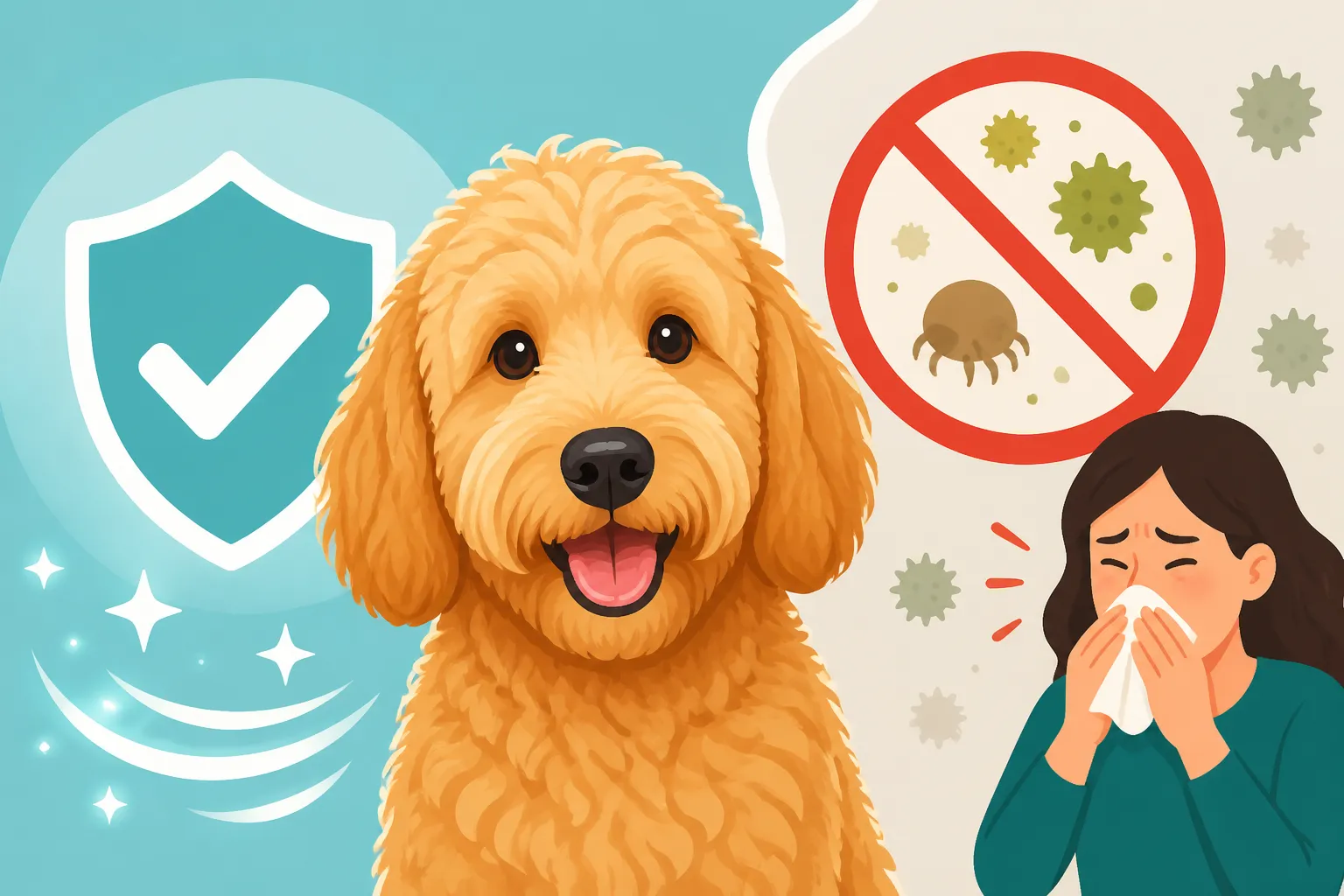
Whether a Goldendoodle Is Really Hypoallergenic
Oh, the age-old question that brings so many hopeful Goldendoodle parents to our doorstep: are they really hypoallergenic? It's a loaded term, isn't it? Many people jump into Goldendoodle ownership with the understanding that their new fluffy family member will solve all their allergy woes, only to find themselves still sneezing and sniffling. This guide is here to cut through the confusion, break down what "hypoallergenic" actually means for dogs, and help you understand why your Goldendoodle might still trigger those pesky allergies, no matter how much you love them.
Understanding the Term "Hypoallergenic" and Why It's Tricky for Dogs
Let's start with a big truth bomb: there is no such thing as a truly 100% hypoallergenic dog. I know, it's a harsh reality when you've been told otherwise, but it’s crucial to understand this from the get-go. The term "hypoallergenic" literally means "less allergenic," not "non-allergenic." It implies a reduced likelihood of causing an allergic reaction, not an elimination of it. This nuance often gets lost in translation, leading to disappointment and, sadly, dogs ending up in shelters when expectations aren't met.
What "Hypoallergenic" Really Means for Pets
When people talk about a "hypoallergenic" dog, they're usually referring to breeds that shed very little hair. The assumption is that less shedding equals fewer allergens. While there's a kernel of truth there, it's not the full story. Allergens aren't just found on the hair itself; they're in the dander (tiny flakes of dead skin), saliva, and urine of all animals. A dog that sheds less might distribute fewer of these particles around your home, but it still produces them. Think of it like a leaky faucet—you might slow the drip, but you haven't turned off the water completely. For someone with severe allergies, even a small amount of allergen can be enough to trigger a reaction. This is why many allergists will caution against making definitive "hypoallergenic" claims for any dog breed.
The Source of Dog Allergies: It's Not Just Hair
It’s easy to point the finger at dog hair, especially when you see it clinging to every surface of your home. However, the real culprits behind most dog allergies are specific proteins found in a dog’s dander, saliva, and urine. The most common allergen is a protein called Can f 1, which is secreted by glands in the skin and present in saliva. When a dog licks its fur, grooms itself, or even just breathes, these proteins become airborne or settle on surfaces. Even if a dog doesn't shed much, they're constantly producing dander and saliva. A dog with a thick, non-shedding coat might actually trap these allergens more effectively, meaning they don't become airborne as readily. But when that coat is brushed or groomed, those trapped allergens are released. This is a significant point for Goldendoodles, whose beautiful coats often come with specific grooming needs. Understanding Can f 1 and Where a Goldendoodle Carries Allergens is vital for allergy sufferers.
The Poodle's Contribution: Why They're Often Called Hypoallergenic
The Poodle half of the Goldendoodle equation is where the "hypoallergenic" dream largely originates. Poodles are renowned for their curly, low-shedding coats, and for good reason—they genuinely do shed significantly less than many other breeds. This characteristic makes them a popular choice for people with mild allergies, as the amount of dander and hair released into the environment is reduced.
The Poodle Coat: Low Shedding, Not Allergen-Free
Poodles have a single coat of hair, rather than a double coat like many shedding breeds. Their hair grows continuously, much like human hair, and instead of falling out readily, it gets caught within the curls. This means less loose hair and dander floating around your house. However, this doesn't mean they're allergen-free. Poodles still produce dander and saliva, and those allergenic proteins are still present. The difference is simply in how those allergens are distributed. When a Poodle is brushed, those trapped hairs and dander are removed, which is why regular grooming is so important for allergen management, even with "hypoallergenic" breeds. Think of it as controlling the release of allergens rather than preventing their creation.
The Role of Saliva and Dander
Even a Poodle, with its tightly curled, low-shedding coat, still licks itself, still produces saliva, and still has skin that sheds dander. These are the primary sources of allergens. So, while you might not find tumbleweeds of Poodle hair rolling across your floor, you're still living with airborne dander and saliva proteins. This is often the frustrating reality for those who bring home a Goldendoodle expecting a completely sneeze-free existence. The low-shedding coat helps, but it’s not a magic bullet. Many individuals find that while they might react less severely to a Poodle or Goldendoodle than to a heavy-shedding breed, they are not entirely symptom-free. This is why many allergists say that What Allergists Say About Goldendoodles is often at odds with popular perceptions.
The Golden Retriever's Influence: A Shedding Story
Now let's talk about the other half of the Goldendoodle equation: the Golden Retriever. Beloved for their friendly nature and beautiful coats, Golden Retrievers are, by almost any measure, significant shedders. This is where the unpredictability of a Goldendoodle's "hypoallergenic" status truly comes into play.
The Double Coat and Its Allergen Load
Golden Retrievers possess a dense double coat, consisting of a water-repellent outer coat and a soft, thick undercoat. This type of coat is designed to protect them from the elements and is fantastic for a dog bred to retrieve waterfowl. However, it also means they shed—a lot. They "blow" their undercoat twice a year, resulting in a flurry of hair, but they also shed year-round. All that shedding means a constant release of hair, dander, and saliva proteins into their environment. For someone with dog allergies, a purebred Golden Retriever is often a nightmare scenario, triggering severe reactions due to the sheer volume of allergens distributed. This is a core reason why people seek out Goldendoodles, hoping to dilute this shedding tendency.
Goldendoodle Genetics: The Shedding Spectrum
When you cross a Poodle with a Golden Retriever, you're essentially playing a genetic lottery when it comes to coat type and shedding. A Goldendoodle's coat can inherit traits from either parent, or a mix of both. This means that while some Goldendoodles might lean heavily towards the Poodle's low-shedding, curly coat, others might end up with a coat that's much closer to the Golden Retriever's, complete with significant shedding.
It’s not just about the curl; it’s about the genes that determine the growth and shedding cycle of the hair, and the presence of "furnishings" (more on that in a moment). An F1 Goldendoodle (a first-generation cross) is a 50/50 mix, making its coat and shedding behavior the most unpredictable. You simply don't know what you're going to get until the puppy grows up, and even then, things can change. This unpredictability is a major challenge for allergy sufferers. The idea that Why an F1 Goldendoodle Is the Least Predictable Healthwise also applies somewhat to coat characteristics, adding another layer of complexity for those seeking an allergy-friendly dog.
Goldendoodle Coat Types and Allergen Variability
The variety in Goldendoodle coats is truly fascinating, but it's also a source of confusion for prospective owners, especially those battling allergies. There isn't just one "Goldendoodle coat"; there are several, and each comes with a different implication for shedding and allergen distribution.
Flat, Wavy, and Curly: What Each Means for Shedding
Goldendoodle coats typically fall into three main categories:
- Flat Coat (or "Improper Coat"): This coat type looks very much like a Golden Retriever's coat—straight, sometimes slightly feathered, and notably, it sheds. These Goldendoodles inherit more of the Golden Retriever's coat genes, meaning they will shed much like a Golden, and consequently, will not be suitable for most allergy sufferers.
- Wavy Coat (or "Fleece Coat"): This is often considered the "classic" Goldendoodle look, with soft, flowing waves. It's a mix between the Poodle's curl and the Golden's straight hair. Wavy coats shed minimally to moderately. While they shed less than flat coats, they still do shed some hair and dander, and require regular brushing to prevent matting. They might be acceptable for individuals with very mild allergies.
- Curly Coat (or "Wool Coat"): This coat type closely resembles a Poodle's coat, with tight curls. These Goldendoodles typically shed the least, as the shed hair is trapped within the curls, much like with a purebred Poodle. This is the coat type most sought after by allergy sufferers, as it distributes the fewest airborne allergens. However, it also requires the most diligent grooming to prevent severe matting.
It's clear that The Three Goldendoodle Coat Types and How to Tell Them makes a huge difference to their allergenic potential.
The Furnishings Gene and "Hypoallergenic" Claims
Beyond the curl, there's another crucial genetic factor: "furnishings." Furnishings are the longer hair on a dog's face, including eyebrows, mustache, and beard. They are a defining characteristic of Poodles and are what give Doodles their characteristic "Teddy Bear" look. Dogs that lack furnishings often have a smooth face, much like a Golden Retriever, and are called "unfurnished" or "improper coat" dogs.
The presence of furnishings is strongly linked to the low-shedding trait. Dogs with furnishings are much more likely to have a coat that traps shed hair and dander, reducing its spread. Dogs without furnishings, even if they have some wave to their body coat, will typically shed much more. Reputable Goldendoodle breeders often test their breeding dogs for the furnishings gene (F/f locus) to ensure they are producing puppies with the desired low-shedding coats. Without this gene, you're essentially getting a Golden Retriever with a slightly different texture, and definitely not a "hypoallergenic" dog. Understanding What Furnishings Give a Goldendoodle Its Beard is key to recognizing a truly low-shedding Goldendoodle.
Why Generation and Genetic Testing Matter
The generation of a Goldendoodle (F1, F1b, F2, Multigen) plays a significant role in coat predictability.
| Goldendoodle Generation | Parent Breeds | Poodle/Golden Ratio (approx.) | Shedding Potential | Allergy Friendliness (General) | Grooming Needs |
|---|---|---|---|---|---|
| F1 | Golden Retriever x Poodle | 50% Golden / 50% Poodle | Varies widely | Variable, least predictable | Moderate to high |
| F1b | F1 Goldendoodle x Poodle | 25% Golden / 75% Poodle | Minimal to low | Better, more consistent | High |
| F2 | F1 Goldendoodle x F1 Goldendoodle | 50% Golden / 50% Poodle | Varies widely | Variable, can be unpredictable | Moderate to high |
| F2b | F2 Goldendoodle x Poodle | (complex, higher Poodle) | Minimal to low | Good, very consistent | High |
| Multigen | Goldendoodle x Goldendoodle (F3+) | Varies | Minimal to low (with careful breeding) | Good, breeders aim for consistency | High |
Note: These are general guidelines. Individual genetics can always lead to variations.
For allergy sufferers, an F1b or Multigen Goldendoodle, bred specifically for a curly, furnished coat, offers the best chance of a low-shedding dog. Even then, genetic testing by the breeder for the shedding gene (SD locus) and the furnishings gene is the best indicator of a puppy's adult coat and shedding potential. Without such testing and a clear understanding of the parents' coats, you're taking a significant gamble.
Managing Allergies in a Goldendoodle Household
So, you have a Goldendoodle, or you're planning on getting one, and you or a family member has allergies. What can you actually do to minimize reactions? The good news is that there are many proactive steps you can take to make living with a Goldendoodle much more comfortable for allergy sufferers.
Grooming: Your First Line of Defense
This is paramount. Regular grooming is not just about keeping your Goldendoodle looking dapper; it's a critical component of allergy management. For a low-shedding Goldendoodle, those shed hairs and dander get trapped in the coat. If they're not removed regularly, they build up, and then when the dog shakes, scratches, or is brushed, a concentrated cloud of allergens is released.
- Daily Brushing: This is non-negotiable for most Goldendoodle coats. Using a slicker brush and a metal comb (like those you can find at Chewy) to line brush your dog down to the skin helps remove dead hair and dander before it can become airborne. Ideally, the allergy sufferer should not be the one doing the brushing, or it should be done outdoors. How Often a Goldendoodle Actually Needs Brushing is probably more often than you think!
- Regular Baths: Bathing your Goldendoodle every 2-4 weeks with a gentle, hypoallergenic shampoo can help wash away dander and saliva proteins. Make sure to thoroughly rinse and dry the coat to prevent skin irritation and matting.
- Professional Grooming: Schedule professional grooms every 6-8 weeks. Groomers have powerful dryers that can blast away loose hair and dander, and they can trim the coat to a manageable length. This is a significant expense, but it's crucial for coat health and allergy management. In fact, Goldendoodle Grooming as the Biggest Line in the Budget is a common refrain for Goldendoodle owners, and it’s especially true for those trying to manage allergens.
Environmental Management: Cleaning and Air Quality
Even with the best grooming, allergens will still be present in your home. Taking steps to control the environment can make a huge difference.
- Designated Dog-Free Zones: Establish certain areas, like bedrooms, as dog-free zones. This gives allergy sufferers a sanctuary where allergen levels are kept as low as possible.
- Frequent Cleaning: Vacuum regularly with a HEPA-filter vacuum cleaner. Wash bedding (both human and dog's) frequently. Wipe down hard surfaces. Consider removing carpets, which can trap allergens, in favor of hard flooring that is easier to clean.
- Air Purifiers: Invest in high-quality air purifiers with HEPA filters for rooms where your Goldendoodle spends a lot of time, especially bedrooms (even if the dog isn't in them). These can help capture airborne dander.
- Furniture Covers: Use washable covers on couches and chairs that your Goldendoodle frequents. These can be easily removed and laundered.
- Ventilation: Open windows when possible to circulate fresh air, especially during and after cleaning or grooming.
These steps, though time-consuming, can dramatically reduce the allergen load in your home, making life with your Goldendoodle much more pleasant for everyone. For comprehensive advice on keeping your home clean, look into Managing Dog Allergens in a Goldendoodle Household.
Allergy Testing and Exposure: Before You Commit
Before you bring a Goldendoodle home, especially if you have known allergies, it’s incredibly important to do some serious due diligence. Don't just rely on a breeder's word or a quick visit.
- Spend Time with the Dog: If possible, spend extended time (several hours, or even a couple of visits) with the specific puppy or adult dog you are considering, and with its parents. Allergens can vary even within a litter. This is by far the best way to gauge your reaction. Remember that a young puppy's coat isn't always indicative of its adult coat, especially for Goldendoodles. Spending Time With a Goldendoodle Before Buying is the best test you can do.
- Allergy Testing Yourself: Consult an allergist. They can conduct skin prick tests or blood tests to confirm your sensitivity to dog dander. They can also advise you on managing your symptoms and discuss if living with a dog is truly feasible for your level of allergy.
- Testing the Dog: While less common, some laboratories can test a dog's fur for allergen levels (though this is often debated as to its true accuracy for live animals). More relevant is genetic testing for coat traits (furnishings, curl, shedding genes) which reputable breeders should already be doing. Always ask a breeder for proof of these genetic tests. Chewy also offers a variety of products geared towards reducing pet dander, from specialized shampoos to air filters.
It's a huge commitment, both emotionally and financially, to bring a dog into your life. Being realistic about your allergies and taking proactive steps before adoption can save a lot of heartache later. If you're really serious, consider Allergy Testing Before You Bring a Goldendoodle Home.
What to Expect and How to Choose a Goldendoodle
Given all this information, it's clear that choosing a Goldendoodle for allergy reasons requires a thoughtful, informed approach rather than just hoping for the best. You're not just picking a cute puppy; you're selecting a genetic lottery ticket that might or might not win you a low-allergen companion.
Spending Time With a Goldendoodle Before Buying
As mentioned, this cannot be stressed enough. Don't just pop into a breeder's house for 15 minutes. If you have known allergies, ask if you can spend an hour or two with the litter, or even better, with the adult dogs that share the same parents as the puppy you're considering. Observe your reactions carefully. Are your eyes itchy? Is your nose running? Do you feel tightness in your chest?
Sometimes, people find their allergies are triggered not by the dog itself, but by the environment – perhaps hay, dust, or other allergens in the breeder's home. Try to differentiate. If possible, bring a clean blanket or towel with you, let the puppy lie on it, and then take it home and see if you react to that specific item in your own controlled environment. Remember, puppies change as they grow, and their coat might not fully develop until they're 8-12 months old, so spending time with the adult parents can give you a better idea of the potential adult coat.
Reputable Breeders and Genetic Health
Finding a truly reputable breeder is critical, not just for temperament and health, but especially for coat predictability when allergies are a concern. A good breeder will:
- Prioritize Health Testing: They will have performed comprehensive health clearances on both parent dogs for conditions common to Golden Retrievers and Poodles, such as hip and elbow dysplasia, eye conditions, and heart health. They should be transparent with these results. This is vital because a healthy dog is easier to manage in every aspect.
- Genetic Coat Testing: A breeder genuinely committed to producing low-shedding Goldendoodles for allergy homes will conduct genetic testing on their breeding dogs for the furnishings (F/f) and shedding (SD locus) genes. They should be able to show you these results and explain what they mean for the litter.
- Be Knowledgeable About Coats: They should be able to tell you what coat types are likely in their litter, based on parent genetics, and be honest about the variability. Be wary of any breeder who guarantees a "100% hypoallergenic" puppy, as we've established that's simply not true.
- Offer Guarantees: Reputable breeders often offer a health guarantee, and sometimes even a limited coat guarantee (though this is rarer and harder to enforce). Read all contracts carefully.
- Ask YOU Questions: A good breeder will interview you as much as you interview them. They want to ensure their puppies go to suitable homes, and they should be asking about your lifestyle, experience, and any allergies in the family.
Avoid breeders who have multiple litters at once, don't allow you to see where the puppies are raised, or seem overly focused on rare colors or specific "hypoallergenic" claims without the genetic evidence to back it up.
The Realistic Outcome for Allergy Sufferers
Ultimately, for most allergy sufferers, a Goldendoodle can be a better option than a heavy-shedding dog, but it is rarely a perfect solution. Many people with mild to moderate allergies find that with a curly-coated Goldendoodle and diligent environmental management, their symptoms are significantly reduced and manageable. They might still experience occasional mild reactions, especially during grooming or when cuddling deeply, but it won't be debilitating.
For those with severe allergies, even the lowest-shedding Goldendoodle might still trigger reactions. It comes down to individual sensitivity and the specific proteins causing the allergy. There's no one-size-fits-all answer. This is why it's so important to proceed with caution and thorough testing, rather than just hoping for the best. The idea that Why No Goldendoodle Is Truly Hypoallergenic needs to sink in deeply for anyone considering this breed due to allergies.
The Bigger Picture: Allergies and Crossbreeds
The Goldendoodle's rise in popularity is undeniably linked to the perception of its hypoallergenic qualities. However, the scientific community often approaches these claims with a healthy dose of skepticism, highlighting the complexities that go beyond just a dog's coat.
The 2012 Study That Undercut the Goldendoodle Claim
In 2012, a significant study was published in the American Journal of Rhinology and Allergy that directly challenged the "hypoallergenic" claims associated with certain breeds, including Goldendoodles and Poodles. Researchers collected dust samples from the homes of 190 dog owners, comparing those with so-called "hypoallergenic" breeds to those with other breeds.
The surprising (or perhaps not so surprising for allergists) finding was that there was no significant difference in the amount of Can f 1 allergen found in the homes of "hypoallergenic" dog owners versus those with "non-hypoallergenic" dogs. This study suggested that breed selection alone might not be the most effective strategy for reducing allergen exposure in the home. It strongly supported the idea that all dogs produce allergens, and while some may shed less, the overall allergen load in the environment doesn't necessarily differ enough to make a substantial impact for many allergy sufferers. This particular study is a key piece of information, and it's worth exploring The 2012 Study That Undercut the Goldendoodle Claim for a deeper dive.
Why No Goldendoodle Is Truly Hypoallergenic
Let's circle back to this fundamental truth one last time. The hope that a Goldendoodle is a guaranteed solution for allergies is a myth that needs to be dispelled.
- Allergen Source: Allergens come from dander, saliva, and urine—all things every dog produces, regardless of coat type or shedding level.
- Genetic Variability: Goldendoodles are a crossbreed, not a purebred, and their genetic makeup for coat type is highly variable, especially in earlier generations. Even within the same litter, you can have puppies with drastically different coats and shedding tendencies.
- Individual Sensitivity: Allergy sufferers have different triggers and different levels of sensitivity. What works for one person with mild allergies might be completely insufficient for another with severe reactions.
- Environmental Factors: Home environment, cleaning routines, and individual exposure play a huge role in overall allergen load and symptom severity.
While a Goldendoodle might offer a reduced allergen experience for some, particularly those with milder allergies and a curly-coated, furnished dog, it's never a guarantee of an allergy-free life. It requires diligent management, realistic expectations, and most importantly, a thorough understanding that you're welcoming a beloved family member, not a hypoallergenic medical device. Your Goldendoodle deserves your love and care, regardless of its shedding patterns, and going into ownership with open eyes about allergies ensures a happier, healthier life for both of you.
Disclaimer
This article is for general informational purposes only and does not constitute professional advice. Laws, prices and regulations vary by location and change over time. Consult a qualified professional for guidance on your specific situation.