The Guide Dog Program Behind the Goldendoodle Idea
It’s easy to look at today’s immensely popular Goldendoodle and think they’re just another trendy designer dog that popped up out of nowhere. But beneath all that charming fluff and friendly demeanor lies a fascinating origin story, one rooted in a deep, compassionate desire to help people, specifically those needing assistance. This guide will take you back to the very beginning, exploring the visionary guide dog program that, while not directly creating the Goldendoodle, certainly laid the crucial groundwork for the "doodle" concept we know and love today.
The Humanitarian Spark Behind Hybrid Vigor
Before the Goldendoodle ever bounced into our homes, there was a quiet, profound need that sparked a revolutionary idea in the world of assistance dogs. Imagine needing a guide dog, a loyal companion to navigate the world, but facing a debilitating allergy that made sharing your life with a shedding Golden Retriever or Labrador impossible. This was the frustrating reality for many visually impaired individuals, a true barrier to independence and companionship. This challenge ignited the thought: could we create a guide dog that possessed the intelligence, biddability, and temperament of traditional service breeds, but with a more allergy-friendly coat? This wasn't about fashion; it was about accessibility and changing lives.
The Poodle, with its keen intellect, trainability, and low-shedding, often hypoallergenic coat, emerged as a promising candidate. However, purebred Poodles, while brilliant, sometimes lacked the natural "off-switch" and bombproof temperament that was, and still is, so vital for a guide dog working in busy, unpredictable environments. They could be a bit more sensitive or high-strung than the steady, unflappable retrievers. The idea was simple, yet groundbreaking: combine the best traits of two different breeds. This concept, often referred to as hybrid vigor, wasn't just a marketing slogan; it was a genuine hope that a first-generation cross might inherit the desired physical attributes (like a lower-shedding coat) and the ideal behavioral traits from both sides, while potentially reducing the incidence of certain genetic health issues.
This pioneering approach wasn't initially aimed at creating the Goldendoodle, but rather the Labradoodle, another cross between a Labrador Retriever and a Poodle. The success and rationale behind that initial guide dog cross proved that mixing these intelligent, people-oriented breeds could yield exceptional results. It demonstrated that a purposeful cross could indeed create a dog with a functional, low-allergen coat and the gentle, focused temperament essential for service work. It's a testament to how practical needs can drive innovation, paving the way for dogs that could fulfill diverse roles, from service work to cherished family pets.
Wally Conron and the Birth of the "Doodle" Concept
The true genesis of the "doodle" concept, and the inspiration that directly led to the Goldendoodle, can be largely attributed to Wally Conron, the breeding manager for the Royal Guide Dogs Association of Australia. It was in 1989 that Conron faced the aforementioned dilemma: a visually impaired woman in Hawaii needed a guide dog, but her husband was severely allergic to dogs. Traditional guide dog breeds like the Labrador and Golden Retriever were out of the question due to their shedding coats.
Conron’s innovative solution was to cross a Labrador Retriever with a Standard Poodle. He theorized that the Labrador would contribute its calm demeanor, eagerness to please, and strong work ethic, while the Poodle would provide its intelligence and, crucially, its low-shedding coat. The result was a litter of puppies, and one in particular, named Sultan, proved to be the perfect match, successfully completing his guide dog training and moving to Hawaii. Sultan became the world's first Labradoodle bred specifically for service work. This single, successful pairing proved that the concept could work and that a service dog could indeed be bred with an allergy-friendly coat. The 1989 Guide Dog Cross Behind Every Goldendoodle is an important piece of this history.
However, Conron himself has often expressed regrets about the term "Labradoodle" and the subsequent "designer dog" craze it unleashed. He watched as unethical breeders, driven by profit rather than purpose, began breeding doodles without proper health testing or consideration for temperament, simply capitalizing on the demand for "hypoallergenic" and "designer" puppies. The original intent was purely humanitarian, focused on creating a functional service animal, not a fad. This is why when we talk about What a Goldendoodle Actually Is and Is Not, understanding this foundation is key. The guide dog program demonstrated the potential of the cross, but its commercial explosion brought unforeseen consequences.
Traits Prioritized for a Guide Dog
When breeding a guide dog, whether it's a purebred or a carefully planned cross, breeders are looking for a very specific set of traits that go far beyond just a cute face or a fluffy coat. For the original "doodle" program, these were paramount.
Steadfast Temperament and Trainability
A guide dog needs to be utterly reliable, calm, and focused in all situations. This means a dog that isn't easily spooked by loud noises, isn't distracted by other animals or people, and can maintain concentration even in chaotic urban environments. Both Golden Retrievers and Poodles bring excellent qualities to the table here. Golden Retrievers are renowned for their biddability, gentle nature, and desire to please, making them highly trainable and naturally inclined to work alongside humans. Poodles, on the other hand, are exceptionally intelligent and quick learners, often ranking among the smartest dog breeds. The hope was that combining these would yield a dog that inherited the Golden’s steady resolve with the Poodle’s sharp mind. This emphasis on temperament is crucial when considering What a Goldendoodle Takes From the Golden Retriever and What a Goldendoodle Takes From the Poodle.
Breeders in service dog programs also prioritize a low prey drive and a natural inclination to ignore distractions. A guide dog cannot be chasing squirrels or greeting every passerby. They need to be singularly focused on their handler. Furthermore, they must possess a certain resilience; they can't be overly sensitive to correction or easily overwhelmed by new experiences. This combination of traits is what allows a dog to perform complex tasks like navigating street crossings, avoiding obstacles, and even intelligent disobedience – refusing a command that would lead their handler into danger. It’s a tall order, and why rigorous selection and training are absolutely essential, something that often gets overlooked in the commercial breeding of Goldendoodles.
Allergy-Friendly Coats and Physical Suitability
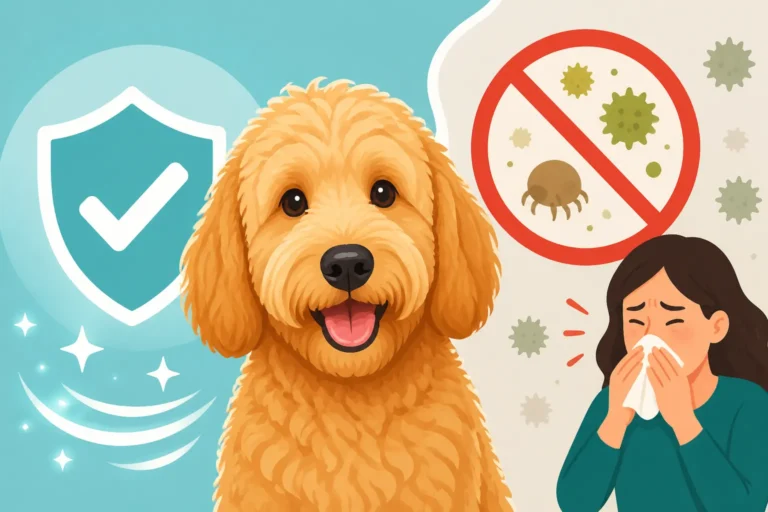
The driving force behind the original crossbreeding was, of course, the desire for a low-shedding, allergy-friendly coat. Poodles possess a single coat that sheds minimally, and their dander—the primary allergen—tends to be less problematic for many allergy sufferers than that of double-coated breeds. Golden Retrievers, for all their wonderful qualities, are significant shedders, especially during seasonal coat blows. The cross aimed to bring the Poodle's coat type to the Golden's wonderful temperament.
However, the reality of genetics is rarely a guarantee. While many Goldendoodles are lower shedding than a Golden Retriever, Why No Goldendoodle Is Truly Hypoallergenic explains that no dog is 100% allergen-free. It's a spectrum. The physical suitability also extended to structure. Guide dogs need to be robust, with sound joints and good stamina, capable of walking long distances and providing stable support. They also need to be of a manageable size – not so small they get underfoot, but not so large they are unwieldy in tight spaces. Careful consideration of hip and elbow health, common concerns in both Golden Retrievers and Poodles, would have been paramount. This blend of practical physical attributes with an accommodating coat type was the program's core innovation.
Let's look at the desired traits from each parent breed that breeders hoped to combine:
| Trait Category | Golden Retriever Contribution | Poodle Contribution | Desired Outcome in Cross |
|---|---|---|---|
| Temperament | Gentle, biddable, eager to please, stable | Intelligent, alert, quick learner, adaptable | Steadfast, highly trainable, focused, socially appropriate |
| Coat | Shedding, double-coat, traditional dog allergens | Low-shedding, single-coat, less dander | Low-shedding, potentially allergy-friendly, manageable coat |
| Physicality | Robust build, good stamina, strong retrieving drive | Athletic, agile, sound structure, moderate energy | Durable, healthy joints, suitable size for assistance work |
| Work Ethic | Strong desire to retrieve and work with handler | High intellect, problem-solving ability, attentive | Motivated, smart, capable of complex tasks, handler-focused |
Health Considerations
The guide dog program also recognized the importance of health. A dog that is meant to serve for many years needs to be as genetically sound as possible. Both Golden Retrievers and Poodles, like all purebred dogs, have their predispositions to certain health conditions. For Golden Retrievers, hip and elbow dysplasia, certain cancers, and eye conditions are concerns. For Poodles, conditions like Addison's disease, bloat, progressive retinal atrophy, and hip dysplasia are more common.
By carefully selecting healthy parents from both breeds, the hope was that the first-generation cross (F1) could potentially benefit from "hybrid vigor," where the genetic diversity might reduce the overall incidence of certain recessive genetic diseases. While Whether a Goldendoodle Is Healthier Than a Purebred is a complex question, and The Goldendoodle Hybrid Vigor Claim and Where It Breaks often points out its limitations, the intention in the guide dog program was absolutely to produce healthier, longer-lived working dogs. Responsible breeders, even for crosses like the Goldendoodle, understand that extensive health testing of both parent dogs for conditions common to their breeds is non-negotiable. This foresight in health screening is a critical part of ethical breeding, ensuring that the puppies have the best possible start and can live full, healthy lives.
The Evolution to the Modern Goldendoodle
While the initial guide dog program focused on the Labradoodle, the success of crossing Poodles with Retrievers quickly sparked interest in other combinations. It wasn't long before people realized that Golden Retrievers, with their equally wonderful temperaments, could also be crossed with Poodles to create a similar, desirable outcome. This marked the unofficial beginning of the Goldendoodle. Initially, it was a ripple effect, with families seeing the benefits of the Labradoodle and wondering if their beloved Golden Retriever could produce a similar low-shedding, friendly companion.
The Goldendoodle quickly gained traction, especially in North America, throughout the 1990s and into the new millennium. People were drawn to their charming appearance, the promise of a lower-shedding coat, and their reputation for being incredibly friendly and family-oriented. How Goldendoodles Spread Through the 1990s tells a fascinating story of how this happened. Unlike traditional breeds that have established breed clubs and strict standards, Goldendoodles emerged from this more organic, demand-driven process, often without the same rigorous oversight that the guide dog programs maintained. This meant that while some breeders upheld high standards, others unfortunately did not.
The shift from a carefully planned guide dog program to a popular family pet meant that the focus expanded beyond strict working dog criteria. While temperament and health remained important for responsible breeders, the "allergy-friendly" coat became a massive draw, alongside the Goldendoodle’s undeniable cuteness. The demand spurred the development of different Goldendoodle generations, from F1 (first generation, 50% Golden, 50% Poodle) to F1b (75% Poodle, 25% Golden), and eventually multi-generational doodles, all aimed at achieving more predictable coat types for allergy sufferers. Many pet product companies like Chewy quickly adapted, offering a plethora of grooming tools and specialized foods for these new popular crosses.
The Long-Term Impact and What It Means for Owners
The guide dog program's initial foray into crossbreeding fundamentally changed how many people view mixed-breed dogs, specifically in the context of purposeful breeding. It demonstrated that combining specific purebreds could yield predictable and desirable outcomes, challenging the long-held belief that only purebreds could be reliably bred for specific traits. This legacy means that today’s Goldendoodle owners benefit from a dog whose very concept was born from a desire for service and companionship, built on a foundation of intelligent, biddable parent breeds.
However, the commercialization of the "doodle" also brought challenges. Without a governing breed club like the American Kennel Club (AKC), which sets health and temperament standards for purebreds, the quality and consistency of Goldendoodle breeding can vary wildly. This is why it’s so important for prospective owners to research breeders thoroughly and ask about parent health testing, not just rely on the "doodle" label. The original guide dog goal was to produce the best possible working dog; the modern Goldendoodle market sometimes prioritizes appearance or convenience. For Goldendoodle owners, understanding Why No Kennel Club Recognizes the Goldendoodle is essential.
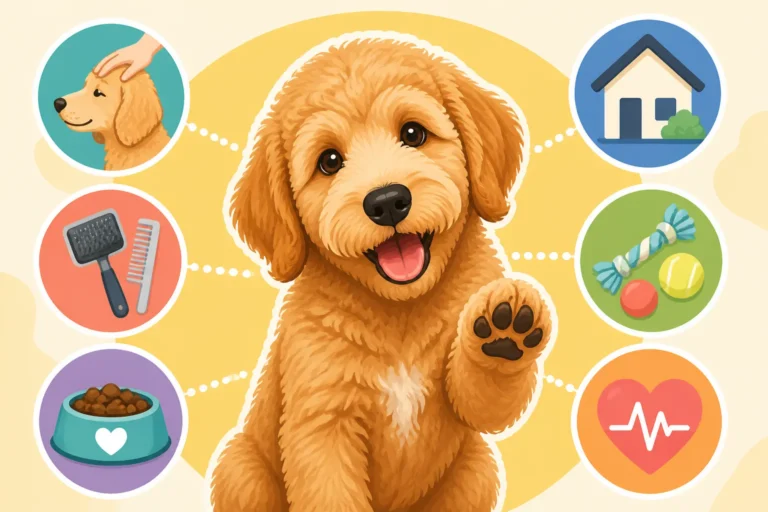
When you're looking for Goldendoodle supplies, whether it's a new slicker brush, a specific dog food blend from Chewy, or even training aids, remember the roots of this unique cross. The guide dog initiative showed the world what was possible when thoughtful breeding met a pressing need. While your Goldendoodle may not be navigating city streets for the visually impaired, they carry the genetic blueprint of dogs chosen for their intelligence, trainability, and deep connection to humans. It’s a powerful reminder that every Goldendoodle, from the smallest mini to the largest standard, has a history rooted in a noble purpose. Even today, you can find a vast array of educational materials and products on platforms like Chewy to support your Goldendoodle's health and well-being, building on that foundation of care.
Disclaimer
This article is for general informational purposes only and does not constitute professional advice. Laws, prices and regulations vary by location and change over time. Consult a qualified professional for guidance on your specific situation.