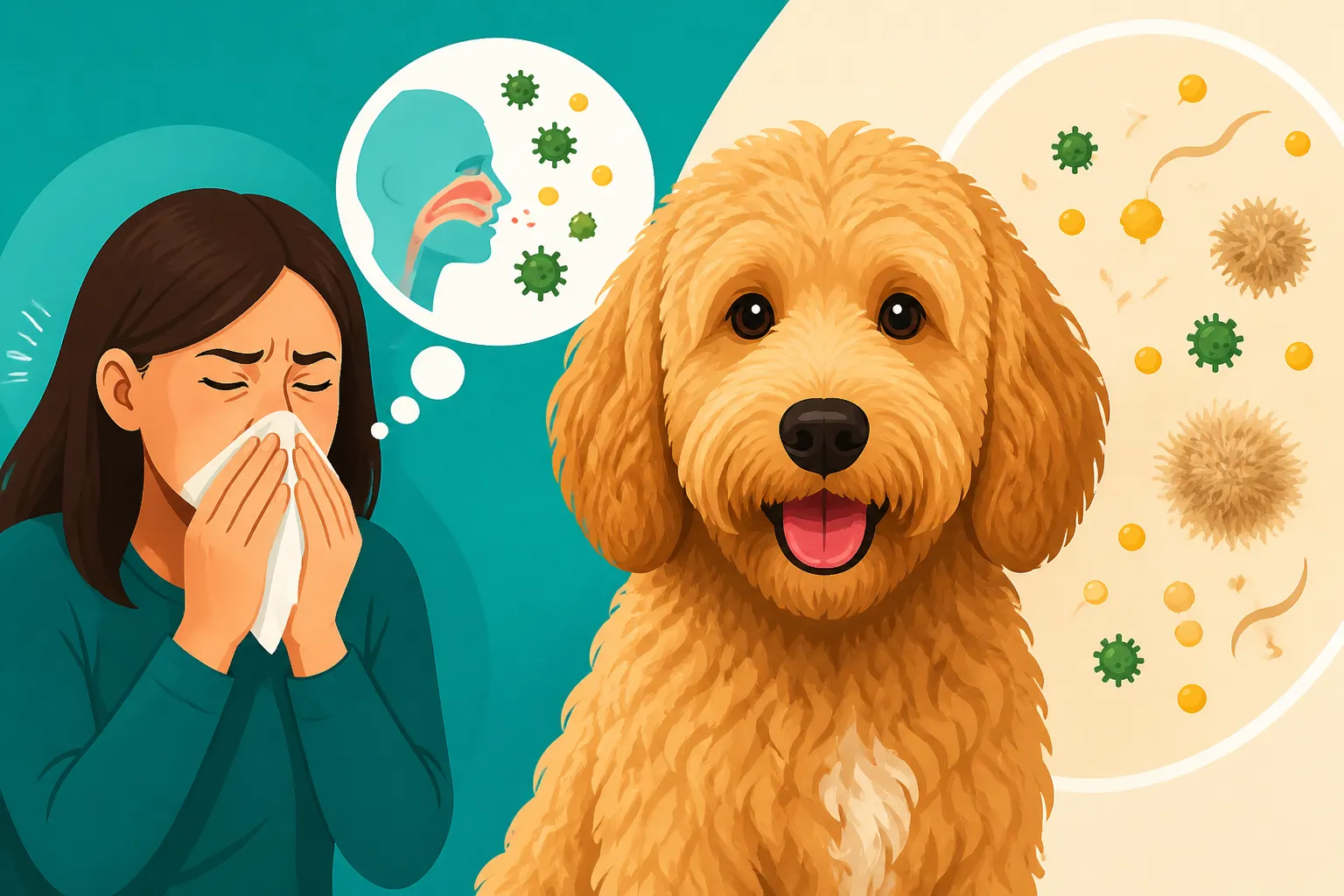
Why Some Allergy Sufferers Still React to a Goldendoodle
The dream of bringing home a Goldendoodle often comes with the hopeful expectation of a furry family member who won't trigger anyone's allergies. You've heard they're "hypoallergenic," right? The reality, for many allergy sufferers, can be a harsh slap of disappointment when those familiar sniffles, itchy eyes, and skin rashes reappear, even with the cutest, curliest Goldendoodle puppy. This guide is here to shed light on why some people still react to these beloved crossbreeds and what you can do about it.
The Misconception of the "Hypoallergenic" Dog
It’s a word that gets tossed around a lot, often with the best intentions, but "hypoallergenic" is perhaps one of the most misunderstood terms in the pet world. When it comes to dogs, especially popular crossbreeds like the Goldendoodle, this word can set people up for a real struggle.
What "Hypoallergenic" Really Means (and Doesn't)
The term "hypoallergenic" literally means "less allergenic," not "non-allergenic." It implies a reduced likelihood of causing an allergic reaction, not an absence of allergens altogether. For Goldendoodles, this belief largely stems from their Poodle parentage, a breed often touted as hypoallergenic due to its low-shedding coat. The thinking goes: less shedding equals less dander floating around, which equals fewer allergic reactions. While it sounds logical, this is where the common understanding often goes awry. It's a marketing term more than a scientific classification, and it often leads people down a path of false hope. Many folks assume that if a dog doesn't shed visible hair all over the house, it won't trigger their sensitivities. Unfortunately, the science tells us a different story.
This widespread assumption can be incredibly frustrating. Imagine investing your time, emotion, and significant money into a Goldendoodle puppy, only to find yourself reaching for antihistamines daily. You followed what you thought was sound advice, only to discover it wasn't a guarantee at all. It's not your fault for believing the common narrative, but it's important to understand the nuances so you can make informed decisions. The truth is, there's no such thing as a 100% hypoallergenic dog, because the allergens aren't just in the hair. If you're hoping for an allergy-free experience, you might need to adjust your expectations, as outlined further in Why No Goldendoodle Is Truly Hypoallergenic.
Where the Allergens Actually Come From
The primary culprit behind most dog allergies isn't actually the hair itself, but microscopic proteins produced by the dog. The most well-known of these is Can f 1, a protein found in a dog's dander (dead skin cells), saliva, and urine. All dogs, regardless of breed or coat type, produce these proteins. When a Goldendoodle licks its fur, that saliva, laden with Can f 1, dries on the coat. As the dog moves, grooms itself, or simply exists, these dried protein particles flake off as dander and become airborne, or transfer onto surfaces like furniture, carpets, and clothing.
This means that even a dog with a non-shedding coat can still cause allergic reactions because they still have skin, they still produce saliva, and they still urinate. The difference with low-shedding breeds like Poodles and many Goldendoodles is that less hair being released into the environment might mean fewer dander-laden particles are released directly. However, these particles are still present in the environment, clinging to dust, floating in the air, and building up on surfaces. It's why an allergy sufferer might find relief with a low-shedding dog compared to, say, a shedding Golden Retriever, but it's rarely a complete absence of symptoms. Understanding these primary sources of allergens is crucial for managing your home and your health. If you want to dive deeper into the specific proteins, Can f 1 and Where a Goldendoodle Carries Allergens provides more detail.
Why Your Goldendoodle Might Still Trigger Allergies
Despite their reputation, Goldendoodles are not a one-size-fits-all solution for allergy sufferers. Their genetic makeup is a bit of a lottery, and combined with other factors, it can lead to frustrating allergic responses.
The Genetic Lottery of a Crossbreed Coat
One of the biggest reasons Goldendoodles are unpredictable for allergy sufferers lies in their very nature as a crossbreed. A Goldendoodle is a mix of a Golden Retriever and a Poodle. While the Poodle is known for its low-shedding, curly coat, the Golden Retriever is famous for its thick, shedding double coat. When these two breeds are mixed, you don't always get the ideal Poodle coat.
In an F1 Goldendoodle (first generation, 50% Golden Retriever, 50% Poodle), the puppies can inherit a wide range of coat types, from flat and shedding like a Golden, to wavy, to curly and Poodle-like. Even within the same litter, you might see all three variations. This means some F1 Goldendoodles will shed significantly, releasing more dander into the environment. Even an F1b (75% Poodle, 25% Golden Retriever), often marketed as the "most hypoallergenic" because it's bred back to a Poodle, can still have varying coat qualities and may not be a complete guarantee against shedding and dander release. You can explore how these genetic traits manifest in Whether a Low-Shedding Goldendoodle Helps Allergies.
It's a common misconception that if a Goldendoodle looks curly, it must be low-shedding. But genetics are more complex than appearance alone. Some Goldendoodles can have what's called an "improper coat" or an "open coat," where they might look fluffy but still shed quite a bit, similar to a Golden Retriever's undercoat. This unpredictability means that even if you've met one Goldendoodle that didn't bother your allergies, another one, even from the same generation or breeder, could be entirely different. This genetic variability is precisely why relying solely on the "Goldendoodle" label for allergy assurance can be so problematic.
Saliva and Dander: The Unseen Culprits
As we touched on, the real allergen is a protein, primarily Can f 1, found in dander and saliva. Even if your Goldendoodle sheds minimally, they still produce dander. This microscopic skin flaking is a constant process for all dogs. This dander can get trapped in their dense, often curly coat, only to be released when the dog shakes, scratches, or is brushed. Think of it like a reservoir of allergens waiting to escape.
Beyond dander, saliva is a huge factor. Goldendoodles are affectionate dogs; they love to lick. They lick themselves, they lick you, they slobber on toys, and they drip water from their beards after drinking. All of this saliva dries, and the allergenic proteins become airborne. This means even if you have a perfectly non-shedding Goldendoodle, every time they give you a loving lick, or play with a toy that then dries and releases particles, you're being exposed to allergens. Many people forget that the moisture from a dog's nose, their urine, and their anal gland secretions also contain these proteins, which can subtly contribute to the allergen load in your home. This constant, invisible spread of allergens is why even the most "hypoallergenic-marketed" Goldendoodle can still pose a challenge.
Environmental Factors and Cumulative Exposure
Allergy reactions are not always a simple 'on-off' switch; they can be a cumulative effect. Even if a Goldendoodle produces fewer allergens than a heavy-shedding breed, if you are highly sensitive or if the allergens are allowed to build up in your home environment, you can absolutely still experience symptoms. Over time, dander and saliva proteins can permeate every corner of your living space: furniture, carpets, curtains, and even ventilation systems.
Consider also that dog allergies rarely exist in a vacuum. Many people who react to dogs also have sensitivities to other common household allergens like dust mites, pollen, mold, or cat dander. Your Goldendoodle might not be the sole cause of your discomfort, but the dog allergens can act as an additional trigger, pushing your immune system over its tolerance threshold. During peak pollen season, for instance, your already taxed immune system might react more strongly to your Goldendoodle than usual. This interplay of multiple allergens means that simply having a low-shedding dog isn't always enough to prevent symptoms. The overall allergen load in your home, which is something we'll discuss next, becomes critical for your comfort and well-being. The findings in The 2012 Study That Undercut the Goldendoodle Claim are particularly insightful here, as they revealed no significant difference in allergen levels between homes with so-called "hypoallergenic" breeds and those with other breeds.
Strategies for Living with a Goldendoodle (and Allergies)
If you're already deeply in love with your Goldendoodle or planning to welcome one into your life despite known allergies, don't despair! While there's no magic bullet, there are many practical strategies you can implement to significantly reduce allergen exposure and manage your symptoms.
Before You Bring Your Puppy Home: Testing and Exposure
The single most important step you can take if you or a family member has dog allergies is to spend significant time with the actual Goldendoodle you are considering, or at least with its parents if possible. Different dogs, even within the same litter, can produce varying amounts of allergens. Visiting a breeder and interacting with the adult dogs and puppies in their home environment will give you a much more realistic idea of your potential reaction than just looking at pictures or reading online descriptions. Don't just sit there for five minutes; try to spend an hour or two, petting the dogs, letting them lick you, and seeing how you feel afterwards. Do this several times if you can.
Additionally, consider getting a professional allergy test for yourself or the affected family member. This can confirm whether dog dander is indeed the primary allergen and give you an idea of your sensitivity level. Some allergists can even perform a "skin prick" test using dander collected from specific dogs, though this is less common. If a breeder is confident in their lines, they might even let you take a small swatch of hair and dander from the puppy or its parents to take to your allergist. This proactive approach is far better than the heartbreak of bringing a puppy home only to realize you can't live with it. For more on this, check out Spending Time With a Goldendoodle Before Buying and Allergy Testing Before You Bring a Goldendoodle Home.
Minimizing Allergen Load in Your Home
Once you have a Goldendoodle, managing the environment becomes paramount. The goal is to reduce the amount of Can f 1 protein circulating in your home and on surfaces.
- Frequent Grooming: This is arguably your most powerful tool. Regular bathing (every 1-2 weeks, using a dander-reducing shampoo) and brushing (daily, if possible) helps wash away and remove loose dander before it has a chance to spread. You'll want to invest in good quality brushes and grooming tools, which you can easily find on sites like Chewy. Make sure to brush your Goldendoodle outdoors or in a designated area like a bathroom that's easy to clean, wearing a mask if needed. You can find detailed advice in Brushing a Goldendoodle Often Enough to Stop Matting.
- Cleaning Routine: Establish a rigorous cleaning schedule. Vacuum frequently with a vacuum cleaner equipped with a HEPA filter. Dust surfaces regularly with a damp cloth to trap allergens, rather than just scattering them. Wash dog beds, blankets, and your own bedding weekly in hot water. Consider removing carpets, which trap allergens, and opting for hard flooring that is easier to clean. High-quality air purifiers with HEPA filters running continuously in main living areas and bedrooms can also make a significant difference. Many pet-specific cleaning supplies and air purifiers are available through Chewy or similar online stores.
- Designated Dog-Free Zones: Your bedroom should be a sanctuary. Keep your Goldendoodle out of the bedroom entirely to allow you a significant portion of your day in an allergen-reduced environment. If this isn't feasible, at least keep them off the bed and ensure all bedding is washed regularly.
- Water Bowl Management: Goldendoodles often have beards that get wet when they drink, dripping water and saliva onto the floor. Consider a "snood" to keep their beard dry, or specialized water bowls designed to minimize wetting the beard. Even specialized diets aimed at skin and coat health can sometimes help, and exploring options on Chewy with your vet's guidance can be beneficial.
Personal Care and Medication
Even with the best environmental management, some individuals may still experience symptoms. This is where personal care and medical interventions come into play.
- Hand Washing: Make it a habit to wash your hands thoroughly after petting or playing with your Goldendoodle, especially before touching your face. This simple act can prevent a lot of accidental allergen transfer to your eyes and nose.
- Over-the-Counter Medications: Antihistamines, decongestants, and nasal sprays can help alleviate symptoms like sneezing, runny nose, and itchy eyes. Always consult with a healthcare professional before starting any new medication, even over-the-counter options, to ensure they are appropriate for you.
- Immunotherapy (Allergy Shots): For more severe or persistent allergies, your allergist might recommend immunotherapy. This involves a series of injections designed to gradually desensitize your immune system to the specific allergens that trigger your reaction. It's a long-term commitment but can offer significant relief for many sufferers.
- Professional Guidance: It is always wise to consult with an allergist to discuss your specific situation and develop a personalized management plan. They can help you identify your triggers, recommend appropriate medications, and advise on strategies to reduce your exposure to allergens in your home and daily life. They can also offer insight into What Allergists Say About Goldendoodles and help you understand the nuances of your particular allergic response.
By understanding that Goldendoodles are not a foolproof solution for allergies and by proactively implementing these management strategies, it is absolutely possible for many allergy sufferers to successfully share their lives with these wonderful dogs. It requires diligence and consistency, but the joy and companionship a Goldendoodle brings can be well worth the effort.
Disclaimer
This article is for general informational purposes only and does not constitute professional advice. Laws, prices and regulations vary by location and change over time. Consult a qualified professional for guidance on your specific situation.