Desensitising a Goldendoodle to Clippers
It's a common frustration many Goldendoodle parents face: your sweet, goofy companion turns into a trembling, squirming mess the moment the electric clippers come out. You're just trying to keep their beautiful coat tidy and prevent mats, but the sound, the vibration, the feeling – it all feels like a huge assault on their senses. This guide is here to walk you through how to gently and effectively desensitize your Goldendoodle to clippers, turning a stressful experience into a more manageable one for both of you.
Why Clippers Feel So Foreign and Frightening to a Goldendoodle
Imagine if someone held a buzzing, vibrating object next to your face, then tried to touch your sensitive skin with it. You'd probably be a bit wary, right? For a Goldendoodle, the clippers aren't just a strange tool; they represent a multi-sensory challenge that can feel genuinely overwhelming. Understanding why they react this way is the first step to helping them.
The Sensory Overload of Sound, Vibration, and Touch
Goldendoodles, with their Poodle intelligence and Golden Retriever sensitivity, can be highly aware of their surroundings. Clippers, by their very nature, are loud and vibrate intensely. This combination can be incredibly jarring. Think about how sensitive a dog's hearing is compared to ours; a sound that's just a hum to us might be a buzzing roar to them. Then there's the vibration, which travels through their body as the clippers make contact. This isn't just a light touch; it's a constant, low-level tremor that can feel unsettling and even threatening.
Beyond that, the feeling of the blades against their skin, especially if they have sensitive skin or a particularly thick coat, can be uncomfortable. It's not like a gentle brush; it's a specific, unfamiliar sensation that's difficult for them to process. For some Goldendoodles, particularly those with a very dense, curly coat, the pull of even sharp blades can feel unpleasant, leading to a negative association. This complex sensory input makes it crucial to approach clipper introduction with immense patience and positive reinforcement.
Early Experiences That Shape Fear or Acceptance
A Goldendoodle's first few encounters with clippers can profoundly shape their lifelong perception. If a puppy's initial grooming experiences involve being held down, forced, or feeling pain, they quickly learn to associate clippers with fear and discomfort. This can happen innocently enough if a breeder or early groomer isn't practiced in gentle desensitization or if the puppy's coat is already matted. A single negative experience, like a nick from a blade or getting tangled in a mat, can create a lasting phobia that's tough to undo.
Conversely, Goldendoodles who are introduced to clippers in a positive, gradual way during their critical socialization period are much more likely to accept grooming as a normal part of life. Imagine a puppy being gently exposed to the sound of clippers while receiving delicious treats, or having the vibration introduced slowly, not on their body directly, but perhaps on a toy first. These early positive associations are invaluable. Many of the dogs that struggle at the groomer likely had a less-than-ideal first few sessions. This is why it's vital to start right from when you bring your puppy home, as detailed in Training a Goldendoodle Puppy for the Grooming Table.
The Goldendoodle's Inherited Sensitivities
Both parent breeds contribute to the Goldendoodle's personality and sensitivities. Poodles are known for their intelligence and often for being quite sensitive to their environment, including sounds and textures. Golden Retrievers are typically more laid-back and eager to please, but they too can be sensitive, especially to rough handling or perceived threats. When these traits combine, you can get a dog that is intelligent enough to remember negative experiences and sensitive enough to react strongly to new or unpleasant sensations.
The "velcro dog" nature of many Goldendoodles also plays a role. They love to be close to their humans, and sudden, intense handling can feel like a betrayal of that bond if not introduced with care. Their desire to please you is a huge asset in training, but it can also make them more likely to internalize stress if they feel they can't escape an uncomfortable situation. Understanding this blend of intelligence, sensitivity, and biddability is key to tailoring your desensitization approach.
Starting Small: Introducing Clippers to Your Goldendoodle Puppy
The earlier you start, the better. Puppyhood is a golden opportunity to make clippers seem like no big deal. Think of it as laying the groundwork for a lifetime of stress-free grooming sessions.
The Critical Window: Puppyhood Desensitization
The period between 8 and 16 weeks is often called the critical socialization window for puppies. During this time, they are most open to new experiences and forming associations with the world around them. This is the absolute best time to introduce clippers. Waiting until your Goldendoodle is already an adult and has developed strong fears makes the process much longer and more challenging.
Even if your puppy isn't due for a full clip yet, you can start the process of Getting a Goldendoodle Used to Clipper Noise and vibration. Don't wait for the first professional groom. Every positive, calm exposure you provide during this crucial time will build confidence and acceptance, paving the way for easier grooming appointments down the line, whether you opt for professional services or plan on Learning to Groom Your Own Goldendoodle.
Low-Stress First Encounters: The Power of Positive Association
The goal here is not to groom your puppy, but to make them think clippers are the best thing since sliced cheese (or, more appropriately, since high-value training treats!). Start by simply having the clippers in the room, turned off. Let your puppy sniff them, offer a treat. Then, turn the clippers on across the room, at a low setting if possible, and immediately give a treat. The sound comes, the treat appears. Sound goes, treats stop. Repeat this many times.
Slowly, you can move the running clippers closer. Don't touch your puppy with them yet. Just let them get used to the sound and vibration in the air. The moment your puppy shows any sign of stress – ears back, yawning, lip licking, pulling away – increase the distance or turn them off. We want to stay under their fear threshold. This isn't about pushing them; it's about building their confidence little by little. These early sessions should be short, positive, and end on a good note.
Tools and Treats: Setting the Stage for Success
Having the right tools and, crucially, the right motivators, makes all the difference. For initial desensitization, consider using quiet, cordless clippers designed for pet grooming. Brands like Wahl or Andis often have models that are specifically marketed as low-noise, which can be a huge advantage. You can find many options on Amazon. A good pair of clippers for pet use will make a world of difference compared to human hair clippers.
Beyond the clippers themselves, you need high-value treats – something your Goldendoodle absolutely adores. Cooked chicken, cheese, or specialized training treats work wonders. A lick mat smeared with peanut butter or cream cheese can also be a fantastic distraction and positive reinforcement during sessions. While your puppy is focused on licking, they'll be less aware of the clippers. You might also find resources from programs like BAXTER & Bella that emphasize positive reinforcement and early puppy handling, which aligns perfectly with this approach. Don't forget a grooming table with a non-slip surface, or even just a sturdy non-slip mat on the floor, to help your puppy feel secure.
Step-by-Step Desensitization for an Adult Goldendoodle
If you have an adult Goldendoodle who is already fearful of clippers, the process will require even more patience, but it's absolutely doable. The key is never to rush and always respect their boundaries.
Reintroducing the Clippers: Slow and Steady Wins the Race
When tackling an existing fear, we essentially need to "re-write" your Goldendoodle's emotional response. This means going back to basics, even simpler than with a puppy. Start with the clippers turned off. Just let them sit on the floor. When your Goldendoodle approaches them, even hesitantly, reward them. If they ignore them, place a treat near the clippers. The goal is simply to make the presence of the clippers a neutral, then positive, thing.
Once they're comfortable with the off-clippers, move to turning them on briefly in another room, far enough away that your dog doesn't react negatively. The moment you turn them on, immediately offer a high-value treat. Turn them off, treats stop. Repeat this, gradually decreasing the distance over many sessions, days, or even weeks. It’s crucial that the clippers always predict good things. If your Goldendoodle still shows strong fear, you might need to try a different type of clipper, perhaps an even quieter model, or introduce the sound through a recording first. Remember that Goldendoodle Behavior at the Vet can often reflect how they handle grooming — if they're anxious there, they might be anxious here too.
Gradual Exposure: From Sight to Sound to Touch
This is where you break down the experience into tiny, manageable steps.
- Sight: Place the clippers on the grooming table or a counter. Reward your dog for calmly looking at them.
- Sound (Distant): Turn the clippers on in another room. Reward. Slowly bring them closer over multiple sessions.
- Sound (Close): Turn the clippers on next to you, but not touching your dog. Reward.
- Vibration (Indirect): Hold the running clippers against your own arm or thigh. Let your Goldendoodle investigate, sniff, and see that it's not hurting you. Reward.
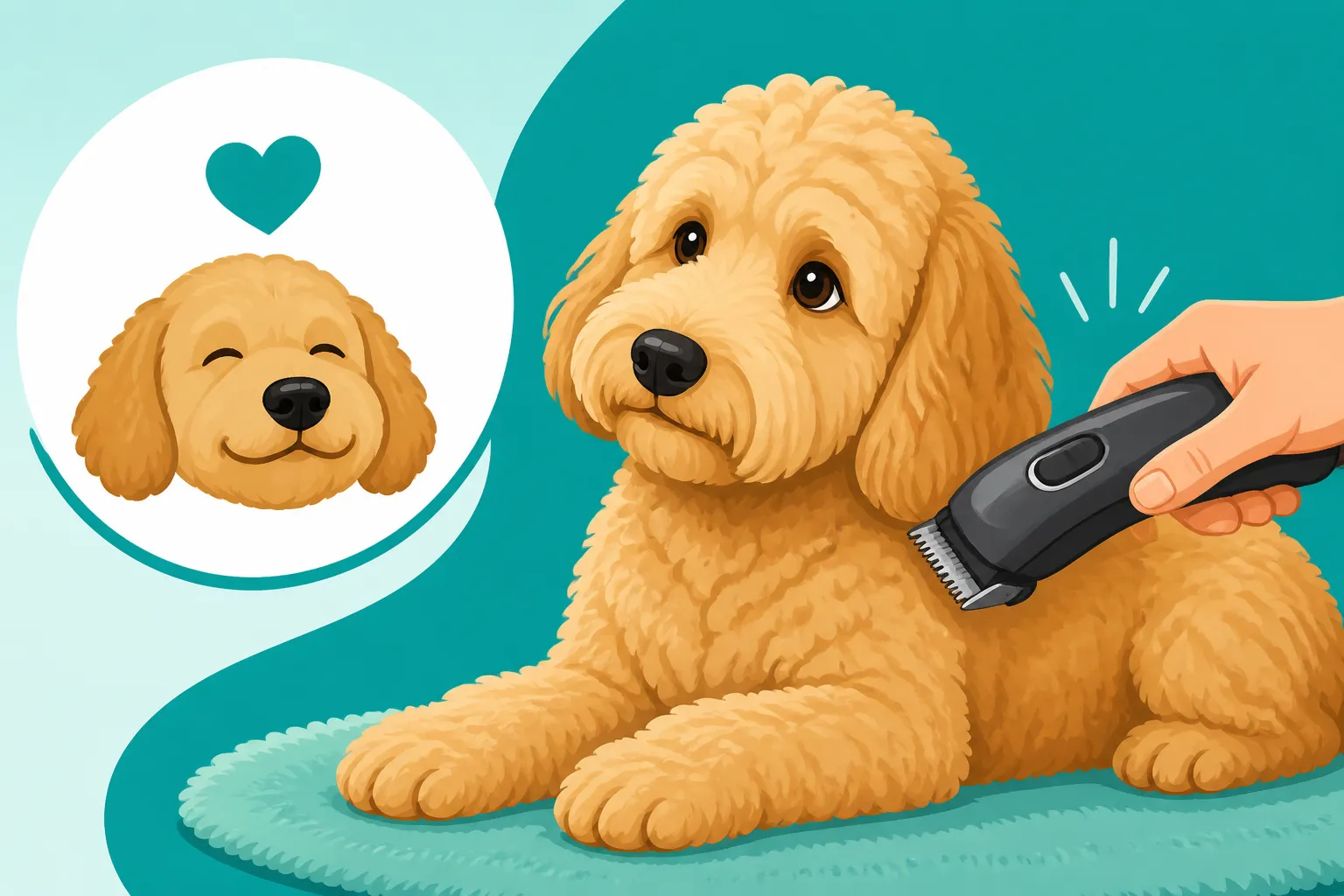
- Vibration (On Body, Brief): Gently touch the back of the running clippers (the cool, non-cutting part) to a non-sensitive area of your Goldendoodle's body, like their shoulder or hip, for just a second. Immediately reward. This is about them feeling the vibration, not the blades.
- Vibration (On Body, Increasing Time): Gradually increase the duration of the non-cutting contact, still rewarding continuously.
- Blade Touch (Brief): With the clippers on, gently touch the edge of the blade to a less sensitive area like a paw pad or a very small, clean patch of hair for a fraction of a second. Immediately reward.
The whole process of Handling a Goldendoodle's Feet, Face and Ears with clippers will be far easier if you've broken it down this way. Each step might take multiple sessions, and that's perfectly okay. Never move to the next step until your Goldendoodle is completely relaxed at the current one.
Body Part by Body Part: A Patient Approach
Once your Goldendoodle is comfortable with the idea of clippers touching them, you still need to introduce them to different body parts slowly. Some areas, like the sanitary area, paw pads, and face, are much more sensitive than others.
Start with less sensitive areas like their back or sides. Make tiny passes with the clippers, reward, move away, then repeat. The goal is to groom for short bursts, not to get a perfect trim in one go. For the more sensitive areas:
- Paw Pads: Practice handling their paws regularly (even without clippers) so they're comfortable with you touching their feet. Then, use the running clippers for very brief touches to the paw pads, rewarding each time. You'll want to clear the hair from Goldendoodle Paw Pad Hair and Slipping to prevent issues.
- Sanitary Area: This is a very sensitive spot. Keep sessions extremely short. Use small clippers if possible.
- Face and Ears: This area requires the most patience, as the sound is closer to their ears and eyes. Practicing Face and Beard Handling on a Goldendoodle is essential here. You may need a lower-noise clipper for this specific area or even consider using blunt-nosed scissors for areas around the eyes if your dog cannot tolerate clippers there.
| Step | Action | Goldendoodle Reaction | Reward |
|---|---|---|---|
| 1. Introduce Clippers (Off) | Place clippers on floor/table. Let dog sniff. | Calm, curious, or ignores. | Verbal praise, small treat. |
| 2. Introduce Sound (Distant) | Turn clippers on in another room. | Calm, ignores, or slight head turn. | High-value treat immediately. |
| 3. Introduce Sound (Closer) | Gradually reduce distance with clippers on, ensuring no fear. | Relaxed, perhaps looks at you for a treat. | High-value treat continuously while clippers are on, then stop. |
| 4. Introduce Vibration (Indirect) | Hold running clippers against your arm/leg. Let dog observe. | Curious, sniffs, no signs of fear. | Verbal praise, small treat. |
| 5. Introduce Vibration (Body Contact) | Touch back of running clippers to non-sensitive area (shoulder/hip) for 1 second. | Calm, tolerates. | High-value treat immediately. |
| 6. Gradual Body Exposure (Non-Cutting) | Increase duration of non-cutting contact, moving to different calm areas. | Remains relaxed, accepts contact. | Continuous high-value treats during contact. |
| 7. Blade Touch (Brief, Gentle) | Gently touch edge of running clippers to a small, less sensitive patch of hair (e.g., paw pad, back of leg) for less than 1 second. | Calm, tolerates. | High-value treat immediately, lots of praise. |
| 8. Short Grooming Passes | Make very short, gentle passes on a calm body part. | Calm, relaxed, may lean into it. | Continuous stream of high-value treats while clippers are running on them. |
Common Challenges and Troubleshooting Goldendoodle Clipper Fear
Even with the best intentions, you might hit some bumps in the road. It's totally normal, and there are ways to navigate these challenges.
When Your Goldendoodle Still Panics: Recognizing Stress Signals
Sometimes, despite your best efforts, your Goldendoodle might still panic. It's vital to recognize the subtle signs of stress before they escalate into a full-blown meltdown. These can include:
- Subtle signs: Lip licking, yawning (when not tired), averted gaze, tight lips, ears pinned back, furrowed brow, whale eye (showing the whites of their eyes).
- Moderate signs: Trembling, panting (when not hot or exerted), drooling, low body posture, trying to move away, lifting a paw, whining.
- Severe signs: Growling, snapping, biting, urinating/defecating, vocalizing intensely, trying to escape frantically.
If you see any of these signs, especially the moderate to severe ones, stop immediately. You've gone too far, too fast. Pushing past these signals will only reinforce their fear. Take a break, reset, and go back to an earlier, easier step where they were comfortable. Sometimes, the fear is so deeply ingrained that even the sight of clippers causes a reaction. In these cases, you might need to try putting the clippers away entirely for a while and just working on general body handling and positive association with grooming tools like brushes and combs first.
Avoiding Coercion: Why Force Backfires
It's tempting to just "get it over with" by holding your Goldendoodle down and forcing the clippers on them. Please, resist this urge. Coercion is the fastest way to increase fear and aggression, and it can permanently damage the trust between you and your dog. A forced grooming session might get the hair off in the short term, but it will make every subsequent grooming attempt exponentially harder and more dangerous for both you and your Goldendoodle.
Instead of force, think distraction and positive reinforcement. If your Goldendoodle is struggling, consider a session with a high-value treat dispenser or a lick mat, which can keep them occupied and associate the grooming experience with something incredibly pleasurable. For an older dog who is still struggling, the Anxiety Medication for a Goldendoodle might be something to discuss with your vet, not as a quick fix, but as a tool to help them be more receptive to training while you work on desensitization. Never use tools that cause pain or discomfort in an attempt to control behavior, as this will only lead to further escalation of fear and potentially aggression.
Seeking Professional Help: When to Call in a Pro
If you've tried consistent, positive desensitization for weeks or months and your Goldendoodle's fear isn't improving, or if it's escalating to aggression, it's absolutely time to call in professional help. This isn't a failure on your part; it's recognizing that some fears are deep-seated and require expert guidance.
Look for a certified professional dog trainer (CPDT-KA) or a veterinary behaviorist who specializes in fear and anxiety. They can assess your dog's specific triggers and body language, and help you develop a tailored desensitization and counter-conditioning plan. They might also suggest adjunct therapies, such as calming supplements or even short-term anti-anxiety medication, to help your Goldendoodle cope while you work through the training. A professional groomer who practices fear-free grooming techniques can also be an invaluable resource. They are often willing to do "happy visits" where your Goldendoodle simply comes in, gets treats, and leaves, slowly building positive associations with the grooming salon environment and the sound of clippers. Sometimes, Why Groomers Refuse Some Goldendoodles is directly related to a lack of desensitization, and a good professional can help bridge that gap.
Maintaining Clipper Comfort Through Regular Practice
Desensitization isn't a one-and-done deal. Just like any learned behavior, it needs maintenance. Regular, positive practice is crucial to ensure your Goldendoodle remains comfortable with clippers throughout their life.
Short, Frequent Sessions: The Key to Lasting Acceptance
Instead of waiting until your Goldendoodle's coat is long and matted, then doing one long, stressful grooming session, opt for short, frequent "mini-sessions." Even just 5-10 minutes of running the clippers, doing a small trim on a paw pad, or clearing a small patch of hair on their sanitary area, followed by lavish treats and praise, can be incredibly effective. These frequent, low-stress exposures prevent the fear from creeping back in.
Think of it as brushing your teeth; you do it every day, not just once a month. The more routine and mundane these short clipper sessions become, the less special (and scary) they will feel to your Goldendoodle. Consistency is far more important than intensity when it comes to maintaining comfort. These regular touch-ups will also help you prevent serious matting, which is a common reason for longer, more uncomfortable grooming sessions.
Making Grooming a Routine, Not a Rarity
Integrating clipper exposure into your regular grooming routine is essential. This means that every time you brush your Goldendoodle, or Cleaning a Goldendoodle Ear Every Week, you might also briefly turn on the clippers, even if you don't use them on their body. The goal is to normalize their presence and sound within the context of other acceptable handling.
Perhaps once a week, you do a quick check of their paw pads and briefly run the clippers over them, followed by a delicious chew. Or maybe every few days, after a walk, you use the clippers for a quick trim around their eyes. By making it a regular, predictable event, your Goldendoodle learns that clippers are just another tool, like their brush, and not something to dread. This is part of the larger picture of Building a Goldendoodle's Tolerance for Two Hours on a grooming table, slowly but surely.
Celebrating Success: Reinforcing Positive Associations
Every time your Goldendoodle tolerates the clippers, even for a moment, it's a huge win! Make sure to celebrate their success. This isn't just about treats during the session; it's about making the end of the session a positive experience too. A quick play session, a favorite toy, or even just lots of happy praise and cuddles immediately after the clippers are put away reinforces that they did a good job and that the experience ended pleasantly.
Positive reinforcement works by creating a powerful association: clippers = good things. The more positive experiences you stack up, the stronger that association becomes, eventually overriding any lingering fear. Remember, your Goldendoodle wants to please you, and if they understand that cooperating with the clippers makes you happy and brings them rewards, they will be much more inclined to tolerate it.
Disclaimer
This article is for general informational purposes only and does not constitute professional advice. Laws, prices and regulations vary by location and change over time. Consult a qualified professional for guidance on your specific situation.