Goldendoodle Agility and Whether It Suits Them
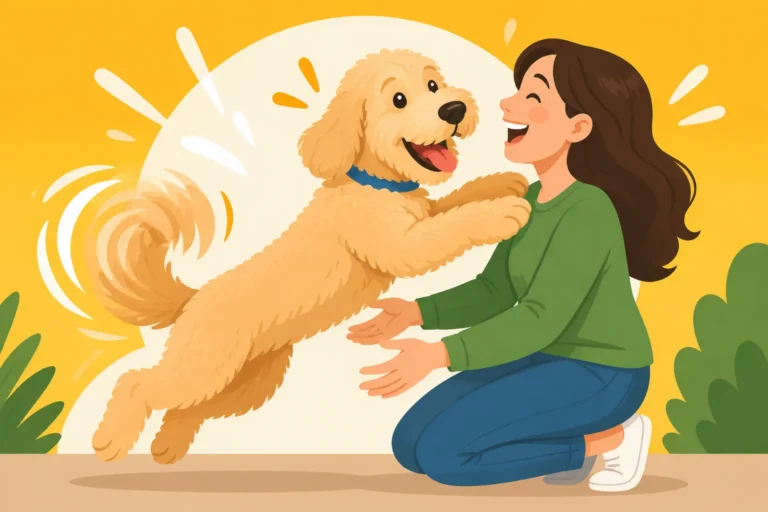
You’ve got a Goldendoodle that seems to have boundless energy, constantly zooming around the house or yard, leaping onto furniture with reckless abandon, and generally acting like a furry, four-legged rocket. It's enough to make you wonder if there’s a productive outlet for all that enthusiastic exuberance. This guide is here to explore whether the fast-paced, obstacle-course world of dog agility is a good fit for your Goldendoodle and how you can get started if it is.
What Goldendoodle Agility Even Means Beyond the "Zoomies"
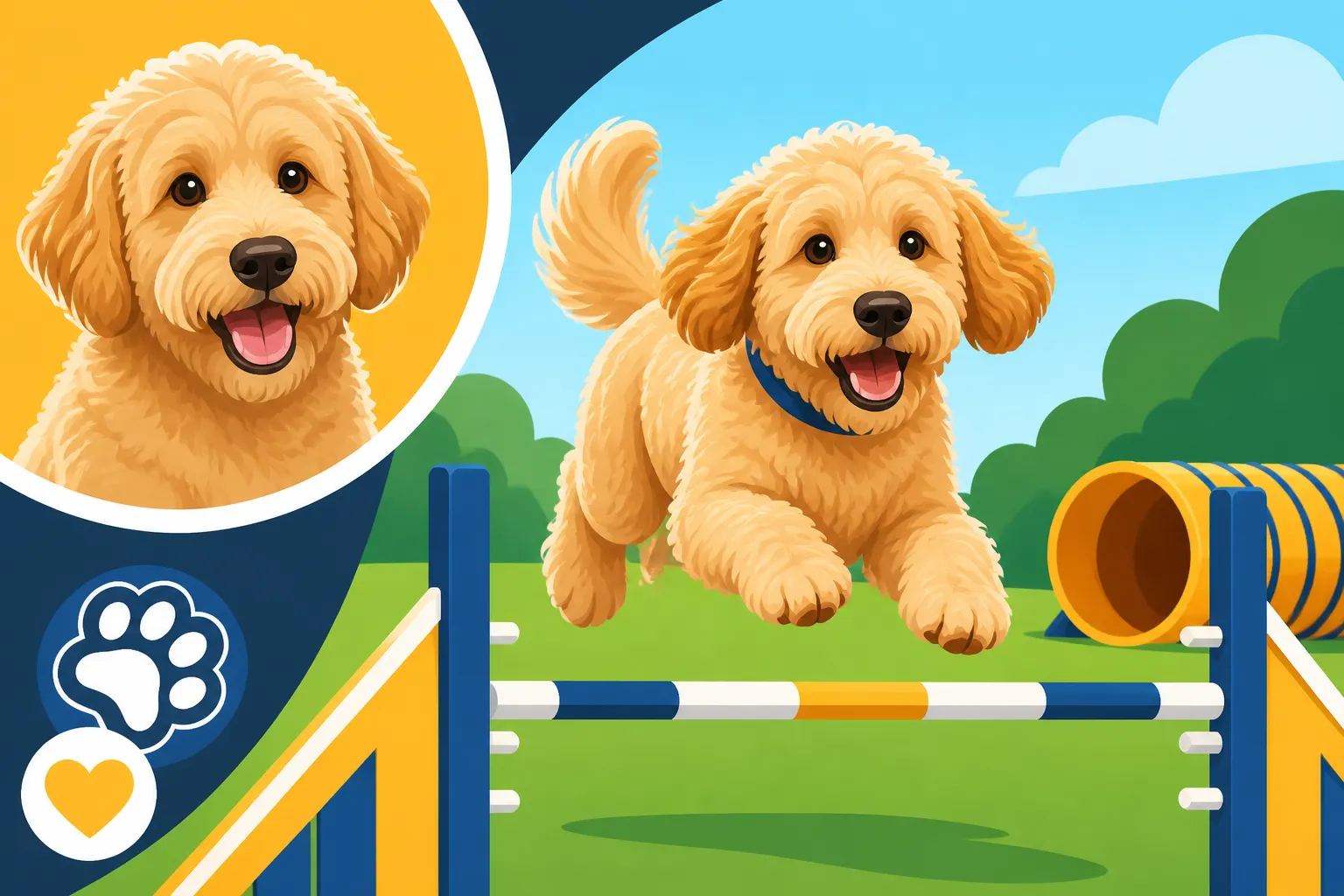
When we talk about dog agility, it's so much more than just letting your Goldendoodle run wild. Agility is a structured, competitive sport where a handler directs a dog through an obstacle course. Think of it like a canine obstacle race, featuring jumps, tunnels, weave poles, and contact obstacles like A-frames and dog walks. The goal is to complete the course as quickly and accurately as possible, with the handler giving precise commands and body language cues.
For a Goldendoodle, whose energy often manifests in what owners affectionately call "zoomies" – those sudden bursts of high-speed running – agility offers a fantastic way to channel that natural athleticism and enthusiasm. It's a mental and physical challenge that requires focus, coordination, and a strong partnership between you and your dog. It’s not just about speed; it's about understanding complex commands, executing precise movements, and maintaining control in an exciting environment.
More Than Just Physical Exercise
It’s easy to look at an agility course and just see the physical demands, but for a Goldendoodle, the mental engagement is equally, if not more, important. These are intelligent dogs, inheriting keen minds from both their Poodle and Golden Retriever parents. A tired Goldendoodle isn't just physically exhausted; they're mentally satisfied. Agility provides a puzzle for their brains to solve – figuring out the sequence of obstacles, responding to hand signals and verbal cues, and anticipating the next move. This kind of thinking work can actually tire out a Goldendoodle more effectively than a simple walk around the block. You'll find that after a good agility session, your Goldendoodle is not only calmer but also more engaged and content.
This combination of physical exertion and mental stimulation is crucial for a well-behaved and happy Goldendoodle. Without it, that incredible energy can manifest in less desirable ways, like excessive barking, destructive chewing, or frantic greetings at the door. Agility gives them a "job" to do, fulfilling their innate drive to work and interact with their favorite person – you!
The Skills Agility Builds
Agility isn't just about winning ribbons; it's about building a stronger bond and fostering important life skills in your Goldendoodle. Through agility training, your dog learns incredible impulse control. They learn to wait at the start line, to ignore distractions, and to focus intently on your commands, even when surrounded by exciting sights and smells. This translates directly to better behavior in everyday life. Imagine your Goldendoodle learning to "wait" before bursting out the front door or "leave it" when a tempting crumb falls on the floor. These are all foundational skills honed in agility.
Furthermore, it hones their body awareness and confidence. Navigating an A-frame or a teeter-totter teaches them how their body moves in space, making them more coordinated and less prone to clumsy accidents. For a dog that might be a little shy or unsure, successfully completing an agility obstacle can be a huge confidence booster, reinforcing that they are capable and that you are a reliable guide. It's truly a transformative experience for many dogs and their handlers.
The Goldendoodle Temperament and Physicality for Agility
The Goldendoodle, as a mix of Golden Retriever and Poodle, brings a unique blend of traits to the agility arena. Both parent breeds are renowned for their athleticism, intelligence, and eagerness to please, making the Goldendoodle often a natural fit for this dynamic sport. However, understanding the nuances of their inherited characteristics is key to gauging their potential and setting them up for success.
Poodle Brains and Retriever Enthusiasm
From the Poodle side, Goldendoodles inherit incredible intelligence and a keen desire to learn. Poodles are highly trainable, problem-solvers who excel in obedience and dog sports. This "Poodle brain" means they often pick up new commands and sequences very quickly. They love having a job and thrive on mental challenges, which agility provides in spades. You’ll often see a Goldendoodle watching you intently, trying to figure out what you want, a clear sign of their Poodle heritage at work. Poodle Brains and Retriever Eagerness in One Goldendoodle is an excellent read if you want to dive deeper into how these two intelligence types combine.
Then there's the Golden Retriever influence: that boundless enthusiasm, biddability, and sheer joy in working alongside their human. Golden Retrievers are famous for their "happy-go-lucky" attitude and their desire to please, making them incredibly motivated students. When you combine the Poodle's smarts with the Golden's eagerness, you get a Goldendoodle that is often a fast and willing learner, eager to tackle new obstacles and celebrate every success with a wagging tail. This positive attitude is invaluable in a sport like agility, which requires a lot of repetition and encouragement.
Physical Considerations by Size
Goldendoodles come in a range of sizes, from Toy and Mini to Medium and Standard, and their size definitely plays a role in their agility journey. A standard Goldendoodle, while powerful and fast, might need careful consideration for impact on joints, especially during growth. Larger dogs can be more prone to joint issues like hip and elbow dysplasia, so proper warm-ups, cool-downs, and a gradual increase in intensity are crucial. We always emphasize Goldendoodle Joint Health by Size Category when discussing active dogs.
Mini and Toy Goldendoodles, on the other hand, are often incredibly agile and nimble. Their smaller stature means they can navigate weave poles and jumps with incredible speed and less strain on their bodies. However, even smaller dogs need careful handling to avoid injuries. Regardless of size, all Goldendoodles need to be physically sound and free from pain before starting intense physical activity like agility. A pre-agility vet check is always a good idea to ensure their growth plates are closed and their joints are healthy.
Here’s a quick overview of how size might impact their agility experience:
| Goldendoodle Size | Typical Weight (lbs) | Agility Considerations |
|---|---|---|
| Toy | 10-25 | Very agile, less impact on joints. May be less sturdy on larger equipment. |
| Mini | 26-35 | Excellent balance of speed and sturdiness. Common size for agility dogs. |
| Medium | 36-50 | Good speed and power, but careful attention to joint health is needed. |
| Standard | 51-90+ | Powerful and fast. Focus on controlled movements, strong foundation, and joint care. |
The Coat Conundrum
One practical consideration for Goldendoodles in agility is their coat. Those beautiful, fluffy coats, while charming, can be a magnet for burrs, mud, and other debris found on outdoor agility courses. A longer coat can also obscure vision, especially around the eyes, or even slow them down slightly. Regular grooming is not just about aesthetics; it's essential for a working dog. Many agility handlers opt for a shorter "sporting clip" during agility season to keep their Goldendoodle comfortable and clear of tangles. You'll want to make sure you're Brushing a Goldendoodle Often Enough to Stop Matting to keep that coat in top condition. Mats can be painful and restrictive, especially when your dog is twisting and turning through an obstacle course.
Getting Started with Goldendoodle Agility Training
So, you've decided that agility sounds like a perfect fit for your high-energy, smart Goldendoodle. That's fantastic! But before you go out and buy a full set of obstacles, let's talk about how to start safely and effectively. Agility is a journey, not a sprint, and laying a strong foundation is key to both your and your Goldendoodle's enjoyment and success.
Building Foundational Skills at Home
You don't need a fancy agility park to start. In fact, many of the most important skills for agility can be taught right in your living room or backyard. Focus on strengthening your bond and teaching basic obedience commands with a high degree of reliability. Think about perfecting "come," "stay," "sit," "down," and "target" (touching your hand or a specific object). Strong recall is particularly vital, especially if you ever plan to work off-leash in an agility setting, so practicing Goldendoodle Recall in an Open Field is a great precursor.
Games that build body awareness are also incredibly helpful. Teach your Goldendoodle to walk over different surfaces, navigate around objects, and even do simple tricks like "spin" or "bow." These kinds of activities enhance their coordination and confidence in their own movement. Use positive reinforcement techniques, offering high-value treats and enthusiastic praise for every correct response. Remember, Positive Reinforcement and Why It Suits a Goldendoodle is the most effective way to train these intelligent and sensitive dogs.
Consider investing in an online puppy training program like BAXTER & Bella. While it's focused on general puppy training, it often includes valuable modules on impulse control, engagement, and foundational skills that are directly transferable to agility. These programs can give you a structured approach to building that solid obedience base before you even think about jumps and tunnels.
Finding a Class and the Right Equipment
Once your Goldendoodle has a good grasp of basic obedience and is physically mature enough (generally at least 12-18 months, depending on size and vet recommendation, to protect their joints), it's time to find a local agility class. Look for trainers who use positive, reward-based methods and prioritize safety and fun. A good beginner class will introduce obstacles slowly, focusing on proper technique and building confidence rather than speed. They'll also teach you, the handler, how to use your body language and verbal cues effectively to guide your dog.
You don't need to buy a full agility course for your backyard right away, but a few basic pieces of equipment can be fun for practice at home. A collapsible tunnel and some adjustable jumps are relatively inexpensive and can be found on sites like Amazon. These allow you to practice short sequences and reinforce specific skills between classes. Just ensure any equipment you get is stable and safe for your dog's size.
When starting out, focus on having fun and celebrating small victories. Agility is an incredible bonding experience, and the stronger your partnership becomes, the more successful and enjoyable the journey will be. Don't worry about perfection; focus on progress and keeping your Goldendoodle motivated and happy.
Pros and Cons of Agility for Your Goldendoodle
Deciding whether agility is right for your Goldendoodle involves weighing the many benefits against some potential challenges. It's not for every dog, or every owner, but for many Goldendoodle families, it truly becomes a passion.
The Benefits of Agility for Goldendoodles
There are so many wonderful reasons to consider agility for your Goldendoodle. First and foremost, it's an unparalleled source of physical and mental exercise. Goldendoodles are high-energy dogs, and a couple of walks a day often isn't enough to satisfy their need for activity. Agility provides intense bursts of movement combined with complex problem-solving, which leaves them feeling truly fulfilled. This can significantly reduce destructive behaviors at home that often stem from boredom or pent-up energy. Think of it as hitting their "off switch" in the best possible way. Goldendoodle Exercise and Mental Work Every Day highlights just how crucial this combination is.
Beyond the exercise, agility dramatically strengthens the bond between you and your Goldendoodle. You become a team, communicating with subtle cues and celebrating successes together. This shared activity builds trust and mutual understanding. You'll learn to read your dog's body language better, and they'll learn to rely on your guidance. The confidence boost your Goldendoodle gets from mastering new obstacles is incredible to witness. It can transform a timid dog into a courageous one, and an overly excitable dog into a focused athlete. Moreover, the social aspect of agility classes exposes your Goldendoodle to other dogs and people in a structured, positive environment, which is excellent for continued Socializing a Goldendoodle Beyond Hyper-Friendliness.
Potential Challenges and How to Overcome Them
While agility is fantastic, there are a few challenges unique to Goldendoodles and the sport itself. Their friendly, outgoing nature, while generally a positive trait, can sometimes be a distraction in a busy agility class. A Goldendoodle that wants to greet every dog and person might struggle with focus initially. This is where strong impulse control training comes in, teaching them to ignore distractions and focus solely on you. Goldendoodle Impulse Control Exercises are your best friend here. Patience and consistent reinforcement are key.
Another consideration is their coat. As mentioned earlier, those beautiful furnishings can pick up debris and mat easily, requiring diligent grooming to prevent discomfort and health issues. If you’re not prepared for regular brushing and perhaps a shorter haircut during peak training, this can become a frustration.
Finally, the physical demands of agility mean a commitment to your Goldendoodle's health. You'll need to be mindful of joint health, especially with larger Goldendoodles, and ensure they are properly conditioned. This includes regular vet check-ups, appropriate nutrition, and never pushing them beyond their physical limits. Agility should always be fun and safe, not a source of injury. If you have concerns, talk to your vet and an experienced agility instructor.
Agility can be an incredibly rewarding journey for both you and your Goldendoodle. It taps into their natural intelligence and athleticism, strengthens your bond, and provides a fantastic outlet for all that delightful Goldendoodle energy. With patience, consistent training, and a focus on safety, your Goldendoodle might just become the next agility star!
Disclaimer
This article is for general informational purposes only and does not constitute professional advice. Laws, prices and regulations vary by location and change over time. Consult a qualified professional for guidance on your specific situation.