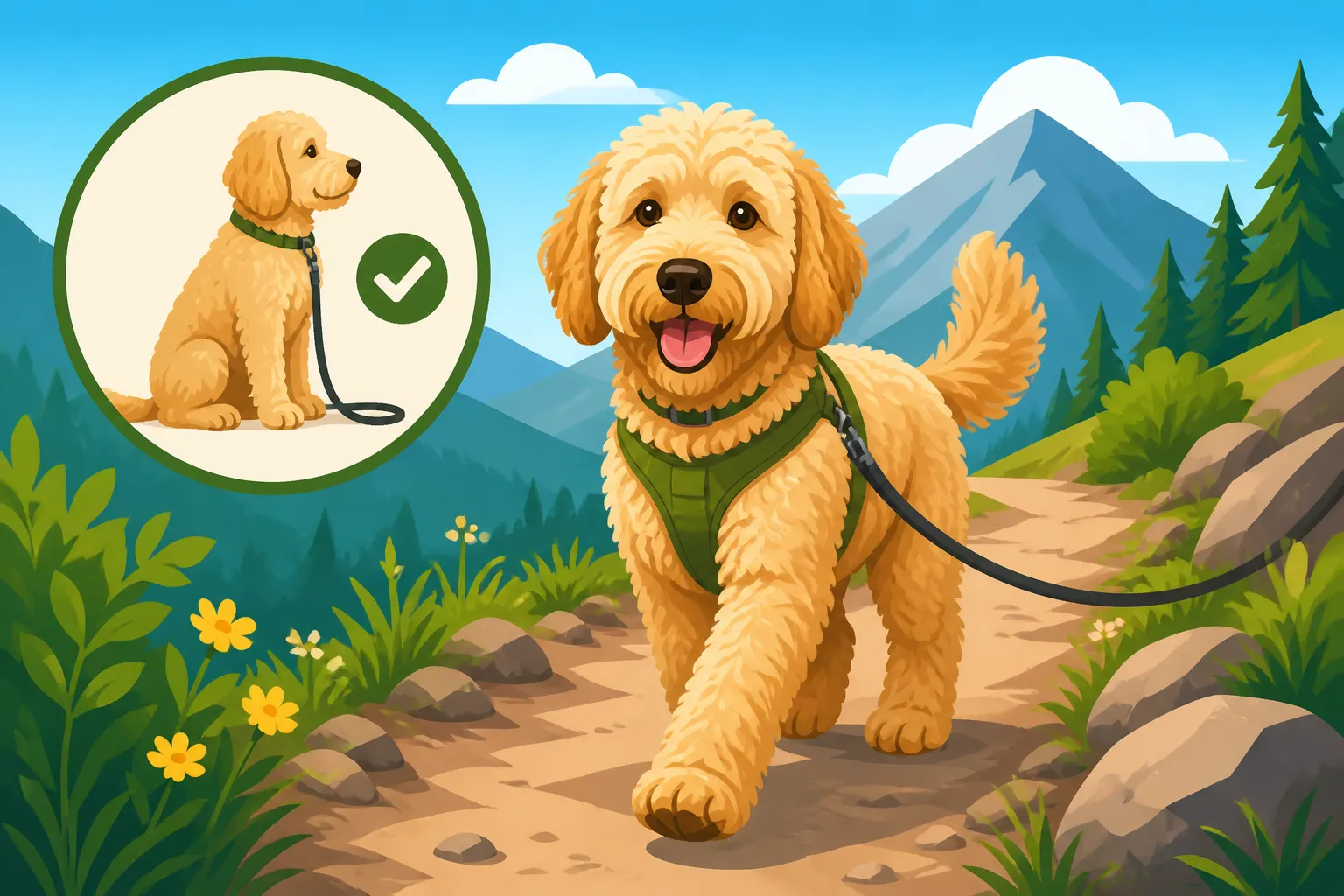
Goldendoodle Hiking and Trail Manners
There’s nothing quite like hitting the trails with your Goldendoodle trotting happily beside you, soaking up the fresh air and new smells. It’s a vision many of us dream of when we bring home one of these energetic, intelligent dogs. However, the reality can sometimes be a bit different, especially if your Goldendoodle is still figuring out their trail manners. You might find yourself dragged down the path by a sudden squirrel sighting or embarrassed by an overly boisterous greeting with another hiker. This guide is all about helping you cultivate a Goldendoodle who is a joy to hike with, ensuring both of you have safe, respectful, and wonderfully memorable adventures.
Preparing Your Goldendoodle for the Trail
Before you even step foot on a mountain path or a winding forest trail, a significant portion of successful hiking with your Goldendoodle happens at home and in your local neighborhood. The foundation you lay in basic obedience and consistent training is absolutely crucial for a harmonious outdoor experience. Without these building blocks, even the most well-intentioned Goldendoodle can quickly become overwhelmed by the novel sights, sounds, and smells of the wilderness.
Building Foundational Obedience
Think of foundational obedience as your Goldendoodle's trail toolkit. Commands like "sit," "stay," and a solid "come" are not just polite parlor tricks; they are vital safety cues that can prevent dangerous situations on the trail. Imagine your Goldendoodle spotting a deer and bolting into dense woods – a reliable recall could be the difference between a minor scare and a lost dog. We often underestimate how much the environment impacts a dog's ability to listen. A command your Goldendoodle nails perfectly in your quiet living room might completely fall apart when they’re surrounded by exciting new scents and sounds.
This is where "proofing" comes in. Start practicing these commands in increasingly distracting environments, like a busy park, a local pet store, or even just your backyard with the neighborhood kids playing. Use high-value treats and enthusiastic praise to make listening to you more rewarding than any potential distraction. Remember, Goldendoodles often have a strong desire to please, a trait they inherit from both the Golden Retriever and Poodle sides, making them highly trainable. Leaning into this eagerness with positive reinforcement can work wonders. If you're looking for structured guidance, programs like BAXTER & Bella offer comprehensive online courses that cover these essential foundational skills, which you can work through at your own pace. For more on their innate desire to learn, check out Why a Goldendoodle Wants to Work With You.
Leash Training and Equipment Choices
One of the biggest frustrations for Goldendoodle owners on a hike is leash pulling. It’s not just annoying; it can be dangerous on uneven terrain, especially if you're navigating steep inclines or narrow ledges. Teaching your Goldendoodle to walk nicely on a leash, ideally with a loose leash "heel" command, is paramount. Start by practicing in low-distraction areas and gradually increase the complexity. When they pull, stop immediately. Only move forward when the leash slackens. This teaches them that pulling gets them nowhere.
The right equipment also makes a huge difference. A standard flat collar might be fine for a well-behaved dog, but for a Goldendoodle prone to pulling, a front-clip harness or a head halter can offer much more control without causing discomfort. These tools redirect your dog's momentum, making it much harder for them to pull you off balance. Avoid retractable leashes on trails; they offer little control and can be dangerous if your dog suddenly lunges. A sturdy 6-foot leash gives you enough slack for sniffing while keeping your Goldendoodle close. Many of these items, from durable harnesses to hands-free leashes, can be found readily on Amazon. For guidance on choosing the right gear, consider reading Harnesses That Suit a Goldendoodle Coat.
| Leash Type | Pros | Cons | Best Use for Hiking |
|---|---|---|---|
| Standard 6-Foot | Good control, common, easy to handle | Can still allow pulling | General trail walking, moderate distractions |
| Front-Clip Harness | Reduces pulling, comfortable for dog | Can tangle, dog might chew | Dogs prone to pulling, better control needed |
| Head Halter | Excellent control, gentle pressure | Some dogs dislike, requires adaptation | Strong pullers, quick redirection needed |
| Retractable Leash | Gives dog more freedom | No control, dangerous, can snap | Not recommended for hiking |
Socialization Beyond the Dog Park
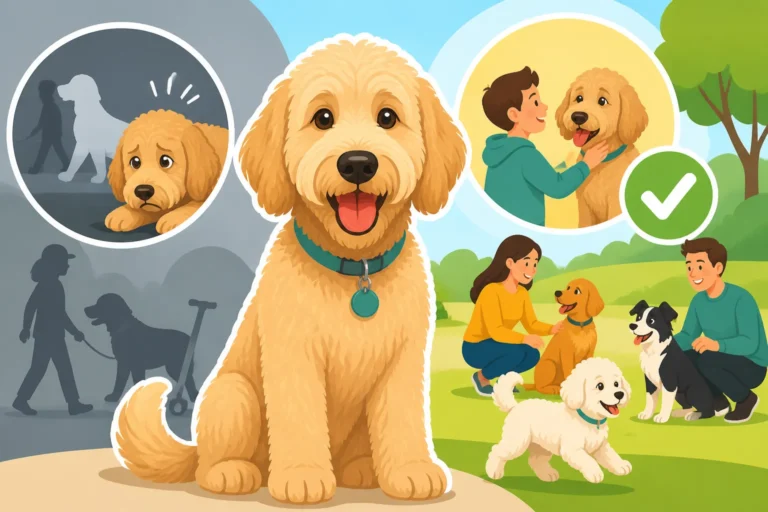
Goldendoodles are known for their friendly, outgoing personalities, which is wonderful in many situations, but on a trail, it needs to be channeled correctly. "Socialization" isn't just about playing with other dogs; it's about exposing your Goldendoodle to a wide variety of people, sights, sounds, and even other animals in a controlled, positive way. On a trail, you might encounter mountain bikers, hikers with backpacks, children, horses, or even wildlife like deer or rabbits. A properly socialized Goldendoodle will react calmly and appropriately to these encounters, rather than barking frantically or lunging.
Before hitting popular trails, take your Goldendoodle to quieter parks or walking paths where you can observe their reactions. Practice having them "sit" and "stay" as people or dogs pass by at a distance. Reward calm behavior generously. This teaches them that not every new encounter is an invitation to play or a reason to be alarmed. If your Goldendoodle tends to get overly excited or reactive, early intervention and consistent training are key. For strategies on managing their interactions, particularly if they are prone to enthusiastic greetings, you might find Goldendoodle Play Style With Other Dogs helpful. Remember, a well-adjusted Goldendoodle makes for a more relaxing and safer hike for everyone.
Navigating the Trail with Confidence
Once you've got the groundwork in place, it's time to apply those skills to the actual trail. Hiking isn't just a walk in the park; it's an immersive experience with unique challenges. Being prepared for these can make all the difference in whether your Goldendoodle becomes a fantastic hiking buddy or a source of constant stress.
Managing Distractions and Impulse Control
Trails are a sensory explosion for a Goldendoodle. The scent of a squirrel that scurried by minutes ago, the rustle of leaves that might be a rabbit, or the sight of another dog rounding a bend—all of these are massive distractions that can test even the most well-trained dog. Impulse control is your best friend here. Commands like "leave it" and "look at me" are indispensable. Practice "leave it" at home with tempting toys or treats, then slowly introduce it to outdoor settings with less appealing items before moving to real-world trail distractions.
When you see a potential distraction coming, whether it's another hiker with a dog or a patch of intriguing smells, proactively engage your Goldendoodle. Ask for a "sit" or "watch me," reward them, and then continue on. This teaches them to check in with you rather than fixating on the distraction. Carrying high-value, small treats (many available on Amazon) can be incredibly useful for these moments, reinforcing that staying focused on you is worth it. Don't be afraid to pull off to the side of the trail to allow others to pass if your Goldendoodle needs a moment to compose themselves. This proactive management prevents situations from escalating and helps build your Goldendoodle's confidence in handling distractions. For further ideas, read about Goldendoodle Impulse Control Exercises.
Trail Etiquette and Safety
Responsible trail use is essential, not just for your enjoyment but for the safety and enjoyment of others, as well as the local wildlife.
- Leash Laws: Always, always respect leash laws. Even if your Goldendoodle has perfect recall, an unleashed dog can disturb wildlife, intimidate other hikers (especially those with reactive dogs), or inadvertently cause an accident. If an area permits off-leash activity, ensure your Goldendoodle’s recall is absolutely bulletproof before considering it.
- Waste Management: Pack out what you pack in, and that includes your Goldendoodle's waste. There's nothing worse than seeing dog bags left on the side of a beautiful trail. Carry enough bags and be prepared to pack out every single one.
- Yielding the Trail: Hikers with dogs should generally yield to other hikers, especially those without dogs, and always to equestrians and mountain bikers. Step off the trail to allow them to pass, keeping your Goldendoodle close and under control.
- Wildlife: Teach your Goldendoodle to leave wildlife alone. Chasing animals is stressful for them, can be dangerous for your dog, and disrupts the ecosystem. Your "leave it" command is crucial here.
- Trail Hazards: Be vigilant for potential dangers like sharp rocks, broken glass, poisonous plants, or steep drop-offs. Keep your Goldendoodle close in tricky areas. In warmer weather, be mindful of Goldendoodle Heat Tolerance Under a Thick Coat to prevent overheating.
Hydration and Breaks
Just like humans, Goldendoodles need to stay hydrated and take breaks, especially on longer or more challenging hikes. Always carry plenty of fresh water for both of you. Many pet supply stores and Amazon offer collapsible bowls that are perfect for hiking. Offer water regularly, even if your Goldendoodle isn't panting heavily. Pay attention to the weather; on hot days, you might need more frequent stops and more water.
Watch your Goldendoodle for signs of fatigue: excessive panting, lagging behind, or limping. If you notice any of these, it's time for a break in a shaded spot. Check their paw pads for any cuts, abrasions, or excessive wear, especially on rough terrain. If you're planning a longer hike, gradually build up your Goldendoodle's endurance over several weeks. Don't go from short neighborhood strolls to a 5-mile mountain trek overnight. This gradual conditioning not only builds their physical stamina but also reinforces their trail manners in varied conditions. Consider packing a small first-aid kit specific for dogs, including paw balm, bandages, and antiseptic wipes. For ideas on daily activity, refer to The Hour or Two a Goldendoodle Needs Each Day.
Advanced Trail Skills and Problem Solving
Even with the best preparation, unexpected situations can arise on the trail. Developing advanced skills and knowing how to troubleshoot common behavioral issues will ensure you're ready for anything.
Emergency Recall for Off-Leash Moments (Where Permitted)
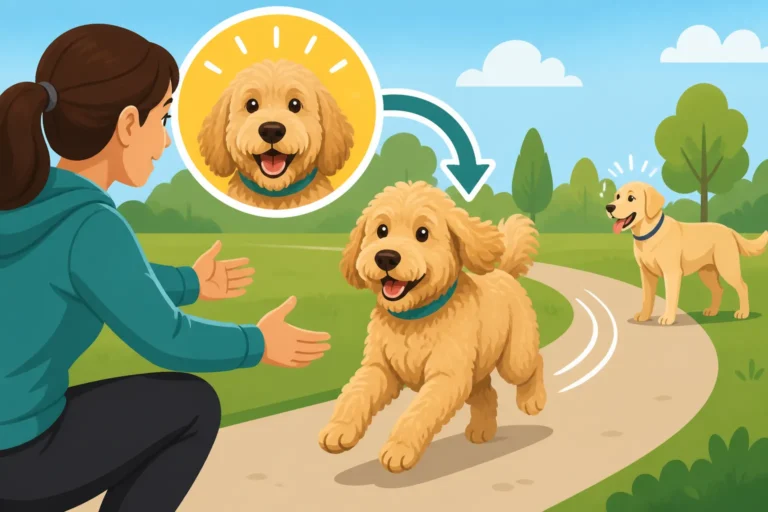
While most trails require leashes, some remote areas or designated dog parks within larger trail systems might allow supervised off-leash activity. If you ever plan to let your Goldendoodle off-leash, even for a moment, an emergency recall is non-negotiable. This isn't just a regular "come"; it's a "drop everything and get back to me now" command. It should be taught separately, practiced consistently, and always rewarded with the highest value treat or toy your Goldendoodle can imagine. Reserve this command only for true emergencies, so it retains its power.
To build an emergency recall, start in a fenced, low-distraction area. Use a unique word or whistle, make it exciting, and when your Goldendoodle comes, make it a party. Run away from them to encourage the chase, then lavish them with praise and treats. Gradually introduce distractions. Remember, a Goldendoodle has a strong retriever drive, which can be an asset for recall if properly harnessed. However, that same drive can lead them to pursue tempting scents. A robust recall is your insurance policy against potential dangers like dangerous wildlife encounters, busy roads, or getting lost. You can learn more about this vital skill in Goldendoodle Recall and the Retriever Half.
Addressing Specific Behavioral Challenges on the Trail
Sometimes, despite all your efforts, your Goldendoodle might develop specific behaviors on the trail that need addressing.
- Excessive Barking: Some Goldendoodles can become quite vocal, barking at other dogs, hikers, or wildlife. This often stems from excitement, anxiety, or a desire for attention. Identify the trigger: are they barking because they want to greet, or because they're nervous? For excitement, practice "look at me" and reward calm focus. For anxiety, increasing distance from the trigger and gradually desensitizing them can help. If it's for attention, ignore the barking and only reward quiet behavior. Goldendoodle Barking and What Sets It Off offers more insight.
- Overly Friendly Greetings: While their friendly nature is endearing, not everyone on the trail wants to be greeted by a bouncy Goldendoodle. Train a reliable "leave it" for people and dogs, and a "go say hello" cue that you only give when appropriate and you have confirmation that the other person is okay with it. This teaches your dog to ask permission before interacting.
- Leash Reactivity: If your Goldendoodle lunges, barks, or growls at other dogs while on leash, this is leash reactivity. It’s often rooted in fear, frustration, or over-excitement. Management (creating distance, turning around) is key while you work on desensitization and counter-conditioning. The goal is to change their emotional response to seeing other dogs from negative to neutral or positive. Working with a certified professional dog trainer can be incredibly beneficial for reactivity.
- Counter-Surfing/Sniffing Out Prohibited Items: Goldendoodles are smart and often food-motivated. On trails, this can mean trying to eat discarded food, investigate animal droppings, or sample poisonous plants. A strong "leave it" is critical. Be extra vigilant in sniffing-prone areas, keeping the leash short and directing their attention elsewhere.
Conditioning for Longer Hikes
Even a relatively fit Goldendoodle needs conditioning for serious hiking. Just as you wouldn't run a marathon without training, your dog shouldn't attempt a strenuous hike without preparation. Start with short, easy walks on varied terrain and gradually increase the distance and difficulty over several weeks or months. This helps build muscle, stamina, and toughens their paw pads.
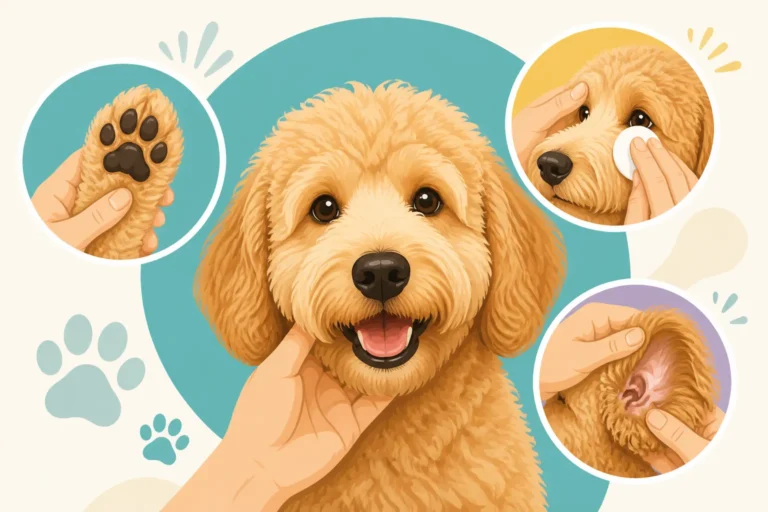
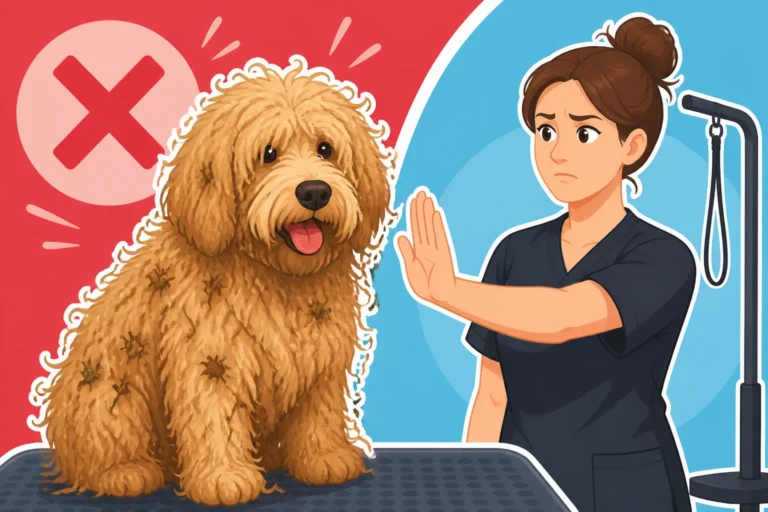
Consider your Goldendoodle's age and size. A young puppy’s growth plates are still developing, so over-exercising can lead to long-term joint issues. Similarly, a senior Goldendoodle might need shorter, flatter routes to accommodate arthritis or reduced stamina. Goldendoodle Joint Health by Size Category provides important considerations here. Always check your Goldendoodle's paws after every hike. Look for cuts, blisters, or embedded debris. Regular paw care, like trimming the hair between pads, can prevent issues. In extreme cold, snow can ball up in their coat, especially between their pads, which can be uncomfortable or cause injury. For year-round coat care, regular grooming appointments are also crucial to prevent matting that can make hiking uncomfortable and lead to skin issues.
With consistent training, the right gear, and a mindful approach to trail etiquette and safety, your Goldendoodle can become the best hiking companion you could ever ask for. Embrace the journey, celebrate the small victories, and enjoy the beautiful outdoors together!
Disclaimer
This article is for general informational purposes only and does not constitute professional advice. Laws, prices and regulations vary by location and change over time. Consult a qualified professional for guidance on your specific situation.