A Goldendoodle That Panics When You Shower
It’s a scenario many Goldendoodle parents know all too well: you step into the bathroom, close the door to start your shower, and almost immediately, the anxious whining, scratching, or even barking begins from the other side. This isn't just a minor annoyance; it's heartbreaking to hear your beloved companion in distress, and it can turn a simple daily routine into a stressful ordeal. This guide is here to help you understand why your Goldendoodle might be panicking when you shower and, more importantly, equip you with the strategies to manage and eventually overcome this challenging behavior.
Understanding Why Your Goldendoodle Panics During Showers
When your Goldendoodle panics as soon as you head for the shower, it's not simply trying to be disruptive or demand attention. There's usually a deeper emotional reason behind their distress. Goldendoodles, with their intelligent Poodle lineage and eager-to-please Golden Retriever side, are often highly bonded with their people, making them prone to certain anxieties.
The Root of Separation Anxiety in Goldendoodles
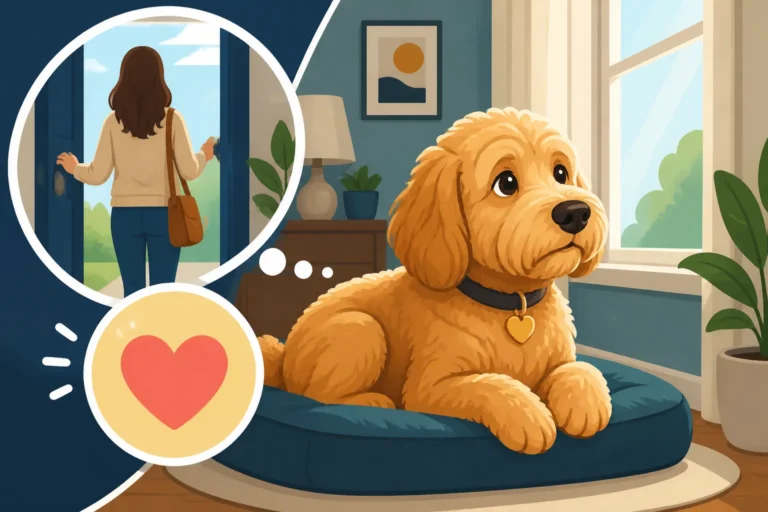
Often, the panic your Goldendoodle displays when you shower is a manifestation of underlying separation anxiety. These dogs are truly "Velcro dogs" – they thrive on companionship and can struggle when they perceive themselves as being separated from their pack leader (that's you!). When you step into the shower, you're not just closing a door; you're creating a sudden, albeit temporary, physical and auditory barrier that can trigger feelings of abandonment or fear.
Think about it from your Goldendoodle's perspective. One minute, you're there, a comforting presence. The next, you've vanished behind a closed door, and strange, loud noises (the shower, the fan) start up. For a dog that deeply relies on your presence and routine, this abrupt change can be profoundly unsettling. It’s not just about you being gone; it's about the unknown, and for a Goldendoodle prone to being sensitive, this can feel like a genuine crisis. They literally can't fathom why you've disappeared and might feel a primal urge to get back to you, especially if they haven't been slowly accustomed to spending time alone. Many Goldendoodles are particularly prone to this, a trait that can come from both parent breeds. You can read more about this in Goldendoodle Separation Anxiety From Both Parent Lines.
Noise Sensitivity and Environmental Triggers
Beyond the feeling of separation, the bathroom environment itself can be a significant trigger for panic. The sounds associated with showering are often loud and unusual to a dog's sensitive ears. The rush of water, the hum of the extractor fan, the clanking of pipes, and even the echoing acoustics of a tiled bathroom can be amplified and distorted, turning what we perceive as normal background noise into a frightening assault on their senses.
Dogs perceive sound at different frequencies and volumes than humans, making them much more susceptible to being startled or distressed by household noises. A Goldendoodle, with its keen hearing, might interpret the sudden gush of water or the whirring fan as a threat or simply an overwhelming sensory experience. If these noises are consistently linked with your sudden disappearance, the bathroom itself can become a conditioned trigger for anxiety, even before the water starts running. It's a complex interplay of sensory input and learned association that can be very hard for them to ignore.
Lack of Predictability and Control
Dogs, much like humans, thrive on routine and predictability. When something happens outside their established rhythm or without clear signals, it can lead to uncertainty and anxiety. Your shower routine, while predictable to you, might not be to your Goldendoodle, especially if you haven't intentionally built cues around it. They don't know when you're coming back, or if you're coming back.
The lack of control over your sudden departure and the mysterious sounds can be a huge source of stress. They can't open the door, they can't investigate the noise, and they can't comfort themselves with your presence. This feeling of helplessness often manifests as barking, whining, digging at the door, or other panic-driven behaviors. It's their way of trying to regain control, communicate their distress, or simply get you to reappear and restore their sense of security. Recognizing this need for predictability is a huge step in helping them feel more secure.
Practical Strategies to Manage Shower-Time Panic
Managing your Goldendoodle's shower-time panic requires patience and a multi-pronged approach. It’s about more than just getting through your shower; it’s about systematically changing your dog’s emotional response to the situation.
Building Positive Associations with the Bathroom
The first step is to change your Goldendoodle’s perception of the bathroom from a scary, isolating place to one that is neutral or even positive. This process is called counter-conditioning. You want them to associate the bathroom with good things, not just your disappearance.
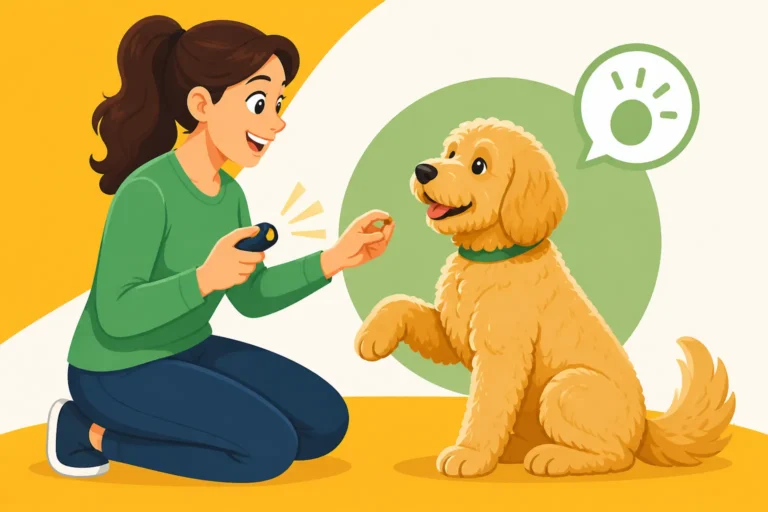
Start by spending time with your Goldendoodle in the bathroom without any intention of showering. Drop high-value treats (like small pieces of cheese, chicken, or their favorite soft treats) just inside the door or scatter them on the floor. Let them explore, sniffing around while you sit calmly. You can even bring their favorite sturdy chew toy or a lick mat smeared with peanut butter, like those found on Amazon, into the bathroom for a few minutes while the door stays open. The goal is to create short, positive experiences in the room. Don't push it; if they seem hesitant, just toss treats from the doorway and gradually move closer. You're slowly building a new, positive narrative for that space.
Desensitization to Shower Sounds and Routine
Once they're more comfortable being in the bathroom, the next step is to desensitize them to the sounds and actions that precede a shower. This involves breaking down your shower routine into tiny, non-threatening steps and practicing each one, always ending on a positive note.
Begin by simply walking into the bathroom, closing the door for a second, then immediately reopening it and rewarding your dog. Repeat this many times, gradually increasing the duration the door is closed by a few seconds. Next, add the sound: turn on the water for just a moment, turn it off, and immediately give a treat. Do this repeatedly, slowly increasing the time the water runs. You might even record your shower sounds and play them softly in another room while your dog is relaxed, slowly increasing the volume over days or weeks. This allows your Goldendoodle to get used to the sounds without the added stress of you disappearing. Think of it as exposure therapy for dogs, where tiny, manageable doses of the trigger are paired with something wonderful. You’ll be surprised how much progress you can make with consistent, patient practice.
Creating a Safe and Distracting Space Outside the Bathroom
While you’re working on desensitization, it’s crucial to give your Goldendoodle a comfortable, distracting alternative for those times you do need to shower. This could be their crate, a cozy bed in another room, or a designated "safe zone." The key is to make this space incredibly appealing and associate it with long-lasting, high-value enrichment.
Before you even head to the bathroom, give your Goldendoodle a special chew toy, a Kong filled with frozen peanut butter or wet food, or a puzzle feeder. These should be items they only get when you need them to be occupied. This not only distracts them but also creates a positive association with your absence. Ensure they have access to fresh water and are comfortable. Consider playing calming music or white noise in their safe space to mask the bathroom sounds. For example, if your Goldendoodle is crate-trained, ensure it’s a positive experience. You can learn more about making the crate a haven in Crate Training a Velcro Goldendoodle. The goal is to give them something so engaging that it becomes their focus, rather than your missing presence.
Long-Term Solutions for Addressing Separation Anxiety
While the immediate strategies help manage the panic, truly resolving the issue often involves addressing the underlying separation anxiety. This is a journey that requires commitment, but the payoff of a calm, confident Goldendoodle is immeasurable.
Gradual Alone Time Training
The cornerstone of addressing separation anxiety is gradual alone time training. This means systematically teaching your Goldendoodle that your departures are not something to fear and that you will always return. This process needs to start with minuscule increments of alone time and slowly build up.
Begin by practicing "fake" departures. Pick up your keys, walk to the door, open it, and then close it and immediately return, rewarding your dog for calm behavior. Gradually increase the time you are "gone" – a few seconds in the hallway, then a minute, then two. Never push your Goldendoodle to the point of panic; if they start to show signs of anxiety, you’ve gone too far, too fast, and need to dial it back. Consider setting up a camera to monitor their behavior when you're gone, which helps you understand their threshold. This is a slow, methodical process, but it’s the most effective way to build their confidence. Many online programs, like those offered by BAXTER & Bella, provide structured guidance for this exact type of training, helping you track progress and get support. For a deeper dive into this, check out Building Alone Time for a Goldendoodle in Minutes.
Professional Help and Support
If your Goldendoodle's panic is severe, persistent, or causes them significant distress, it’s time to seek professional guidance. This isn't a sign of failure on your part, but rather a responsible step towards helping your dog. A certified professional dog trainer (CPDT-KA) or a veterinary behaviorist can provide tailored strategies and support that a general internet article simply can’t.
A professional will assess your Goldendoodle’s specific situation, ruling out any underlying medical conditions that might contribute to anxiety and developing a personalized behavior modification plan. They can teach you advanced techniques and help you recognize subtle signs of stress you might be missing. In some cases, especially with severe anxiety, a veterinary behaviorist might recommend calming supplements or even prescribe medication to help your Goldendoodle manage their anxiety while you work through the training protocols. This isn't a quick fix, but rather a tool to help your dog be receptive to learning. Don't hesitate to reach out for expert assistance if you feel overwhelmed. Exploring Anxiety Medication for a Goldendoodle can give you more insight into this option.
Enrichment and Exercise Beyond the Shower
A well-exercised and mentally stimulated Goldendoodle is generally a calmer, more confident Goldendoodle. Physical exercise helps burn off excess energy that might otherwise manifest as anxiety, while mental enrichment tires their intelligent brains and prevents boredom, which can often exacerbate anxious behaviors.
Ensure your Goldendoodle gets a good combination of physical activity, such as brisk walks, runs, or games of fetch, tailored to their size and age. A standard Goldendoodle, for instance, will need more rigorous exercise than a mini. However, don't forget the power of mental exercise. Puzzle toys, scent games, trick training, and even just engaging them in thoughtful play can be incredibly tiring and satisfying. Consider scattering their kibble in the yard for them to sniff out, or using a snuffle mat, which you can easily find on Amazon. A dog that has had its physical and mental needs met is far less likely to become distressed when left alone, even for a short time. This holistic approach supports their overall well-being, making them more resilient to minor stressors like your shower time. More ideas can be found in Goldendoodle Exercise and Mental Work Every Day.
To summarize some key approaches, here’s a quick overview:
| Strategy Category | Immediate Action | Long-Term Goal | Key Elements |
|---|---|---|---|
| Bathroom Association | Place treats & toys in the bathroom (door open). | Neutralize or positively associate bathroom. | High-value treats, short happy visits, favorite toys. |
| Sound Desensitization | Play shower sounds quietly, gradually increase. | Neutralize shower sounds as a trigger. | Incremental exposure to water running, fan noise; pairing with rewards. |
| Distraction & Safety | Provide long-lasting chew/puzzle in safe space. | Create a positive "alone time" routine. | Crate training, designated cozy spot, Kongs, puzzle feeders. |
| Alone Time Training | "Fake" departures for seconds, immediate return. | Build confidence in your return. | Gradual increase in absence duration, monitoring with camera, consistent rewards. |
| Professional Help | Consult trainer/behaviorist for severe cases. | Personalized plan, medication if necessary. | Assessment, behavior modification, calming aids, veterinary support. |
| Enrichment | Daily physical and mental workouts. | Overall calm & well-being. | Walks, fetch, puzzle toys, scent games, trick training. |
Remember, every Goldendoodle is an individual, and what works quickly for one might take longer for another. Be patient, be consistent, and always approach the situation with empathy and understanding for your furry friend. Your bond is strong, and with these strategies, you can help them feel secure, even when you’re just taking a quick shower.
Disclaimer
This article is for general informational purposes only and does not constitute professional advice. Laws, prices and regulations vary by location and change over time. Consult a qualified professional for guidance on your specific situation.