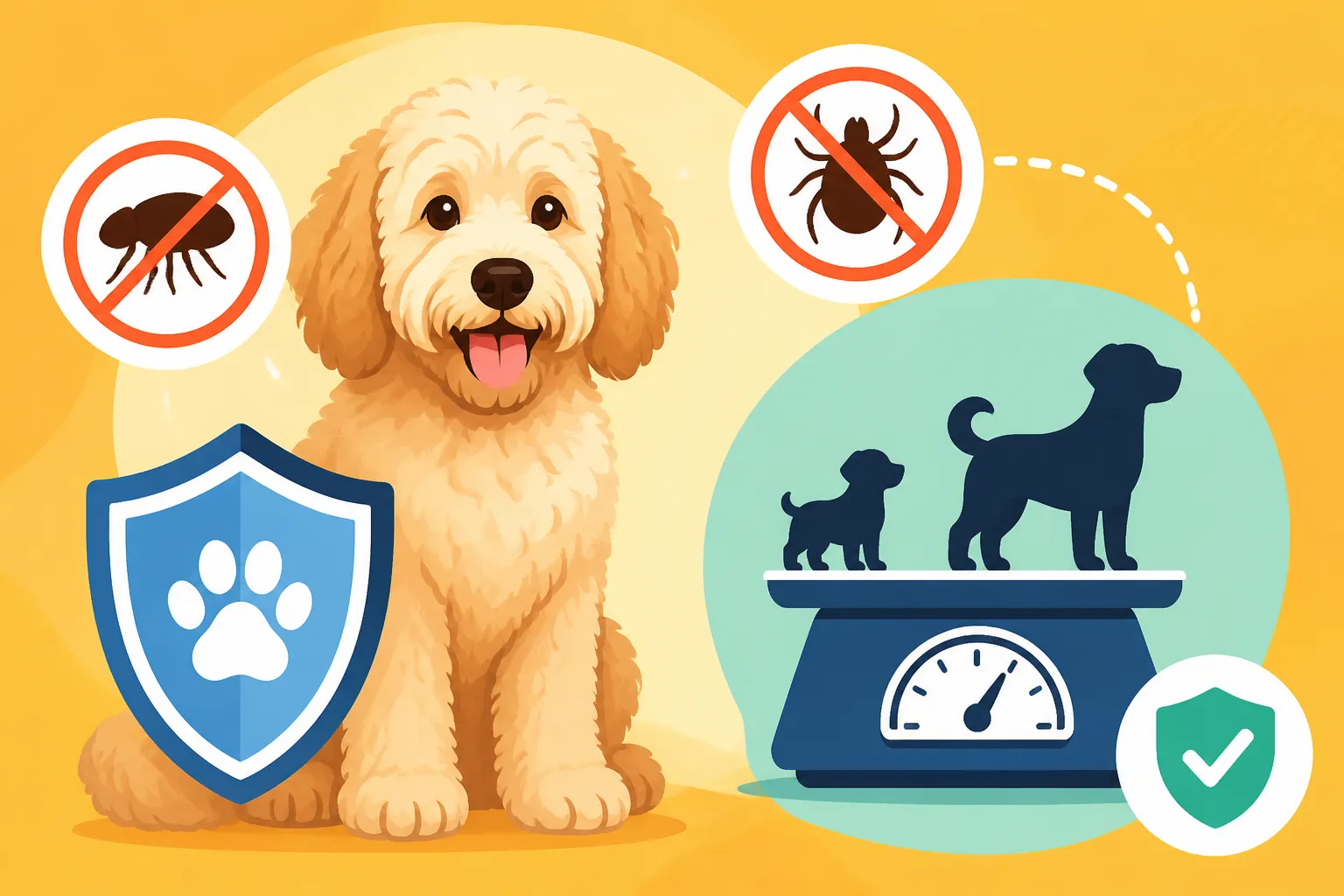
Goldendoodle Flea and Tick Prevention by Weight
Finding a tiny black speck or a creepy crawly navigating your Goldendoodle's beautiful, fluffy coat can send shivers down any dog parent's spine. It's not just about the "ick" factor; these unwelcome guests pose serious health risks to our beloved companions. This guide will walk you through everything you need to know about protecting your Goldendoodle from fleas and ticks, with a special focus on the crucial role your dog's weight plays in effective prevention.
The Unique Challenges of Flea and Tick Prevention for Goldendoodles
Let's be real, Goldendoodles are practically walking, wagging magnets for everything outdoors. Their luxurious coats, which we adore for their low-shedding qualities and teddy bear appeal, are also prime real estate for fleas and ticks. It's a double-edged sword, making prevention not just important, but absolutely essential for these wonderful dogs.
The Goldendoodle Coat: A Perfect Hiding Place
If you've ever tried to find a tiny burr or a stray leaf in your Goldendoodle's coat after a romp in the park, you already know the struggle. Now imagine trying to spot a flea, no bigger than a pinhead, or a tick, which can be even smaller when unfed, burrowed deep within those dense curls or waves. It's like finding a needle in a haystack, except the haystack is constantly moving and covered in loveable fluff.
Whether your Goldendoodle has a wavy, fleece, or curly wool coat, the sheer volume and texture provide ample camouflage for parasites. These unwelcome visitors can hide easily against the skin, making visual inspections incredibly challenging. They can breed and multiply, or attach and feed, often going unnoticed until the infestation is significant, or your dog starts showing obvious signs of discomfort. This is why a proactive approach is so vital; waiting until you see them usually means they've been there for a while. You can learn more about the different coat types in our article on The Three Goldendoodle Coat Types and How to Tell Them.
Beyond simply hiding, the coat can also trap moisture, creating a slightly warmer, more humid microclimate close to the skin. While this isn't the primary reason for infestation, it certainly doesn't deter these parasites, which thrive in environments where they can stay undisturbed. Owners often discover fleas only when a routine grooming session unearths them, or when their Goldendoodle develops severe itching.
Health Risks Associated with Parasites
Fleas and ticks aren't just annoying; they are carriers of a host of serious diseases that can severely impact your Goldendoodle's health, and in some cases, even pose a risk to humans. It's not worth taking a chance with these tiny creatures, especially when effective prevention is readily available.
Fleas, for instance, are the most common cause of flea allergy dermatitis (FAD) in dogs. Just one bite can trigger an intense allergic reaction in sensitive Goldendoodles, leading to relentless itching, scratching, skin inflammation, and potentially secondary skin infections. Beyond allergies, fleas can transmit tapeworms if ingested, and in severe infestations, especially in puppies, they can cause anemia due to blood loss. Imagine your Goldendoodle, usually so full of energy, becoming lethargic and pale because of these minuscule bloodsuckers.
Ticks are perhaps even more concerning due to the wide array of diseases they can transmit, including Lyme disease, Anaplasmosis, Ehrlichiosis, Rocky Mountain Spotted Fever, and Babesiosis, to name a few. These diseases can lead to debilitating symptoms like lameness, joint pain, fever, lethargy, and in severe cases, organ damage or even death. A tick can transmit disease-causing organisms within hours of attaching, underscoring the urgency of consistent prevention. Even if you're diligent about checking your dog, a tick can easily go unnoticed, particularly in dense Goldendoodle fur, and cause significant harm.
Common Types of Flea and Tick Prevention for Goldendoodles
Thankfully, modern veterinary medicine offers a variety of highly effective options to keep your Goldendoodle safe from fleas and ticks. These products generally fall into a few main categories, each with its own benefits and considerations. The key is finding the right fit for your dog's lifestyle, your regional parasite risks, and, crucially, their precise weight.
Oral Medications
Oral medications, typically given as flavored chews or pills, are incredibly popular for a good reason: they're convenient, mess-free, and provide systemic protection. Once ingested, the active ingredient circulates through your Goldendoodle's bloodstream. When a flea or tick bites your dog, it ingests the medication and is killed.
The biggest advantage of oral medications is that they aren't affected by bathing, swimming, or getting caught in the rain, which is a huge plus for active Goldendoodles who love to splash around. You don't have to worry about the product rubbing off on furniture or children after application, which offers peace of mind for many families. These medications are typically given once a month or every three months, depending on the specific product, making compliance easier for busy owners.
However, it’s important to remember that for these medications to work, the parasite must bite your dog. While they are highly effective at killing fleas and ticks once they feed, they don't repel them. This means you might still occasionally find a live tick crawling on your dog before it has a chance to bite and ingest the medication. Always discuss with your vet which oral medication is best, as prescription-strength options are often recommended for their broad-spectrum coverage and efficacy.
Topical Treatments
Topical "spot-on" treatments are liquid medications applied directly to a small area of your Goldendoodle's skin, usually between the shoulder blades. The active ingredients then spread over the skin's surface or are absorbed into the oil glands, providing protection against fleas and ticks.
One benefit of topical treatments is that they can often repel parasites before they bite, or kill them upon contact with the treated skin, without requiring the parasite to ingest the dog's blood. This can be appealing if you want to minimize the chance of parasites even getting a foothold. These treatments are typically applied monthly and are generally easy to use.
The downsides, however, can include a temporary greasy residue on the fur, and the need to keep your dog dry for a certain period after application to ensure the product absorbs properly. This can be tricky with a Goldendoodle who loves to roll in the dew or jump in puddles. There's also a small risk of the product rubbing off onto bedding or people, especially immediately after application. Always follow the instructions carefully regarding bathing and contact with your dog.
Other Prevention Methods
While oral and topical medications form the backbone of most flea and tick prevention plans, there are other methods that can complement these primary defenses or serve as alternative options in specific situations. These might include specialized shampoos, sprays, and even environmental control measures.
Flea and tick shampoos can be useful for killing existing parasites on contact, which is great for giving your Goldendoodle immediate relief if you've discovered an infestation. However, they generally don't offer long-lasting residual protection, meaning their effects are temporary. They are often best used as an initial step to clear current parasites before initiating a more sustained prevention strategy. Regularly bathing your Goldendoodle can also help dislodge loose hair and anything clinging to the coat, though it won't prevent future infestations alone.
Flea and tick sprays can offer quick, temporary protection or act as a knock-down treatment for parasites on contact. Some sprays are designed for direct application to your dog, while others are for treating bedding or areas of your home. However, sprays require consistent reapplication and may not provide the comprehensive, long-lasting protection of oral or topical medications. For environmental control, consider treating your yard, especially if your Goldendoodle spends a lot of time outdoors in areas known for heavy tick populations. Products like those available from Chewy or other pet supply retailers can help create a barrier around your home.
Dosing by Weight: Why It's Crucial for Goldendoodles
This is perhaps the single most critical aspect of flea and tick prevention: giving your Goldendoodle the correct dose of medication. Whether it's an oral chew or a topical spot-on, these products are formulated with precise amounts of active ingredients designed to be safe and effective for dogs within specific weight ranges. Guessing or estimating can lead to serious problems.
The Importance of Accurate Weight
You might think you know your Goldendoodle's weight, especially if they're a fully grown adult, but even a few pounds off can make a difference in dosing. For Goldendoodle puppies, who grow incredibly rapidly, their weight can change significantly in just a few weeks or months. This means regular weight checks are non-negotiable.
For example, a standard Goldendoodle puppy might easily move from a "medium dog" weight category to a "large dog" category in the time between two monthly doses. Using a medication designed for a 20-40 lb dog on a 50 lb growing pup could mean they are underdosed, leaving them vulnerable to parasites. Conversely, if you have a smaller Goldendoodle, perhaps a mini or toy size, and they've lost a few pounds, continuing with a higher dose could put them at risk of adverse reactions. It’s always best to have your vet weigh your Goldendoodle at every visit, or invest in a reliable pet scale at home for intermediate checks. This accuracy ensures that the medication prescribed is perfectly suited to their current size, providing optimal protection without unnecessary risks. Understanding your dog's growth curve, especially for large breeds, is critical. We touch on growth considerations in Goldendoodle Growth Plates by Size Category.
Overdosing and Underdosing Risks
Giving your Goldendoodle the wrong dosage of flea and tick medication can have serious consequences, ranging from ineffective prevention to dangerous toxicity. It's a fine line, and getting it right is paramount for your dog's safety and well-being.
Underdosing your Goldendoodle means you're not giving enough active ingredient to effectively kill or repel parasites. This leaves your dog unprotected and vulnerable to infestations and the diseases they carry. Imagine thinking your Goldendoodle is safe, only to discover a tick-borne illness later because the medication wasn't strong enough for their size. It's a frustrating and potentially heartbreaking situation that can easily be avoided with proper dosing. The parasites continue to thrive, posing risks not just to your dog but also potentially to your home environment.
On the other hand, overdosing is equally, if not more, dangerous. Giving a dose intended for a much larger dog, or accidentally administering two doses too closely together, can lead to a toxic reaction. Symptoms of an overdose can vary depending on the specific medication and active ingredients, but may include vomiting, diarrhea, lethargy, tremors, seizures, or even neurological damage. These can be frightening and require immediate veterinary attention. Your Goldendoodle's system is delicate, and while these medications are generally safe when used correctly, exceeding the recommended dosage stresses their body and can have severe, lasting effects. Always read the label thoroughly and consult your vet if you have any doubts.
Consulting Your Veterinarian
When it comes to flea and tick prevention, your veterinarian is your absolute best resource. They have a deep understanding of the local parasite risks in your area, your Goldendoodle's individual health profile, and the nuances of various prevention products. Trying to navigate the vast array of options on your own can be overwhelming and lead to mistakes.
Your vet can recommend prescription-strength products that are often more effective and provide broader coverage than over-the-counter options. They can also take into account any other health conditions your Goldendoodle might have, or medications they are currently taking, to ensure there are no adverse interactions. For instance, if your Goldendoodle has a history of Goldendoodle Allergies and Itchy Skin or a sensitive stomach, your vet can suggest options that are less likely to exacerbate these issues. They will also ensure your Goldendoodle is accurately weighed, confirming the correct dosage for their current size and anticipated growth if they are a puppy.
Furthermore, your veterinarian can advise on a year-round prevention plan, which is crucial even in colder climates where parasite activity may decrease but rarely disappears entirely. They can also explain potential side effects of different medications and what to watch out for. Don't hesitate to ask them about products like those that may be covered by pet insurance providers like Healthy Paws, or how to purchase recommended prevention methods from trusted retailers like Chewy. This ongoing dialogue ensures your Goldendoodle receives the safest and most effective protection throughout their life.
Integrating Prevention into Your Goldendoodle's Routine
Effective flea and tick prevention isn't just about administering a dose of medication; it's a holistic approach that involves year-round commitment, regular environmental checks, and proactive grooming practices. For Goldendoodle owners, this integration into their daily and weekly routines is key to keeping their furry friends safe and healthy.
Year-Round Protection
One of the biggest misconceptions about flea and tick prevention is that it's only necessary during warmer months. This couldn't be further from the truth, especially in many regions where temperatures fluctuate, or parasites have adapted to survive colder periods. Fleas can thrive indoors all year long, reproducing in the warmth of your home, and ticks can be active any time the temperature is above freezing, even in winter.
Skipping doses during seemingly "off-season" months creates gaps in protection, leaving your Goldendoodle vulnerable. Just one missed dose can be enough for an infestation to take hold or for a disease-carrying tick to attach. Maintaining a consistent, year-round schedule, as recommended by your vet, is the most reliable way to ensure continuous protection. This consistency also helps prevent environmental infestations, reducing the overall parasite load in and around your home. Remember, prevention is always easier, cheaper, and safer than treatment.
For many Goldendoodle owners, especially those with pups, establishing this routine early on is a smart move. When you bring home a Goldendoodle puppy, alongside figuring out What a Goldendoodle Puppy Costs and Why and basic training, understanding and implementing year-round parasite prevention should be high on your priority list. It sets a precedent for their lifelong health care.
Environmental Control and Regular Checks
Beyond medication, managing your Goldendoodle's environment and conducting regular physical checks are vital components of a comprehensive prevention strategy. This multi-layered approach helps catch any stray parasites that might slip past chemical defenses and reduces their presence in your immediate surroundings.
Start with your home and yard. Regularly vacuum carpets, rugs, and upholstery where fleas might lay eggs or hide, and promptly dispose of the vacuum bag. Wash your Goldendoodle's bedding frequently in hot water. If your Goldendoodle loves to sleep on your bed or the couch, clean those areas often too. For your yard, keep grass mowed short, trim bushes and trees, and clear away leaf litter, especially around fences or shaded areas where ticks like to congregate. Creating a barrier with wood chips or gravel between your lawn and wooded areas can also deter ticks.
Equally important are daily or frequent physical checks of your Goldendoodle, particularly after walks in grassy or wooded areas. This is where their unique coat presents a challenge, as mentioned earlier. Make it a routine to run your hands over their entire body, feeling for any bumps or abnormalities. Pay close attention to warm, dark, or hidden areas: behind and inside the ears (Goldendoodle ears, with all that hair, are prime spots; read more about Cleaning a Goldendoodle Ear Before It Gets Infected), in the armpits, between the toes, around the tail, and under the collar. If you find a tick, remove it promptly and correctly using fine-tipped tweezers, grasping it as close to the skin as possible and pulling straight up with steady pressure. Regular brushing, detailed in articles like Brushing a Goldendoodle Often Enough to Stop Matting and Daily Brushing Through a Goldendoodle Coat Change, not only keeps their coat healthy but also serves as an excellent opportunity for these essential parasite checks.
What to Do If You Find Parasites
Even with the most diligent prevention plan, finding a flea or a tick on your Goldendoodle can occasionally happen. No prevention method is 100% foolproof, and parasites are notoriously resilient. The key is to act quickly and systematically.
If you find fleas, immediate action is needed to prevent an infestation from escalating. First, bathe your Goldendoodle with a flea-killing shampoo, if appropriate for their skin and coat, or a regular shampoo to wash off as many as possible. Then, ensure they receive their prescribed flea prevention medication promptly if it's due or administer an appropriate spot-on treatment. Immediately deep clean your home: vacuum thoroughly, wash all bedding (yours and your dog's), and consider using a household flea spray or calling a professional exterminator if the problem is widespread. Fleas reproduce rapidly, so addressing the environment is just as crucial as treating your dog. For Goldendoodles prone to skin irritation, finding fleas might even lead to hot spots, discussed in Goldendoodle Hot Spots Under a Thick Coat, requiring extra care.
If you find a tick, the most important step is safe and swift removal. Use fine-tipped tweezers to grasp the tick as close to your Goldendoodle's skin as possible. Pull upward with steady, even pressure; avoid twisting or jerking, which can cause the mouthparts to break off and remain in the skin. After removal, clean the bite area with rubbing alcohol or soap and water. Save the tick in a sealed jar with a damp paper towel or rubbing alcohol, noting the date, in case your Goldendoodle develops symptoms of a tick-borne illness later. Contact your vet to discuss the finding, especially if the tick appeared engorged or if you live in a high-risk area for tick-borne diseases. Your vet may recommend testing the tick or monitoring your Goldendoodle for symptoms. Staying on top of preventive care, including the DNA panel a breeder should run for genetic health, can help catch some predisposition issues early, but it doesn't replace vigilance against external parasites.
Table of Common Flea and Tick Prevention Methods
To help you visualize the different approaches, here's a general overview of common flea and tick prevention methods. Always remember that specific products within these categories will vary in their ingredients, dosage, and efficacy, so professional veterinary advice is essential.
| Method | Description | Pros | Cons | Key Considerations |
|---|---|---|---|---|
| Oral Medications | Flavored chews or pills ingested by the dog. Active ingredient circulates in bloodstream. | Not affected by water; no residue on coat; convenient monthly/quarterly dosing. | Parasites must bite to be killed; prescription often required. | Weight-specific dosing is critical; consult vet for prescription. |
| Topical Spot-Ons | Liquid applied to a small area of skin (e.g., between shoulder blades). | Can repel/kill on contact; easy application; no ingestion by dog. | Can leave residue; dog must stay dry after application; potential for rub-off. | Avoid contact with product; check for skin irritation; monthly application. |
| Flea & Tick Collars | Collar infused with active ingredients that spread over the coat or repel parasites. | Long-lasting (several months); can repel some parasites. | May not cover entire body effectively; potential for skin irritation/ingestion. | Ensure proper fit; check skin under collar; effectiveness varies by brand. |
| Shampoos | Used during bathing to kill fleas/ticks on contact. | Quick knock-down of existing parasites. | No residual protection; temporary effect; can be drying to skin. | Best used for immediate relief of existing infestations, not primary prevention. |
| Sprays | Applied directly to the coat for immediate kill or short-term repulsion. | Quick action; can be used for environmental treatment. | Requires frequent reapplication; uneven coverage possible; odor. | Follow label directions carefully; primarily for supplementary use. |
| Environmental | Yard treatments, regular vacuuming, washing bedding. | Reduces parasite load in home/yard; non-chemical options for some steps. | Doesn't directly protect dog; constant maintenance required. | Best used in conjunction with direct dog prevention; consider professional help. |
Disclaimer
This article is for general informational purposes only and does not constitute professional advice. Laws, prices and regulations vary by location and change over time. Consult a qualified professional for guidance on your specific situation.