Skin Biopsies for a Goldendoodle With Coat Loss
Watching your beloved Goldendoodle start to lose that beautiful, fluffy coat can be incredibly unsettling. It’s not just about their appearance; it often signals an underlying health issue that leaves you feeling worried and desperate for answers. This guide is here to walk you through what a skin biopsy is, why it might be recommended for your Goldendoodle’s coat loss, and what to expect every step of the way, helping you navigate this diagnostic journey with confidence.
Why Your Goldendoodle Might Be Losing Its Coat
When you first notice patches of thin fur or actual bald spots on your Goldendoodle, it’s natural to jump to conclusions or feel overwhelmed by the possibilities. Goldendoodles, with their diverse genetic background from both Golden Retrievers and Poodles, can be prone to a variety of skin and coat issues. Before your vet even suggests a biopsy, they’ll usually explore a range of more common culprits that can cause that frustrating hair loss. Understanding these helps you see why a biopsy often comes later in the diagnostic process.
Common Culprits: Allergies and Parasites
More often than not, a Goldendoodle's itching and subsequent coat loss can be traced back to allergies or pesky parasites. We've all seen dogs relentlessly scratching or chewing at themselves, leaving behind red, irritated skin and broken fur. For many Goldendoodles, allergies are a significant problem, whether they're reacting to something in their food, pollen in the air, or even ingredients in their shampoo. These reactions can cause intense itching, leading to self-trauma that thins the coat or creates raw patches. You might notice your Goldendoodle constantly licking their paws or rubbing their face, which are tell-tale signs of discomfort.
Parasites, though less romantic to think about, are also huge offenders. Fleas, mites, and even certain fungal infections like ringworm can cause severe itching and subsequent hair loss. A thorough physical exam and some simple tests, like a skin scraping or fungal culture, are typically the first line of defense to rule these out. It’s always best to start with the most common, easily treatable issues before diving into more complex diagnostics. It's a journey, and your vet will often look at these first to avoid unnecessary procedures. For more on this, you might find our article on Goldendoodle Allergies and Itchy Skin helpful.
Hormonal Imbalances and Systemic Issues
Sometimes, the root cause of coat loss isn't on the surface at all, but deep within your Goldendoodle’s body. Hormonal imbalances, such as hypothyroidism (underactive thyroid) or Cushing’s disease (overproduction of cortisol), are notorious for causing symmetrical hair loss, often without any itching. With hypothyroidism, you might notice your Goldendoodle’s coat thinning, feeling dry or brittle, and they might also gain weight, become lethargic, or seem less tolerant to cold.
Other systemic diseases, while less common, can also manifest with skin and coat changes. Autoimmune diseases, for example, can sometimes attack the hair follicles directly, leading to significant hair loss. These internal issues often require blood tests to diagnose, which your vet will likely perform before considering a skin biopsy. If you're concerned about your Goldendoodle's energy levels or sudden weight changes alongside coat loss, discussing thyroid health with your vet is a critical step. Our guide on Thyroid Disease and a Goldendoodle Losing Coat delves deeper into these concerns.
Nutritional Deficiencies and Stress
Believe it or not, your Goldendoodle's diet and stress levels can also play a role in the health and density of their coat. A diet lacking essential fatty acids, vitamins, or minerals can lead to a dull, dry, and thinning coat. While severe nutritional deficiencies are less common with commercially prepared, high-quality dog foods, they can occur, especially if your Goldendoodle has an underlying digestive issue preventing nutrient absorption or if they're on a very restrictive or unbalanced homemade diet.
Stress, too, can impact a dog's overall health, including their skin and coat. Just like humans, dogs can react to prolonged stress by shedding excessively or developing nervous habits like excessive licking, which can lead to localized hair loss. Major life changes, separation anxiety, or even chronic pain can contribute to a stressed Goldendoodle. Your vet will consider your Goldendoodle's overall lifestyle and recent changes when evaluating the cause of their coat loss.
Understanding the Skin Biopsy Procedure for Goldendoodles
Once the more straightforward causes like parasites, common allergies, and obvious hormonal issues have been explored, and your Goldendoodle is still experiencing persistent or unusual coat loss, your vet might suggest a skin biopsy. This can feel like a big step, but it’s often the most direct way to get a definitive diagnosis, especially for rarer or more complex skin conditions. It allows a veterinary pathologist to examine tiny pieces of skin tissue under a microscope, revealing cellular changes that other tests simply can't.
When a Biopsy Becomes Necessary
A skin biopsy isn't usually the first diagnostic test your vet reaches for; it's typically reserved for situations where initial investigations haven't provided clear answers. Think of it as a crucial step when you've exhausted other avenues, such as trying different flea prevention methods, conducting food elimination trials for potential allergies, or running blood work to check for systemic illnesses like Goldendoodle Hypothyroidism and Weight Gain. If those tests come back normal, or if the skin lesions present atypically (e.g., non-itchy but extensive hair loss, unusual skin thickening, or sores that won't heal), a biopsy becomes an essential tool. It’s about getting to the bottom of things when the superficial signs aren't telling the whole story. For instance, some specific conditions like Sebaceous Adenitis and a Goldendoodle Losing Coat can only be definitively diagnosed through a biopsy.
The Different Types of Biopsies
There isn't just one way to perform a skin biopsy; the type chosen often depends on the nature and location of your Goldendoodle's skin issue. The three main types are punch biopsies, incisional biopsies, and excisional biopsies.
Types of Skin Biopsies for Goldendoodles
| Biopsy Type | Description | Advantages | Disadvantages |
|---|---|---|---|
| Punch Biopsy | Uses a circular punch tool to remove small core samples (typically 4-8 mm in diameter) from the skin. | Minimally invasive, requires local or light sedation, quick healing, good for multiple sites. | Small sample size, may not capture deeper lesions or represent entire affected area. |
| Incisional Biopsy | Removes a wedge or strip of affected tissue, leaving much of the lesion intact. | Larger sample, better for deeper lesions or those with varied appearances. | Requires full anesthesia and sutures, slightly longer recovery, more invasive than punch. |
| Excisional Biopsy | Removes the entire lesion along with a margin of healthy tissue. Often therapeutic as well as diagnostic. | Provides the most comprehensive sample, can be curative if the lesion is benign. | Most invasive, requires full anesthesia and sutures, longer recovery time. |
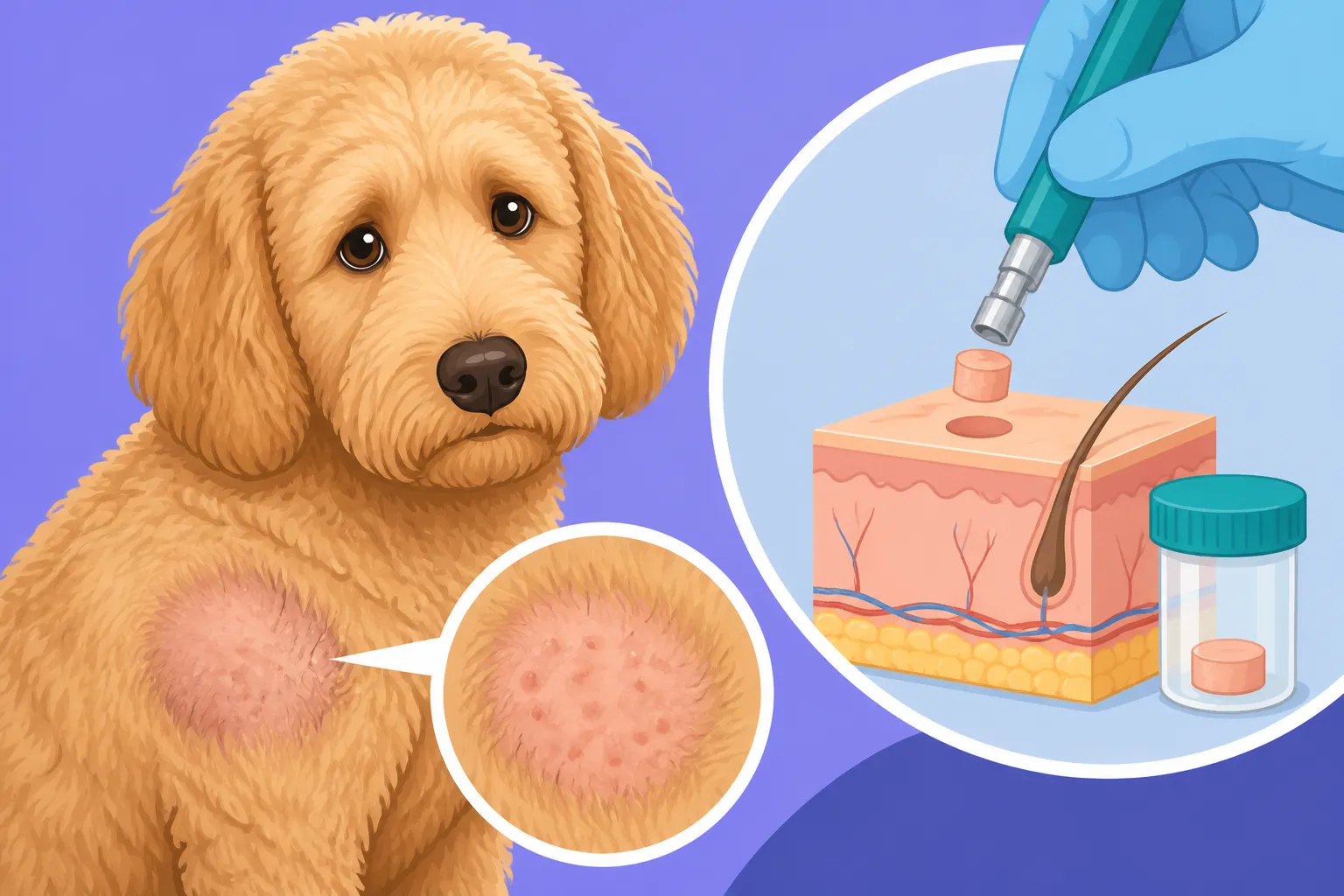
A punch biopsy is the most common. Your vet will use a specialized tool, much like a tiny cookie cutter, to remove small, circular pieces of skin. This can sometimes be done with just local anesthesia and sedation, depending on your Goldendoodle's temperament and the location of the biopsy site, but often general anesthesia is safer to ensure stillness and comfort. For larger or deeper lesions, an incisional biopsy might be performed, where a wedge of tissue is carefully cut out. If there's a suspicious lump or a very defined area of disease, an excisional biopsy might be chosen, which removes the entire affected area. Your vet will choose the method that offers the best chance of getting a diagnostic sample with the least impact on your Goldendoodle.
What to Expect During the Procedure
Leading up to the biopsy, your vet will likely ask you to withhold food and water for a certain period, usually 8-12 hours, especially if general anesthesia is planned. This helps prevent aspiration if your Goldendoodle vomits while under anesthesia. Once at the clinic, your Goldendoodle will undergo a pre-anesthetic exam, and possibly blood work, to ensure they are healthy enough for sedation.
The procedure itself typically involves shaving and cleaning the biopsy site, then carefully collecting the tissue samples. Depending on the type of biopsy, stitches might be needed to close the small wounds. The samples are then placed in a special preservative solution and sent to a veterinary pathologist, a specialist who will examine them under a microscope. While your Goldendoodle is recovering from anesthesia, they will be closely monitored by the veterinary team. You'll usually be able to take them home later the same day, though they might be a bit groggy from the medication.
Preparing Your Goldendoodle for a Skin Biopsy and Aftercare
Having your Goldendoodle undergo any procedure, even a minor one, can be stressful for both of you. Knowing what to do beforehand and how to care for them afterward can make a huge difference in their comfort and recovery. It’s all about creating a calm, supportive environment and following your vet’s instructions to the letter.
Pre-Biopsy Preparations
The key to a smooth biopsy day starts at home. Your vet will provide specific instructions, but generally, you'll need to fast your Goldendoodle from food for at least 8-12 hours before the scheduled appointment. Water may be permitted up to a few hours before, but always double-check. It’s crucial to prevent aspiration during anesthesia, so sticking to these guidelines is really important. If your Goldendoodle is on any regular medications, discuss these with your vet well in advance. Some medications, especially blood thinners or certain supplements, might need to be paused.
Make sure your Goldendoodle gets a good potty break right before leaving for the clinic. Arrive a little early to fill out any necessary paperwork and allow your Goldendoodle to acclimate to the environment. This is also a great time to ask any last-minute questions you might have about the procedure, anesthesia, or recovery. Don't be shy – your vet and their team are there to reassure you.
Post-Procedure Care at Home
Bringing your Goldendoodle home after a biopsy requires careful attention. They might still be a bit disoriented or lethargic from the anesthesia, so a quiet, comfortable space is ideal. The biopsy site will likely have stitches or surgical glue, and it’s paramount to prevent your Goldendoodle from licking, chewing, or scratching at it. This is where the dreaded "cone of shame" (an Elizabethan collar) or a recovery suit becomes a non-negotiable accessory. It might seem like punishment, but it’s truly the best way to prevent infection and allow the wound to heal properly. Preventing infection is crucial, especially for Goldendoodles who might already have compromised skin due to their underlying condition.
You’ll need to monitor the biopsy site daily for any signs of swelling, redness, discharge, or foul odor. Your vet will give you instructions on how to clean the area, if necessary, and might prescribe pain medication or antibiotics. Limit strenuous activity, jumping, and rough play for about 7-10 days, or as advised by your vet, to ensure the stitches hold. During this time, gentle walks are usually fine, but keep an eye on their energy levels. Remember that goldendoodle coats can hide things, so being vigilant is key. For more on general care, our article on Goldendoodle Skin and Coat Disease can offer additional insights.
Interpreting the Results and Next Steps
The waiting period for biopsy results can feel agonizing, but it's important to remember that sending samples to a specialized veterinary pathologist takes time. Typically, you can expect results within 5-10 business days. Once the report comes back, your vet will contact you to discuss the findings.
The pathologist's report will provide a microscopic diagnosis, detailing the type of cells present, any inflammation, and specific characteristics that point to a particular condition. This definitive diagnosis is invaluable. It might confirm something suspected, like an autoimmune disorder or a specific type of infection, or it could reveal something entirely unexpected. For instance, it might identify a specific type of skin cancer that requires surgical removal, or a rare immune-mediated disease that needs targeted medication.
With a clear diagnosis in hand, your vet can then formulate a precise treatment plan tailored to your Goldendoodle’s specific condition. This could involve long-term medication, dietary changes, specialized grooming routines, or further specialist consultations. The biopsy is not just about identifying the problem; it’s about paving the way for effective treatment and improving your Goldendoodle’s quality of life.
Cost Considerations and Insurance for Goldendoodle Biopsies
Understanding the potential costs involved in a skin biopsy and subsequent treatment is a practical concern for any Goldendoodle owner. While the procedure itself is relatively routine, the expenses can add up, especially if it’s part of a broader diagnostic workup or leads to ongoing management. Being prepared for the financial aspect can help reduce stress during an already worrying time.
The Financial Investment
The cost of a Goldendoodle skin biopsy can vary quite a bit depending on where you live, the veterinary clinic you choose, and the complexity of the procedure (e.g., how many samples are taken, type of anesthesia). Generally, you can expect the cost to include the initial consultation, pre-anesthetic blood work, the anesthesia itself, the biopsy procedure fee, the pathology lab fees for analyzing the samples, and any post-operative medications like pain relief or antibiotics.
Roughly, you might be looking at a range from a few hundred dollars for a simple punch biopsy with sedation, up to over a thousand dollars if general anesthesia is used, multiple samples are taken, and follow-up care is factored in. It's always best to ask your vet for a detailed estimate upfront so there are no surprises. Remember, this investment is often crucial for getting a definitive answer that can save you money and stress on ineffective treatments in the long run.
How Pet Insurance Can Help
This is where pet insurance can really come in handy. Many pet insurance plans, including those from providers like Healthy Paws, will cover the costs of diagnostic procedures like skin biopsies, especially when they are medically necessary to diagnose an illness causing coat loss. However, it’s crucial to review your specific policy details, as coverage can vary. Some plans might have waiting periods for certain conditions or specific exclusions. For example, pre-existing conditions are typically not covered.
If you enrolled your Goldendoodle in pet insurance when they were younger and before any signs of coat loss appeared, you’re in a much better position. Companies like Healthy Paws offer various plans, and understanding your deductible and reimbursement percentage will help you anticipate your out-of-pocket expenses. Even if you're not fully covered, having a portion of the biopsy and subsequent treatment costs reimbursed can significantly ease the financial burden. Our article on Goldendoodle Pet Insurance for a Dog With No Breed Papers offers a deep dive into navigating insurance options for your crossbreed.
Long-Term Management and Outlook
A skin biopsy, while a significant step, is just one part of your Goldendoodle’s health journey. Once a diagnosis is made, the focus shifts to long-term management. For conditions like severe allergies, this might mean ongoing diet management, environmental controls, or even immunotherapy. For hormonal issues, it could involve lifelong medication and regular monitoring. If the biopsy reveals a form of The Skin Disease a Goldendoodle Gets From the Poodle Line like sebaceous adenitis, management will focus on specialized bathing and skin treatments.
The good news is that with an accurate diagnosis, many causes of Goldendoodle coat loss can be effectively managed, leading to a significant improvement in your dog's comfort and coat health. It might require patience, consistency, and a close working relationship with your veterinarian, but seeing your Goldendoodle happy, healthy, and sporting their beautiful coat once again is truly priceless.
Disclaimer
The information provided in this article is for general informational purposes only and is not a substitute for professional veterinary advice. Always consult with a qualified veterinarian regarding any health concerns or before making any decisions about your Goldendoodle's medical care.