Why a Comb Finds Goldendoodle Mats a Brush Misses
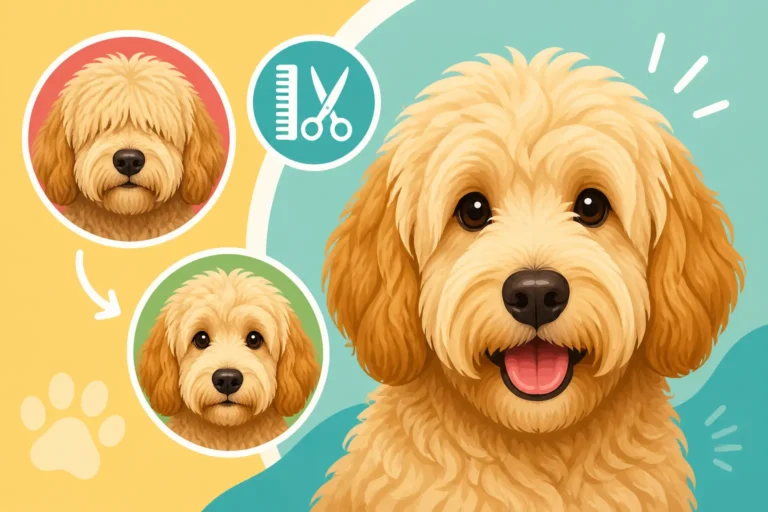
Oh, the Goldendoodle coat! It's truly a marvel, isn't it? So soft, so fluffy, so seemingly innocent. You spend what feels like ages brushing your beloved Goldie, feel confident you've gotten every stray hair, only to discover a tangled, matted nightmare tucked away behind an ear or under an armpit a day later. It's incredibly frustrating, and honestly, it makes you wonder if you're doing something wrong. But here's the secret: it's not always your brushing technique that's the problem; it's often the tool. This guide is going to dive deep into why your trusty slicker brush, while essential, simply cannot replace the mat-detecting power of a good grooming comb, and how incorporating both will save you a lot of heartache and your Goldendoodle a lot of discomfort.
The Deceptive Nature of the Goldendoodle Coat
Goldendoodles are famous for their beautiful, often low-shedding coats. But what makes them so desirable also makes them incredibly prone to matting, and to matting that can sneak up on you faster than a treat disappears from the counter. It's a constant battle, and the very structure of their hair conspires against easy grooming.
The Illusion of a "Brushed" Goldendoodle
Your Goldendoodle can look absolutely pristine, freshly fluffed and seemingly tangle-free after a good session with a slicker brush. You might run your hands through their fur and feel nothing but soft, flowing hair. This is the cruel trick of the Goldendoodle coat. The outer layers, especially on wavy or straight coats, are easily smoothed and detangled by a slicker brush, giving the appearance of a perfectly groomed dog. However, beneath this lovely, brushed facade, closer to the skin, loose hairs can be silently weaving together with healthy hairs, forming tight, insidious knots.
Think of it like trying to sweep a shag rug with a broom. The broom might get the surface dust, but deep down, all sorts of crumbs and debris are still hiding. The longer, finer, and more plentiful the hair, the more layers there are for mats to form in, unseen and unfelt by a surface brush. This is why you can diligently brush your Goldendoodle every day and still find a rock-hard mat forming, leaving you wondering if your dog secretly wrestled a hedgehog while you weren't looking. Understanding The Three Goldendoodle Coat Types and How to Tell Them can really help you anticipate how much effort you'll need to put into brushing.
Where Mats Love to Hide
Mats aren't just random occurrences; they have favorite spots. These are areas where friction is high, moisture can get trapped, or where the coat is particularly dense and easily overlooked. If you're not specifically targeting these zones, you're almost guaranteed to find trouble brewing.
Common culprits include:
- Behind the ears: This is probably the number one hotspot. Every time your Goldendoodle shakes its head, those delicate hairs rub and tangle. Plus, it's an area we often avoid brushing too vigorously because it's sensitive. Behind the Ears and the First Goldendoodle Mats are a common headache for Goldendoodle owners.
- Armpits and groin: These are high-friction zones where legs rub against the body throughout the day. Moisture from sweat can also contribute to matting here.
- Under the collar or harness: Any area where accessories rub against the coat is a prime matting spot. A collar can gather loose hair and compress it into a mat, especially if it's left on all the time.
- Tail base: Often overlooked, the hair around the base of the tail can get quite thick and tangle, especially with enthusiastic tail wags.
- Between the paw pads: Hair grows continuously here, and if not trimmed, it collects debris, holds moisture, and forms dense mats that can be painful, affecting your dog's gait.
- Feathers on legs and belly: These longer, often finer hairs can knot easily, especially if they drag on the ground or get wet frequently.
These hidden zones are precisely where a slicker brush often fails to penetrate, allowing mats to grow in silence until they become painful, skin-tight clumps that require significant effort (or a professional groomer) to remove.
Why Your Slicker Brush Isn't Enough
The slicker brush is an invaluable tool in your Goldendoodle grooming arsenal, truly. It's excellent for fluffing, removing loose surface hair, and distributing natural oils. But it has limitations, especially when it comes to the unique challenges of a Goldendoodle coat. Relying solely on it is a recipe for hidden mats.
The Surface-Level Reach of a Slicker Brush
Imagine your Goldendoodle's coat as a dense forest. A slicker brush is like a helicopter flying over the treetops, able to smooth down the canopy and pick up a few loose leaves, but unable to reach the undergrowth where the real tangles and debris accumulate. The fine, bent wire pins of a slicker brush are designed to grab and pull out loose hair from the outermost layers of the coat. They're fantastic for creating that fluffy, well-groomed look.
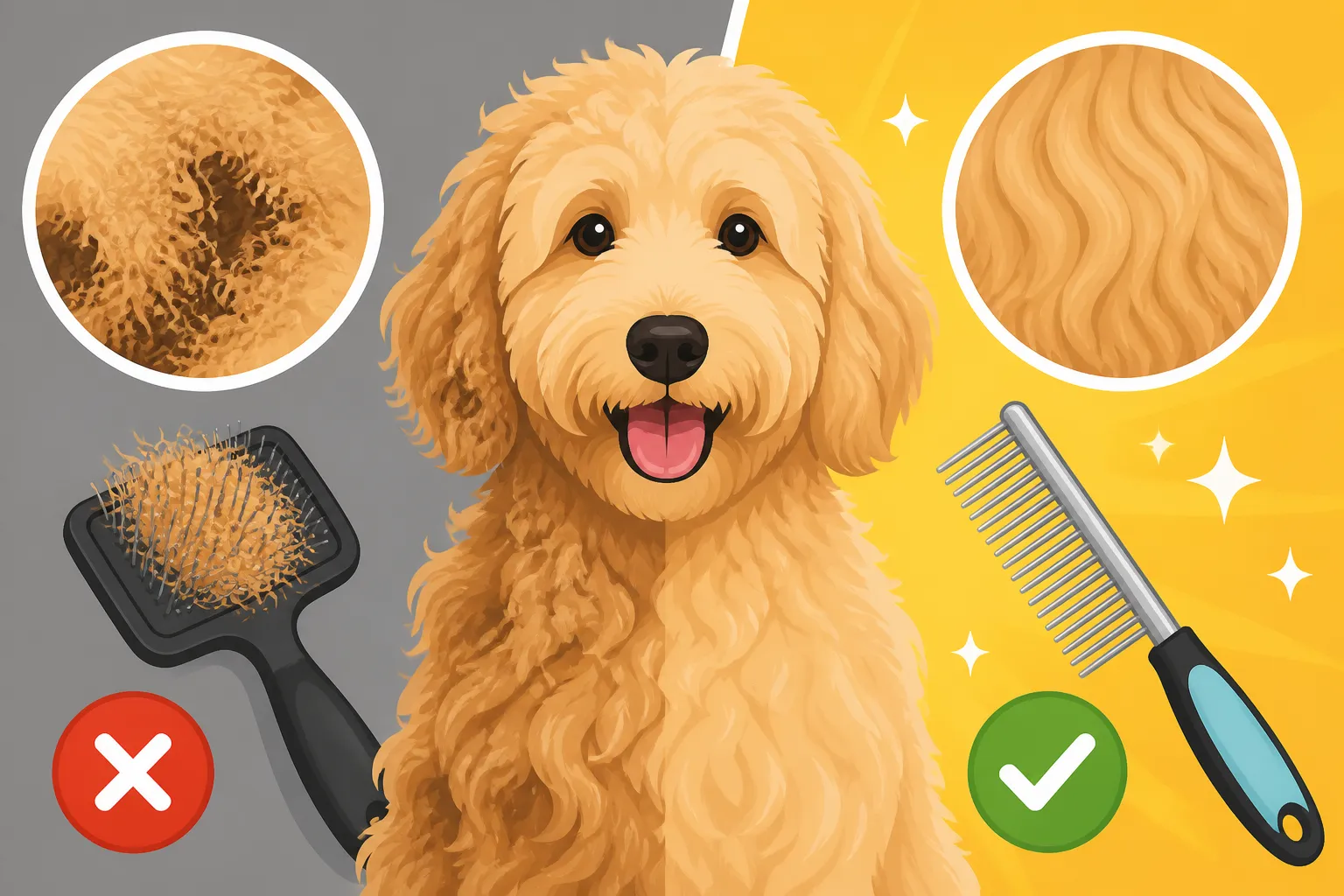
However, on a Goldendoodle's typically dense, often curly or wavy coat, these pins often don't reach all the way down to the skin. Instead, they glide over the top of any minor tangles or loose undercoat that's starting to felt, leaving them untouched. You might feel resistance, but because the brush only hits the surface of the mat, it can feel like you're just hitting a snag, not a full-blown problem. For truly effective grooming, you need to be able to comb from the skin outwards, a technique often called "line brushing," which a slicker brush simply isn't designed to do on its own.
Compressing Mats, Not Removing Them
Here's another tricky aspect of relying too heavily on a slicker brush: it can inadvertently make matting worse. When a slicker brush encounters a small, developing mat or a patch of loose undercoat that's just starting to felt, its pins often can't penetrate it. Instead, they might just slide over it, compressing the loose hairs and tangles into an even tighter, more compact mass. What started as a small knot that could have been gently picked apart can, with repeated surface-level brushing, become a dense, felted mat that's much harder to deal with.
You might feel a slight tug or resistance when your slicker hits one of these nascent mats. Your instinct might be to brush harder, but this can actually push the mat closer to the skin and tighten it. It creates a false sense of security; you're brushing, but you're not actually removing the problem. This is especially true during Why a Goldendoodle Coat Turns at Nine Months, when the puppy coat is shedding out and the adult coat is growing in, leading to a period of intense matting if not handled correctly.
The Unrivaled Power of the Grooming Comb
If the slicker brush is the fluffer, the metal grooming comb is the truth-teller. It's the tool that gets down to the nitty-gritty, confirming your brushing efforts and revealing any hidden adversaries. Without a good comb, you're essentially grooming blind when it comes to detecting mats.
Getting Down to the Skin: The Comb's Secret Weapon
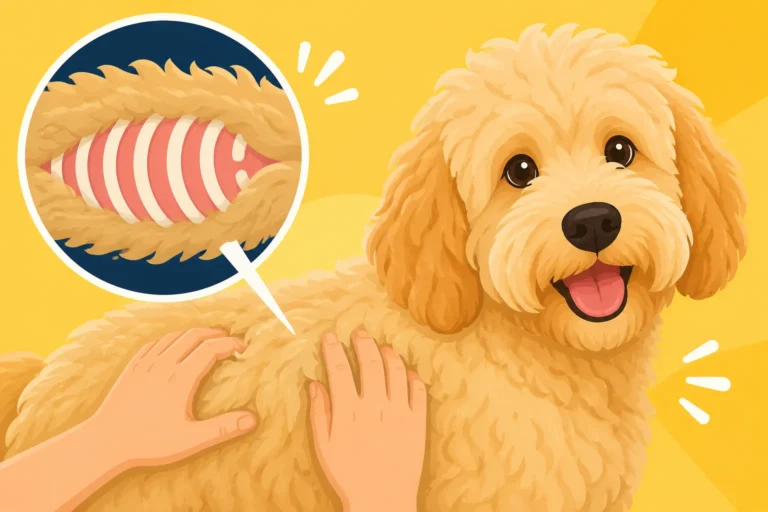
The real magic of a grooming comb lies in its ability to penetrate through the entire depth of the Goldendoodle's coat, right down to the skin. Unlike the slicker brush, which often rides the surface, a sturdy metal comb with well-spaced teeth allows you to part the hair and systematically work through each section.
To do this effectively, you need to employ the technique of "line brushing" or "section grooming." You lift a section of your Goldendoodle's coat, usually starting at the bottom of a leg or flank, and comb only the hair beneath your hand. Then, you let a bit more hair down and comb that section. You're literally combing in lines, working your way up the body. A two-sided comb, often called a "greyhound comb," with wider teeth on one end and finer teeth on the other, is fantastic for this. You use the wider teeth for initial detangling and the finer teeth to ensure there are no small knots left.
When you can easily slide the comb from the skin all the way out through the ends of the hair, you know that section is truly tangle-free. This isn't just about looking good; it's about comfort and health for your dog. Mats pull on the skin, causing pain and irritation, and can hide skin infections. A comb ensures you're addressing the problem at its root, literally. For a deeper dive, check out Line Brushing a Goldendoodle Section by Section.
Identifying and Addressing Hidden Mats
The moment your comb snags, even slightly, it's telling you there's a problem. That little catch is the comb hitting a mat or a developing tangle that your slicker brush sailed right over. This immediate feedback is what makes the comb indispensable. It's like a mat-detection system for your Goldendoodle's coat.
Once you find a snag:
- Don't pull: Never try to rip the comb through a mat. This is painful for your dog and can cause skin irritation or damage their coat.
- Isolate the mat: Gently hold the hair at the base of the mat (closest to the skin) to minimize skin pulling.
- Spray and tease: Apply a good quality detangling spray. Brands like those found on Chewy or Amazon often offer excellent options that help lubricate the hair. Then, use the very tips of your comb (or even your fingers) to gently tease apart the outer edges of the mat, working small sections at a time.
- Brush through: Once the mat starts to loosen, you can go back in with your slicker brush, working from the ends of the hair towards the skin, gradually brushing out the loosened tangles.
- Comb again: Finish by combing through the section with your metal comb to ensure every last strand is free.
This systematic approach, led by the comb's ability to find the mat, is crucial. Without it, those little snags would turn into painful, dense mats that might ultimately require shaving. Knowing how to use Detangler Sprays That Help a Goldendoodle is key to making this process as smooth as possible.
Establishing a Comprehensive Grooming Routine
Preventing mats is far easier and less painful than removing them. A consistent, thorough grooming routine that integrates both your slicker brush and your trusty comb is the best defense against the Goldendoodle coat's notorious matting tendencies.
The Daily Brush and Weekly Comb Check
Consistency is absolutely critical with a Goldendoodle coat. While daily brushing with a slicker brush is highly recommended to remove loose hair and prevent minor tangles from taking hold, it's the regular comb-through that truly ensures a mat-free coat. Aim for a full-body comb-through at least two to three times a week. For Goldendoodles with particularly dense or curly coats, or during their "coat change" phase (typically between 8-12 months), daily combing might even be necessary.
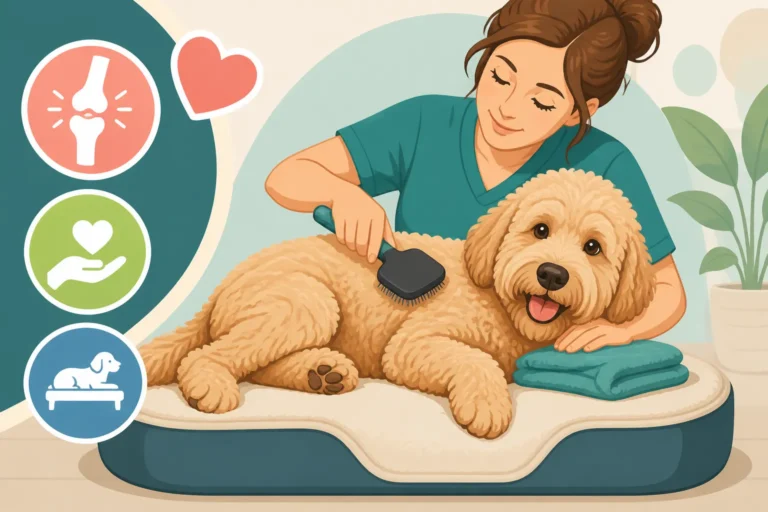
This routine is about more than just aesthetics; it's about your Goldendoodle's comfort and skin health. Mats, if left unchecked, can pull on the skin, restrict movement, and lead to painful skin infections because they trap moisture and debris. By making the comb a regular part of your routine, you're not just grooming; you're performing essential preventative care. Starting this routine early, even during puppyhood, can help your dog tolerate and even enjoy the grooming process. Remember, Brushing a Goldendoodle Often Enough to Stop Matting is the foundation, but combing is the bedrock.
Essential Grooming Tools for Every Goldendoodle Owner
Don't skimp on grooming tools; they are an investment in your Goldendoodle's well-being. Having the right equipment on hand makes the job easier for you and more comfortable for your dog.
Here's what you absolutely need:
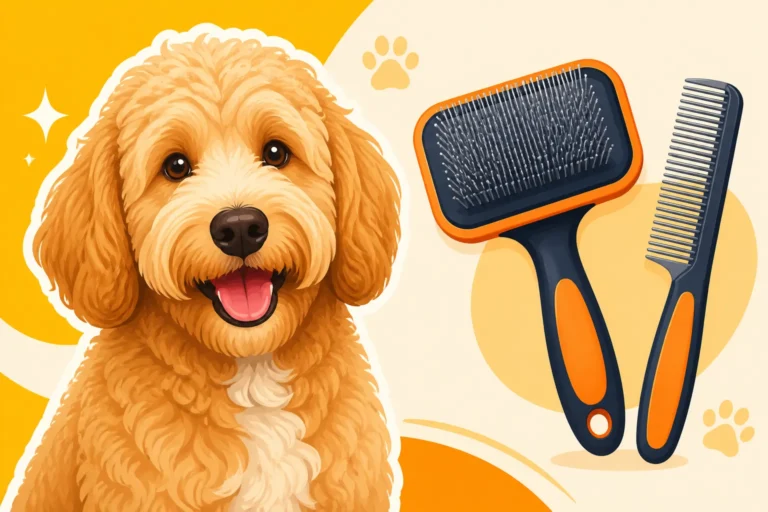
- High-Quality Slicker Brush: Choose one appropriate for your Goldendoodle's size and coat density. Look for brushes with sturdy pins and a comfortable handle.
- Metal Greyhound Comb: This is non-negotiable. Look for one with both wide and narrow-spaced teeth. This comb will be your primary mat-detector.
- Detangling Spray: A good detangler helps loosen mats and makes combing smoother, reducing discomfort. Many great options are available from retailers like Chewy or on Amazon.
- Blunt-Tip Scissors: For safely trimming small, stubborn mats that cannot be combed out, but use with extreme caution!
- Nail Clippers or Grinder: Keeping nails trimmed prevents discomfort and helps with overall paw health.
- Ear Cleaner and Cotton Balls: Goldendoodles are prone to ear infections, so regular cleaning is essential.
Having these tools readily available will allow you to address any grooming needs promptly, preventing minor issues from escalating. For more detail on specific tools, read The Slicker Brush and Comb a Goldendoodle Needs.
When to Seek Professional Help
Despite your best efforts, sometimes mats become too severe or too close to the skin for safe home removal. This is not a failure on your part; it's simply the reality of managing a Goldendoodle coat. Professional groomers have specialized tools, training, and experience to handle even the most challenging matting safely and efficiently.
It's always better to take your Goldendoodle to a groomer if:
- You find large, tight mats that are pulling on the skin.
- The mats are located in sensitive areas, like near the eyes, ears, or genital region, where you fear nicking the skin.
- Your dog is showing signs of pain or extreme discomfort during grooming attempts.
- You simply don't have the time or patience to tackle a significant matting problem.
Trying to cut out severe mats yourself can result in accidental nicks, cuts, or even serious injury to your dog, often requiring a costly vet visit. Groomers can often "demat" a coat if the matting isn't too severe, or they may recommend a full shave-down to get a fresh start. This might sound drastic, but it's often the kindest thing for a severely matted dog. Just be prepared for the added cost; Dematting Surcharges on a Goldendoodle are a real thing, and they can add significantly to your bill. Understanding that How Matting Adds Hundreds to a Goldendoodle Year puts things into perspective. Sometimes, the best solution for the dog is a fresh start, even if it's not the haircut you initially envisioned.
| Feature | Slicker Brush | Metal Grooming Comb |
|---|---|---|
| Primary Function | Remove loose hair, fluff coat, detangle surface | Find hidden mats, ensure coat is tangle-free to skin |
| Depth of Reach | Surface to mid-coat | Skin to tip of hair (full depth) |
| Mat Detection | Limited, may push small mats tighter | Excellent, will snag on even tiny knots |
| Best Used For | Daily maintenance, finishing, removing surface debris | Regular deep checks, mat identification, detangling |
| Feeling to Dog | Generally pleasant, can be painful if snagging mats | Pleasant when smooth, painful if pulling mats |
| Ideal Frequency | Daily | 2-3 times/week (or daily during coat change) |
Disclaimer
This article is for general informational purposes only and does not constitute professional advice. Laws, prices and regulations vary by location and change over time. Consult a qualified professional for guidance on your specific situation.