Grooming an Arthritic Goldendoodle Comfortably
It's heartbreaking to see your once-spry Goldendoodle start to slow down, and even more so when something as simple as grooming becomes a source of discomfort, or worse, outright pain. For many senior Goldendoodles, the stiffness and aches of arthritis can turn a routine brush-out or bath into a challenging ordeal for both dog and owner. This comprehensive guide is here to walk you through strategies, tools, and techniques to ensure your arthritic Goldendoodle can be groomed comfortably, maintaining their dignity and your bond without causing undue stress or exacerbating their pain.
Understanding Arthritis and Its Impact on Grooming
Arthritis, or osteoarthritis, is a common and often debilitating condition in older dogs, affecting their joints and leading to chronic pain and reduced mobility. When your Goldendoodle starts exhibiting signs of this condition, it fundamentally changes how you approach their care, especially something as hands-on as grooming.
How Arthritis Affects Mobility and Comfort
Imagine waking up every day with stiff, aching joints, where every movement, every bend, and every stand-up is a conscious effort, sometimes punctuated by sharp pain. That's often the reality for a Goldendoodle living with arthritis. This isn't just a minor ache; it's a persistent inflammation of the joints, leading to cartilage degradation and bone-on-bone friction in severe cases. For a Goldendoodle, whose parent breeds (Golden Retrievers and Poodles) are both prone to joint issues like hip and elbow dysplasia, arthritis can be a particularly prevalent concern.
Simple acts we take for granted become monumental hurdles. Standing still for an extended period, lifting a paw to trim nails, bending a leg to brush out an armpit mat, or even just shifting weight on a grooming table can send a jolt of pain through their body. The pressure of a brush, the twist of a limb, or the vibration from clippers can all contribute to discomfort. This is why understanding where your dog hurts is the first step in making grooming tolerable. Common areas affected include hips, elbows, knees, and the spine. A Goldendoodle's size also plays a role in joint strain, with larger dogs often experiencing more pronounced effects. Goldendoodle Joint Health by Size Category The once effortless act of being lifted onto a grooming table might now be excruciating, making you both dread the process.
Recognizing Signs of Pain During Grooming
Your Goldendoodle can't tell you in words that their hip is throbbing or their elbow is screaming, but they will communicate their pain in other ways. It's crucial for us, as their caregivers, to learn to read these signals, both subtle and overt. Misinterpreting their reluctance as stubbornness can inadvertently cause more pain and erode trust.
Subtle signs might include a slight flinch when a particular area is touched, a low whimper, excessive panting without exertion, or trembling, especially when you approach with grooming tools. They might lean away from your touch, try to sit or lie down repeatedly during brushing, or avoid eye contact. Some dogs might become uncharacteristically still, freezing up to avoid movement. More overt signs could be growling, snapping, or trying to nip, which are often desperate attempts to make the pain stop. If your Goldendoodle, who was once a cooperative grooming partner, starts showing these behaviors, it's a clear signal that something hurts. Don't push through it. Stop, reassess, and consider if it's time to speak with your veterinarian about pain management options. Remember, their refusal isn't personal; it's protection. For a deeper understanding of this stage, you might find Goldendoodle Arthritis After the Age of Eight helpful.
Creating a Low-Stress Grooming Environment
Making grooming a comfortable experience for an arthritic Goldendoodle goes beyond just being gentle with the brush; it starts with the environment itself. Thoughtful preparation can make all the difference in reducing stress and physical strain.
Choosing the Right Location and Surface
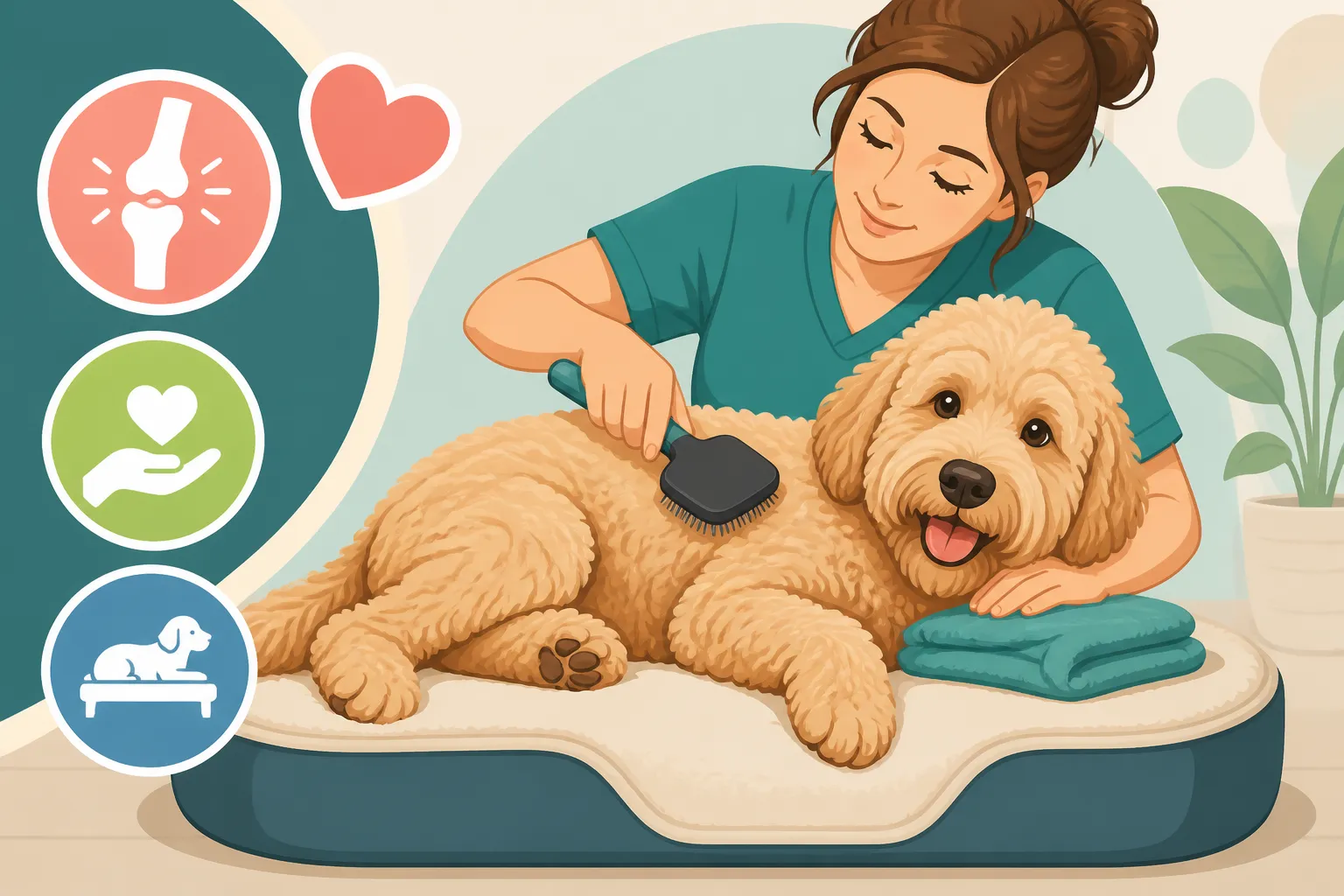
The first consideration is where you groom your Goldendoodle. For larger Goldendoodles, lifting them onto a high grooming table might be impossible or incredibly painful. In such cases, working on the floor is often the best solution. Find a quiet, well-lit area where your dog can lie down or stand comfortably. Lay down a thick, non-slip mat or a memory foam dog bed to provide cushioning and stability. This prevents slipping, which can cause painful splits and strains, and reduces pressure on their tender joints.
If a grooming table is indispensable, perhaps for smaller Goldendoodles or for easier access for you, ensure it is exceptionally stable and has a non-slip surface. Many professional grooming tables come with hydraulic lifts, which can slowly and gently raise your dog without you having to lift their full weight. If using a stationary table, add a thick, soft mat or several layers of towels to cushion their body. The goal is to minimize any hard surfaces that could press uncomfortably against their bones or sore spots. A calm, quiet room, away from the hustle and bustle of family life, will also help keep their stress levels low.
Scheduling and Preparation for Success
Timing is everything when it comes to grooming an arthritic Goldendoodle. If your veterinarian has prescribed pain medication, schedule grooming sessions for when the medication is most effective. This might be an hour or two after their morning dose, for instance. Observe your dog to find their most comfortable time of day – perhaps not first thing in the morning when they might be stiffest, or late in the evening when they're tired.
The "all at once" approach to grooming is a thing of the past for an arthritic dog. Instead, break grooming into multiple, short sessions. Today might be a quick brush-out of their back, tomorrow their legs, and the next day a face trim. This prevents over-taxing their joints and keeps the experience positive. Gather all your tools before you start so you don't have to leave your dog unattended or make them wait while you hunt for a comb. This includes brushes, combs, detangling spray, clippers, nail grinder, treats, and any calming aids.
For dogs with significant anxiety or pain, discuss calming strategies with your vet. This could range from over-the-counter pheromone sprays or calming treats found on Chewy or Amazon, to prescription anti-anxiety medications that can make the experience far less traumatic. A little preparation goes a long way in making these sessions bearable, and even pleasant, for your cherished companion.
Techniques and Tools for Gentle Grooming
Once you've set the stage for a calm experience, the actual grooming techniques and tools you use become paramount. Gentleness, patience, and the right equipment can significantly reduce discomfort.
Gentle Brushing and Dematting Strategies
The key word here is gentle. Forget the quick, aggressive strokes you might have used when your Goldendoodle was a bouncy puppy. Now, every touch must be soft, deliberate, and mindful of their pain. Use a high-quality, soft slicker brush with rounded pins, and always follow up with a wide-toothed comb to ensure you've reached down to the skin. The Slicker Brush and Comb a Goldendoodle Needs
When brushing, support the joint closest to the area you're working on. For example, if you're brushing a rear leg, gently place your hand under their hip or knee to stabilize it. This minimizes strain on their tender joints. Practice line brushing: lift sections of hair, brush the hair underneath, working in small sections from the skin outwards. This ensures you're catching any tiny tangles before they become painful mats.
Mats are the enemy of an arthritic Goldendoodle. Never pull on a mat. It's incredibly painful and can cause skin irritation. If you find a mat, liberally apply a detangling spray (brands like Cowboy Magic or Chris Christensen often work well and can be found on Amazon) and gently try to work it out with your fingers or a mat splitter. If the mat is tight and close to the skin, it's often kinder to carefully clip it out with small blunt-nosed scissors or a clipper blade, even if it leaves a patch. Consider keeping your Goldendoodle in a shorter, more manageable haircut year-round to significantly reduce the frequency and severity of matting, thereby easing their grooming burden. This allows you to brush them less often and for shorter periods, which is a huge relief for their aching bodies.
Safe Nail Trimming and Paw Pad Care
Overgrown nails are a silent agony for arthritic dogs. They push the toes back, distort the paw structure, and can make walking even more painful by altering their gait and posture. Regular nail trims are non-negotiable, but how you do them needs to adapt.
Instead of traditional clippers, many owners find a Dremel-style rotary tool (nail grinder) to be a much gentler option. The continuous grinding action is less jarring than the sudden snip of clippers, and it allows you to take off tiny bits at a time, reducing the risk of hitting the quick. If you must use clippers, ensure they are sharp and take very small amounts off at a time. The goal isn't speed, but comfort.
When holding your Goldendoodle's paw, do so very gently. Avoid twisting or pulling their leg into an awkward position. Support the leg from underneath and keep their paw as natural as possible. If they can only tolerate one or two nails at a time, that's perfectly fine. Break it up over several days. Rewards are key here; high-value treats after each successful nail will help build a positive association. Trimming Goldendoodle Nails at Home
Don't forget the hair between their paw pads. This hair can mat, collect debris, and cause your Goldendoodle to slip on hard floors, which can be disastrous for tender joints. Carefully trim this hair flush with the paw pads using blunt-nosed scissors or a small clipper. Improved traction can make a world of difference in their daily comfort and confidence.
Bathing and Drying Modifications
Bath time for an arthritic Goldendoodle requires extra care. Ensure the water is comfortably warm – never too hot or too cold – and use a non-slip mat in the tub or shower to prevent falls. A hand-held shower sprayer can be a lifesaver, allowing you to rinse them without forcing them to stand or move excessively.
Use gentle, hypoallergenic shampoos and conditioners. Lather them lightly, focusing on lifting dirt rather than scrubbing vigorously. Support your dog throughout the bath; if they need to lie down, let them. Avoid forcing them to stand for extended periods.
Drying is just as important. Towel dry them thoroughly, then consider using a low-heat, low-speed forced air dryer if they tolerate it. The air movement can help separate the coat and speed drying without requiring you to brush intensely while wet. If a forced air dryer is too much, ensure they are air-dried in a warm, draft-free room to prevent chilling, which can exacerbate joint pain. For Goldendoodles with woolly coats, air drying completely might not be feasible without severe matting, so a gentle, thorough blow-dry becomes essential.
Aftercare and Ongoing Comfort for Your Arthritic Goldendoodle
Grooming might be over, but your Goldendoodle's comfort journey continues. What you do immediately after grooming, and the ongoing support you provide, are vital for their well-being.
Post-Grooming Comfort and Rewards
As soon as the grooming session concludes, the first thing your Goldendoodle needs is a comfortable place to rest. Guide them to their favorite plush bed, ideally an orthopedic one that supports their joints. A memory foam bed can be a godsend for aching bodies, reducing pressure points and offering cushioning. Many excellent options are available from retailers like Chewy or Amazon.
Follow up with generous praise and high-value treats. You want them to associate grooming with positive outcomes, not just pain. A delicious treat, perhaps a small portion of a fresh meal from a brand like Ollie (if it aligns with their dietary needs and your vet approves), can create a powerful positive reinforcement. If your dog enjoys it and it doesn't cause further pain, a gentle, soothing massage can help relax any muscles that might have tensed up during grooming. Focus on broad, gentle strokes rather than deep tissue work. Allow them to rest and recover; don't immediately launch into an activity that requires strenuous movement.
Integrating Joint Support and Pain Management
Grooming comfortably is just one piece of the puzzle. Managing your Goldendoodle's arthritis effectively requires a holistic approach, always in consultation with your veterinarian. This might involve a combination of strategies. Your vet might prescribe non-steroidal anti-inflammatory drugs (NSAIDs) to reduce pain and inflammation, or other medications like gabapentin for neuropathic pain. Consistency with these medications is key to their comfort.
Beyond medication, joint supplements can play a crucial supportive role. Ingredients like glucosamine, chondroitin, and omega-3 fatty acids (often found in fish oil) are commonly recommended to support joint health and reduce inflammation. These are readily available from pet supply stores and online, including from Chewy. Joint Support Dosed to Goldendoodle Size Category Discuss dosage and specific products with your vet, as quality and effectiveness can vary.
Physical therapy, including hydrotherapy (underwater treadmill), can be incredibly beneficial. The buoyancy of water reduces stress on joints while allowing for movement that strengthens muscles, improving mobility and reducing pain. Maintaining a healthy weight is also paramount. Every extra pound puts additional strain on already compromised joints. Work with your vet to establish an ideal weight and a suitable diet plan. Goldendoodle Weight and the Load on Its Joints High-quality senior diets or joint-supportive foods are available, and brands on Chewy offer a variety of options. Joint Diets for a Senior Goldendoodle
When to Seek Professional Groomer Support
Despite your best efforts, some arthritic Goldendoodles simply cannot tolerate home grooming. The pain might be too intense, or their anxiety too high. In these situations, seeking a professional groomer who specializes in senior or special needs dogs is a compassionate choice.
When looking for a groomer, be upfront about your Goldendoodle's arthritis. Ask about their experience with older dogs, their techniques for gentle handling, and if they offer amenities like hydraulic grooming tables, non-slip mats, or flexible scheduling that allows for breaks. A good groomer will listen attentively, understand your concerns, and be willing to work at your dog's pace, prioritizing comfort over speed or aesthetic perfection. Communication is vital: inform them about specific painful areas, medication schedules, and any behaviors that indicate distress.
For Goldendoodles with severe arthritis or extreme anxiety around grooming, sedation under veterinary supervision might be the kindest option. This ensures they are completely comfortable and unaware of the potentially painful process. While it's not ideal for regular grooming, it can be a humane solution for a much-needed comprehensive clip or bath, especially if matting becomes unmanageable. Ultimately, the goal is to keep your beloved Goldendoodle clean, comfortable, and pain-free throughout their golden years. Remember, Senior Goldendoodle Mobility and Arthritis is a journey best traveled with patience, understanding, and professional guidance.
Disclaimer
This article is for general informational purposes only and does not constitute professional advice. Laws, prices and regulations vary by location and change over time. Consult a qualified professional for guidance on your specific situation.