Telling a Flat Goldendoodle Coat From a Wavy One
It can be incredibly confusing trying to figure out what kind of coat your Goldendoodle puppy has, especially when breeders throw around terms like "flat," "wavy," and "curly." You might be picturing a specific look for your future companion, only to find yourself wondering if your fluffy little friend will grow up to have the shaggy, low-shedding coat you dreamt of, or something entirely different. This guide will walk you through the distinct characteristics of flat and wavy Goldendoodle coats, help you understand what to look for, and explain why knowing the difference is so crucial for their long-term care.
Understanding the Goldendoodle Coat Spectrum
The Goldendoodle coat isn't a "one size fits all" affair; it's a beautiful spectrum, a direct result of blending the Golden Retriever's straight, flowing hair with the Poodle's dense, curly coat. When people talk about "flat" versus "wavy" coats, they're referring to two distinct points along this spectrum, each with its own look, feel, and grooming demands. It’s not just about aesthetics; it profoundly impacts how much shedding you'll see and how much time you'll spend with a brush in your hand.
What is a Flat Goldendoodle Coat?
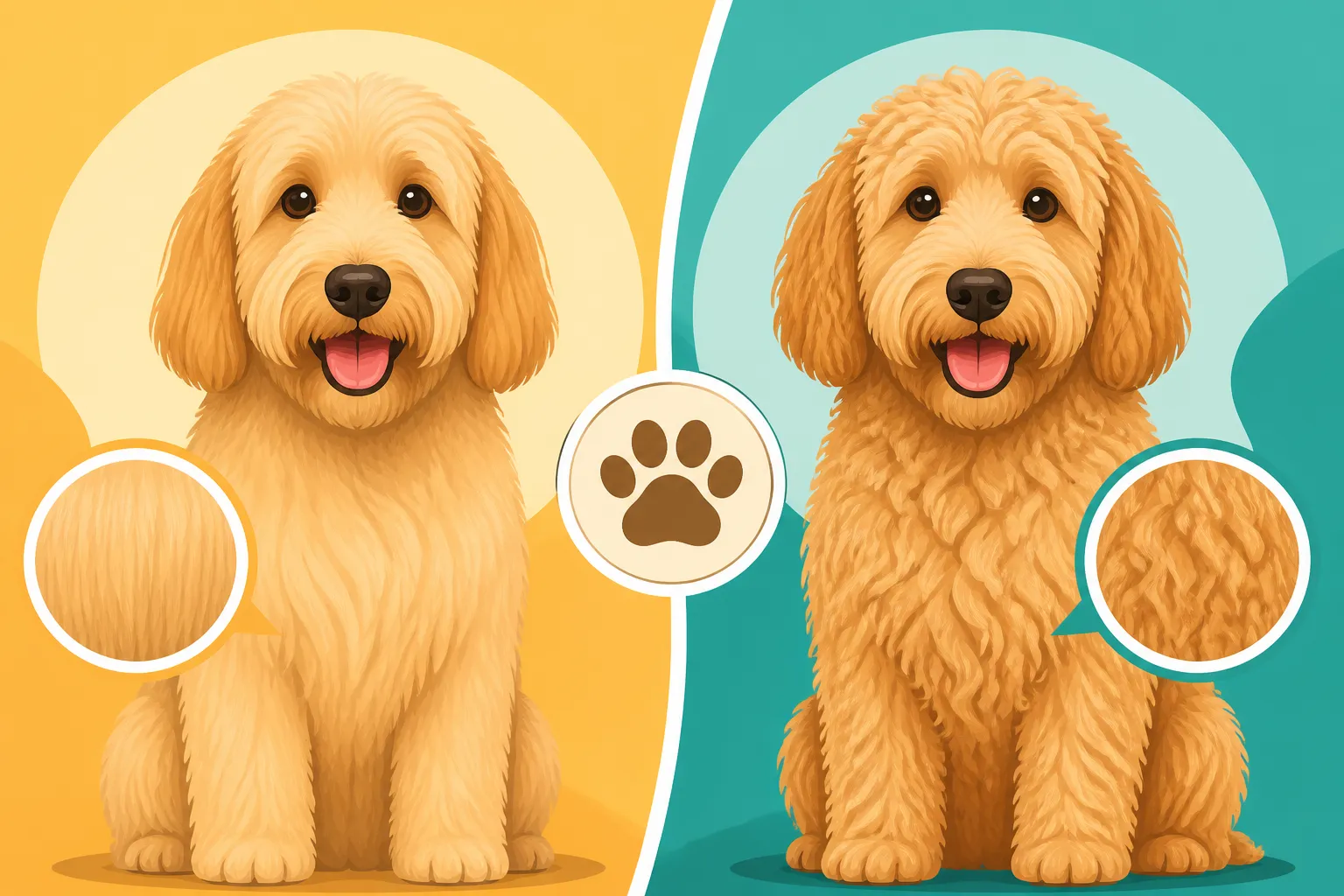
A flat Goldendoodle coat is often the one that surprises new owners because it tends to look a lot like the Golden Retriever parent's coat. Visually, it's straight or very minimally wavy, lacking the characteristic curl or even strong wave most people associate with a "Doodle." The hair might be slightly longer on the body and tail, and it will have a softer, more silky texture than a typical Poodle coat. If you run your hand through it, you'll notice it feels smooth and lies relatively flat against the dog's body, especially on the back and sides.
The key genetic component influencing a flat coat is the presence of fewer curl genes (often denoted as c/c on a DNA test) and sometimes a lack of the furnishing gene (F/F for furnished, F/f for furnished carrier, f/f for unfurnished). Furnishings are the longer hairs around the muzzle, eyebrows, and legs that give most Doodles their distinctive bearded, shaggy look. An unfurnished, flat-coated Goldendoodle will have a smooth face, much like a Golden Retriever, and will not develop that iconic "teddy bear" appearance. This lack of furnishings also often means they shed more. Many people specifically seek a Goldendoodle for its low-shedding qualities, and a flat coat often contradicts that expectation.
What is a Wavy Goldendoodle Coat?
The wavy Goldendoodle coat is probably what most people envision when they think of a Goldendoodle. It strikes a lovely balance, featuring a soft, loose wave that’s distinct but not tightly curled. This coat type typically has furnishings, meaning your Goldendoodle will have that adorable longer hair on their face, creating eyebrows and a beard. The texture is generally soft, sometimes described as fleecy, and it has a much fuller appearance than a flat coat because of the body the waves create.
Genetically, a wavy coat usually indicates that the dog carries at least one furnishing gene (F/f or F/F) and often at least one curl gene (C/c or C/C, though often it's C/c for a wavy coat, C/C being more curly). The combination of these genes gives the coat its distinct wave pattern and helps to reduce shedding. While not entirely non-shedding, a wavy-coated Goldendoodle will typically shed significantly less than a flat-coated one, making it a more suitable option for families with mild allergies.
Identifying Coat Types: Puppy vs. Adult Goldendoodle
One of the biggest challenges for prospective Goldendoodle owners is predicting the adult coat type from a tiny, fluffy puppy. It’s like trying to guess what a caterpillar will look like as a butterfly – sometimes you get it right, sometimes nature throws a curveball. The puppy coat can be quite deceptive, and what looks flat or slightly wavy at eight weeks might transform dramatically over the first year. This is why looking at the parents' coats, and even DNA testing, becomes so important. Why a Goldendoodle Puppy Coat Predicts Nothing is a must-read if you're holding a fluffy little furball and wondering about its future.
Puppy Coat Clues and Changes
When you first bring home a Goldendoodle puppy, its coat is usually soft, fine, and relatively straight or with very minimal waves. This "puppy fuzz" can be incredibly misleading. You might have a puppy with what appears to be a flat coat, only for it to start developing noticeable waves and even curls around the four to six-month mark. This is when the dreaded "coat change" begins, typically lasting until 10-14 months of age, during which the puppy coat sheds out and the adult coat grows in. When a Goldendoodle Starts Blowing Its Puppy Coat delves deeper into this transformative period.
A primary indicator in puppies, more reliable than initial curl, is the presence of "furnishings." Look closely at the puppy's muzzle, eyebrows, and legs. If you see longer, coarser hair developing in these areas, even if the body coat is fairly straight, it's a strong sign the puppy will be furnished and likely develop a wavy or curly coat. Puppies lacking these furnishings, often identifiable by a smooth face like a Golden Retriever, are more likely to mature into a flat-coated Goldendoodle. A good breeder will be able to show you the parents' coats and ideally, their DNA test results for furnishings and curl genes.
Adult Coat Appearance
By the time a Goldendoodle reaches its first birthday, its adult coat should be well established.
-
Flat Coat in Adults: An adult flat-coated Goldendoodle will maintain a relatively straight or slightly feathered coat, very reminiscent of a Golden Retriever. They will lack the distinct beard and eyebrows that most Doodles possess. While beautiful, this coat type usually sheds as much as a Golden Retriever, and therefore is not considered "hypoallergenic." The hair will feel smooth and often be a double coat, meaning a softer undercoat and a tougher topcoat, typical of a Retriever.
-
Wavy Coat in Adults: An adult wavy-coated Goldendoodle will have a clear, loose wave throughout its body. The hair won't be tightly curled like a Poodle's or some wool-coated Doodles, but it will have noticeable bends and ripples. They will certainly have furnishings, giving them that characteristic shaggy, friendly face. The texture is often described as fleece-like – soft, plush, and flowing. This coat type generally sheds minimally and is often a good compromise for those with mild allergies. It also tends to hold its shape well when groomed into popular "teddy bear" cuts. For a broader overview, you might find The Three Goldendoodle Coat Types and How to Tell Them helpful in understanding the entire spectrum.
| Feature | Flat Goldendoodle Coat | Wavy Goldendoodle Coat |
|---|---|---|
| Appearance | Straight to slightly feathered, lies close to the body | Loose, flowing waves, fuller appearance |
| Texture | Smooth, silky, often double-coated | Soft, fleecy, plush |
| Furnishings | Absent (smooth face, like a Golden Retriever) | Present (distinct beard, eyebrows, shaggy face) |
| Shedding | Moderate to heavy (similar to a Golden Retriever) | Minimal to light |
| Allergy Suitability | Generally not suitable for allergy sufferers | Often suitable for mild allergy sufferers |
| Grooming Needs | Regular brushing to prevent tangles and remove shedding hair | Regular brushing to prevent mats, professional grooming needed |
| Genetic Marker | f/f (unfurnished), often c/c (no curl) | F/f or F/F (furnished), often C/c (wavy curl) |
Why Coat Type Matters: Grooming and Shedding Implications
Understanding your Goldendoodle's coat type isn't just about what they'll look like; it's fundamental to managing their daily care, their comfort, and even how well they fit into an allergy-prone household. The flat and wavy coats, despite being next to each other on the spectrum, have vastly different demands. Ignoring these differences can lead to frustration, unexpected costs, and discomfort for your beloved dog.
Grooming Demands
Both flat and wavy Goldendoodle coats require regular grooming, but the type and frequency differ significantly.
-
Flat Coat Grooming: A flat coat might seem easier because it doesn't mat as quickly as a curly one. However, it sheds more, meaning you'll be brushing primarily to remove loose hair and distribute natural oils. While professional grooming might be less frequent for trims, daily or every-other-day brushing with a good slicker brush and metal comb is essential to keep shedding under control and prevent minor tangles, especially on the longer feathering. Tools readily available on sites like Amazon or Chewy, such as a sturdy slicker brush and a wide-toothed comb, will be your best friends. These dogs will still need baths and nail trims, but the complexity of their haircut is usually minimal.
-
Wavy Coat Grooming: This is where the term "Goldendoodle grooming" often truly applies. Wavy coats are prone to matting because the soft, fleecy hair intertwines easily, especially when loose puppy hair transitions to adult coat. You'll need to commit to Brushing a Goldendoodle Three Times a Week, if not daily, using a slicker brush and a metal comb to line-brush down to the skin. This isn't just surface brushing; it means lifting layers of hair and working through them section by section. Regular professional grooming appointments, typically every 6-8 weeks, are non-negotiable for a wavy coat to prevent painful matting. Without it, you'll face dematting fees or, worse, a full shave-down, which no one wants for their Doodle. High-quality shampoos and conditioners are also vital for keeping the coat healthy and manageable, many of which can be found on Chewy.
Shedding and Allergies
This is often the deal-breaker for many families considering a Goldendoodle. The promise of a "hypoallergenic" dog is a huge draw, but it's crucial to understand how coat type impacts this.
-
Flat Coat Shedding: A flat Goldendoodle coat will shed, often as much as a purebred Golden Retriever. This is because it typically lacks the "furnishings" gene (f/f) which is responsible for the low-shedding quality. If you or a family member has dog allergies, a flat-coated Goldendoodle is likely not a suitable choice. They will leave hair on furniture, clothing, and around the house, and the dander they produce will be present. Whether a Goldendoodle Is Really Hypoallergenic is a valuable resource for understanding the nuances of Goldendoodle allergies.
-
Wavy Coat Shedding: Wavy coats generally shed minimally. They are considered low-shedding because the wavy texture traps loose hairs within the coat rather than releasing them into the environment. This is why regular brushing is so critical – it removes these trapped hairs. For people with mild to moderate dog allergies, a wavy-coated (and furnished) Goldendoodle is often a much better fit, though no dog is 100% hypoallergenic. The presence of furnishings is the best visual indicator of a truly low-shedding Goldendoodle, as covered in What Furnishings Give a Goldendoodle Its Beard.
Predicting Goldendoodle Coat Type
The desire to know exactly what kind of coat your Goldendoodle will have is perfectly natural, especially given the significant differences in grooming and shedding. While no crystal ball can give you a 100% guarantee from puppyhood, there are methods and indicators that can greatly improve your chances of predicting the adult coat type.
Genetic Testing for Furnishings and Curl
The most reliable way to predict a Goldendoodle's adult coat type, even when they are just a tiny puppy, is through genetic testing. Reputable Goldendoodle breeders often conduct DNA tests on their parent dogs for specific genes related to coat characteristics. The two most important genes for distinguishing flat from wavy coats are:
-
Furnishings (F/f locus): This gene determines whether a dog will have the long facial hair (beard, mustache, eyebrows) characteristic of Doodles.
- F/F: Fully furnished. The dog will have furnishings and is likely to be low-shedding (assuming other genes cooperate).
- F/f: Furnished carrier. The dog will have furnishings and is also likely low-shedding.
- f/f: Unfurnished. The dog will have a smooth face like a Golden Retriever and will shed. This is the genetic marker for a "flat" coat.
-
Curl (C/c locus): This gene dictates the degree of curl in the coat.
- C/C: Straight/minimal wave. This dog would likely have a flat coat if also unfurnished, or a very loose wave if furnished.
- C/c: Wavy coat. This is the most common genotype for wavy-coated Goldendoodles.
- c/c: Curly coat. This genotype typically results in a tighter, wool-like curl, often seen in Identifying a Curly Wool Goldendoodle Coat.
A breeder who knows the genetic makeup of their parent dogs can make a very educated guess about the coat types of their puppies. For instance, if a puppy is f/f (unfurnished) and C/C (no curl), it is almost guaranteed to have a flat coat. If it's F/F or F/f (furnished) and C/c (wavy), it will most likely have a wavy, low-shedding coat. Asking a breeder for these The DNA Panel a Goldendoodle Breeder Should Run results for the parents is a smart move.
Observing Puppy Features and Parent Coats
Even without DNA tests, you can look for visual cues, though they are less definitive. As mentioned, the most telling sign in a puppy is the presence of furnishings.
- Muzzle Hair: Observe the hair around the puppy's muzzle. If it's short and smooth, resembling a Golden Retriever puppy's face, it's a strong indicator of an unfurnished, potentially flat coat. If the muzzle hair appears slightly longer, thicker, and perhaps even a bit crimped or scruffy, it suggests furnishings are present, pointing towards a wavy or curly coat.
- Eyebrows: Similarly, look for longer, slightly wiry hair above the eyes. These "eyebrows" are part of the furnishings.
- Parent Coats: Always ask to see the parent dogs, or at least clear photos of them. If both parents have clearly wavy or curly, furnished coats, the puppies are more likely to inherit similar traits. If one parent is a Golden Retriever and the other is a Poodle (an F1 generation), the coat types can be highly variable. If one parent has a flat, unfurnished coat, then some puppies in the litter will also likely have flat coats.
Remember, the puppy coat itself can be deceptive, as it will change around 8-12 months. What seems straight at 8 weeks might develop a wave. However, the presence or absence of furnishings is a far more reliable indicator of adult coat type than the initial texture of the body coat.
Implications for Owners
Knowing your Goldendoodle's coat type, whether flat or wavy, empowers you to prepare for their care. If you end up with a flat-coated Goldendoodle, embrace their Golden Retriever-like appearance and prepare for regular shedding management. You might need a good vacuum cleaner and to re-evaluate if anyone in your home has serious allergies. Brands like Ollie also offer high-quality food that supports healthy skin and coat, regardless of type, which can help manage shedding by promoting overall coat health.
For a wavy-coated Goldendoodle, you'll be investing in more frequent grooming appointments and a dedicated home brushing routine to keep those beautiful waves free of mats. This coat type is usually a fantastic option for those seeking a lower-shedding companion. Regardless of the coat, a Goldendoodle needs consistent care, and understanding their unique coat is the first step in providing it.
Disclaimer
This article is for general informational purposes only and does not constitute professional advice. Laws, prices and regulations vary by location and change over time. Consult a qualified professional for guidance on your specific situation.