Daily Calories for a Standard Goldendoodle
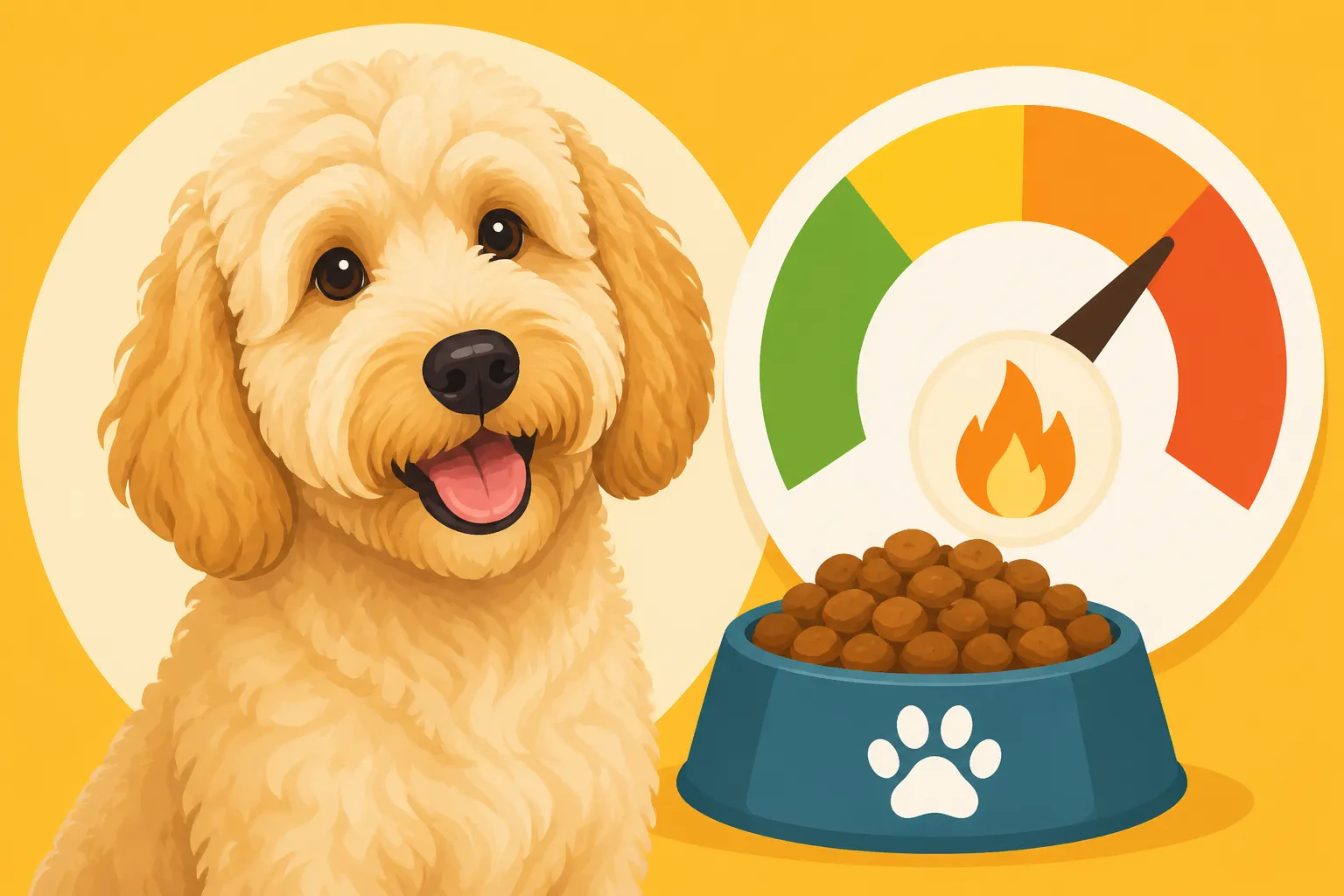
Many standard Goldendoodle owners find themselves staring at a bag of dog food, utterly perplexed by the feeding guidelines. It’s a common frustration: the bag might suggest a range that feels too broad, or your highly energetic Goldendoodle seems to need more (or less) than what's listed for their weight. Getting the daily calorie intake just right for your furry companion can feel like a guessing game, leading to worries about overfeeding, underfeeding, or missing crucial nutritional needs. This comprehensive guide will demystify the process, helping you understand how to accurately determine and manage the daily calorie requirements for your beloved standard Goldendoodle, ensuring they stay happy, healthy, and at their ideal weight.
Unpacking Your Standard Goldendoodle's Baseline Calorie Needs
When you bring home a standard Goldendoodle, you’re often looking at a dog that will grow to be anywhere from 50 to 90 pounds, sometimes even a bit more. That’s a significant range, and it means there's no single "magic number" for daily calories that applies to every single standard Goldendoodle. Their baseline calorie needs are essentially the energy required for their body to perform all its essential functions — breathing, digestion, maintaining body temperature, and just generally existing, even if they're lounging on the couch. This is often referred to as their Resting Energy Requirement (RER), and it’s a foundational piece of the puzzle.
You might see charts online or hear vets mention formulas based on weight in kilograms. While these are great starting points for professionals, what’s more practical for you as an owner is understanding the factors that push those numbers up or down. A good quality dog food, whether kibble, wet food, or even a fresh food delivery service like Ollie, will list its caloric density, usually in calories per cup or per kilogram. This number is crucial because it allows you to translate general calorie recommendations into actual food portions. Without knowing this, "two cups a day" means very little if one brand’s cup has 300 calories and another’s has 500.
Think of it this way: a standard Goldendoodle at the lower end of the weight spectrum, say 55 pounds, will naturally need fewer calories than one tipping the scales at 85 pounds, assuming all other factors are equal. This fundamental difference in body mass means more cells to maintain, more blood to pump, and generally a larger engine to run. However, it's not simply a linear equation. Metabolism plays a huge role, and just like people, some dogs are naturally more efficient at burning calories than others. This is why even within the same household, two Goldendoodles of similar size might thrive on slightly different food quantities.
Key Factors That Shift Calorie Requirements
The baseline is just that – a starting point. Your Goldendoodle's calorie needs are incredibly dynamic, changing throughout their life and even day-to-day. Understanding these variables is key to keeping them at a healthy weight.
Age and Life Stage: From Puppyhood to Golden Years
A standard Goldendoodle puppy, with all that adorable clumsiness and boundless energy, is a calorie-burning machine! They are growing at an incredible rate, building bones, muscles, and organs, which demands a significantly higher caloric intake per pound of body weight than an adult dog. During their rapid growth phase, from about 8 weeks to 12-18 months, their energy requirements are intense. Feeding a puppy an adult maintenance diet would simply not provide enough fuel for their development. However, overfeeding a large breed puppy can also be detrimental, leading to too-rapid growth that puts undue stress on developing joints. It's a delicate balance. You can read more about Feeding a Goldendoodle Puppy Through Growth to understand this period better.
As they transition into adulthood, typically between one and two years of age, their growth slows, and their metabolism often settles. This is when their calorie needs will stabilize into what we consider "adult maintenance." Then, as they approach their senior years, usually around age 7 or 8 for a standard size, their activity levels may naturally decrease, and their metabolism can slow down again. Senior Goldendoodles often require fewer calories to maintain their weight, or they might need foods formulated with different nutrient balances to support aging joints and organs. Neglecting to adjust their diet during these phases can easily lead to unwanted weight gain or loss. If you have a senior, consider reviewing Senior Goldendoodle Care After the Age of Nine.
Activity Level: The Couch Potato vs. The Trail Blazer
This is arguably one of the most significant variables in a Goldendoodle’s daily calorie equation. Is your standard Goldendoodle a serene companion who enjoys short strolls around the block and plenty of naps on the sofa? Or are they a high-energy dynamo who accompanies you on daily runs, hikes, or vigorous games of fetch in the dog park? The difference in their daily energy expenditure is immense. An active Goldendoodle training for agility or participating in regular, long outdoor adventures might need 20-40% more calories than a less active counterpart of the same size.
It's easy to underestimate just how much energy a truly active dog burns. Conversely, it's also easy to overestimate your dog's activity, especially if they have bursts of "zoomies" that quickly subside. Be honest with yourself about your Goldendoodle’s consistent activity. If they’re getting daily vigorous exercise, their food intake should reflect that. If they're mostly sedentary, sticking to the lower end of caloric recommendations is likely more appropriate. A Goldendoodle's exercise needs for both Goldendoodle Exercise for Body and Mind also play a big role here.
Reproductive Status: Intact vs. Spayed/Neutered
Spaying or neutering your Goldendoodle significantly impacts their metabolism and, consequently, their calorie needs. The removal of reproductive organs causes hormonal shifts that often lead to a decrease in metabolic rate. This means that spayed or neutered dogs typically require 20-30% fewer calories than their intact counterparts to maintain the same weight. It’s a change many owners overlook, continuing to feed the same amount of food as before surgery, which almost inevitably leads to weight gain. This is such a common scenario that it's worth a dedicated read on Recalculating a Goldendoodle Ration After Neutering.
If your Goldendoodle has recently been spayed or neutered, this is a critical time to adjust their food intake proactively. Even a small reduction can make a big difference over time. Monitoring their weight and body condition closely in the months following the procedure is vital to prevent creeping weight gain.
Health Conditions and Environmental Factors
Underlying health conditions can also play a major role. For example, a Goldendoodle recovering from surgery or an illness may have temporarily increased caloric needs for healing, or decreased needs if their appetite is suppressed. Conditions like hypothyroidism can slow metabolism, leading to weight gain even on a normal diet, while some gastrointestinal issues might require a specific diet or increased calories to maintain weight. Always consult your veterinarian if you suspect a health issue is affecting your dog's weight.
Environmental factors like temperature can also subtly influence calorie needs. Dogs living in very cold climates might burn slightly more calories to maintain their body temperature, especially if they spend time outdoors. Conversely, in very hot climates, activity might decrease, leading to slightly lower energy expenditure. However, for most indoor Goldendoodles in temperate climates, these environmental factors are less impactful than age, activity, or reproductive status.
Practical Steps for Accurate Feeding and Weight Management
Now that we understand the variables, let's talk about the actionable steps you can take to ensure your standard Goldendoodle is getting exactly what they need. This isn't just about throwing food in a bowl; it's about precision and observation.
Decoding the Food Label: Calories Per Cup (or Gram)
The first, most crucial step is to find the caloric density on your dog food bag. It's usually listed as "kcal/kg" (kilocalories per kilogram) or "kcal/cup." If it's only in kcal/kg, you'll need to know how many grams are in a cup of that particular food (which can vary by kibble size and density) to convert it. Many brands, like those found on Chewy or Amazon, make this information readily available on their product pages or packaging.
Once you have this number, you can calculate how much food corresponds to a given calorie target. For example, if your vet recommends 1,500 calories a day for your 70-pound standard Goldendoodle, and your food has 400 kcal/cup, you know your dog needs 3.75 cups per day (1500 / 400 = 3.75). This seemingly simple math is the foundation for accurate feeding. It’s much more precise than relying on generic "cups per day" recommendations which assume a caloric density that might not match your chosen food. To learn more about selecting the right food, check out What to Look For on a Goldendoodle Food Bag.
The Secret Weapon: A Food Scale
If there's one piece of equipment every Goldendoodle owner should invest in for feeding, it's a digital food scale. Measuring food by volume (cups) is notoriously inaccurate. A cup of kibble can vary by as much as 20-25% depending on how tightly packed it is, the shape of the kibble, and even the measuring cup you use. Over the course of a day, let alone a month, these small discrepancies add up to significant over- or underfeeding.
Using a food scale, you can measure your dog’s food in grams, which is incredibly precise. The food bag will often provide a recommended feeding amount in grams for various weight ranges, or you can convert your calculated cup amount into grams using the product's listed density. This ensures consistency every single meal, removing all guesswork. You can read more about Measuring Goldendoodle Food by Weight for detailed instructions.
The Mirror, Not Just the Scale: Body Condition Score (BCS)
Your standard Goldendoodle's fluffy, often dense coat can be a master of deception, hiding a multitude of sins – including excess weight. Relying solely on the number on the bathroom scale isn't enough. Instead, you need to regularly assess their Body Condition Score (BCS), which involves both looking and feeling your dog.
A healthy Goldendoodle should have:
- Visible Waist: When viewed from above, there should be a discernible indentation behind the ribs.
- Abdominal Tuck: When viewed from the side, their abdomen should tuck up slightly from their rib cage, not sag down.
- Palpable Ribs: You should be able to easily feel their ribs with light pressure, almost like feeling the back of your hand. You shouldn't see them, but they shouldn't be buried under a thick layer of fat.
If you can't feel their ribs easily, or if they lack a waistline, your Goldendoodle is likely overweight. Conversely, if their ribs are very prominent or hip bones stick out, they might be underweight. Getting comfortable with regular BCS checks, especially under that thick coat, is vital. This is an area where Keeping a Goldendoodle Lean When the Coat Hides It can provide further insights.
Making Incremental Adjustments
If your Goldendoodle's BCS indicates they are a bit heavy or too lean, don't make drastic changes overnight. Sudden shifts in diet can upset their digestive system. Instead, aim for small, incremental adjustments. If they need to lose weight, reduce their daily calories by about 5-10% initially. Maintain this for 2-4 weeks, then re-evaluate their BCS and weight. Continue with small adjustments until they reach their ideal condition. The goal is gradual, sustainable weight loss, typically 1-2% of body weight per week.
Conversely, if your Goldendoodle is too thin, gradually increase their calories by 5-10%. Always remember that their energy needs can fluctuate, so regular reassessment is key. Don't be afraid to experiment slightly until you find the sweet spot for your individual dog.
The Power of Your Veterinarian
Never underestimate the value of your veterinarian in this process. They can provide an objective assessment of your Goldendoodle's BCS, discuss any underlying health concerns that might impact weight, and help you set realistic calorie targets. They can also advise on appropriate food choices if dietary changes are needed for health reasons. Your vet is your best partner in ensuring your Goldendoodle's nutritional health.
Common Pitfalls and How to Avoid Them
Even with the best intentions, it's easy to fall into common feeding traps. Being aware of these can save you a lot of headache (and vet bills!) down the line.
Over-Reliance on Bag Recommendations
We touched on this earlier, but it bears repeating: the feeding guide on the back of the dog food bag is just that – a guide. It's designed for an average dog of a certain weight, usually an intact, moderately active adult. If your Goldendoodle doesn't fit that exact profile (and most don't), the recommendations will be off. For example, a spayed senior Goldendoodle will almost certainly need significantly less than what the bag suggests for an intact, active adult of the same weight.
Always use the bag's recommendations as a starting point, but quickly move to assessing your dog's individual needs based on their BCS, activity, and life stage. Don't just blindly scoop based on the chart; observe your dog and adjust.
The Sneaky Calorie Creep from Treats and Extras
We all love to spoil our Goldendoodles, and treats are a wonderful way to reinforce good behavior and show affection. However, treats are often calorie-dense, and those small bites can quickly add up. A good rule of thumb is that treats should make up no more than 10% of your Goldendoodle's total daily caloric intake. If you're giving a lot of treats, especially during training sessions, you absolutely must reduce their main meal portion to compensate.
Consider using low-calorie options for treats, like small pieces of cooked carrot, green beans, or specialized low-cal training treats. For puzzle feeders and enrichment, you can even use a portion of their daily kibble ration instead of extra treats. Don't forget about table scraps either – while a small bit of plain cooked chicken might seem harmless, a regular habit of sharing human food can quickly derail their diet and lead to digestive upset.
The Goldendoodle Coat: Hiding Weight Gain in Plain Sight
This is perhaps the biggest pitfall unique to Goldendoodles and other similarly coated breeds. Their beautiful, often voluminous coats can effectively hide gradual weight gain for months or even years. What looks like a perfectly proportioned dog from a distance might actually be carrying an extra five or ten pounds underneath all that fluff. This is why the Body Condition Score, which relies on feeling your dog's body, is so much more critical than just visual inspection or even relying on the scale alone.
Make it a habit to feel along your Goldendoodle’s ribs, spine, and waist every time you groom them or give them a cuddle. Pay attention to their belly tuck after they’ve had a haircut. It's much easier to address a small amount of weight gain early than to try and shed 15-20 pounds from an already arthritic senior Goldendoodle. For more on this, check out Spotting Goldendoodle Weight Gain Through the Coat.
Avoid Drastic or Frequent Diet Changes
While adjusting calorie intake is good, constantly switching your Goldendoodle’s food can lead to digestive upset, including vomiting and diarrhea. Their digestive system needs time to adapt to a new formula. If you need to change foods, do so gradually over 7-10 days, mixing increasing amounts of the new food with decreasing amounts of the old.
Furthermore, unless there’s a medical reason advised by your vet, resist the urge to jump on every new diet fad. Consistency in a high-quality, nutritionally complete food is often best for your Goldendoodle's long-term health and digestive comfort.
By understanding these nuances and implementing consistent practices, you'll be well-equipped to manage your standard Goldendoodle's daily calorie intake, helping them lead a long, healthy, and energetic life by your side.
Here's a quick guide to estimating daily calorie ranges for adult standard Goldendoodles based on common weight ranges and activity levels, remembering that these are estimates and individual needs will vary:
| Goldendoodle Weight (lbs) | Low Activity (Couch Potato) | Moderate Activity (Daily Walks) | High Activity (Runs, Hikes) |
|---|---|---|---|
| 50 – 60 | 1000 – 1300 kcal | 1300 – 1600 kcal | 1600 – 1900 kcal |
| 61 – 70 | 1200 – 1500 kcal | 1500 – 1800 kcal | 1800 – 2200 kcal |
| 71 – 80 | 1400 – 1700 kcal | 1700 – 2000 kcal | 2000 – 2500 kcal |
| 81 – 90+ | 1600 – 1900 kcal | 1900 – 2300 kcal | 2300 – 2800+ kcal |
Note: These ranges are for adult Goldendoodles. Puppies will require significantly more calories per pound of body weight for growth, and senior dogs might be at the lower end of these ranges or even below, depending on their activity and health. Always adjust based on your dog's individual body condition and consult your veterinarian for personalized advice.
Disclaimer
This article is for general informational purposes only and does not constitute professional advice. Laws, prices and regulations vary by location and change over time. Consult a qualified professional for guidance on your specific situation.