Growth Plates and Goldendoodle Puppy Exercise
Bringing home a fluffy Goldendoodle puppy is one of the most exciting times for any dog lover, but it also comes with a lot of questions, especially around exercise. It's so easy to worry if you're doing too much or too little for your energetic little companion, and the fear of accidentally harming their delicate growing bodies is very real. This guide is here to walk you through understanding your Goldendoodle puppy's growth plates, how they affect exercise, and how to create a safe, healthy activity plan for their crucial first year.
Understanding Goldendoodle Puppy Growth Plates
When you look at your bouncy Goldendoodle puppy, you see boundless energy, but underneath all that fluff and enthusiasm are bones that are still very much under construction. The most critical part of this skeletal development happens at what are called growth plates, and understanding them is key to protecting your puppy's long-term joint health. Many owners don't realize just how vulnerable these areas are, leading to unintentional harm during a puppy's most formative months.
The Anatomy of Puppy Bones
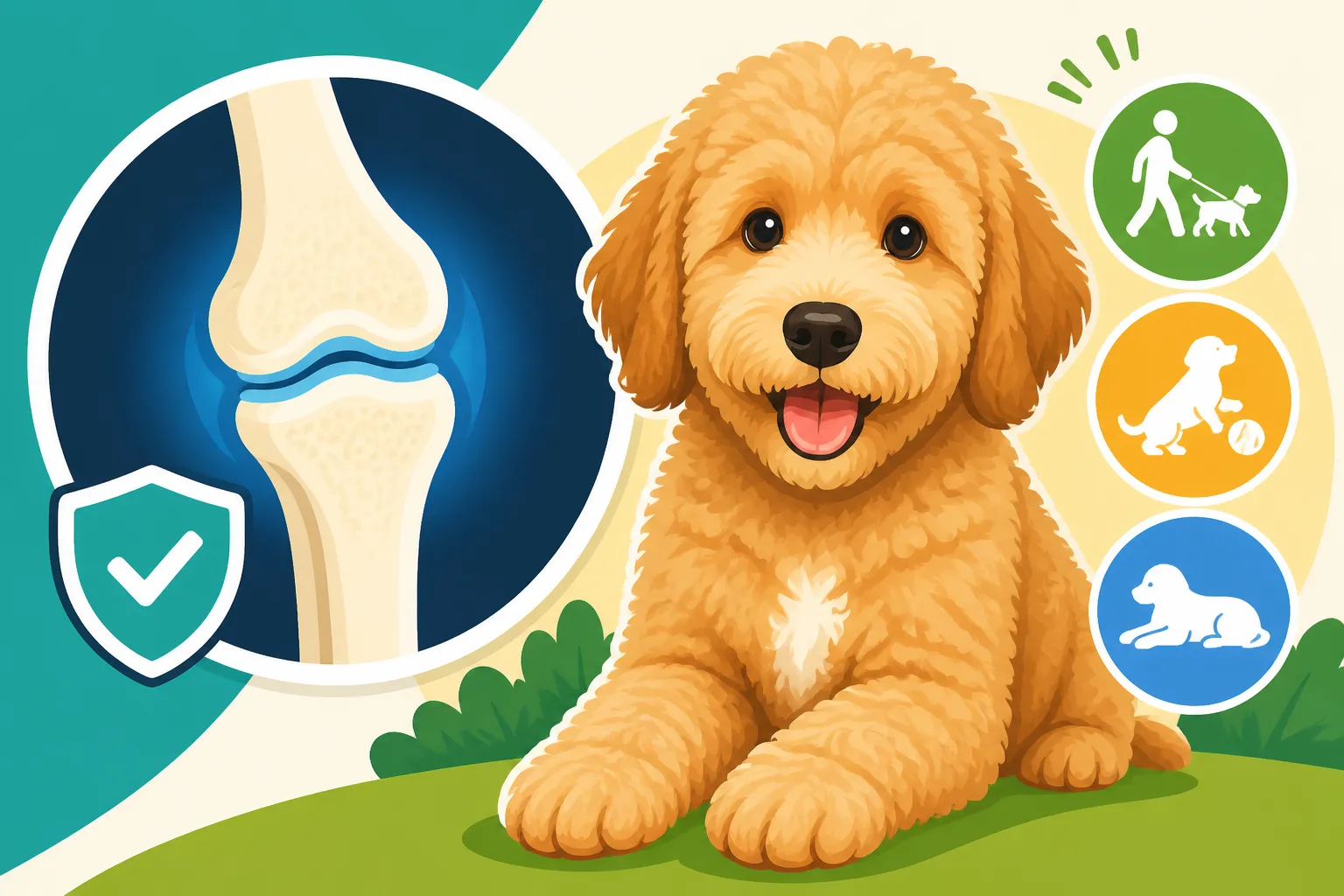
Think of growth plates, scientifically known as epiphyseal plates, as soft, cartilaginous areas near the ends of a puppy's long bones, like those in their legs. These aren't solid bone yet; they're essentially factories where new bone cells are constantly being produced, allowing the bones to lengthen as your Goldendoodle puppy grows from a tiny fluffball into a full-sized dog. Because they're made of cartilage, they are much softer and more fragile than the surrounding mature bone. Imagine trying to build a sturdy house on a foundation of Jell-O – it's just not going to hold up to the same stress as a solid concrete base. This vulnerability means that rough play, repetitive impacts, or accidental falls can easily damage these vital growth zones.
How Growth Plate Injuries Happen
Because growth plates are so much softer than mature bone, they are the weakest link in a puppy's skeletal system. If a puppy experiences too much force or impact, the growth plate is far more likely to be injured than the adjacent bone or ligaments. Common scenarios include jumping off furniture (a definite no-no for growing pups!), repetitive pounding on hard surfaces during long runs, or even an awkward landing from a high jump. A Goldendoodle, with its eager-to-please nature and often surprising athleticism, might push itself beyond what its growing body can handle without showing immediate pain or fatigue. A micro-fracture or even a complete separation of the growth plate can occur, potentially leading to abnormal bone growth, limb deformities, or even long-term lameness if not addressed promptly and correctly. This is why vigilance in managing your puppy's activities is paramount during their first year.
When Goldendoodle Growth Plates Fuse
The timing of growth plate closure is not a one-size-fits-all answer, as it depends significantly on the individual dog and, notably, its size. Generally, smaller breeds mature faster, with their growth plates closing earlier, while larger breeds like Standard Goldendoodles take longer. For most Goldendoodles, you can expect the majority of growth plates to start fusing between 9 to 18 months of age. Smaller Goldendoodles (Mini and Toy) might be on the earlier end of this spectrum, typically around 9 to 12 months, while larger Standard Goldendoodles might continue growing and have open growth plates until 14 to 18 months, or even a bit longer for the very biggest specimens. It's a gradual process, not a sudden event. Even after the visible growth has slowed down, some plates might still be finalizing their fusion. Your vet can give you a better estimate based on your specific puppy's size and breed lines, and in some cases, X-rays might be used to confirm closure, especially if there's a concern about a potential injury. Until full closure, it's safer to err on the side of caution with high-impact activities. For more on how size impacts their joints, check out Goldendoodle Joint Health by Size Category.
Safe Exercise Guidelines for Your Goldendoodle Puppy
So, with the knowledge of vulnerable growth plates, how do you provide enough exercise for your energetic Goldendoodle puppy without risking injury? It's a common dilemma, as these dogs are often bred from active lines and have a natural zest for life. The key is to focus on appropriate types and durations of activity that build muscle and coordination without stressing immature joints. It's not about preventing them from moving, but guiding that movement safely.
The Five-Minute Rule: A Goldendoodle Puppy's Best Friend
This rule is a fantastic, easy-to-remember guideline for Goldendoodle puppy exercise. It suggests that a puppy should receive approximately five minutes of structured exercise per day for every month of their age, up to twice a day. So, a three-month-old Goldendoodle puppy would get 15 minutes of structured activity (like a walk or fetch) twice a day. A six-month-old puppy would get 30 minutes twice a day. This includes leash walks, formal training sessions, and directed play.
Why is this rule so important? Because it prevents over-exertion and unnecessary stress on those developing growth plates. Goldendoodle puppies, especially those with strong retriever instincts, might try to keep going long after their bodies are fatigued, simply because they want to please you or chase that ball one more time. This rule helps you, the owner, set appropriate limits, even when your puppy seems like they could go for hours. It ensures their exercise is consistent and controlled, allowing for proper development without putting their fragile joints at risk. How Far a Goldendoodle Puppy Should Walk is another great resource for understanding distances.
Acceptable Activities for Growing Pups
The goal is to provide varied, low-impact exercise that helps your Goldendoodle puppy build strength, coordination, and confidence without undue stress. Here are some excellent choices:
- Short, Leashed Walks: These are fantastic for socialization and exploring new smells, which is great mental stimulation. Keep them on grass or soft trails rather than pavement. Remember the "five-minute rule" to gauge duration.
- Free Play in a Secure Yard: Let your puppy zoom around and play on their own terms in a safe, enclosed space with soft ground. They can self-regulate much better when they initiate the play. Keep an eye out to prevent excessive jumping or roughhousing if you have other dogs.
- Puppy Socialization Classes: These are invaluable not just for meeting other puppies, but often include controlled play sessions supervised by trainers who understand puppy body language and safe interaction.
- Gentle Fetch on Soft Surfaces: A few throws of a soft ball on grass are great. Avoid long, repetitive sessions or throwing the ball so far that your puppy has to sprint hard repeatedly.
- Tug-of-War (with rules): This can be a great energy burner and bond-builder. Just make sure your Goldendoodle knows to "drop it" on command and avoid violent jerking motions that could strain their neck or joints. Using a sturdy rope toy from a trusted pet supply retailer like Chewy can make this safer.
- Puzzle Toys and Scent Games: Mental exercise is just as important as physical exercise for a smart Goldendoodle. Hide-and-seek with treats or puzzle feeders can tire them out without putting any strain on their growing bodies. You can find a huge variety of these on Amazon.
High-Impact Activities to Steer Clear Of
While your Goldendoodle might look like a miniature athlete, certain activities are big no-nos during their growth phase due to the risk they pose to growth plates and developing joints. Avoiding these can prevent serious, lifelong issues.
- Repetitive Pounding on Hard Surfaces: Long runs on pavement, jogging alongside you, or extended fetch sessions on concrete are out. The constant impact sends jarring forces through those vulnerable growth plates.
- High Jumps and Agility Obstacles: While they might eventually excel at agility, avoid jumping activities, especially those where they land heavily or twist their bodies. This includes jumping off furniture, out of cars, or over obstacles taller than their elbow. Why a Goldendoodle Should Not Jump Off Furniture elaborates on this point.
- Aggressive or Unsupervised Rough Play: While play with other dogs is important, very rough wrestling, hard tackling, or being pinned repeatedly by a much larger, rambunctious dog can lead to awkward falls or twists that injure growth plates. Supervise play carefully.
- Excessive Stair Climbing: While a few stairs occasionally won't hurt, repeatedly going up and down long flights of stairs, especially as a young puppy, can put strain on their still-developing hips and elbows. Consider carrying smaller puppies or limiting access to stairs until they're older.
- Forced Running or Long Hikes: Pushing a puppy to keep up on a long hike or forcing them to run when they'd rather sniff can lead to fatigue and injury. Let your Goldendoodle set the pace and duration during walks.
- Competitive Sports Before Maturity: Activities like competitive agility, flyball, or intensive dock diving should be postponed until your Goldendoodle is fully grown and their growth plates have completely fused.
Recognizing Over-Exercise and Injury Signs
Even with the best intentions and careful management, sometimes puppies can still push themselves too hard, or an accidental tumble might occur. It's crucial for Goldendoodle owners to be vigilant and know the signs that their puppy might be over-exercised or, worse, has sustained an injury. Catching these issues early can make a significant difference in their recovery and long-term health.
Subtle Signs Your Puppy is Overdoing It
Goldendoodle puppies are often so keen to please and so full of energy that they might hide discomfort until it becomes more severe. It's your job to read their subtle cues.
- Limping or Favoring a Leg: This is perhaps the most obvious sign. Even a slight limp after play or rest, or a reluctance to put full weight on a particular paw, should never be ignored.
- Stiffness or Difficulty Getting Up: If your puppy seems stiff, slow, or struggles to get up after lying down, especially after a period of activity, it could indicate sore muscles or joint discomfort.
- Reluctance to Play or Move: A normally playful Goldendoodle suddenly less interested in their favorite game or hesitant to jump (even small jumps they usually enjoy) could be trying to tell you something.
- Changes in Gait or Posture: Watch how they walk and run. Is their stride uneven? Are they holding their head or tail differently? Are they hunching their back? Any unusual posture could signal pain.
- Excessive Panting or Lagging Behind: While all puppies get tired, if your Goldendoodle is panting excessively for the level of activity, seems unusually lethargic, or starts falling behind on a walk they usually manage easily, they might be overexerted.
- Whining or Crying When Touched: If they vocalize or pull away when you gently touch certain areas, especially their legs or hips, they could be experiencing pain.
It's a delicate balance because puppies are known for their "zoomies" and sudden bursts of energy, followed by crashing out. The key is to look for changes in their normal behavior and movement patterns.
What to Do If You Suspect an Injury
If you notice any of the signs above, particularly limping, stiffness, or reluctance to move, it's time to take action.
- Stop All Activity Immediately: Do not let your Goldendoodle puppy continue to play or exercise. Confine them to a crate or a small, safe area to prevent further injury.
- Gentle Examination: Very carefully and gently, run your hands over their legs and body. Look for swelling, heat, or any points where they flinch or cry out. Be extremely cautious, as a painful puppy might snap.
- Contact Your Veterinarian: Even if the signs seem mild, it's always best to get a professional opinion. Explain exactly what happened (if you know) and what symptoms you're observing. They might recommend bringing your puppy in for an examination.
- Follow Vet's Advice: Your vet might suggest rest, pain medication, or further diagnostics like X-rays to assess the growth plates or other joints. Never try to self-diagnose or treat a suspected injury. Early intervention is crucial for proper healing and preventing chronic problems down the line. Remember, issues like Goldendoodle Hip Dysplasia and the OFA Numbers can sometimes manifest with early signs, so veterinary oversight is vital.
Long-Term Consequences of Early Over-Exercise
The impact of pushing a Goldendoodle puppy too hard during their developmental phase can unfortunately echo throughout their entire life. Those vulnerable growth plates, once damaged, may not heal perfectly, leading to permanent structural changes.
- Deformed Limbs: A growth plate injury can cause one side of a bone to stop growing while the other continues, resulting in a bowed or uneven limb. This can lead to lameness and discomfort.
- Arthritis at a Young Age: Joints that developed abnormally or were subjected to excessive stress can wear down faster, leading to osteoarthritis much earlier than naturally would occur. Imagine a Goldendoodle struggling with Senior Goldendoodle Mobility and Arthritis in their middle years instead of their golden ones.
- Chronic Pain and Lameness: Some injuries, if severe or not properly treated, can result in lifelong pain or a persistent limp, significantly impacting a dog's quality of life and ability to enjoy normal activities.
- Increased Risk of Other Joint Issues: Early injuries can predispose a Goldendoodle to other orthopedic problems, such as cruciate ligament tears or patellar luxation, later in life, because their body compensates for the initial damage.
Prevention is truly the best medicine when it comes to safeguarding your Goldendoodle puppy's joints and ensuring they grow into a healthy, pain-free adult.
Long-Term Joint Health and Preventive Care
Protecting your Goldendoodle's joints isn't just about limiting puppy exercise; it's a lifelong commitment that starts with foundational care. Once your Goldendoodle is fully grown and their growth plates have closed, you can gradually increase activity, but maintaining healthy joints requires a holistic approach, encompassing nutrition, weight management, and sometimes even supplements. This proactive strategy can help mitigate the risk of conditions like Goldendoodle Hip Dysplasia at 15 to 20 Percent.
Nutrition's Role in Strong Bones and Joints
What you feed your Goldendoodle puppy from day one plays an enormous role in the health and strength of their bones and joints.
- High-Quality Puppy Food: For larger Goldendoodles, choosing a high-quality large-breed puppy food is critical. These formulas are specifically designed with controlled calcium and phosphorus levels to support steady, healthy growth, rather than rapid growth that can put stress on developing bones. Brands like Purina Pro Plan, Royal Canin, and Eukanuba often offer excellent large-breed puppy formulas that you can find at stores like Chewy or on Amazon.
- Balanced Nutrients: Ensure their food provides a complete and balanced array of vitamins and minerals. Vitamin D, for instance, is crucial for calcium absorption, which builds strong bones.
- Avoid Overfeeding: More isn't always better. Overfeeding a puppy, even with appropriate food, can lead to excessively rapid growth, which is detrimental to growth plates and joints. Stick to the feeding guidelines on the bag or, better yet, consult your vet for precise portion sizes based on your puppy's individual needs. Companies like Ollie, known for fresh, human-grade food, can provide pre-portioned meals, which helps prevent accidental overfeeding. For more specifics, look into Large Breed Puppy Food for a Standard Goldendoodle, Daily Calories for a Standard Goldendoodle, and Daily Calories for a Mini Goldendoodle.
Maintaining a Healthy Weight for Joint Longevity
Once your Goldendoodle is an adult, maintaining an ideal body weight becomes one of the single most important factors in joint health. Extra pounds put immense strain on all joints, accelerating wear and tear and increasing the risk of conditions like arthritis.
- Regular Weight Checks: Even under all that beautiful Goldendoodle fluff, it's possible for them to gain weight without you immediately noticing. Regularly weighing your dog (or at least having your vet do it at check-ups) and checking their body condition (you should be able to feel their ribs easily without seeing them, and they should have a discernible waist) is vital.
- Appropriate Portion Control: As adults, adjust their food intake to match their activity level and metabolism. If your Goldendoodle is less active in cooler months, they might need slightly less food. Always measure their meals rather than free-feeding.
- Healthy Treats: Treats are great for training and bonding, but they should be given in moderation and factored into their daily calorie intake. Choose low-calorie, healthy options.
- Consistent Exercise: Once fully grown, ensure your Goldendoodle gets regular, appropriate exercise to maintain muscle mass and joint flexibility without being overweight. This should be consistent through all seasons. Learn more about the challenges in Goldendoodle Weight Gain and the Strain on Joints.
Supporting Joint Health Through Adulthood
Even with excellent puppy care and weight management, some Goldendoodles may benefit from additional joint support as they age or if they show early signs of stiffness.
- Joint Supplements: Ingredients like glucosamine, chondroitin, and MSM are popular choices believed to support cartilage health and reduce inflammation. Omega-3 fatty acids (like those found in fish oil) can also help reduce inflammation throughout the body, including in the joints. Always discuss any supplements with your veterinarian before starting them, as not all products are created equal, and dosing needs to be appropriate for your dog's size.
- Warm, Soft Beds: Providing orthopedic beds, especially as your Goldendoodle gets older, can offer significant comfort and support for their joints, preventing stiffness from lying on hard surfaces.
- Regular Veterinary Check-ups: Routine vet visits allow your veterinarian to monitor your Goldendoodle's joint health, detect any issues early, and recommend preventive measures or interventions as needed. This is especially important for The Senior Panel a Goldendoodle Should Have at Nine.
- Physical Therapy/Rehabilitation: If your Goldendoodle develops a joint condition or undergoes surgery, canine physical therapy can be incredibly beneficial for regaining strength, flexibility, and range of motion, and can often improve quality of life for dogs with chronic joint pain.
By understanding the delicate nature of puppy growth plates and committing to a comprehensive approach to joint care, you can help ensure your Goldendoodle lives a long, active, and comfortable life.
Disclaimer
This article is for general informational purposes only and does not constitute professional advice. Laws, prices and regulations vary by location and change over time. Consult a qualified professional for guidance on your specific situation.