Doing the Math on an F1b Goldendoodle
It can feel like you need a genetics degree just to understand all the different Goldendoodle generations out there! You've likely heard of F1s, F2s, and of course, the ever-popular F1b, often touted as the "hypoallergenic" choice. But what exactly does that "b" mean, and what's the actual genetic breakdown behind an F1b Goldendoodle? This guide is here to demystify the numbers, showing you the precise "math" involved and why this particular cross is so sought after.
Decoding Goldendoodle Generations: The Foundation
Before we dive into the specifics of the F1b, it's really helpful to understand the basic terminology that breeders use. The "F" stands for "Filial Hybrid," which essentially means a crossbreed. The number refers to the generation. So, when you see an "F1" Goldendoodle, you're looking at the very first generation born from two purebred parents.
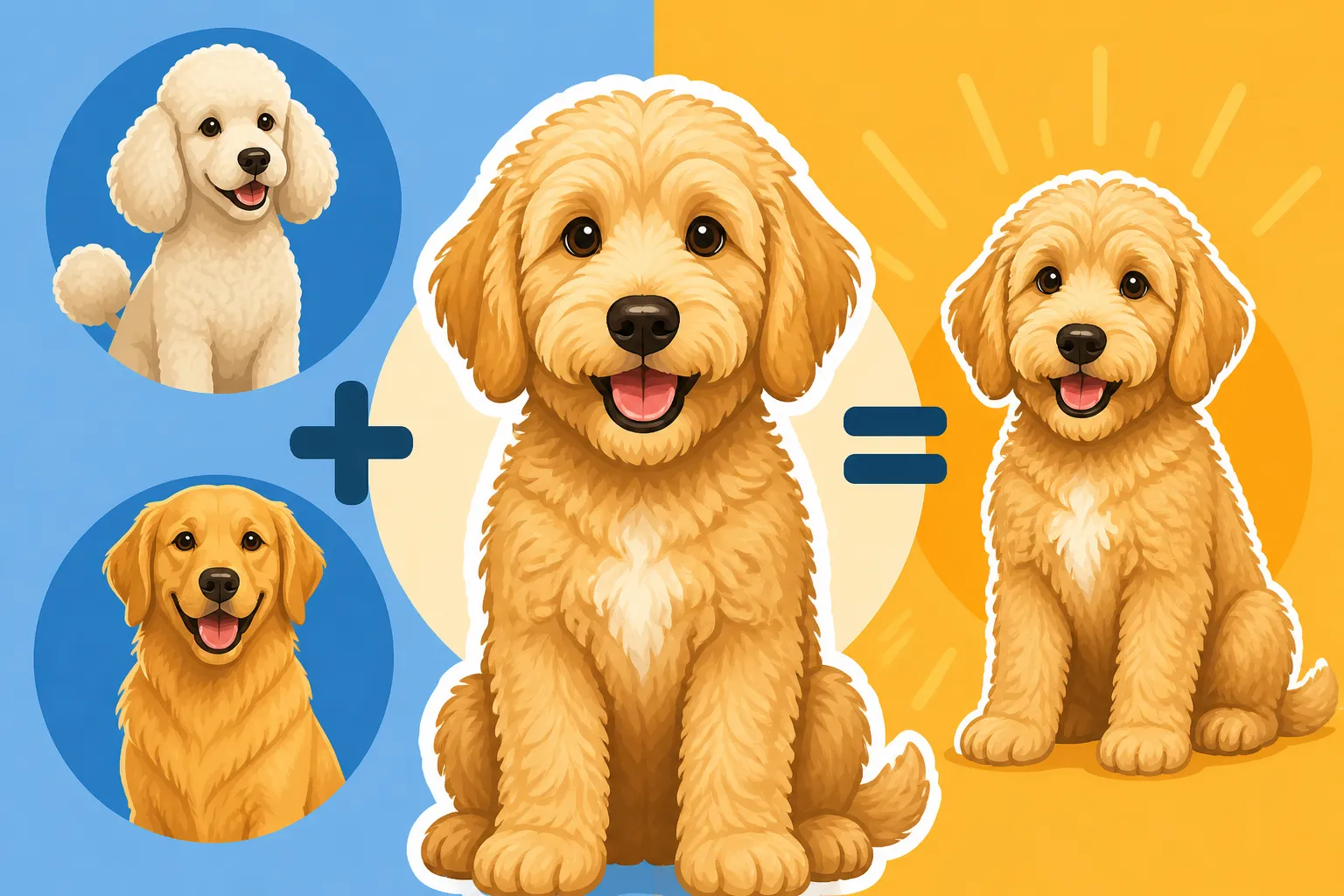
An F1 Goldendoodle is the direct offspring of a purebred Golden Retriever and a purebred Poodle. This means, genetically speaking, an F1 Goldendoodle is typically a 50% Golden Retriever and 50% Poodle mix. Simple enough, right? The idea behind this initial cross was to combine the beloved temperament of the Golden Retriever with the non-shedding, intelligent traits of the Poodle. You can read more about What the Letter F Means in a Goldendoodle Pedigree to get an even clearer picture.
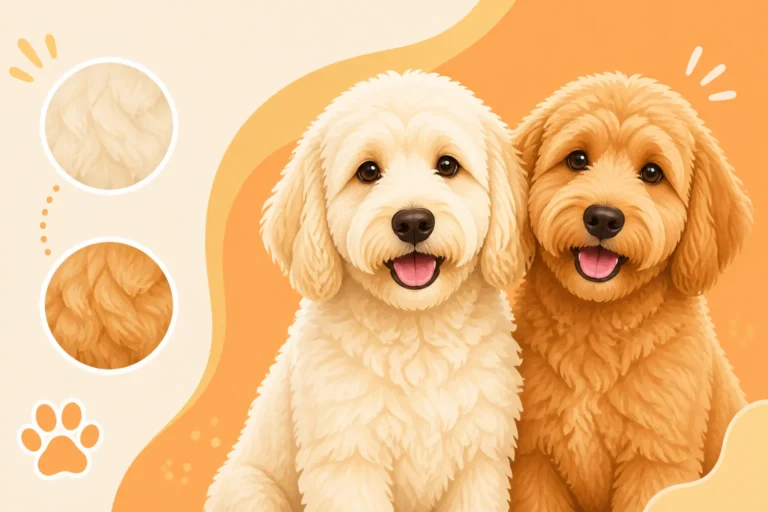
However, the reality of F1 coats can be quite variable. While some F1 Goldendoodles might inherit a lovely wavy or curly coat that sheds minimally, others can end up with a straighter, more Golden-like coat that sheds more. This unpredictability, especially for families seeking a low-shedding dog, led breeders to experiment further, paving the way for the F1b generation. This is also why understanding How an F1 Goldendoodle Is Bred is so important, as it’s the starting point for everything else.
The F1b Goldendoodle: The Genetic Breakdown
This is where the "math" really comes into play, and it’s a crucial distinction. An F1b Goldendoodle is created by "backcrossing" an F1 Goldendoodle (which is 50% Golden Retriever, 50% Poodle) with a purebred Poodle. The "b" in F1b literally stands for "backcross."
Let's break down the percentages. If your F1 Goldendoodle parent contributes 50% Golden Retriever and 50% Poodle genetics, and the other parent is a 100% purebred Poodle, the resulting F1b puppy's genetic makeup is a statistical average of its parents. You effectively take the 50% Poodle from the F1 parent and add it to the 100% Poodle from the purebred Poodle parent, then average it out.
So, for an F1b Goldendoodle:
- The Golden Retriever contribution comes solely from the F1 parent's Golden half, which is 50% of 50%, or 25%.
- The Poodle contribution comes from the F1 parent's Poodle half (50% of 50%, or 25%) plus the entire 100% contribution from the purebred Poodle parent. This works out to an average of 75% Poodle (25% from F1 + 50% from purebred Poodle).
The result is a Goldendoodle that is, on average, 75% Poodle and 25% Golden Retriever. This intentional shift in genetic ratios is designed to increase the likelihood of specific Poodle traits, primarily the low-shedding, curly coat. Understanding How an F1b Goldendoodle Is Bred Back is key to appreciating this genetic strategy.
Here’s a quick table to help visualize the difference between the most common initial generations:
| Generation | Parent 1 | Parent 2 | Golden Retriever % (Avg) | Poodle % (Avg) | Typical Coat Description |
|---|---|---|---|---|---|
| F1 | Purebred Golden Ret. | Purebred Poodle | 50% | 50% | Straight, wavy, or curly (variable) |
| F1b | F1 Goldendoodle | Purebred Poodle | 25% | 75% | Wavy to curly, typically low-shedding |
| F1bb | F1b Goldendoodle | Purebred Poodle | 12.5% | 87.5% | Very curly, often non-shedding |
Beyond the 75/25 Rule: Individual Variation
Now, it's crucial to understand that while 75% Poodle and 25% Golden Retriever is the average genetic contribution for an F1b Goldendoodle, it's not a rigid, exact formula for every single puppy in a litter. Think of it like shuffling a deck of cards: you get a mix of genetic material from each parent, but the precise combination passed down to each individual puppy can vary. This is thanks to the wondrous process of genetic recombination.
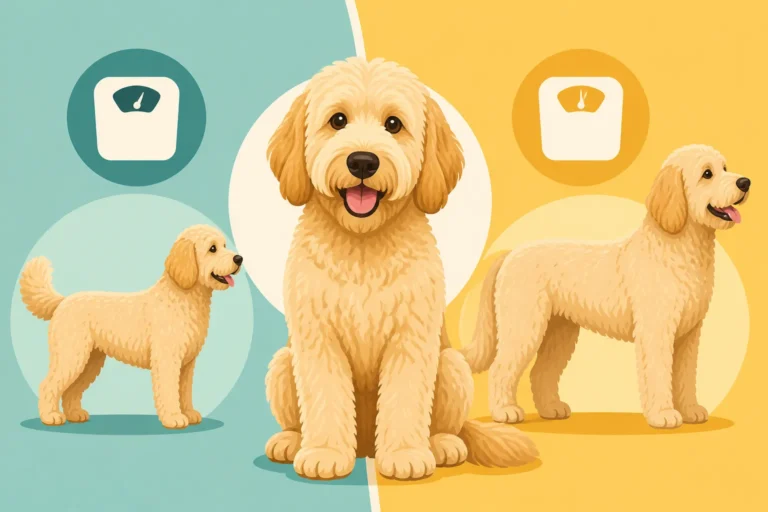
This means that even within the same F1b litter, you might see some puppies that lean slightly more towards their Poodle ancestors in certain traits, while others might retain a tiny bit more of their Golden heritage in other aspects. For instance, one F1b puppy might have a slightly wavier coat, while another sibling has a very tight curl, even though both are F1b. This is why you can sometimes see Why two Goldendoodles from one litter differ in appearance or even temperament, despite sharing the same parents. It's a testament to the beautiful complexity of genetics in crossbreeds.
The Strategic Backcross: Why Breeders Choose F1b
So, why go through the extra step of backcrossing to create an F1b? It's not just to make the naming conventions more complicated, I promise! There are very deliberate and practical reasons behind this breeding strategy, primarily revolving around predictability and desirability of certain traits.
Reducing Shedding and Allergen Load
The number one reason breeders strive for the F1b generation is to create a Goldendoodle that is more consistently low-shedding. The Poodle is renowned for its curly, single-coat hair that grows continuously and sheds minimally, similar to human hair. By increasing the Poodle percentage to 75%, breeders significantly enhance the chances of a puppy inheriting those desirable Poodle coat genes. This is often the goal for families where allergies are a concern.
It's important to set realistic expectations here. While F1b Goldendoodles are generally very low-shedding, no dog is truly 100% "hypoallergenic." People with dog allergies react to dander (skin flakes), saliva, and urine, not just hair. A lower-shedding dog simply releases less dander into the environment. So, while an F1b is often a much better choice for allergy sufferers than an F1, it’s not a guaranteed solution, and you should definitely learn Why No Goldendoodle Is Truly Hypoallergenic.
Coat Consistency
Beyond just shedding, the F1b generation also offers greater consistency in coat type. While F1 Goldendoodles can have a wide spectrum of coats—from flat and straight to shaggy wavy, to tight curls—the F1b typically narrows that range. Most F1b Goldendoodles will have a wavy or curly coat, often described as "fleece" or "wool." This makes it easier for breeders to predict what type of coat a litter will have, fulfilling a common desire among prospective owners for that classic, plush "doodle" look.
This consistency means less guesswork for you as an owner, particularly when it comes to grooming expectations. A puppy with a curlier, denser coat is almost certainly going to require more diligent care than one with a straighter coat, which leads us nicely into the practical implications.
Temperament Considerations
While coat type is usually the primary driver for creating F1b Goldendoodles, the increased Poodle influence can also subtly impact temperament. Poodles are highly intelligent, agile, and often possess a slightly more independent streak, although they are also very keen to please their owners. Golden Retrievers are known for their boundless enthusiasm, friendliness, and biddability.
An F1b Goldendoodle might, on average, inherit a bit more of the Poodle's sharp intellect and quick problem-solving abilities. This often means they can excel in training and enjoy mental stimulation games. However, they still retain plenty of the Golden Retriever's endearing desire to be part of the family and their generally happy-go-lucky nature. It's a fantastic blend, but some owners might notice a slight lean towards Poodle behaviors. You might find yourself wondering Whether an F1b Goldendoodle Acts More Like a Poodle in daily life, and the answer, genetically, is often "yes, a little."
The Trade-offs: What You Gain and What You Might Lose
With every breeding decision, there are always trade-offs, and the F1b generation is no exception. While you gain a higher likelihood of a low-shedding coat, there are other factors to consider when you're doing the math on an F1b Goldendoodle.
Firstly, increasing the percentage of one parent breed, in this case, the Poodle, can mean a slight reduction in what's known as "hybrid vigor." Hybrid vigor is the idea that the first cross (F1) often benefits from a broader genetic pool, potentially leading to increased health and robustness. When you backcross to a Poodle, you are, by definition, narrowing that genetic pool slightly towards the Poodle side. This isn't to say F1bs aren't healthy dogs, but it's a point worth noting in the broader genetic discussion. For more on this, check out Why Goldendoodle Hybrid Vigor Fades After F1.
Secondly, with a higher percentage of Poodle genetics, there is a statistical increase in the potential for inheriting health concerns more common to the Poodle breed. While Goldendoodles benefit from being a cross, and responsible breeders health test extensively, conditions like Addison's Disease, bloat, or sebaceous adenitis, which are seen in Poodles, might become slightly more prevalent in an F1b compared to a purely 50/50 F1. Of course, the Golden Retriever's predispositions, like certain cancers or hip dysplasia, are still very much a factor from the 25% Golden side. A good breeder will have thoroughly tested both parents, mitigating these risks significantly.
Practical Implications for F1b Goldendoodle Owners
Understanding the genetics is one thing, but what does it all mean for you as a potential F1b Goldendoodle owner? The genetic "math" directly translates into practical considerations for daily care, health monitoring, and managing expectations.
Grooming Needs
Because F1b Goldendoodles typically have those wonderful wavy or curly, low-shedding coats, they come with a significant grooming commitment. That continuous-growth hair, while great for allergies, is a magnet for mats. If you've never had a Poodle or a doodle with a similar coat type, this can be a real wake-up call.
You'll need to brush your F1b Goldendoodle diligently, often several times a week, if not daily, using a slicker brush and a metal comb to ensure you're reaching down to the skin. Missing even a small mat can quickly lead to a larger, painful tangle that might require professional shaving. Professional grooming appointments every 6-8 weeks are non-negotiable for most F1b owners to keep their dog comfortable and healthy. It's truly a critical aspect of their care, and you'll soon realize Brushing a Goldendoodle Often Enough to Stop Matting is not just a suggestion, but a necessity. Companies like Chewy offer a fantastic array of grooming tools, from sturdy slicker brushes to detangling sprays, that are absolute must-haves for maintaining their beautiful coats between professional visits.
Allergy Management
While the F1b Goldendoodle is often chosen specifically for its low-shedding qualities, remember that "hypoallergenic" is a myth. If someone in your household has allergies, even with an F1b, it's wise to spend time with the specific puppy or adult dog you are considering before bringing them home. Every dog, and every allergic individual, is different.
Beyond choosing an F1b, you can help manage allergens in your home by regularly bathing your dog with a gentle shampoo (again, Chewy has great options for sensitive skin), using air purifiers, vacuuming frequently with a HEPA filter, and keeping your Goldendoodle off furniture and out of bedrooms. Consistent grooming, both at home and professionally, is your best defense against allergen buildup.
Understanding Potential Health Predispositions
Even though F1b Goldendoodles have more Poodle in them, they are still a crossbreed, and their health profile is a blend of both parent breeds. This means you should always look for a breeder who conducts comprehensive health testing on both the Poodle parent and the F1 Goldendoodle parent. These tests should cover conditions prevalent in Golden Retrievers, such as hip and elbow dysplasia, certain heart conditions, and various cancers, as well as Poodle-specific issues like Progressive Retinal Atrophy (PRA), Addison's Disease, Von Willebrand's Disease, and patellar luxation.
Don't just take a breeder's word for it; ask to see the official clearances. This is non-negotiable for any reputable breeder, regardless of generation. A good breeder will be transparent about their health testing and able to explain The DNA Panel a Goldendoodle Breeder Should Run and Health Testing Both Goldendoodle Parents Should Have. It's crucial to understand that even with the best genetic math, a dog is still an individual. Being aware of the risks from both sides of the family, like Addison's Disease a Goldendoodle Gets From the Poodle or Cancer Risk a Goldendoodle Carries From the Golden Side, empowers you to provide the best preventive care and recognize early signs if something does arise.
Ultimately, "doing the math" on an F1b Goldendoodle reveals a deliberate strategy to create a dog with more predictable low-shedding qualities. While it’s not a magic bullet for allergies or an elimination of all health concerns, it’s a genetic blueprint that has successfully produced countless beloved family companions.
Disclaimer
This article is for general informational purposes only and does not constitute professional advice. Laws, prices and regulations vary by location and change over time. Consult a qualified professional for guidance on your specific situation.