Why Goldendoodle Saliva Matters More Than Shedding
One of the most common reasons folks fall in love with Goldendoodles is the promise of less shedding, often hoping that means fewer sniffles and itchy eyes. It's a completely understandable hope, especially when you're dreaming of a furry companion without the constant cleanup. However, many Goldendoodle owners, and prospective owners, are still caught off guard by allergy symptoms even with a low-shedding dog. This guide will peel back the layers of this common misconception, explaining why your Goldendoodle's saliva is actually a much bigger factor than its shedding when it comes to allergies, and what you can do about it.
The Shedding Misconception and Allergy Realities
When we talk about dog allergies, the first thing that usually comes to mind is hair, right? We see dog hair everywhere, clinging to clothes, furniture, and floating through the air, so it's natural to assume that's the primary culprit. People often seek out Goldendoodles, specifically F1b or multi-gen curly-coated varieties, because they're told these dogs shed minimally, if at all. The assumption is that less shedding automatically equates to a "hypoallergenic" dog.
Unfortunately, this isn't the full picture. While reduced shedding can certainly help minimize the spread of allergens, it doesn't eliminate them entirely, because the hair itself isn't the primary allergen. It's really a vehicle. Many families have brought home a Goldendoodle with high hopes, only to find that despite the cleaner floors, their allergies persist. This can be incredibly frustrating and disheartening, especially after investing so much time and emotion into finding the right dog. It's a common point of confusion, and one that deserves a much clearer explanation. You can read more about Why No Goldendoodle Is Truly Hypoallergenic.
Why Low Shedding Doesn't Mean Allergy-Free
The real allergens are microscopic proteins found in a dog's dander (dead skin flakes), urine, and, most significantly for many, saliva. When a dog sheds, it disperses dander and saliva-coated hairs into the environment, which is why shedding contributes to allergy symptoms. However, even a dog that doesn't shed much still produces dander and saliva. Think of it like this: your dog is constantly cleaning itself, licking its fur, paws, and body. Every time it does this, it's transferring those allergenic proteins from its saliva onto its coat and skin.
Once these proteins are on the coat, they inevitably dry and become airborne with minute skin flakes (dander) or rub off onto surfaces the dog touches. So, while a low-shedding Goldendoodle might mean you're not vacuuming tumbleweeds of fur every day, it doesn't mean your home is free of the actual allergy triggers. The illusion of a "hypoallergenic" coat can lead to disappointment if the underlying biological cause isn't understood. This is why What Allergists Say About Goldendoodles often differs from popular belief.
Understanding Different Goldendoodle Coat Types
Goldendoodles come with a variety of coats, often categorized as straight, wavy, or curly. Each type can have different shedding characteristics, but all produce dander and saliva.
| Coat Type | Shedding Level (General) | Allergen Spread Impact | Grooming Needs |
|---|---|---|---|
| Straight | Moderate to High | Higher (more hair to carry allergens) | Moderate |
| Wavy | Low to Moderate | Moderate | Moderate to High |
| Curly | Very Low to Minimal | Lower (fewer loose hairs) | High |
Even Goldendoodles with the tightly curled, "wool" coats, which are often sought after by allergy sufferers, are still secreting the Can f 1 protein. While they might trap more dander and saliva in their dense curls rather than releasing it into the air as loose hairs, those allergens are still present and can transfer to you through petting or close contact. It's important to understand the nuances of The Three Goldendoodle Coat Types and How to Tell Them to manage expectations.
Unpacking the Real Culprit: Can f 1 in Saliva
The star player in the dog allergy game isn't hair, but a specific protein called Can f 1. This protein is primarily produced in a dog's salivary glands and sebaceous glands in the skin. So, every lick, every scratch, every breath a dog takes, it's potentially releasing these tiny, invisible proteins into the environment. This makes saliva a much more direct and potent source of allergens than the shed hair itself.
When a Goldendoodle licks your hand, or grooms itself, those proteins are directly transferred. Once the saliva dries, the proteins become part of the dander, which is then dispersed. Because Goldendoodles are often described as "Velcro dogs" due to their affectionate nature and desire to be close to their human companions, they inadvertently increase direct exposure to these salivary allergens. They're on your lap, licking your face, snuggling on the couch – all prime opportunities for allergen transfer. This is exactly Where a Goldendoodle's Allergens Actually Come From.
The Role of Dander and Urine
While saliva takes center stage, dander and urine also contribute to the allergen load. Dander, those tiny flakes of skin, is essentially dried-up skin cells that constantly slough off. These skin cells carry the Can f 1 protein (from the sebaceous glands) and can also be coated with dried saliva. Dander is incredibly lightweight and can stay suspended in the air for long periods, settling on every surface in your home. This is why cleaning diligently is so important, regardless of how much your Goldendoodle sheds.
Urine also contains allergenic proteins. While a well-house-trained Goldendoodle might not directly contribute to airborne urine allergens, any accidents during puppyhood, or even residual urine on outdoor surfaces, can be a source. For most indoor environments, however, saliva and dander are the main concerns. The combination of these factors means that focusing solely on shedding misses the point of managing dog allergies with a Goldendoodle.
Why Exposure to Saliva is Hard to Avoid
Think about a typical day with your Goldendoodle. They wake you up with a happy lick to the face. They're nudging your hand for pets, their wet nose touching your skin. After a drink of water, their beard is dripping. They chew on their favorite toy, then drop it on your rug. They rub against your leg for attention, then settle down for a nap on the sofa where you sit. Each of these everyday interactions involves direct or indirect transfer of saliva.
Even if your Goldendoodle has an F1b or Multigen coat that barely sheds, the proteins in their saliva are still very much present. These proteins are sticky, clinging to their fur, your clothes, and all the surfaces they interact with. It's not just the hair itself that causes the reaction, but what's on the hair, what's in the dander, and what's in the slobbery kisses. Understanding this biological reality is crucial for families navigating dog allergies. It highlights why Can f 1 and Where a Goldendoodle Carries Allergens is a critical concept for Goldendoodle owners.
How Goldendoodles Spread Allergens (Even if They Don't Shed)
Even the most non-shedding Goldendoodle can be an allergen factory, and it's all about how those tiny proteins move from their body into your living space. It’s not just about visible hair; it’s about invisible particles. This can be a hard pill to swallow for hopeful allergy sufferers, but facing the facts allows for better management.
The Grooming Connection
Every Goldendoodle, regardless of coat type, grooms itself. They lick, chew, and scratch. When they do this, they're distributing saliva, and therefore Can f 1 proteins, all over their coat. As the saliva dries, it becomes part of the dander and sticks to the hair. When you brush your Goldendoodle, even a non-shedding one, you're disrupting these particles and releasing them into the air. This is why regular brushing, ideally outside or with a good air filter, is so important.
Think about how often you interact with your Goldendoodle's coat – petting, cuddling, grooming. Every touch is a potential transfer point. Their beautiful, often fluffy coats are excellent traps for these allergens, holding onto them until they're released by movement or brushing. This is why a thorough Brushing a Goldendoodle Often Enough to Stop Matting routine isn't just for knot prevention; it's also a key part of allergy management.
Airborne and Surface Spread
Once the saliva-laden dander and hair fragments are released, they don't just disappear. They become airborne, floating through your home's ventilation system, settling on furniture, carpets, and curtains. They stick to walls, collect under beds, and permeate upholstered items. This means that even if your Goldendoodle isn't in a particular room, allergens can still be present there.
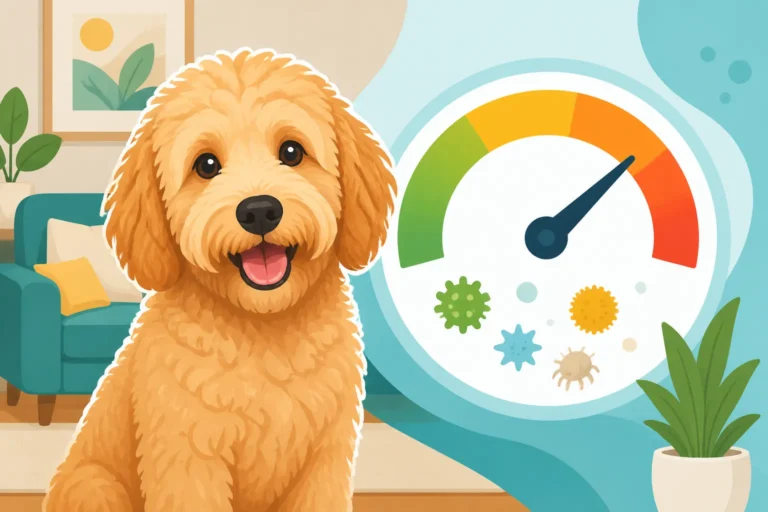
Furthermore, every surface your Goldendoodle touches becomes a potential source. Their dog bed, toys, your sofa, your bed (if they're allowed), even your clothes after a cuddle session. These proteins transfer easily and persist in the environment. This is why some people find relief only after removing all carpets and upholstered furniture, creating a more easily washable environment. The extent to which these allergens build up in a home can be significant, even if you never see a stray hair. This is why Allergen Levels Measured in Goldendoodle Homes often surprise people.
Direct Contact and Close Proximity
Goldendoodles are famous for being affectionate and wanting to be close to their families. This lovely trait, however, is a direct pathway for allergen exposure for sensitive individuals. Whether they're licking your hand, resting their head on your lap, or sleeping in your bed, direct contact means direct transfer of salivary proteins and dander. For someone with a severe allergy, even a brief touch can trigger a reaction.
It's a tough balance to strike, loving your dog and managing allergies, but acknowledging this direct contact route is important. It means thinking about how you interact, and how to minimize that direct transfer, especially if symptoms are severe. Sometimes, it means creating "allergen-free zones" in the home, like a bedroom, where the Goldendoodle is not allowed, providing a sanctuary for allergy sufferers.
Managing Allergens in a Goldendoodle Home
Okay, so we've established that the "hypoallergenic" dream often falls short because saliva, not just shedding, is the main culprit. But that doesn't mean you can't live comfortably with your beloved Goldendoodle if you have allergies! It simply means you need a comprehensive strategy that goes beyond just hoping for a low-shedding coat. It's about proactive management and diligent cleaning.
Regular Grooming and Bathing
This is probably your most powerful tool. Consistent grooming helps remove dander and loose hairs (which carry dried saliva) before they spread widely.
- Professional Grooming: Schedule professional grooming every 6-8 weeks. A good groomer will thoroughly wash, dry, and brush your Goldendoodle, significantly reducing the allergen load on their coat. Discuss this with your groomer so they understand the goal.
- Home Brushing: Even between professional grooms, you'll need to brush your Goldendoodle at home several times a week. Use a slicker brush and a metal comb to get deep into the coat and remove loose hair and dander. Try to do this outdoors if possible, or in a well-ventilated area, and wear a mask if your allergies are severe.
- Bathing: Bathe your Goldendoodle at home every 2-4 weeks using a mild, veterinarian-approved shampoo. This helps wash away accumulated allergens. Make sure to dry them completely to prevent skin issues and matting. Chewy offers a wide selection of gentle dog shampoos suitable for Goldendoodles.
Environmental Control Measures
Your home environment needs to be managed just as much as your dog's coat.
- HEPA Filters: Invest in high-quality HEPA air purifiers for rooms where your Goldendoodle spends a lot of time, especially bedrooms and living areas. Also, ensure your HVAC system has a high-efficiency particulate air (HEPA) filter and change it frequently.
- Vacuuming: Vacuum carpets and upholstered furniture frequently (daily or every other day) with a vacuum cleaner equipped with a HEPA filter. For hard floors, damp mopping is even better as it traps allergens rather than stirring them up.
- Surface Cleaning: Regularly wipe down hard surfaces with a damp cloth. This includes tables, shelves, and countertops, where airborne allergens can settle. Chewy also stocks a variety of pet-safe cleaning solutions that can help.
- Washable Fabrics: Choose washable slipcovers for furniture, and wash pet beds, blankets, and your dog's toys frequently in hot water. Avoid heavy curtains and opt for blinds or lighter, washable window treatments.
- Create Allergen-Free Zones: Designate certain areas of your home, like your bedroom, as off-limits to your Goldendoodle. This gives allergy sufferers a space where allergen levels are significantly lower, allowing for symptom relief. You might think about your bedroom as a sanctuary for eight hours a day.
Personal Hygiene and Interaction Strategies
How you interact with your Goldendoodle can also make a big difference.
- Hand Washing: Always wash your hands immediately after petting or handling your Goldendoodle. This simple step can prevent the transfer of allergens to your face and eyes.
- Change Clothes: If you've been cuddling extensively with your Goldendoodle, consider changing your clothes, especially before entering an allergen-free zone like your bedroom.
- Avoid Face Licking: While those Goldendoodle kisses are hard to resist, politely discourage face licking, especially if it leads to skin irritation or respiratory symptoms.
- Diet and Supplements: Sometimes, certain foods or supplements can help improve your dog's skin health, potentially reducing dander. Consult your vet about appropriate omega-3 fatty acid supplements or specialized diets. Many quality dog foods and supplements can be found at Chewy.
By implementing these strategies, you can significantly reduce the allergen load in your home and make living with your wonderful Goldendoodle a much more comfortable experience, even if you’re prone to allergies. It really comes down to acknowledging that Whether a Low-Shedding Goldendoodle Helps Allergies is only part of the equation, and proactive care is key.
Disclaimer
This article is for general informational purposes only and does not constitute professional advice. Laws, prices and regulations vary by location and change over time. Consult a qualified professional for guidance on your specific situation.