The Goldendoodle Against a Sheepadoodle
It’s easy to get swept up in the adorable charm of a Doodle, but when you’re looking to bring a new furry family member home, the sheer number of Poodle crosses out there can feel overwhelming. Many folks find themselves torn between the ever-popular Goldendoodle and the increasingly beloved Sheepadoodle, each with their own unique blend of traits. This guide aims to thoroughly explore the distinctions between these two wonderful breeds, helping you understand their temperaments, care needs, and what to expect from daily life, so you can confidently choose the perfect companion for your household.
Understanding the Goldendoodle: A Familiar Friend
The Goldendoodle has truly captured hearts for decades, and it's easy to see why. This delightful crossbreed brings together the best of the Golden Retriever and the Standard Poodle, resulting in a dog that is typically outgoing, intelligent, and incredibly devoted to its family. They're often seen as the quintessential "friendly family dog," eager to join in on any activity.
One of the most defining characteristics of a Goldendoodle is its desire to be involved. They thrive on companionship and genuinely want to please their people, which often makes them highly trainable. Whether you’re teaching basic obedience or more complex tricks, their enthusiasm for learning, often inherited from the Poodle side, coupled with the Golden Retriever's biddability, means they tend to pick things up quickly. However, this intense desire for connection can sometimes manifest as Goldendoodle Separation Anxiety From Both Parent Lines if they are left alone for too long without proper preparation. Their energy levels can range from moderate to high, requiring consistent Goldendoodle Exercise and Mental Work Every Day to keep them happy and well-adjusted. This isn't a dog content to be a couch potato all day, though they certainly enjoy snuggling up after a good romp.
Their coats are a significant draw for many, ranging from wavy to curly, and often shedding less than a purebred Golden Retriever. But don't be fooled by the "low-shedding" label; while some Goldendoodles are certainly less prone to dropping hair around the house, they are not truly hypoallergenic, and their coats demand serious attention. We're talking regular Brushing a Goldendoodle Often Enough to Stop Matting to prevent painful tangles and mats, which are a common frustration for new owners. Without diligent grooming, that beautiful fluffy coat can quickly become a matted mess, leading to expensive professional dematting fees or even a full shave-down.
Introducing the Sheepadoodle: The Gentle Giant
Now, let's turn our attention to the Sheepadoodle, a captivating cross between the Old English Sheepdog and the Standard Poodle. While not as long-established or as widely known as the Goldendoodle, the Sheepadoodle has rapidly gained popularity due to its striking appearance and truly lovely temperament. They often possess a playful, affectionate, and intelligent nature, though perhaps with a slightly calmer demeanor than many Goldendoodles.
Sheepadoodles often inherit a gentle, laid-back disposition from their Old English Sheepdog lineage, balanced by the Poodle's smarts and zest for life. This combination often results in a dog that is incredibly adaptable, often doing well in various living situations as long as their needs for attention and exercise are met. They tend to be good-natured with children and other pets, often exhibiting a patient and tolerant streak. Their intelligence makes them highly trainable, much like the Goldendoodle, but they might approach training with a slightly more thoughtful, less exuberant energy. They also benefit immensely from positive reinforcement methods.
Their coat is undeniably one of their most distinguishing features, typically a shaggy, soft, and often bicolor or tricolor affair, inheriting the Old English Sheepdog's characteristic "woolly" appearance combined with the Poodle's curl. Like the Goldendoodle, the Sheepadoodle's coat is often marketed as low-shedding, which can be true, but again, it requires extensive grooming. This isn't a wash-and-wear dog; that glorious coat is prone to matting and will require consistent brushing and professional trims every few months. Ignoring their coat needs will lead to the same painful matting issues Goldendoodle owners face. Platforms like Chewy offer a vast array of brushes, combs, and detangling sprays specifically designed for long, curly coats that both Goldendoodles and Sheepadoodles possess.
Key Differences: Goldendoodle vs. Sheepadoodle
When you line them up, the Goldendoodle and the Sheepadoodle share some "Doodle" commonalities, but they diverge significantly in ways that impact daily life. Understanding these core differences is crucial in deciding which one might be the best fit for your home.
| Feature | Goldendoodle | Sheepadoodle |
|---|---|---|
| Parent Breeds | Golden Retriever + Poodle | Old English Sheepdog + Poodle |
| Typical Size | Standard, Medium, Mini, Toy (often smaller options) | Often Standard to Giant (larger side of standard) |
| Coat Appearance | Wavy to curly; solid colors, some partis | Shaggy, wavy to curly; often black/white or gray/white |
| Shedding | Low to moderate (depends on generation/coat type) | Low to moderate (requires diligent grooming) |
| Grooming Needs | High (daily/every-other-day brushing, professional every 6-8 weeks) | High (daily brushing, professional every 6-8 weeks) |
| Energy Level | Moderate to high; enthusiastic, playful | Moderate; playful but often calmer, more laid-back |
| Temperament | Eager to please, social, friendly, can be exuberant | Patient, gentle, intelligent, affectionate, sometimes "clownish" |
| Common Health Concerns (Breed Specific) | Hip/Elbow Dysplasia, PRA, Addison's, Cancer | Hip/Elbow Dysplasia, Addison's, Bloat, Deafness, Eye Anomalies |
| Apartment Suitability | Mini/Medium Goldendoodles can adapt with exercise | Smaller Sheepadoodles might, but generally need more space |
Size and Physical Presence
One of the most immediate distinctions you'll notice is often their size, particularly at the standard level. While The Four Goldendoodle Sizes and How They Are Set include Standards, Mediums, Minis, and even Toys, offering a range of options, Sheepadoodles tend to lean towards the larger end of the spectrum. Most Sheepadoodles are bred from Standard Poodles and Old English Sheepdogs, making them substantial dogs. A fully grown Standard Sheepadoodle can easily weigh 60-80 pounds, sometimes more, and be quite tall. A standard Goldendoodle, while also large, often falls within a similar range but with more variability downwards due to the existence of more common mini/medium lines. If you're looking for a genuinely smaller dog, the Goldendoodle offers more consistent options in the mini and toy categories, which are less common or consistent with Sheepadoodles. This difference in physical presence impacts everything from the size of dog bed you need to how much space they take up on the couch.
Coat Type and Grooming Demands
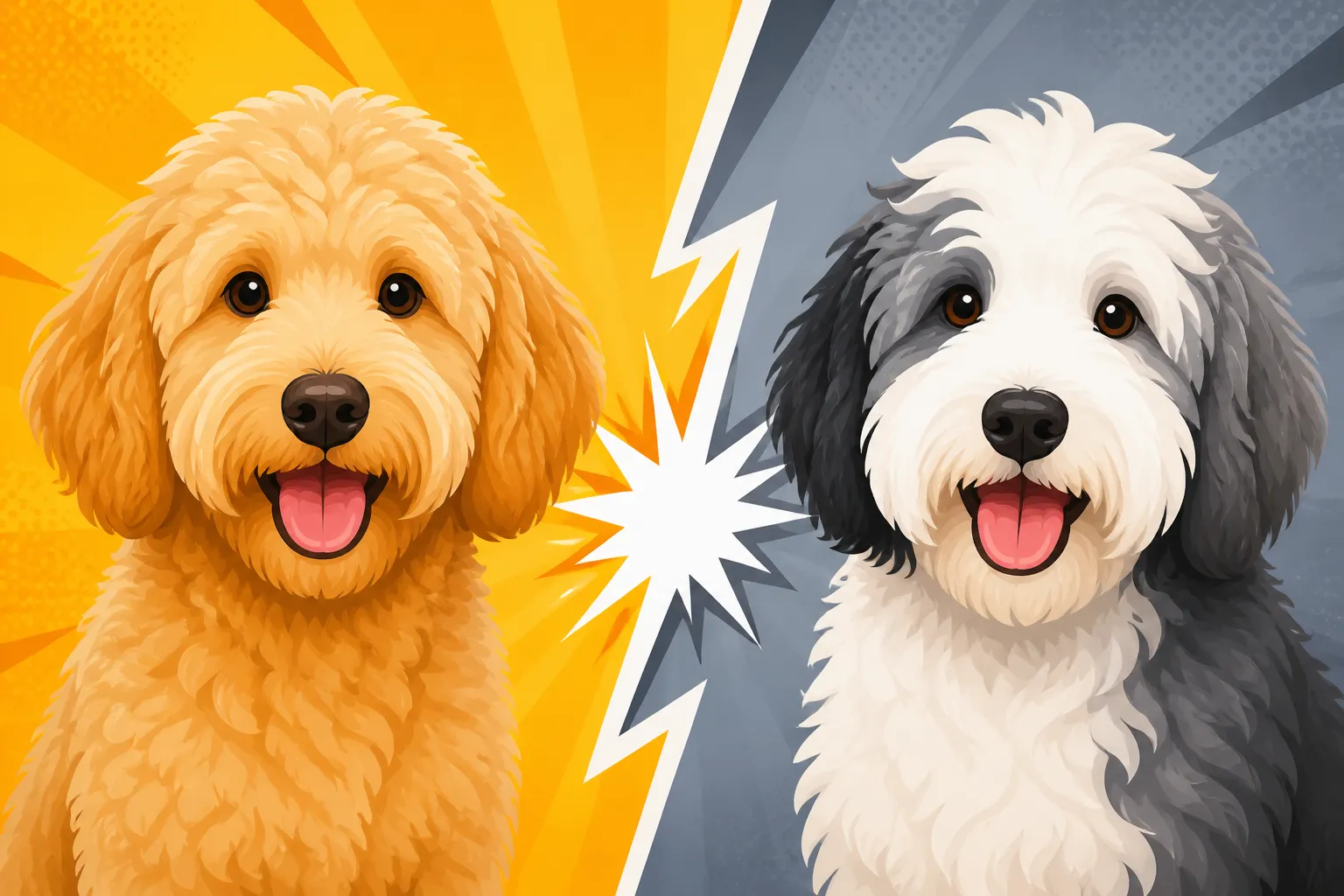
Both Doodles boast those appealing low-shedding coats, but the type of coat and its maintenance can differ. Goldendoodle coats are famous for their soft waves or tighter curls, coming in a variety of solid colors like cream, apricot, red, and black, with some parti or phantom patterns emerging. A Sheepadoodle, however, often sports a distinct black and white or grey and white shaggy coat, a clear nod to its Old English Sheepdog parentage. Their hair tends to be a bit thicker and denser, which, while beautiful, can be a magnet for dirt, leaves, and burrs.
Regardless of the cross, both require a monumental commitment to grooming. Daily brushing isn't just a suggestion; it's a necessity to prevent painful matting that can lead to skin infections and discomfort for your dog. For instance, after a romp in the park, a Goldendoodle’s wavy coat might collect some debris, but a Sheepadoodle’s dense shag can literally become a moving shrub. Both will need professional grooming appointments every six to eight weeks. These aren't cheap visits, and skipping them is simply not an option unless you're prepared for significant challenges. You can find specialized shampoos, conditioners, and grooming tools on Chewy to help manage these demanding coats between professional appointments.
Temperament and Energy Levels
The temperament of both breeds is generally excellent, but their nuances are important. Goldendoodles, thanks to their Golden Retriever heritage, are often described as exceptionally friendly, outgoing, and sometimes downright goofy. They live to be with their people and tend to greet everyone with boundless enthusiasm. Their Poodle genes contribute intelligence and often a high degree of sensitivity. They love to play, and many possess a strong retrieve drive. Goldendoodle Temperament From Two Parent Breeds highlights this blend of eagerness and smarts.
Sheepadoodles, on the other hand, often inherit the Old English Sheepdog's calm, patient, and sometimes independent nature. While equally intelligent and affectionate, they might be a touch less hyper-exuberant than some Goldendoodles, often described as gentle giants. They can still be very playful and comical, but perhaps with a slightly lower, more sustained energy output rather than bursts of frantic joy. They are known for their loyalty and can make wonderful companions for families seeking a loving, steady presence. However, their herding instincts might occasionally surface, leading them to "herd" children or other pets, which is something to be aware of during puppy training.
Health Concerns
Both Goldendoodles and Sheepadoodles can inherit health issues from their parent breeds. It's a common misconception that crossbreeds are inherently healthier; while some claim "hybrid vigor," it's not a guarantee, and responsible breeding relies on health testing. For Goldendoodles, concerns include Goldendoodle Hip Dysplasia at 15 to 20 Percent, elbow dysplasia, certain cancers from the Golden Retriever side, and eye conditions like Progressive Retinal Atrophy (PRA), and Addison's disease from the Poodle side.
Sheepadoodles are susceptible to hip and elbow dysplasia from both parent breeds. They can also inherit Addison's disease from the Poodle side. From the Old English Sheepdog side, concerns like bloat (Gastric Dilatation-Volvulus), deafness, and certain eye anomalies (like hereditary cataracts) can be present. Regardless of which Doodle you choose, always insist on seeing health clearances for the parent dogs, including OFA or PennHIP certifications for hips and elbows, and eye certifications. Without this, you're rolling the dice on potential significant vet bills down the line.
Making the Right Choice for Your Family
Choosing between a Goldendoodle and a Sheepadoodle really comes down to what you envision for your life with a dog. Both are fantastic companions, but their subtle differences can significantly impact daily routines and overall family dynamic.
Consider your living situation and activity level. If you live in an apartment or have a smaller home, and you're dedicated to providing consistent daily exercise and mental stimulation, a Mini or Medium Goldendoodle might be a more manageable fit. Their range of sizes offers more flexibility for urban dwellers. If you have ample space, a larger yard, or an active lifestyle that includes plenty of outdoor adventures, a Standard Goldendoodle or a Sheepadoodle would thrive. Remember, even a calmer Sheepadoodle needs its daily walks, playtime, and mental challenges to prevent boredom and destructive behaviors. Neither dog is truly suited for a sedentary lifestyle.
Think about the time commitment for grooming. While both are high-maintenance in this regard, the Sheepadoodle's denser, shaggier coat might require slightly more rigorous daily attention to prevent mats, especially if you love their longer, fluffier look. If you're someone who enjoys the routine of daily brushing and sees it as bonding time, either could be a fit. If the thought of daily brushing and bi-monthly professional grooming sounds like a chore, then neither of these breeds is likely to bring you joy, and you might want to explore The Goldendoodle Against Other Doodle Crosses that have less demanding coats, or even a different type of dog altogether.
Finally, reflect on temperament. Do you want a dog that will greet every person and dog with unbridled exuberance, perhaps even jumping to say hello? That's often the Goldendoodle's default, and while trainable, their enthusiasm is a core part of their charm. Or do you prefer a dog that's friendly and affectionate, but perhaps a bit more reserved or thoughtful in its greetings, with a slightly calmer overall demeanor? The Sheepadoodle might lean more towards that. Both are incredibly intelligent and eager to please, making them wonderful candidates for training classes and enrichment activities. Getting supplies from Chewy, from puzzle toys to high-quality training treats, can help engage either breed's sharp mind. Ultimately, both dogs are a significant investment of time, energy, and resources, and understanding their unique needs is the first step toward a happy, healthy relationship.
Disclaimer
This article is for general informational purposes only and does not constitute professional advice. Laws, prices and regulations vary by location and change over time. Consult a qualified professional for guidance on your specific situation.