OFA Clearances on a Goldendoodle Sire and Dam
Bringing a Goldendoodle into your life is an absolute joy, but it also comes with a significant responsibility to ensure they live a long, healthy life. One of the biggest frustrations for prospective owners is navigating the maze of health claims and breeder assurances, especially when it comes to understanding real, verifiable health testing. This guide is here to cut through the confusion and explain exactly what OFA clearances are, why they’re crucial for Goldendoodle parents, and what you need to look for to make the best decision for your future furry family member.
The Critical Need for Health Testing in Goldendoodles
It's easy to get swept up in the adorable fluff and friendly demeanor of a Goldendoodle puppy. Many people are drawn to them because of the pervasive idea of "hybrid vigor" – the belief that crossbreeds are inherently healthier than purebreds. While there's a kernel of truth to the concept of hybrid vigor, it's far from a blanket guarantee, especially when it comes to specific genetic health conditions. Relying solely on the "crossbreed" label without verifiable health testing can lead to heartbreaking and expensive problems down the line.
Why "Hybrid Vigor" Isn't a Guarantee
The term "hybrid vigor," or heterosis, refers to the increased strength, growth, and fertility of hybrids over their purebred parents. In theory, by mixing two distinct genetic pools, you reduce the chances of inheriting two copies of a recessive gene for a specific disease. However, this only really works if the parent breeds don't share common genetic predispositions, or if the parents are not carriers for the same issues. Unfortunately, both Golden Retrievers and Poodles share some overlapping health concerns, and many diseases are dominant or polygenic (caused by multiple genes) which hybrid vigor offers no protection against.
This means that simply breeding a Golden Retriever with a Poodle doesn't magically eliminate all potential health problems. In fact, if both parents carry a problematic gene, their Goldendoodle offspring are just as likely to inherit it, or even more so if the breeder isn't careful. For instance, both parent breeds can be prone to certain cancers or orthopedic issues. Understanding The Goldendoodle Hybrid Vigor Claim and Where It Breaks is absolutely essential for any responsible owner looking to add one of these wonderful dogs to their home.
Understanding the Genetic Risks from Both Parent Breeds
The Goldendoodle is a blend of two fantastic breeds, the Golden Retriever and the Poodle, each with its own set of genetic predispositions. Golden Retrievers are widely loved for their gentle nature but are known to be prone to hip and elbow dysplasia, certain types of cancer (like lymphoma and hemangiosarcoma), and heart conditions such as subvalvular aortic stenosis (SAS). Poodles, on the other hand, bring their intelligence and often lower-shedding coats but can carry genes for hip dysplasia, progressive retinal atrophy (PRA), Addison's disease, sebaceous adenitis, and thyroid issues.
When these two breeds are combined, the resulting Goldendoodle can inherit any of these conditions from either side of their family tree. Without proper health screening of the parent dogs, you're essentially playing a genetic lottery. Imagine adopting a puppy only to find out at a year old that they have severe hip dysplasia, a condition that could have been significantly reduced with responsible breeding practices. It's a heavy burden, both emotionally and financially, that proactive testing aims to prevent.
The Role of Responsible Breeding Without a Breed Club
Unlike purebred dogs, Goldendoodles do not have a recognized breed club like the American Kennel Club (AKC) that mandates health testing protocols or maintains a central registry of health clearances. This lack of oversight means the responsibility falls entirely on the individual breeder to conduct thorough health testing and on the buyer to scrutinize those efforts. It's a wild west out there, and without a formal structure, the quality of breeding can vary dramatically.
A truly responsible Goldendoodle breeder understands that their commitment to the puppies' future health goes far beyond just providing food and shelter. They actively seek to minimize the risk of inherited diseases by carefully selecting breeding stock that has been screened and cleared for common genetic ailments. This includes obtaining certifications from organizations like the Orthopedic Foundation for Animals (OFA) and often DNA testing. These breeders are your best bet for a healthy puppy, even if Why a Goldendoodle Has No Breed Club Health Scheme means you have to be extra diligent in your research.
Deciphering OFA: What It Is and Why It Matters
When you start researching Goldendoodle breeders, you'll inevitably come across the acronym "OFA." It's a cornerstone of responsible dog breeding, signifying a commitment to health. But what exactly is OFA, and how do its clearances impact your future Goldendoodle puppy? Understanding this organization and its processes is key to evaluating a breeder's claims and ensuring your puppy has the best possible start.
The Orthopedic Foundation for Animals Explained
The Orthopedic Foundation for Animals (OFA) is a not-for-profit organization established in 1966. Its primary mission is to promote the health and welfare of companion animals through objective evaluation of inherited diseases. While its name suggests a focus purely on orthopedics, OFA actually provides evaluation services for a wide range of genetic conditions affecting various body systems, including hips, elbows, patellas (kneecaps), cardiac health, thyroid function, and eyes.
For breeders, OFA serves as a centralized database where health testing results are recorded and made publicly accessible. This transparency is invaluable, allowing prospective puppy buyers like you to verify a breeder's claims directly, rather than simply taking their word for it. When a breeder proudly displays OFA clearances for their sire and dam, it's a strong indicator of their dedication to producing healthy puppies and reducing the prevalence of debilitating genetic conditions in their lines.
How OFA Evaluations Work for Goldendoodle Parents
OFA evaluations involve specific diagnostic tests, typically performed by a veterinarian, which are then submitted to a panel of independent, board-certified veterinary specialists. These specialists review the images (like X-rays for hips and elbows) or test results (like eye exams or cardiac auscultations) and assign a grade or clearance. For example, hip X-rays are usually taken when a dog is at least 24 months old to ensure the joints are fully mature. These X-rays are sent to three different radiologists who anonymously evaluate them against a set of standards.
The beauty of the OFA system lies in its objectivity and standardization. It provides a consistent method for assessing the health status of potential breeding dogs, offering a common language for breeders and buyers alike. When a Goldendoodle sire and dam both have OFA certifications, it means that reputable veterinary specialists have reviewed their health status and deemed them suitable, or at least acceptable, for breeding, based on the specific conditions tested.
Beyond Hips: Other Crucial OFA Clearances
While OFA is perhaps best known for its hip and elbow certifications, it's vital to remember that a comprehensive health panel extends much further. Goldendoodles, inheriting traits from both Golden Retrievers and Poodles, are prone to a variety of genetic issues beyond just orthopedic problems. A responsible breeder will seek OFA clearances for a broader spectrum of conditions to ensure they're doing everything possible to prevent passing on inherited diseases.
For instance, OFA also certifies cardiac health (to screen for conditions like SAS from the Golden Retriever side), patellar luxation (slipping kneecaps, especially relevant for smaller Poodle lines), and thyroid function. They also manage certifications for eye health through examinations by board-certified veterinary ophthalmologists, looking for issues like Progressive Retinal Atrophy. Relying on just one or two clearances is simply not enough to fully assess the health of breeding dogs. It's important to ask for the complete picture, not just a partial snapshot.
Diving Deep into Specific OFA Clearances
When you're sifting through breeder websites or talking to prospective Goldendoodle breeders, you'll hear about specific health conditions that OFA aims to screen for. It can feel like a lot of medical jargon, but understanding the most critical clearances will empower you to ask the right questions and evaluate breeders effectively. These are the major health concerns where OFA plays a pivotal role.
Hip and Elbow Dysplasia: The Big Ones
Hip dysplasia and elbow dysplasia are two of the most common and debilitating orthopedic diseases in large and medium-sized dog breeds, including both Golden Retrievers and Poodles. Both conditions are polygenic, meaning they are influenced by multiple genes, as well as environmental factors like diet and exercise. They involve abnormal development of the hip or elbow joints, leading to looseness, pain, and eventually arthritis. OFA hip evaluations are performed on dogs 24 months or older, with results graded as Excellent, Good, Fair (all considered clear for breeding), Borderline, or Dysplastic (Mild, Moderate, Severe). Elbows are simpler, typically graded as Normal or Dysplastic (Grade I, II, or III).
A Goldendoodle with parents who have excellent hip and elbow clearances significantly reduces the risk of these painful conditions appearing in their offspring. Conversely, breeding dogs with dysplastic joints can almost guarantee that their puppies will also suffer. Imagine a playful Goldendoodle, full of life, suddenly struggling to get up, limping, and needing expensive surgery or lifelong pain management – that's the reality for dogs with severe dysplasia. Goldendoodle Hip Dysplasia at 15 to 20 Percent is a sobering statistic that highlights why these specific clearances are so vital. Goldendoodle Elbow Dysplasia From Both Parent Breeds also emphasizes the importance of screening for both joints.
Patellar Luxation and Cardiac Health
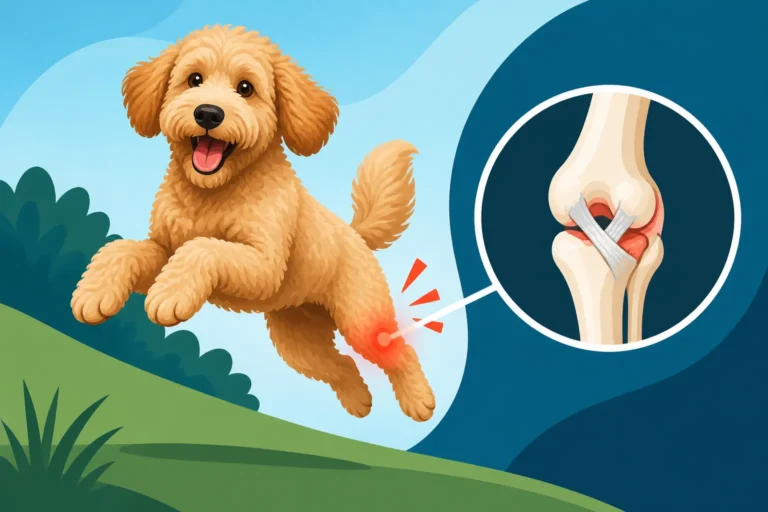
Beyond hips and elbows, responsible breeders will also seek OFA clearances for patellar luxation and cardiac health. Patellar luxation, or "slipping kneecaps," is particularly prevalent in smaller breeds, making it a concern for Mini and Toy Goldendoodles whose Poodle lineage often includes miniature or toy Poodles. This condition occurs when the patella (kneecap) dislocates from its normal position in the thigh bone groove. It can range from mild, intermittent skipping to severe, constant lameness requiring surgery. OFA patellar evaluations grade the severity of luxation from 0 (normal) to 4 (severe).
Cardiac health screening is equally important. Golden Retrievers can be predisposed to conditions like Subvalvular Aortic Stenosis (SAS), a congenital heart defect where a fibrous ring obstructs blood flow from the heart. While Goldendoodles may not have the same high incidence as purebred Golden Retrievers, it's still a concern to screen for. OFA cardiac clearances involve a veterinarian performing an auscultation (listening to the heart) and noting any murmurs, with suspicious findings often warranting an advanced echocardiogram by a veterinary cardiologist. These screenings help identify issues that could lead to serious health problems or even early death.
Eye Health: PRA and Other Concerns
Eye health is another critical area where OFA provides valuable certifications. Both Golden Retrievers and Poodles are known carriers for various hereditary eye diseases, with Progressive Retinal Atrophy (PRA) being one of the most serious. PRA is a group of genetic diseases that cause the retina to degenerate over time, ultimately leading to blindness. It's a devastating condition with no cure. OFA eye certifications are performed by board-certified veterinary ophthalmologists who conduct a thorough examination of the eyes to detect any abnormalities, including PRA, cataracts, and other inherited conditions. These exams should be done annually for breeding dogs, as some conditions can develop later in life.
A breeder presenting recent OFA eye clearances demonstrates a commitment to preventing this cruel disease. It’s not just about PRA; other conditions like juvenile cataracts or retinal dysplasia can also impact a dog’s vision and quality of life. Knowing Progressive Retinal Atrophy and the Goldendoodle Eye Test is vital because it's a recessive genetic condition, meaning a dog can be a carrier without showing symptoms. If two carriers are bred, 25% of their offspring could be affected.
Interpreting OFA Results for Goldendoodle Parents
Seeing "OFA Certified" on a breeder's website is a good start, but truly understanding what those certifications mean requires a bit more digging. Not all OFA results are equal, and knowing how to interpret them can make all the difference in choosing a healthy puppy. It's like reading a report card – you want to see good grades, not just a stamp that says "attended class."
Understanding Normal, Borderline, and Dysplastic Ratings
For hip evaluations, OFA provides a range of ratings:
- Excellent, Good, and Fair: These are all considered passing grades, meaning the hips are free of evidence of hip dysplasia. "Excellent" is the tightest and best, while "Fair" indicates some minor irregularities but still within normal limits for breeding. Breeders should ideally be striving for "Good" or "Excellent" hips in their breeding dogs.
- Borderline: This is a tricky one. It means there are minor irregularities that prevent a definitive diagnosis of "Normal," but there's also no clear evidence of dysplasia. OFA often recommends re-evaluating these dogs at a later date. While some breeders may choose to breed dogs with "Borderline" hips, it's generally considered a less ideal choice and may indicate a higher risk for future offspring.
- Mild, Moderate, or Severe Dysplasia: Any of these ratings means the dog has hip dysplasia and should absolutely not be bred.
For elbows, the ratings are simpler:
- Normal: The elbows are free of evidence of elbow dysplasia.
- Grade I, II, or III Dysplasia: Any of these grades means the dog has elbow dysplasia and should not be bred.
When a breeder says their dogs are "OFA Certified," always ask to see the actual certificates or look them up on the OFA website. The difference between "Fair" and "Borderline" can seem subtle but carries significant implications for the potential health of a litter.
The Importance of a Full Panel of Clearances
A truly responsible Goldendoodle breeder won't just focus on hips and elbows. They will provide a "full panel" of OFA clearances, demonstrating a commitment to comprehensive health screening. This typically includes:
- Hips: Excellent, Good, or Fair.
- Elbows: Normal.
- Patellas: Normal (Grade 0).
- Cardiac: Normal, typically via practitioner auscultation or specialist echocardiogram.
- Eyes: Normal, with a current exam by a board-certified ophthalmologist.
In addition to OFA, many breeders also utilize DNA testing services like Embark or Canine HealthCheck to screen for an even broader array of genetic diseases specific to Goldens and Poodles. These tests can identify carriers for conditions like Von Willebrand's Disease, certain forms of PRA, Ichthyosis, and more. A comprehensive approach using both OFA evaluations and DNA panels gives the clearest picture of a breeding dog's genetic health. Don't be shy about asking The DNA Panel a Goldendoodle Breeder Should Run in addition to their OFA certifications.
What to Ask a Breeder About Their OFA Records
When you're speaking with a potential breeder, don't just accept a vague statement about "health testing." Be specific with your questions:
- "Can I see the OFA certificates for both the sire and dam?" Reputable breeders will be happy to provide these, or at least the OFA numbers so you can look them up yourself on the OFA website (ofa.org).
- "What specific OFA clearances do your breeding dogs have, and what are the grades?" This helps ensure they're testing for more than just hips.
- "Are the eye certifications current?" Eye certifications need to be renewed annually to be considered valid for breeding.
- "At what age were the hip and elbow X-rays submitted?" Remember, hips and elbows should be evaluated at 24 months or older for final certification. Preliminary evaluations can be done earlier but are not final.
- "Can you explain what these results mean for the health of the puppies?" A good breeder will be knowledgeable and transparent about their dogs' health history and any potential risks.
Remember, What Health Papers a Goldendoodle Breeder Should Show should include not just OFA certificates but also DNA test results and potentially even general vet check-up records. Transparency is key. If a breeder is evasive or reluctant to share detailed health information, it's a major red flag.
The Limitations of OFA and Complementary Health Checks
While OFA clearances are an indispensable tool for responsible breeding, they are not a silver bullet. No single test can guarantee a perfectly healthy dog, and savvy owners understand that OFA is just one piece of a larger puzzle. A holistic approach to health assessment is always best, combining official certifications with other forms of screening and ongoing care.
When OFA Doesn't Tell the Whole Story
OFA primarily focuses on structural and genetic conditions that can be identified through X-rays, specialist exams, or blood tests. However, it doesn't cover every single health issue a Goldendoodle might face. For instance, common Goldendoodle problems like allergies or ear infections are not typically part of standard OFA clearances, although a responsible breeder will still be aware of the prevalence of such issues in their lines. Goldendoodle Ear Infections Under a Furnished Ear are a common nuisance, but there's no OFA test for susceptibility.
Furthermore, some conditions have complex inheritance patterns, involving multiple genes or environmental factors, which OFA evaluations alone can't fully predict. Even with "Excellent" rated parents, there's always a minuscule chance of a health issue due to unpredictable genetic recombination or other unforeseen circumstances. OFA helps to reduce risk significantly, but it cannot eliminate it entirely. It's about playing the odds as smartly as possible.
The Value of DNA Testing alongside OFA
This is where comprehensive DNA testing comes into play, complementing OFA's structural and clinical evaluations. Services like Embark or Paw Print Genetics offer panels that screen for dozens, sometimes hundreds, of genetic diseases specific to Golden Retrievers and Poodles. These tests can identify if a dog is "clear," a "carrier," or "affected" by conditions that might not be evident through a physical exam or X-ray.
For example, a dog might be an asymptomatic carrier for certain forms of Progressive Retinal Atrophy (PRA) or Von Willebrand Disease (vWD). If two carriers are bred, their offspring have a 25% chance of being affected. DNA testing allows breeders to make informed pairing decisions, ensuring that two carriers for the same recessive gene are never bred together. This prevents the birth of affected puppies. Always ask for both OFA clearances and a full DNA health panel, looking for parents who are "clear" or "carrier" for different diseases, ensuring no affected puppies are produced. This comprehensive approach gives prospective owners greater peace of mind regarding their puppy's genetic future.
Vet Examinations and Ongoing Health Monitoring
Beyond initial OFA and DNA testing, a truly ethical breeder maintains a strong relationship with their veterinarian for routine health checks and ongoing monitoring of their breeding dogs. These regular vet visits help catch any non-genetic health issues early, ensure the dogs are in peak physical condition, and can provide additional insights into overall health that isn't covered by specific health clearances.
For puppies, Goldendoodle Vaccination and Puppy Health Checks are paramount. A reputable breeder will ensure their puppies receive appropriate vaccinations and deworming, along with a thorough veterinary examination before they go to their new homes. This "well puppy check" confirms that the puppy appears healthy at the time of sale and doesn't have any obvious congenital defects. This continuous veterinary care, from the parents through the puppies, underscores a breeder's commitment to the well-being of their animals and the success of their breeding program.
Protecting Your Goldendoodle's Future Health
Bringing a Goldendoodle into your home is a decade-plus commitment, and while health testing goes a long way, it's crucial to be prepared for the journey ahead. A smart owner combines diligent breeder research with realistic expectations and practical planning for potential future health needs. It's about setting your dog up for success and ensuring you're ready for whatever life throws at you both.
Choosing a Breeder Committed to Transparency
The ultimate protection for your Goldendoodle's future health starts with choosing a reputable breeder. This means looking for breeders who are not only conducting all the necessary OFA and DNA testing but are also completely transparent about their results and their breeding practices. They should be willing to share all health certifications, answer your questions thoroughly, and ideally, allow you to meet the parent dogs. Watch out for breeders who make vague claims, don't show official paperwork, or won't let you visit their facility.
A committed breeder will also provide a health guarantee for their puppies, typically covering genetic diseases for a specified period (e.g., one or two years). While no guarantee can truly replace thorough testing, it demonstrates the breeder's confidence in their lines and their willingness to stand behind their puppies. They'll also be a lifelong resource for you, offering advice and support as your Goldendoodle grows. Don't be swayed solely by price; remember that What a Goldendoodle Puppy Costs and Why often reflects the investment a breeder has made in health testing and quality care.
Preparing for Potential Health Challenges
Even with the most responsible breeding and all the clearances in the world, dogs can still face unexpected health issues. Just like humans, they can get sick, have accidents, or develop conditions that aren't genetic. Goldendoodles, like all breeds, can be susceptible to The Cancers a Goldendoodle Can Inherit from either parent line, or general health issues that aren't specifically screened for in their parents. This is where preparedness comes in.
Maintaining a healthy lifestyle for your Goldendoodle, including proper nutrition, appropriate exercise, and regular veterinary check-ups, is vital. Be proactive about their Goldendoodle Joint Health by Size Category by managing their weight, providing joint supplements if recommended by your vet, and avoiding excessive impact on growing joints. Knowing the signs of common ailments and not hesitating to contact your vet is critical. Early detection can often make a significant difference in treatment outcomes and long-term prognosis.
The Role of Pet Insurance in Managing Costs
One of the most practical ways to prepare for potential health challenges is to invest in pet insurance. Vet bills, especially for unexpected emergencies or chronic conditions, can quickly become astronomical. Imagine if your Goldendoodle developed a serious orthopedic issue requiring surgery, or needed lifelong medication for a condition like Addison's disease. These costs can be thousands of dollars, a financial strain that many families aren't prepared for.
Pet insurance, offered by companies like Healthy Paws, can provide a financial safety net, reimbursing you for a significant portion of eligible veterinary expenses. While Goldendoodles are considered a "mixed breed" by many insurers, making them generally easier to insure than some purebreds with known extensive health issues, it's still wise to enroll them when they're young and healthy. This helps avoid pre-existing condition exclusions. A good policy from Healthy Paws can cover accidents, illnesses, surgeries, medications, and more, allowing you to focus on your dog's recovery rather than worrying about the bill. Consider how Goldendoodle Pet Insurance for a Dog With No Breed Papers can be a lifeline for your furry friend. Many Goldendoodle owners find peace of mind knowing they have a plan for unexpected emergencies with providers like Healthy Paws.
Table: Understanding OFA Hip & Elbow Grades
| OFA Rating (Hips) | Description | Breeding Recommendation |
|---|---|---|
| Excellent | Superior conformation, nearly perfect joints. | Clear to Breed |
| Good | Well-formed joints, minimal irregularities. | Clear to Breed |
| Fair | Functional, but with some minor irregularities. | Clear to Breed |
| Borderline | Indeterminate, slight deviation from normal. Re-evaluate. | Caution / Re-evaluate |
| Mild Dysplasia | Mild evidence of hip dysplasia. | Do Not Breed |
| Moderate Dysplasia | Moderate evidence of hip dysplasia. | Do Not Breed |
| Severe Dysplasia | Marked evidence of hip dysplasia. | Do Not Breed |
| OFA Rating (Elbows) | Description | Breeding Recommendation |
| Normal | No evidence of elbow dysplasia. | Clear to Breed |
| Grade I Dysplasia | Minimal bone change, likely hereditary. | Do Not Breed |
| Grade II Dysplasia | Moderate bone change. | Do Not Breed |
| Grade III Dysplasia | Severe bone change. | Do Not Breed |
Investing in a Goldendoodle means investing in their health. By understanding and prioritizing OFA clearances, asking the right questions, and planning for their long-term care, you're not just buying a puppy – you're building a foundation for a happy, healthy future together. Companies like Healthy Paws are there to help with the financial side, but your diligence as an owner is the first and most important step.
Disclaimer
The information provided in this article is for educational and informational purposes only and does not constitute veterinary advice. Always consult with a qualified veterinarian for any health concerns or before making any decisions about your pet's medical care.