The PRA DNA Test Both Goldendoodle Parents Need
Bringing a Goldendoodle into your home is an exciting time, filled with dreams of cuddles and playful antics, but the heartbreaking reality of a beloved companion slowly losing their sight is a fear many prospective and current owners face. Progressive Retinal Atrophy (PRA) is one such genetic eye disease that can steal your dog's vision, and understanding the specific DNA test for both Goldendoodle parents is absolutely essential to prevent this devastating condition from affecting a litter.
What is Progressive Retinal Atrophy (PRA) in Goldendoodles?
Progressive Retinal Atrophy, or PRA, isn't a single disease but rather a group of genetic disorders that affect the retina, the light-sensitive tissue at the back of your dog's eye. Imagine looking at the world through a constantly dimming light, slowly fading to complete darkness – that's often what a dog with PRA experiences. It's a cruel condition because it's typically progressive, meaning it worsens over time, leading to eventual blindness. This isn't something that happens overnight, but a gradual decline that can be incredibly distressing for both dog and owner. The cruel irony is that many owners don't even realize anything is wrong until their dog is already struggling significantly, often bumping into furniture in familiar surroundings or hesitating in new places.
The Insidious Nature of PRA
The onset and progression of PRA can vary quite a bit, making it particularly insidious. Some forms of PRA might start showing symptoms in puppyhood, while others might not become apparent until your Goldendoodle is well into its senior years. This variability means you can't just 'wait and see' for signs, especially if you're considering a puppy from parents who haven't been tested. The retinal cells, responsible for detecting light, slowly degenerate. Initially, it often affects the rod cells, which are crucial for vision in low light, leading to what we call "night blindness." Your Goldendoodle might become more reluctant to go outside in the evening or navigate dark rooms. As the disease progresses, cone cells, which handle daylight and color vision, also begin to fail, resulting in total blindness. This slow decline gives dogs some time to adapt, but it’s a constant struggle.
Types of PRA Affecting Goldendoodles
Given that Goldendoodles are a cross between Golden Retrievers and Poodles, they are susceptible to the forms of PRA carried by both parent breeds. The most common types we worry about are progressive rod-cone degeneration (prcd-PRA), which is prevalent in Poodles, and two specific forms found in Golden Retrievers: Golden Retriever PRA 1 (GR-PRA1) and Golden Retriever PRA 2 (GR-PRA2).
- prcd-PRA: This is arguably the most recognized form in Poodles and, by extension, Goldendoodles. Dogs with prcd-PRA typically begin to show signs of night blindness between 3 and 5 years of age, with complete blindness often occurring by 6 to 8 years. It's an adult-onset condition, which is why it can sneak up on owners who might have believed their dog was healthy for years.
- GR-PRA1 and GR-PRA2: These are specific to Golden Retrievers and can also manifest as adult-onset conditions, often appearing around 4-7 years of age. They also lead to a similar progressive vision loss.
Because a Goldendoodle carries genetics from both sides, understanding Progressive Retinal Atrophy Carried by Both Goldendoodle Lines is key. A responsible breeder will test for all relevant types of PRA common to both parent breeds, ensuring their breeding stock is free from carrying these specific genes.
Recognizing the Early Signs of Vision Loss
Catching PRA early can be challenging because dogs are incredibly adaptable, especially in familiar environments. They learn to navigate by memory and scent. However, subtle changes can be red flags. The very first signs you might notice often involve a reluctance to go out in the dark or a hesitation when entering dimly lit rooms. Your Goldendoodle might start bumping into objects more frequently, especially when tired or distracted. Their pupils might appear more dilated, and their eyes may have a reflective, glassy sheen when light hits them, due to the tapetum lucidum reflecting more light as the retina thins. Over time, you may even notice cataracts forming as a secondary complication, exacerbating the vision loss. If you ever suspect your dog is struggling with their vision, an immediate visit to a veterinary ophthalmologist is crucial. They can perform specific tests, including an electroretinogram (ERG), to diagnose PRA definitively. You might find more detailed information on Night Blindness as a Goldendoodle's First PRA Sign and Goldendoodle Cataracts and Vision Loss helpful.
Why a DNA Test for PRA is Crucial for Goldendoodle Parents
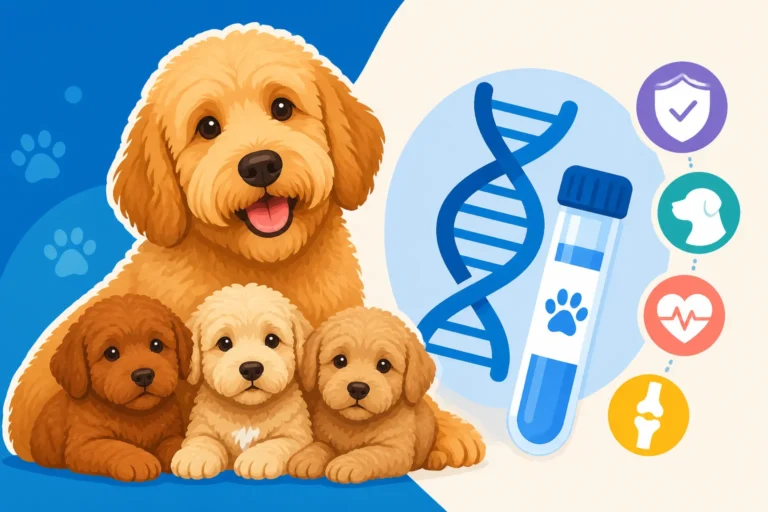
The most important thing to grasp about PRA is that it's a genetic disease, passed down from parent to offspring. This means that if you're considering getting a Goldendoodle puppy, the health of its parents directly impacts its future. Relying solely on a physical eye exam, while important, isn't enough to prevent PRA because many dogs don't show symptoms until well after they've been bred. This is where DNA testing becomes not just helpful, but absolutely vital. It's the only way to know with certainty if a dog carries the genes for PRA before it ever shows signs of the disease. This is a critical point that differentiates good breeders from those who might cut corners.
Autosomal Recessive Inheritance in Goldendoodles
Most forms of PRA, including prcd-PRA, GR-PRA1, and GR-PRA2, are inherited in an autosomal recessive pattern. What does this complicated-sounding term mean for your Goldendoodle? It means a puppy must inherit two copies of the defective gene – one from its mother and one from its father – to actually develop the disease.
- Clear dogs: Have two normal copies of the gene. They won't develop PRA and can't pass the defective gene to their offspring.
- Carrier dogs: Have one normal copy and one defective copy of the gene. They won't develop PRA themselves, but they can pass the defective gene to their offspring.
- Affected dogs: Have two defective copies of the gene. They will develop PRA.
This inheritance pattern highlights why testing both parents is so crucial. A dog can be a carrier, appear perfectly healthy, and pass on the problematic gene without anyone knowing unless a DNA test is performed.
The 'Carrier' Dilemma and Unwitting Breeding
The "carrier" status is where many well-meaning but uneducated breeders can unknowingly perpetuate PRA. If a breeder has a beautiful, healthy-looking Goldendoodle who is an unknowing carrier, and they breed it to another beautiful, healthy-looking Goldendoodle who is also an unknowing carrier, about 25% of the puppies in that litter will be affected by PRA. Another 50% will be carriers themselves, and only 25% will be clear. This is the genetic lottery nobody wants to win, and it's entirely preventable with proper DNA testing.
Imagine the devastation for a family who brings home a seemingly healthy puppy, only for it to start losing its vision in a few years. It's a huge emotional and financial burden. Veterinary care for dogs with progressive vision loss can be extensive, and while pet insurance providers like Healthy Paws can assist with unexpected medical costs, preventing the condition through responsible breeding is always the first and best defense. It's about proactive care, not reactive treatment.
Preventing Heartbreak with Early Testing
For breeders, DNA testing isn't just about ethics; it's about reputation and preventing immense heartache for their puppy buyers. By using DNA tests, breeders can ensure that at least one parent in any breeding pair is "clear" of the PRA gene. This guarantees that none of the puppies will ever develop the disease themselves, even if the other parent is a carrier. They might produce carriers, but never affected dogs. This simple step eliminates the risk of genetically inherited PRA from ever appearing in their litters. This due diligence is part of Health Testing Both Goldendoodle Parents Should Have and is a non-negotiable for anyone serious about raising healthy dogs. Always insist on seeing the actual test results, not just a breeder's word.
Understanding the PRA DNA Test Results
When you're looking at a Goldendoodle breeder's health clearances, the PRA DNA test results are some of the most critical documents you'll encounter. It's not enough for a breeder to say, "Oh, the parents are clear." You need to understand what those results actually mean and how they translate to the health of the puppies. Getting familiar with these terms will empower you to ask the right questions and ensure you're making an informed decision about your future furry family member.
Deciphering Clear, Carrier, and Affected Designations
The results of a PRA DNA test will typically categorize a dog into one of three statuses:
- Clear (or "Normal"): This means the dog has two healthy copies of the gene and does not carry the mutation for that specific type of PRA. A clear dog will not develop PRA and will not pass the problematic gene on to any offspring.
- Carrier (or "Heterozygous"): This dog has one healthy copy of the gene and one copy of the mutation. A carrier will not develop PRA itself (because it needs two copies for the disease to manifest). However, it can pass the mutated gene to approximately 50% of its offspring.
- Affected (or "Homozygous Affected"): This dog has two copies of the mutated gene. It will develop PRA at some point in its life. Any offspring from an affected dog will inherit at least one copy of the mutated gene.
Understanding What a Carrier PRA Result Means for a Goldendoodle is vital, as it's often misunderstood. A carrier dog isn't "sick," but its breeding choices must be carefully managed to prevent affected puppies.
Breeding Pair Combinations and Their Outcomes
Let's look at how these statuses interact when two dogs are bred. This table illustrates the potential outcomes for puppies in a litter based on the genetic status of their parents for a single recessive gene like PRA:
| Sire's PRA Status | Dam's PRA Status | Offspring Outcome | Risk of Affected Puppies |
|---|---|---|---|
| Clear | Clear | 100% Clear. All puppies receive two healthy genes. | 0% |
| Clear | Carrier | 50% Clear, 50% Carrier. Puppies will not be affected but half will carry the gene. | 0% |
| Clear | Affected | 100% Carrier. All puppies receive one healthy gene and one mutated gene. They will be carriers but not affected. | 0% |
| Carrier | Carrier | 25% Clear, 50% Carrier, 25% Affected. This is the riskiest pairing. | 25% |
| Carrier | Affected | 50% Carrier, 50% Affected. Extremely risky. | 50% |
| Affected | Affected | 100% Affected. All puppies will develop PRA. | 100% |
As you can see, the only way to guarantee that no puppy in a litter will ever be affected by PRA is to breed at least one parent who is "Clear" for all relevant PRA genes. Many responsible breeders will only breed a "Carrier" dog to a "Clear" dog. This prevents affected puppies, though some puppies will still be carriers. This ethical approach safeguards the future health of the breed and the happiness of the families involved.
What a "Carrier" Result Means for a Goldendoodle
For a Goldendoodle owner whose dog is a carrier for PRA, it means their dog itself will likely live a full life with perfect vision, unaffected by that particular genetic disease. The "carrier" status is not a diagnosis of illness; it's an indication of genetic makeup. However, it does mean that if this dog were ever bred, it could pass on the problematic gene. This is why for pet owners, knowing their dog is a carrier typically doesn't impact their dog's quality of life one bit. For breeders, however, it's a critical piece of information that dictates breeding decisions. A responsible breeder will never breed two carriers together. They will ensure that if they choose to breed a carrier, it is always paired with a clear dog, thereby eliminating the risk of producing affected puppies. This kind of careful genetic management is part of what makes The DNA Panel a Goldendoodle Breeder Should Run so important for the future health of Goldendoodles.
Finding a Reputable Breeder Who Tests for PRA
The burden of ensuring your Goldendoodle puppy isn't destined for blindness due to PRA falls squarely on the shoulders of the breeder. A reputable breeder is transparent, knowledgeable, and committed to the long-term health of their puppies. They view genetic testing not as an optional extra, but as a fundamental part of their breeding program. Unfortunately, the popularity of Goldendoodles has led to many opportunistic breeders who prioritize profit over health, often skipping essential genetic testing. This is why it's absolutely paramount that you, as a prospective owner, know what to ask for and what to expect.
Insisting on Genetic Health Clearances
When you're speaking with a potential breeder, one of your very first questions should be about health testing. You need to ask specifically about DNA tests for PRA, and not just for one type, but for all forms relevant to both Golden Retrievers and Poodles (prcd-PRA, GR-PRA1, and GR-PRA2). A good breeder will readily provide these results for both the sire (father) and dam (mother) of the litter you're interested in. They'll also typically have broader health clearances, including OFA (Orthopedic Foundation for Animals) certifications for hips and elbows, and potentially cardiac and thyroid screenings. For a deeper dive into these requirements, check out Health Testing Both Goldendoodle Parents Should Have.
Don't accept vague answers or assurances like "we've never had a problem." The absence of reported issues doesn't mean the genetic risk isn't there, especially with conditions that have a late onset. A breeder who cannot or will not provide clear, documented proof of these tests for both parents is not a breeder you want to get a puppy from. It's simply too big of a risk.
Verifying Test Results Independently
Even with documents in hand, it’s wise to take an extra step. Responsible breeders will usually register their dogs' health clearances with public databases like the OFA or will use reputable genetic testing companies such as Embark or Canine HealthCheck. These companies provide online portals where you can verify the results using the dog's registered name and/or microchip number. This independent verification is crucial. Sometimes, a breeder might show you an old test, or a test for a different dog. It sounds cynical, but unfortunately, it happens. A breeder who is truly transparent and confident in their health testing will not hesitate for you to cross-reference their claims. This simple act of due diligence on your part can save you immense grief later on.
It’s also important to remember that The Annual Eye Exam a Goldendoodle Breeder Should Have is a separate, but equally important, part of health screening. While the DNA test tells you about genetic predisposition, an annual eye exam by a board-certified veterinary ophthalmologist looks for existing eye conditions and structural abnormalities. Both are crucial for comprehensive eye health assessment.
The Difference a Health Guarantee Makes
A reputable breeder will often offer a health guarantee for their puppies, typically covering genetic conditions like PRA for a specified period, often one or two years. While this guarantee can offer some peace of mind, it's not a substitute for thorough parent health testing. A guarantee primarily covers the financial aspects if an issue arises, like a partial refund or a replacement puppy. However, it can never truly compensate for the emotional bond you form with your dog and the heartache of managing a chronic condition.
Imagine spending thousands on veterinary visits, specialized treatments, and potentially even surgery for a condition that could have been entirely prevented. This is where the initial higher cost of a well-bred Goldendoodle with fully tested parents can actually save you money, and definitely emotional distress, in the long run. While pet insurance, like policies from Healthy Paws, can certainly help defray the costs of unexpected illnesses or accidents, the goal is always to prevent preventable genetic diseases from occurring in the first place. When you see Goldendoodle Puppies Sold With a Health Guarantee, ensure it details which conditions are covered and for how long, and always prioritize parents with proven clear health tests first.
Disclaimer
The information provided in this article is for general informational purposes only and does not constitute veterinary advice. Always consult with a qualified veterinarian or veterinary specialist for any health concerns or before making any decisions about your Goldendoodle's health care or breeding practices.