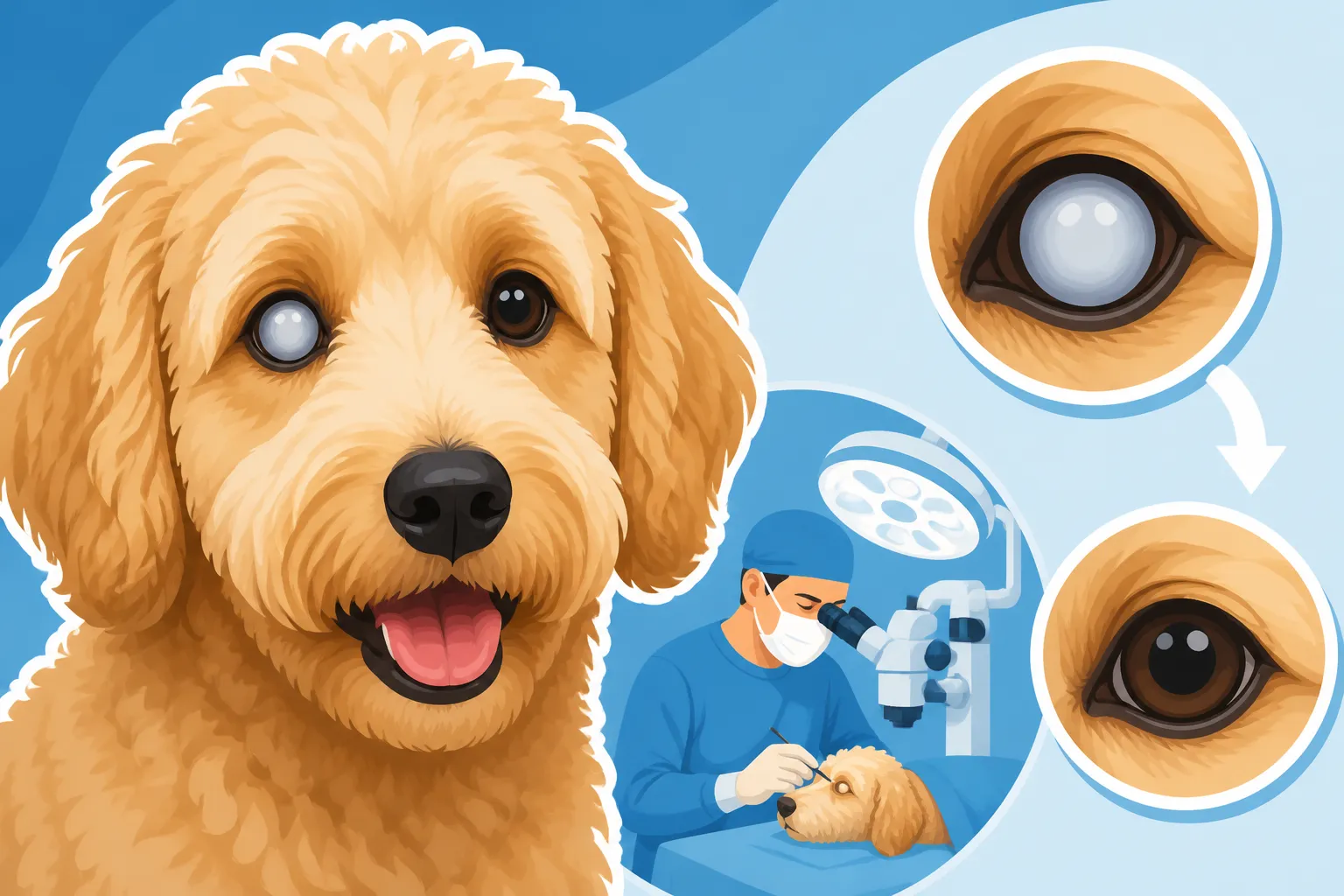
Goldendoodle Cataracts and Surgery Options
Seeing your beloved Goldendoodle start to lose their sparkle, literally, as their eyes become cloudy can be incredibly distressing. It’s a heartbreaking moment when you realize their world is dimming, and the vibrant, curious dog you know might be struggling to navigate everyday life, bumping into furniture, or hesitating on stairs. This guide will walk you through everything you need to know about Goldendoodle cataracts, from spotting the early signs to understanding the various treatment and surgery options available, helping you make the best decisions for your furry family member.
Understanding Goldendoodle Cataracts: The Cloud in Their World
Cataracts are a common eye condition that can affect dogs of all ages and breeds, and Goldendoodles are certainly not immune. When that cloudiness starts to appear, it's natural to feel a pang of worry and wonder what it means for your dog's future vision.
What Cataracts Are and How They Develop
At its core, a cataract is an opacity or cloudiness in the lens of the eye, which is normally clear. Think of the lens like a tiny, perfectly transparent window that focuses light onto the retina at the back of the eye, allowing your dog to see clearly. When a cataract forms, this window becomes hazy, blocking light from reaching the retina effectively, much like looking through a foggy pane of glass. This can range from a small, almost unnoticeable speck to a dense, milky white cloud that completely obstructs vision.
Several factors can contribute to cataract development in Goldendoodles. Age is a significant one; just like in humans, the lens can naturally degenerate over time, leading to age-related cataracts, often appearing in senior Goldendoodle care after the age of nine. However, Goldendoodles can also be predisposed to genetic cataracts, inheriting the tendency from their Golden Retriever or Poodle lineage. These inherited cataracts can sometimes appear much earlier in life, even in young adulthood, which can be particularly shocking for owners. Other causes include diabetes (diabetic cataracts can develop very rapidly, sometimes in a matter of weeks), eye trauma or inflammation, and nutritional deficiencies, though these are less common as primary causes in well-cared-for dogs. The genetic component is often a significant concern for Goldendoodle owners, highlighting the importance of knowing your dog’s lineage and the health clearances of their parents.
Recognizing the Early Signs
It can be surprisingly tricky to spot cataracts in their very early stages, especially if they’re developing slowly or are small. Dogs are masters at adapting, and they often compensate for subtle vision loss, especially if it’s only affecting one eye or peripheral vision. You might not immediately see a milky film over their eye.
Instead, look for more subtle behavioral changes first. Perhaps your Goldendoodle, usually so confident, starts hesitating before jumping off the sofa or going down a set of stairs. They might seem more tentative in dimly lit rooms, or you might notice them bumping into familiar objects, particularly at night, which could be a sign of night blindness as the cataract progresses. Their pupils might appear slightly dilated more often, trying to let in more light. You might also observe changes in their play, becoming less enthusiastic about chasing a ball or struggling to track toys in flight. It's often when these behavioral shifts become more pronounced that owners start peering closer at their dog's eyes and notice the characteristic cloudiness. Remember, these signs can also point to other issues, so a vet visit is always warranted. For more on how vision loss can manifest, you might find Goldendoodle Cataracts and Vision Loss helpful.
Distinguishing Cataracts from Nuclear Sclerosis
One common point of confusion for Goldendoodle owners is telling the difference between a true cataract and a condition called nuclear sclerosis. Both involve a hazy appearance in the lens, but they are very different in their impact on vision.
Nuclear sclerosis is a perfectly normal, age-related change where the lens fibers harden and become more dense, giving the pupil a grayish-blue, hazy appearance. It typically affects older dogs, much like presbyopia (age-related farsightedness) in humans. While it can cause some minor changes in focus, it generally doesn't significantly impair a dog's vision. They can still see quite well through the haziness. A true cataract, on the other hand, involves an opacity in the lens that blocks light. It can range from partial to complete blindness, depending on its density and location. A veterinary ophthalmologist can easily differentiate between the two with a thorough eye exam. It's a huge relief when you hear it's just nuclear sclerosis, but it's crucial not to dismiss any cloudiness until a professional confirms the diagnosis.
Diagnosing Cataracts and Assessing Vision Loss
Once you suspect your Goldendoodle might have cataracts, the next step is a professional diagnosis. This isn't something you can reliably self-diagnose, as other eye conditions can mimic the appearance of cataracts or coexist with them.
The Importance of a Vet Visit
Your regular veterinarian is always your first point of contact. They can perform an initial eye examination, often using an ophthalmoscope to get a closer look at the lens and other structures of the eye. They can confirm the presence of a cataract and rule out some other basic issues. However, for a definitive diagnosis, to understand the extent of the cataract, and to discuss potential treatment options, your vet will almost certainly recommend a referral to a veterinary ophthalmologist.
These specialists have advanced training and equipment dedicated solely to eye health. They can accurately assess the type of cataract, its stage of development, and, critically, evaluate the overall health of the eye, including the retina, which is paramount if surgery is being considered. Don't hesitate if your vet suggests a specialist; it's truly the best way to get the most accurate picture of your Goldendoodle's eye health and explore the best path forward. This specialist will also know if your dog has any other inherited eye conditions, such as Progressive Retinal Atrophy Carried by Both Goldendoodle Lines, which can greatly influence treatment decisions.
What an Ophthalmic Exam Involves
When you visit a veterinary ophthalmologist, expect a very thorough examination. They'll likely start by checking your Goldendoodle's overall health and taking a detailed history. The eye exam itself typically includes:
- Vision Assessment: Simple tests to gauge your dog's functional vision, like navigating an obstacle course in different lighting conditions or tracking a cotton ball.
- Pupillary Light Reflexes: Checking how your dog's pupils respond to light, which indicates optic nerve function.
- Schirmer Tear Test: Measuring tear production to check for dry eye.
- Tonometry: Measuring intraocular pressure to screen for glaucoma, a painful condition that can develop secondary to cataracts or independently.
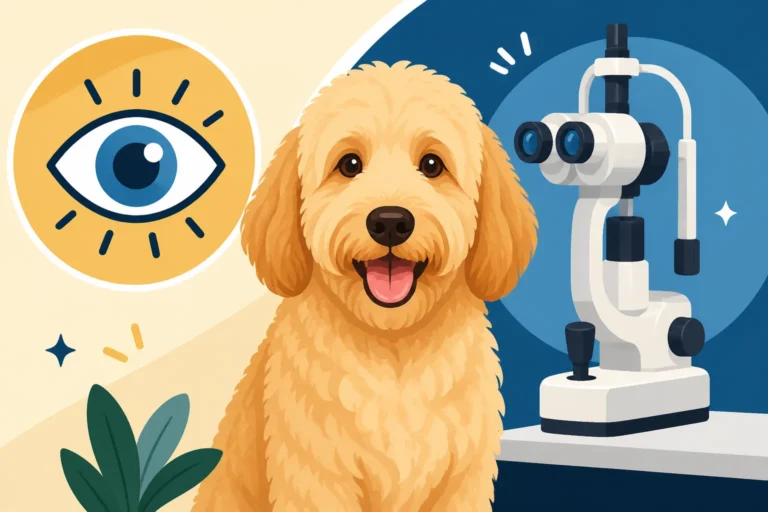
- Slit-Lamp Biomicroscopy: This is a crucial part. The ophthalmologist uses a specialized microscope with a narrow beam of light to examine the various structures of the eye in detail, including the cornea, anterior chamber, iris, and most importantly, the lens. This allows them to precisely locate and grade the cataract.
- Fundoscopy: Examining the retina and optic nerve at the back of the eye, often after dilating the pupils with eye drops, to ensure they are healthy.
This comprehensive exam helps the specialist determine not only if it's a cataract but also what impact it's having on your Goldendoodle's vision and whether other eye conditions are present.
Pre-Surgical Evaluation and Screening
If cataract surgery is on the table, a thorough pre-surgical evaluation is non-negotiable. This isn't just about looking at the cataract; it's about ensuring the rest of the eye is healthy enough to benefit from surgery and that your Goldendoodle is a good candidate for general anesthesia.
Key diagnostic tests typically include:
- Electroretinography (ERG): This test is vital. It measures the electrical activity of the retinal cells, even if a dense cataract prevents direct visualization. It tells the ophthalmologist if the retina is healthy and functional. If the retina isn't working, removing the cataract won't restore vision, making surgery unnecessary.
- Ocular Ultrasound: An ultrasound of the eye allows the ophthalmologist to "see" behind a dense cataract to check for any underlying issues like retinal detachment or masses that wouldn't be visible during a normal exam.
- Blood Work: Comprehensive blood tests (CBC, chemistry panel) are performed to assess your Goldendoodle's overall health, kidney and liver function, and blood sugar levels (especially important to rule out or manage diabetes).
- Urinalysis: Another routine test to assess kidney function and screen for conditions like diabetes.
All this extensive screening helps determine the prognosis for vision restoration and minimizes surgical risks. It can feel like a lot of appointments and tests, but it’s all done to ensure the best possible outcome for your Goldendoodle.
Goldendoodle Cataract Surgery Options: Bringing Back the Light
For many Goldendoodle owners, the idea of surgery can be daunting, but it's the only way to truly restore vision lost to cataracts. The good news is that canine cataract surgery has a very high success rate.
The Surgical Procedure: Phacoemulsification
The standard and most successful surgical technique for removing cataracts in dogs is called phacoemulsification. It's essentially the same procedure performed on humans. Here’s a general overview of what it involves:
- General Anesthesia: Your Goldendoodle will be placed under general anesthesia, requiring careful monitoring by a veterinary anesthesiologist. This is a significant consideration, especially for older dogs, so a thorough pre-anesthetic workup is always performed.
- Micro-Incision: The veterinary ophthalmologist makes a tiny incision (usually less than 3mm) on the cornea.
- Phacoemulsification Probe: A specialized ultrasonic probe is inserted through this incision. This probe emits high-frequency sound waves that gently break up the cataractous lens into tiny fragments.
- Aspiration: The fragmented lens material is then carefully suctioned out of the eye.
- Intraocular Lens (IOL) Implantation: In most cases, once the natural lens material is removed, an artificial intraocular lens (IOL) is implanted into the eye. This artificial lens restores clear vision, allowing your Goldendoodle to focus properly after surgery. Without an IOL, their vision would be extremely farsighted, like looking through a camera with no lens.
- Suture Closure: The tiny corneal incision is usually self-sealing or may require one or two very fine sutures, which often dissolve on their own.
The entire procedure is typically performed under an operating microscope, allowing for extreme precision. The success rate for vision restoration with phacoemulsification is generally very high, often around 90-95% for uncomplicated cases. The expertise of the surgeon and the meticulous post-operative care are key factors in achieving these excellent results.
Risks and Potential Complications
While highly successful, no surgery is without risks, and cataract surgery in Goldendoodles is no exception. It's important to be realistic about the potential complications:
- Post-Operative Inflammation: This is the most common complication. The eye's natural reaction to surgery is inflammation, which needs to be rigorously managed with anti-inflammatory eye drops.
- Glaucoma: An increase in intraocular pressure can develop after surgery, either immediately or months/years later. This is a painful condition that can lead to permanent vision loss if not managed aggressively.
- Retinal Detachment: Though rare, the retina can detach after surgery. This is why the pre-surgical ERG and ultrasound are so important.
- Infection: As with any surgery, there's a small risk of infection, though strict sterile techniques minimize this.
- Posterior Capsular Opacification (PCO): Sometimes referred to as "after-cataract," this is a clouding of the membrane that holds the IOL. It can develop months or years later and may require a laser procedure to clear.
- Anesthesia Risks: While generally safe, any general anesthesia carries inherent risks, especially for older or medically compromised Goldendoodles.
Your veterinary ophthalmologist will discuss these risks with you in detail, emphasizing that vigilant post-operative care is crucial for minimizing their occurrence and effectively managing them if they do arise.
Post-Operative Care: A Major Commitment
Successfully restoring your Goldendoodle's vision doesn't end when they wake up from surgery. The post-operative period is arguably just as critical as the surgery itself and requires a significant commitment from you, the owner.
- Eye Drops, Eye Drops, Eye Drops: Be prepared for a rigorous schedule of multiple different eye drops (antibiotics, anti-inflammatories, pupil dilators) administered several times a day for weeks, sometimes months. Consistency is absolutely vital to control inflammation and prevent infection. This often means waking up in the middle of the night for doses!
- E-Collar (Cone of Shame): Your Goldendoodle will need to wear an Elizabethan collar (the infamous "cone") for several weeks to prevent them from rubbing or scratching their eyes, which could cause severe damage.
- Activity Restriction: Strenuous activity, jumping, and rough play will be strictly forbidden for several weeks to allow the eye to heal. This can be challenging for an energetic Goldendoodle, but it's essential.
- Follow-Up Visits: Expect frequent follow-up appointments with the ophthalmologist, especially in the first few weeks and months post-surgery, to monitor healing and adjust medication.
This intensive care routine can be demanding, but it's a labor of love that directly impacts the success of the surgery and the long-term health of your Goldendoodle’s eyes.
Life After Surgery and Managing Non-Surgical Cases
Whether your Goldendoodle undergoes surgery or not, understanding what comes next and how to support them is crucial.
Recovery and Long-Term Outlook
If cataract surgery is successful, the transformation can be incredible. Many owners report seeing their Goldendoodle's personality re-emerge, as they regain their confidence, joy in play, and ability to navigate their world. They might chase squirrels with renewed vigor, or easily find that dropped treat they missed before. The immediate post-op period is intense, but once the healing is complete and the eye drops are tapered down, most Goldendoodles enjoy excellent long-term vision.
However, it's not a one-and-done fix. Regular follow-up exams with the veterinary ophthalmologist are recommended for the rest of their lives to monitor for any late-onset complications like glaucoma or PCO. You'll also need to continue to be observant, ensuring their eyes remain clear and they're not showing signs of discomfort or vision changes. The goal is a high quality of life with clear vision, and for many Goldendoodles, this is absolutely achievable.
When Surgery Isn't an Option
Surgery isn't always the right choice for every Goldendoodle. Sometimes, underlying health conditions make anesthesia too risky, or the retina might be non-functional, meaning surgery wouldn't restore vision anyway. Financial constraints can also unfortunately play a role. If surgery isn't an option, it doesn't mean your Goldendoodle's quality of life is doomed. Dogs adapt incredibly well to vision loss, often relying more heavily on their other senses.
Here are ways to help a Goldendoodle with partial vision or blindness:
- Maintain Routine: Keep their feeding schedule, walk times, and furniture arrangement consistent. Dogs thrive on routine, and it helps them feel secure in their environment.
- Scent and Sound Cues: Use verbal cues consistently ("step up," "watch out") and incorporate scent markers for important areas like their water bowl or dog bed.
- Safe Environment: Block off stairs, pad sharp corners, and always supervise them outdoors.
- Halo Devices: Some dogs benefit from "halo" vests that have a protective ring around their head, preventing them from bumping into objects.
- Enrichment: Focus on activities that engage their other senses, like scent games, puzzle toys, and walks in interesting, safe environments where they can explore with their nose.
- Leash Walking: Keep them on a leash in unfamiliar areas or busy places to ensure their safety.
- Consistency with Other Pets/People: Ensure family members and other pets are gentle and approach the Goldendoodle slowly to avoid startling them.
For more detailed strategies, you can explore articles like Vision Loss in an Old Goldendoodle. With patience, understanding, and some practical adjustments, blind Goldendoodles can still lead full, happy lives.
Financial Considerations and Insurance Support
Let's be upfront: Goldendoodle cataract surgery is a specialized procedure, and it's not inexpensive. The cost can vary significantly based on your geographic location, the specific veterinary ophthalmologist, and the complexity of your dog's case, but you should expect it to be a substantial investment. This usually includes the initial consultation, pre-surgical diagnostics (ERG, ultrasound, blood work), the surgery itself (for one or both eyes), anesthesia, the intraocular lenses, and all the post-operative medications and follow-up visits. Total costs can range from several thousand dollars per eye.
Here's a breakdown of typical expenses:
| Expense Category | Estimated Cost Range (USD, per eye) | Notes |
|---|---|---|
| Initial Ophthalmic Exam | $150 – $300 | May include tonometry, Schirmer test, slit-lamp exam. |
| Pre-surgical Diagnostics | $500 – $1,500 | ERG, Ocular Ultrasound, Blood Panel, Urinalysis. Crucial for eligibility. |
| Surgery (Phacoemulsification + IOL) | $2,000 – $4,500 | Includes surgeon's fees, anesthesia, surgical supplies, IOL. Cost often higher if both eyes done. |
| Post-operative Meds | $200 – $500 | Eye drops, oral medications for weeks/months. |
| Follow-up Exams | $100 – $250 per visit | Multiple visits (e.g., 1 day, 1 week, 1 month, 3 months, 6 months post-op). |
| Total Estimated Cost | $3,000 – $7,000+ | Can vary widely. Double this if both eyes are treated at separate times (though often done concurrently). |
These figures can feel overwhelming, but it's important to discuss payment options with your veterinary ophthalmologist's office. Many offer payment plans or work with third-party financing like CareCredit.
This is where pet insurance can be a genuine lifesaver. If you have a comprehensive policy like those offered by Healthy Paws and enrolled your Goldendoodle before any signs of cataracts appeared, the cost of diagnosis and surgery might be covered, significantly easing the financial burden. Policies vary, so it’s crucial to understand your coverage, deductibles, and reimbursement percentages. While Healthy Paws, for example, is highly regarded for its robust coverage, most pet insurance policies won't cover pre-existing conditions, so early enrollment is key. Exploring options like Goldendoodle Pet Insurance for a Dog With No Breed Papers can help you understand what to look for in a policy. Knowing you have that safety net allows you to make decisions based on what’s best for your Goldendoodle’s health, rather than your wallet alone. The potential for high vet bills for conditions like cataracts is a major reason why many Goldendoodle owners invest in pet insurance.
Ultimately, dealing with Goldendoodle cataracts means navigating a journey that requires patience, informed decisions, and often a significant financial and emotional investment. But the reward of seeing your Goldendoodle look at you with clear, bright eyes once more is truly priceless.
Disclaimer
The information provided in this article is for general informational purposes only and is not a substitute for professional veterinary advice. Always consult with a qualified veterinarian or veterinary ophthalmologist for any health concerns or before making any decisions about your Goldendoodle's medical care.