Goldendoodle Jumping and the Impulse Control Problem
Oh, the Goldendoodle jump! If you've ever been greeted by a furry projectile launched straight at your chest, or if your sweet pup turns into a pogo stick whenever a visitor arrives, you know this frustration all too well. It's not malicious, it's just… a lot. This guide is all about helping you understand why your beloved Goldendoodle can't seem to keep all four paws on the floor and, more importantly, how you can gently but effectively teach them better manners.
Understanding Why Your Goldendoodle Jumps So Much
It’s easy to feel like your Goldendoodle is specifically trying to knock you over, especially when they’re full of beans and coming at you like a furry torpedo. But the truth is, this behavior is deeply rooted in their genetics and their desire to connect with you. They’re not being naughty; they’re often just overwhelmed by excitement and haven’t quite learned the polite way to express it.
The Golden Retriever's Enthusiastic Greeting
Let’s be real, Golden Retrievers are famous for their joyous, all-in approach to life, and that absolutely includes greetings. They want to be close, to make eye contact, and to share their overwhelming happiness with you. When a Goldendoodle inherits this trait, it often translates into jumping up. They see your face as the ultimate prize and will do whatever it takes to get up to your level, especially if you’re standing. It's their way of saying, "You're home! I missed you! Let's play!" with every ounce of their being.
This isn't just about attention; it's about connection. For a Golden Retriever, and by extension, your Goldendoodle, being close to their human's face and hands is a sign of affection and belonging. They might even try to nudge your hand with their nose or mouth your arm gently, all part of that intense desire to bond. It's sweet in theory, but when you're wearing nice clothes or trying to hold a hot cup of coffee, it becomes a real problem. The sheer size and strength of a standard Goldendoodle can make these enthusiastic greetings a bit much for even the most patient owner, let alone guests or children.
The Poodle's High Energy and Sensitivity
Then we have the Poodle side of the equation. Poodles are incredibly intelligent, sensitive, and often quite energetic. They thrive on mental stimulation and physical activity. If a Goldendoodle isn't getting enough of either, that pent-up energy can manifest as excessive jumping. They might be trying to initiate play, release boredom, or simply can’t contain their internal exuberance. Think of it like a child who hasn't had recess all day – they're bound to bounce off the walls!
Beyond energy, Poodles are also very attuned to human emotions and body language. If your Goldendoodle senses excitement or anticipation from you, even subtle cues, it can ramp up their own internal state, making them even more prone to jumping. They might be reacting to your tone of voice, your posture, or even the way you move. This sensitivity, while wonderful for training, can also make them incredibly reactive to stimuli, turning a simple "hello" into a full-body leap. Understanding What a Goldendoodle Inherits From Each Parent Breed can really shed light on these behaviors.
Learning to Get Attention (Even Negative)
Here's where we, as humans, sometimes inadvertently encourage the jumping. When your Goldendoodle jumps, what's your immediate reaction? Do you push them down, say "no," or make eye contact? Even a frustrated "off!" is still attention. For a dog that craves your interaction, any attention – positive or negative – is often better than no attention at all. They learn, "Ah, when I jump, my human looks at me, talks to me, or touches me. Mission accomplished!"
This creates a self-reinforcing cycle. The more they jump and get a reaction, the more they’ll continue to jump. It doesn't matter if you're scolding them; to them, it's engagement. This is especially true for Goldendoodles, who are often described as having an intense desire to please and connect. They're smart cookies, and they quickly figure out what behaviors get them what they want. Breaking this cycle requires a conscious effort to remove the unintended reward and replace it with a more appropriate one.
The Core Issue: Goldendoodle Impulse Control
Jumping is often just a symptom of a larger underlying issue: a lack of impulse control. Goldendoodles, with their spirited personalities and eager-to-please nature, can struggle with self-regulation, especially when they're young and full of boundless energy. It's like asking a kid in a candy store not to touch anything – it's a huge ask!
What Impulse Control Means for Dogs
In simple terms, impulse control for a dog is their ability to pause, think, and choose a more appropriate behavior instead of reacting immediately to an instinct or desire. It's the difference between seeing a squirrel and bolting after it, versus seeing a squirrel, acknowledging it, and then looking back at you for a cue. For a Goldendoodle, it's about being able to greet a person calmly rather than launching themselves upwards. It means resisting the urge to snatch a dropped treat or to rush out the door as soon as it opens.
This isn't something dogs are born with a perfect grasp of; it’s a skill that needs to be taught and practiced consistently. Just like a child learns to wait their turn or not interrupt, a dog needs to learn to control their immediate urges. It taps into their ability to self-regulate their emotions and actions, which is a cornerstone of good behavior and a well-adjusted, calm companion. Without it, every exciting moment becomes an opportunity for unbridled, potentially problematic, behavior.
How a Lack of Impulse Control Manifests
For Goldendoodles, a lack of impulse control doesn’t just show up as jumping. It can manifest in a myriad of ways that are common frustrations for owners. Think about the Goldendoodle that drags you down the street on a leash, unable to resist pulling towards every sniff and dog. Or the one that counter-surfs, unable to resist the lure of food on the kitchen counter. You might also notice Frantic Greeting Behavior in a Goldendoodle even if they don't physically jump, but rather spin and whine excessively.
They might bark excessively at passersby, unable to control their reaction to novel stimuli outside the window. Chewing inappropriate items, bolting out open doors, or even nipping during overly enthusiastic play can all be signs that your Goldendoodle needs more work on self-control. These behaviors aren't about being "bad"; they're about a dog struggling to manage their strong instincts and excitement in a world full of tempting distractions. It's a sign they need more guidance and structure to help them make better choices.
Why Goldendoodles Struggle with Self-Regulation
Goldendoodles, by their very nature, are designed to be friendly, eager, and often quite energetic. These are wonderful traits, but they can also be a recipe for impulse control challenges. The Golden Retriever side brings that inherent enthusiasm and desire to engage, while the Poodle side adds intelligence and often a higher energy level, meaning they’re quick to learn (both good and bad habits) and need an outlet for their mental and physical drive.
Because they are so smart and people-oriented, they often learn very quickly what gets them attention, even if that attention is us trying to push them off. The combination of high intelligence, sociability, and often high energy can make self-regulation a particularly tricky skill for them. They process things quickly and react with equal speed, sometimes before their "thinking brain" has a chance to catch up. This is why focused and consistent training is so crucial from a young age, to help them develop those internal brakes.
Practical Strategies for Managing Goldendoodle Jumping
Tackling Goldendoodle jumping requires a consistent, calm, and positive approach. It’s not about punishing them for their enthusiasm, but rather about teaching them a more appropriate way to express it. Remember, they want to please you; they just need to know how. This means being patient and understanding that habits take time to change.
The "Four Paws on the Floor" Rule
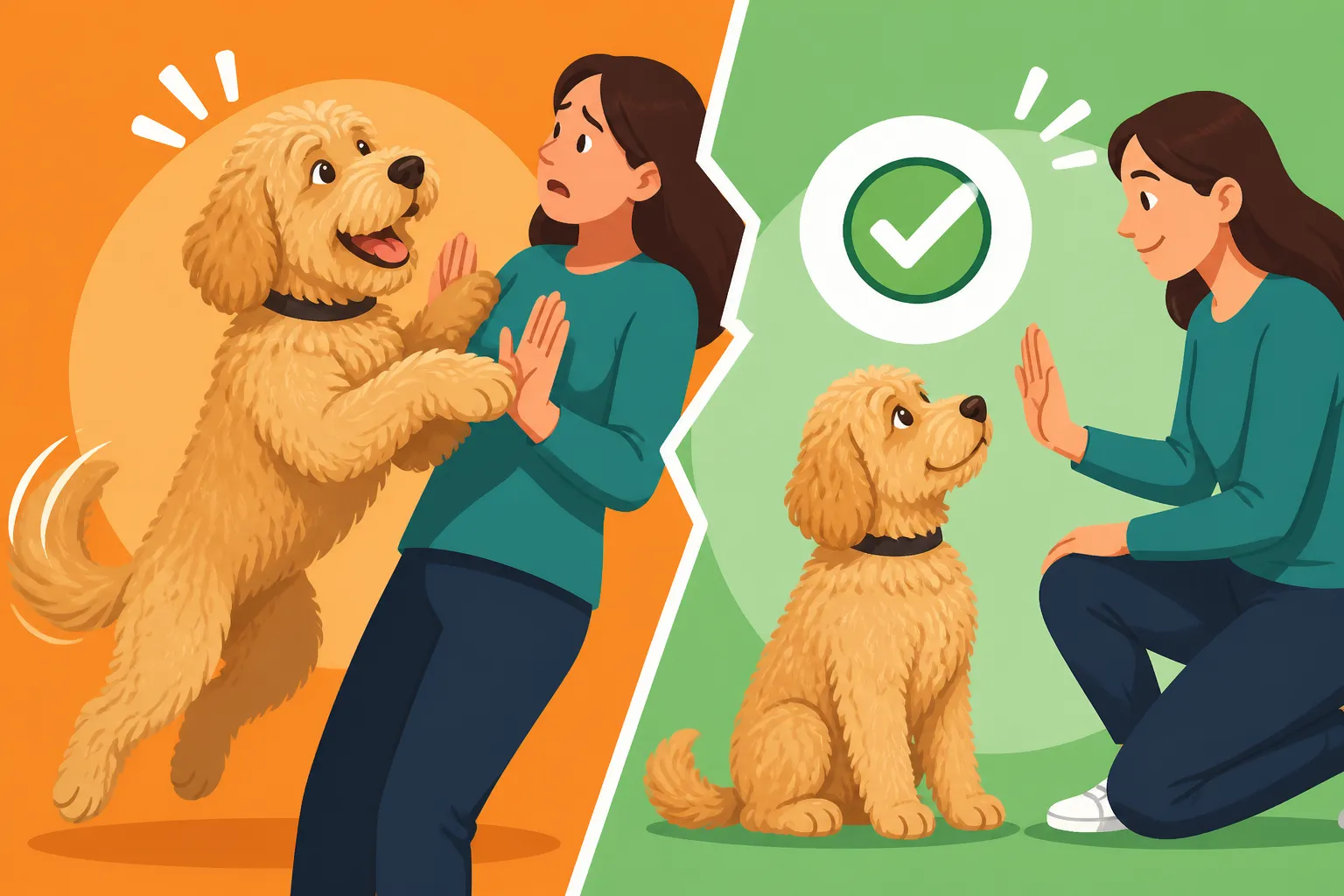
This is the golden rule, pun intended! The concept is simple: your Goldendoodle only gets attention, praise, or a treat when all four of their paws are on the ground. If they jump, you immediately withdraw all attention. This means turning your back, folding your arms, or even stepping out of the room. Absolutely no eye contact, no talking, and no touching until they settle themselves. As soon as those four paws hit the floor, even for a second, immediately reward them with calm praise ("Good settle," "Yes!") and a small, high-value treat.
Consistency is paramount here. Every single person who interacts with your Goldendoodle needs to follow this rule, from family members to guests. If even one person allows jumping, it confuses your dog and undermines all your hard work. Imagine trying to teach a child not to shout, but some adults laugh when they do it – it’s a mixed message. This method teaches your Goldendoodle that calm, polite greetings are what get them the good stuff, while jumping gets them absolutely nothing they want. You can find excellent training tools, like long leashes for practice, on Amazon.
Redirecting Excitement and Energy
Instead of letting your Goldendoodle launch into a jump, actively redirect their excitement into an acceptable behavior. As soon as you anticipate a jump (e.g., you walk through the door, a visitor approaches), ask for an alternative behavior like "sit" or "down." Have a treat ready to reward them before they even think about jumping. This proactive approach helps them practice good habits rather than reacting to bad ones.
Another powerful redirection tool is to have a specific toy ready for greetings. For example, when you come home, immediately engage them with a game of fetch or offer a favorite chew toy. This channels their energy and desire to interact into an appropriate outlet. This is particularly effective for Goldendoodles who also grab or mouth during greetings, as it gives them something positive to hold or chase instead. This teaches them that exciting moments mean engaging with you in a structured, positive way, not through jumping.
Consistency is Key for the Whole Family
I cannot stress this enough: consistency is the absolute cornerstone of stopping jumping behavior. Every single person who interacts with your Goldendoodle must be on the same page. If you spend weeks diligently teaching "four paws on the floor," but then a well-meaning friend or family member allows your Goldendoodle to jump up on them, you've taken ten steps backward. Dogs don't generalize well; they don't understand that "it's okay to jump on Aunt Susan, but not on Mom." For them, it's either allowed or it's not.
This requires communication and sometimes gentle assertiveness with guests. Explain your training rules before they even enter your home. Ask them to calmly ignore your Goldendoodle if they jump and only offer attention when all four paws are on the ground. You might even demonstrate the desired behavior. It takes a village to raise a well-behaved Goldendoodle, and everyone in that village needs to follow the same rules. Inconsistent training is often worse than no training at all, as it just confuses your dog.
Building Impulse Control Through Training Exercises
Beyond managing the jumping itself, the real long-term solution lies in building your Goldendoodle’s overall impulse control. These exercises aren't just for stopping jumping; they lay the foundation for a well-mannered dog in all situations. Goldendoodles are intelligent and eager, which makes them fantastic candidates for this kind of focused training.
"Sit for Everything" Protocol
This is a fantastic way to build self-control and reinforce good manners. The idea is simple: your Goldendoodle has to sit for everything they want. Want to go outside? Sit. Want their food bowl? Sit. Want to play with a toy? Sit. Want a pet? Sit. Make it a reflex, a default behavior. This teaches them that good things come to those who wait and offer a polite behavior. This helps instill good Door Manners for a Goldendoodle That Bolts too.
Start in low-distraction environments and gradually increase the difficulty. For instance, ask for a sit before putting their leash on, then before opening the door, then before greeting someone at the park. Each successful sit reinforces the idea that calm behavior gets rewards. This fundamentally shifts their mindset from immediate gratification to offering a polite action first. Many online programs, like those offered by BAXTER & Bella, incorporate this "Say Please" concept into their curriculum.
Place or Mat Training for Settling
Teaching your Goldendoodle to go to a designated "place" (like a mat or a dog bed) and stay there is an invaluable impulse control exercise. It teaches them to settle, to be calm amidst activity, and to manage their excitement when something interesting is happening around them. This is especially useful when guests arrive or during meal times. Start by luring them onto their mat with a treat, then say "Place" or "Mat." Reward them for staying there, gradually increasing the duration and distractions.
This exercise provides them with a clear job and a safe space, helping them to regulate their own behavior rather than getting over-excited. It’s also incredibly helpful for managing dogs who might otherwise be underfoot or demand constant attention. The ability to relax on cue, even when exciting things are happening, is a huge step in impulse control. You can learn more about this in articles like Mat Settle Training for a Restless Goldendoodle.
Teaching "Leave It" and "Wait"
"Leave It" and "Wait" are two of the most powerful impulse control commands you can teach your Goldendoodle. "Leave It" teaches them to disengage from something tempting they see (e.g., dropped food, a squirrel, another dog) and focus on you instead. "Wait" teaches them to pause before taking action (e.g., waiting at an open door, waiting for food, waiting to greet).
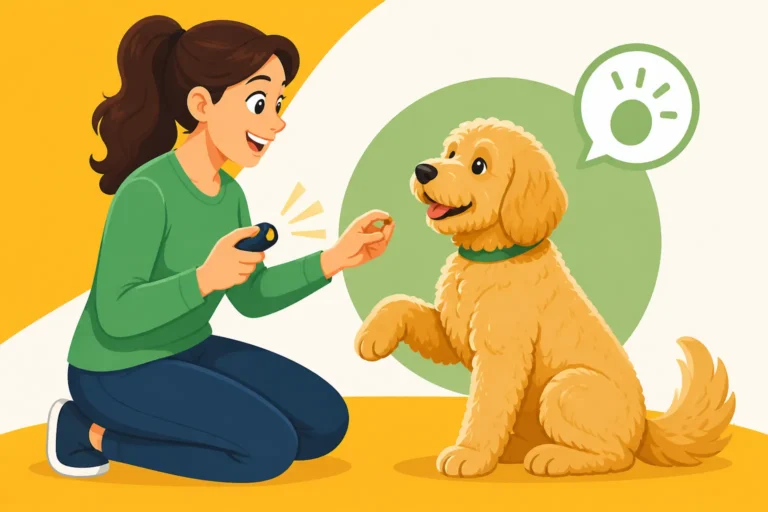
To teach "Leave It," start with a low-value treat on the floor. Cover it with your hand. When your Goldendoodle tries to get it, ignore them. The moment they look away from the treat, even for a second, mark that behavior ("Yes!" or click) and reward them with a different, higher-value treat from your other hand. Gradually increase the temptation and duration. For "Wait," use it at doorways, before meals, or before getting out of the car. These commands build mental discipline and teach your Goldendoodle to defer to your guidance, rather than acting on instinct. For some more ideas, check out Goldendoodle Impulse Control Exercises.
| Training Technique | What It Teaches | Best Use Cases | Key to Success |
|---|---|---|---|
| Four Paws on Floor | Polite greetings, self-control | Door greetings, meeting new people | Absolute consistency from everyone |
| Redirect & Reward | Channels excitement into desired action | Anticipated jumps, high-energy moments | Be proactive, have treats/toys ready |
| Sit for Everything | Default calm behavior, patience | Meals, walks, treats, playtime | Make it a habit, reward every sit |
| Place/Mat Training | Calm settling, self-regulation | Guests, busy times, relaxation | Gradual increase in duration/distractions |
| Leave It/Wait | Disengagement from temptation, patience | Dropped food, doorways, walking past distractions | High-value rewards, controlled environment |
Managing Jumping in Specific Scenarios
It's one thing to practice impulse control in a quiet living room, and another entirely to apply it in real-world, highly exciting situations. Goldendoodles, with their inherent enthusiasm, can find specific scenarios particularly challenging. Here's how to tackle some common jumping hotspots.
Greeting Visitors at the Door
This is probably the number one jumping trigger for many Goldendoodle owners. The doorbell rings, excitement builds, and your Goldendoodle transforms into a vertical greeter. To manage this, start before the visitor arrives. Put your Goldendoodle on a leash, even indoors. Practice having them sit a few feet away from the door. When the guest knocks or rings, stay calm and keep your Goldendoodle in a sit/stay. Only allow them to approach for a calm greeting when they are settled. If they jump, the guest should immediately turn their back, and you should calmly guide your Goldendoodle back to their "place" or away from the guest.
You can also use a baby gate to create a barrier between your Goldendoodle and the incoming guest. This allows your dog to see and hear the arrival without being able to physically jump. Once they are calm behind the gate, you can gradually allow them closer for a controlled, polite greeting, always enforcing the "four paws on the floor" rule. Explaining your training plan to your guests beforehand is vital. A quick text like, "Hey, Fido's learning polite greetings, please don't engage until he has all four paws on the ground!" goes a long way.
Jumping on Small Children or the Elderly
This is where jumping goes from annoying to potentially dangerous. A Goldendoodle, even a mini one, can easily knock over a small child or an elderly person, leading to injury. For children, constant supervision is essential. Teach children to always ask your Goldendoodle to "sit" before petting and to keep their hands down low. Never allow your Goldendoodle to jump on a child, even in play. If your Goldendoodle is prone to jumping on children, separate them with a baby gate or leash them when children are present, and only allow supervised, calm interactions.
For the elderly, similar precautions apply. When they visit, have your Goldendoodle on a leash or behind a barrier. Practice calm greetings, rewarding heavily for polite behavior. Explain to your older relatives the importance of not encouraging jumping. It’s about protecting both your dog and your loved ones, ensuring that interactions are positive and safe for everyone involved. Some Goldendoodles can also be very mouthy in their greetings, so being aware of Goldendoodle Puppy Biting and Mouthing early on can prevent issues here too.
Jumping During Playtime and Walks
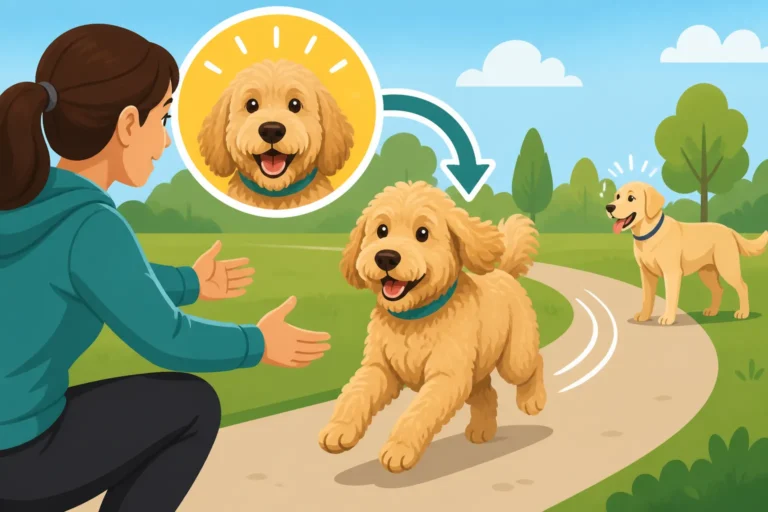
Jumping isn't always about greetings; sometimes it’s an over-arousal response during play or when they're excited on a walk. If your Goldendoodle jumps on you during a game of fetch, immediately end the game. Turn your back and ignore them for a few seconds. Only resume play when they have all four paws on the floor. They quickly learn that jumping stops the fun. The same applies on walks: if they jump up at you when excited by another dog or a scent, stop moving immediately. Wait for them to settle, then calmly continue your walk.
This teaches them that calm behavior continues the fun, while jumping ends it. It’s crucial to be consistent every single time. If you sometimes allow it during play because it's "just play," you're sending mixed signals. Goldendoodles love to play, so using play as a motivator for good behavior is very effective. Remember to consider their overall exercise needs too, as a tired Goldendoodle is often a better-behaved Goldendoodle.
The Role of Exercise and Mental Stimulation
Often, excessive jumping and a lack of impulse control in Goldendoodles can be traced back to unmet needs for physical exercise and mental stimulation. These dogs are intelligent and active; they're not content to be couch potatoes all day. Without appropriate outlets, that energy and intelligence will find its own (often undesirable) release.
Physical Exercise to Burn Off Steam
Goldendoodles, depending on their size and individual temperament, need a good amount of physical exercise every single day. We're not just talking about a quick stroll around the block. For many Goldendoodles, especially standards, this means brisk walks, runs, or active playtime in a securely fenced yard for at least 30-60 minutes, often split into two sessions. A physically tired Goldendoodle is much less likely to have the boundless energy to jump on everything that moves.
Think about it: if your Goldendoodle has been cooped up all day, the first person through the door becomes a prime target for releasing pent-up energy. Ensure they're getting sufficient exercise tailored to their age and size. Puppy Goldendoodles need shorter, more frequent bursts of activity to protect their developing joints. Adult Goldendoodles can often handle more vigorous activities. Remember, physical exercise also helps them produce those wonderful "feel-good" hormones, making them generally calmer and happier. For a good idea of their needs, consider The Hour or Two a Goldendoodle Needs Each Day.
Mental Work to Tire a Goldendoodle Brain
While physical exercise is important, never underestimate the power of mental stimulation for a Goldendoodle. Their Poodle heritage brings incredible intelligence, and their Golden Retriever side provides eagerness to work. A Goldendoodle whose brain has been engaged is often more tired and content than one who has merely had a long walk. Mental fatigue is just as important, if not more so, than physical fatigue for these smart dogs.
Incorporate puzzle toys, snuffle mats, and training sessions into their daily routine. Ten to fifteen minutes of focused training, learning new tricks, or practicing obedience cues can be as tiring as a long walk. Hide-and-seek with treats, scent games, or even just working on their "Place" command for extended periods provides valuable mental enrichment. This kind of work helps them develop focus and self-control, directly impacting their ability to manage impulses like jumping. Discover The Thinking Work That Actually Tires a Goldendoodle for more ideas.
Avoiding Over-Excitement Before Greetings
Sometimes, we inadvertently ramp up our Goldendoodle's excitement levels right before a greeting, setting them up for failure. Do you get overly excited when you're about to go for a walk? Do you hype them up just before a friend comes over? Try to keep your own energy calm and low-key during these transitions. Before a walk, don't use a high-pitched "Walkies!" voice; instead, calmly get the leash. Before guests arrive, try to create a calm atmosphere in the house.
If your Goldendoodle tends to get super excited when they see you getting ready to leave or return, practice desensitization. Pick up your keys, jingle them, then put them back down and sit on the couch. Repeat this several times a day without actually leaving. This teaches them that these cues don't always mean immediate excitement, helping to reduce their anticipatory arousal. The calmer you are, the calmer your Goldendoodle is likely to be, making those greetings much easier to manage.
When to Seek Professional Help for Goldendoodle Jumping
It’s completely normal to feel overwhelmed when dealing with persistent jumping and impulse control issues. Sometimes, despite your best efforts, the behavior simply isn't improving, or perhaps it's even getting worse. This is not a sign of failure on your part; it's a sign that you and your Goldendoodle might benefit from some expert guidance.
Recognizing When You're Overwhelmed
Being a dog parent is tough, and there's no shame in admitting you need help. If you find yourself consistently frustrated, angry, or dreading greetings, it's a good indicator that professional help could be beneficial. Maybe you're not seeing any progress despite consistent training, or perhaps your Goldendoodle's jumping is escalating in intensity or frequency. If the jumping is causing injury, fear in children or older adults, or genuinely impacting your quality of life, it's definitely time to reach out.
Another sign might be that you're just not sure what to do next. You've tried all the advice, watched all the videos, but nothing seems to stick for your specific Goldendoodle. A good trainer can observe your dog's unique quirks and your interaction style, offering tailored advice that a general article can't provide. Remember, asking for help is a sign of a responsible pet owner who wants the best for their dog.
Finding a Trainer Who Understands Doodles
Not all dog trainers are created equal, and it's especially important to find one who understands the unique blend of intelligence, sensitivity, and energy that Goldendoodles possess. Look for trainers who use positive reinforcement methods and who focus on building a strong relationship between you and your dog, rather than relying on harsh corrections or punishment. A trainer who dismisses a Goldendoodle's enthusiasm as "stubbornness" or "dominance" is probably not the right fit.
Ask potential trainers about their experience with Goldendoodles or similar energetic, intelligent breeds. Inquire about their methodology and what a typical training session looks like. A good trainer will be happy to answer your questions, provide references, and even let you observe a class or session. They should be able to offer strategies for A Goldendoodle That Jumps on Every Guest and other common Goldendoodle challenges. A great resource for structured, positive training is an online puppy school like BAXTER & Bella, which can offer foundational skills before or alongside in-person training.
Board and Train Programs: Pros and Cons
For severe or deeply ingrained jumping habits, some owners consider a "board and train" program, where their Goldendoodle lives with a professional trainer for a period. The main "pro" is that your dog receives intensive, consistent training in a structured environment from an expert. They can make significant progress in a shorter amount of time because the trainer can control all aspects of their day and ensure perfect consistency.
However, there are "cons" to consider. Board and train programs can be quite expensive. More importantly, the success of the program heavily relies on you, the owner, being able to consistently implement the learned behaviors once your Goldendoodle returns home. If you don't receive thorough instruction and follow-up support, the behaviors may revert. Always research the specific trainer and their facility thoroughly, ask for references, and ensure their methods align with positive reinforcement principles. While they can be very effective, they are not a magic bullet and require your continued commitment once your Goldendoodle is back in your care.
Disclaimer
This article is for general informational purposes only and does not constitute professional advice. Laws, prices and regulations vary by location and change over time. Consult a qualified professional for guidance on your specific situation.