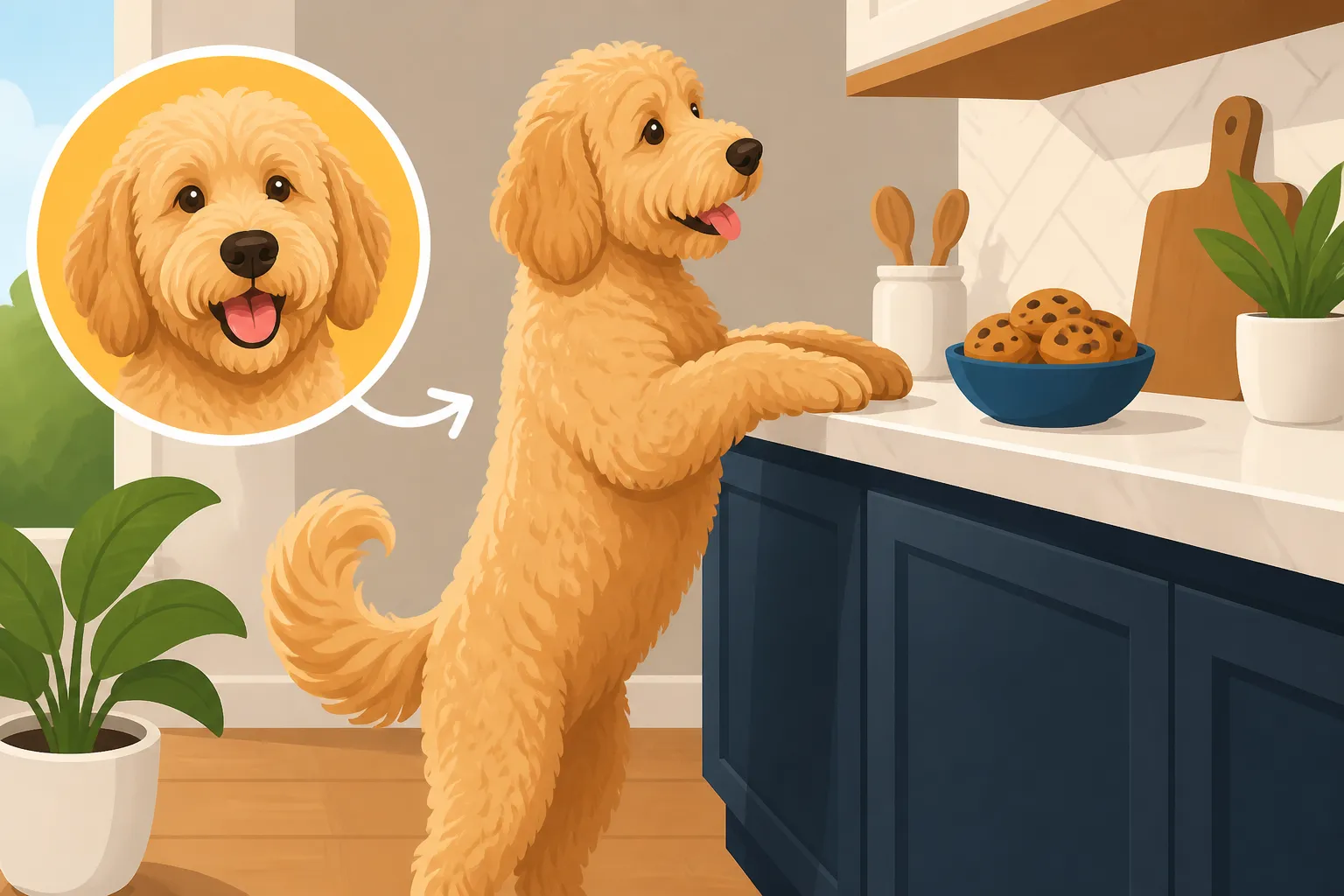
A Standard Goldendoodle Tall Enough to Reach the Counter
Ah, the daily dance around the kitchen island with a standard Goldendoodle! It's a familiar scene for so many of us: you turn your back for a second to grab something from the fridge, and suddenly, those long legs are propped up, nose twitching, investigating every crumb and tempting aroma on the counter. It's incredibly frustrating, and often, it feels like they know exactly when you're not looking. This guide is all about tackling that counter-surfing habit head-on, understanding why our tall, lanky companions are so drawn to those forbidden surfaces, and giving you practical, empathetic strategies to reclaim your kitchen space.
The Tall Tale of the Standard Goldendoodle and Counter Surfing
When you bring a Goldendoodle into your home, especially a standard size, you quickly realize just how much real estate they occupy. Their impressive height, a wonderful trait for reaching high places to give you cuddles, becomes a bit of a double-edged sword when it comes to kitchen counters. It's not just about curiosity; it's about pure, unadulterated opportunity combined with their innate drives.
Why Their Height is Both a Blessing and a Counter-Top Curse
A fully grown standard Goldendoodle can easily stand over two feet tall at the shoulder, with some individuals pushing even higher. Add to that their natural ability to stretch, stand on their hind legs, or even hop, and suddenly, a kitchen counter that felt safely out of reach for a smaller dog becomes prime real estate. It’s like having a perpetually hungry, furry teenager who can suddenly reach the top shelf of the pantry. You love their enthusiastic greetings and how they can look you in the eye for a treat, but that same reach transforms into a constant vigilance mission in the kitchen.
Many Goldendoodle owners feel a deep sense of exasperation, constantly battling against what seems like an endless pursuit of countertop treasures. You might find yourself clearing every surface before you even turn to chop vegetables, or placing bags of groceries directly on the floor the moment you walk in the door. It's exhausting, and it makes preparing meals or just enjoying a cup of coffee in peace feel like a covert operation. Their physical stature, which is so endearing in other contexts, truly becomes a significant challenge when you're trying to keep food, mail, or even car keys safe from a curious snout.
The Unforgettable Appeal of Counter Scents
Our Goldendoodles possess an incredible sense of smell, inheriting capabilities from both the Golden Retriever and Poodle lines. What might seem like a clean, empty counter to us is a rich tapestry of intoxicating aromas to them. That faint scent of last night's dinner, the lingering smell of bread crumbs from breakfast toast, or even the tantalizing aroma of your freshly made sandwich waiting for you—it's all an irresistible invitation.
Even if you’ve meticulously wiped down your counters, traces of food odors can remain, acting like a beacon. To a dog, these faint signals are enough to trigger an investigative mission. They don't see an "empty" counter; they perceive a puzzle, a potential treasure hunt where the reward could be incredibly high. This keen sense of smell, combined with their natural scavenging instincts, means that even a seemingly clean surface holds a promise of delicious discovery, making it incredibly difficult for them to resist a quick sniff-and-grab when the opportunity arises.
Understanding the Motivation Behind the Mischief
It's easy to label counter surfing as "naughty" behavior, but to effectively manage it, we need to dig a little deeper into why our Goldendoodles do it. It's rarely out of spite or malice; it's a combination of their genetic predispositions, intelligence, and learned behaviors.
The Golden Retriever's Opportunistic Nature
One half of your Goldendoodle, the Golden Retriever, is famous for its love of food and its "retrieving" instinct. This breed was developed to seek out and bring back game, and that drive often translates into a powerful, opportunistic search for anything edible. If there's food, a Golden Retriever wants it. And if it's within reach, it's fair game. This inherent drive makes them incredibly skilled scavengers. They aren't thinking about rules or boundaries; they're thinking about the delicious reward they've discovered.
This isn't just about being greedy; it's hardwired. A Golden Retriever is designed to be biddable and keen to please, but that also often extends to pleasing themselves with a tasty snack. If they find an unguarded treat on the counter, their brain screams "Jackpot!" They learn very quickly that the counter can be a source of high-value rewards, making the behavior incredibly self-reinforcing. It becomes a game of chance where the potential payoff is well worth the effort, especially when the odds of getting caught feel low. You can read more about The Retriever Biddability Inside a Goldendoodle and how it influences their behavior.
The Poodle's Intelligence and Problem-Solving Skills
Now, let's mix in the Poodle's intelligence and cleverness. Poodles are incredibly smart dogs, known for their problem-solving abilities and quick learning. This means your Goldendoodle isn't just blindly sniffing around; they're actively figuring out how to access those delicious counter-top treats. They might try different angles, test how much they can stretch, or even knock things off strategically. What a Goldendoodle Takes From the Poodle includes a strong cognitive component.
This intelligence means they're not just reacting to scent; they're actively engaging their brains. They remember where they found something good last time, and they'll try that spot again. They can learn from observation, too. If they see you place food on the counter, they might interpret that as "food is kept there." For a clever dog, successfully getting something off the counter isn't just a snack; it's a mental victory. It reinforces their problem-solving skills and makes them more likely to try again. It's a challenging combination when paired with the Golden's food drive!
Reinforcement: The Accidental Rewards We Give
Here's the kicker: even if you catch them, the act of successfully getting any food item off the counter, even just once, is incredibly rewarding. That single moment of triumph can etch the behavior into their minds, making them more likely to try again. We inadvertently reinforce the behavior in several ways:
- The "Jackpot" Effect: If they ever manage to grab a piece of chicken, a slice of bread, or even a dropped grape (be careful with toxic foods!), that high-value reward makes the effort entirely worthwhile from their perspective. They've hit the jackpot, and they'll keep playing the game.
- Attention: Sometimes, even negative attention, like yelling, can inadvertently reinforce the behavior, especially if they're bored or seeking interaction. While it's not ideal, any response is a form of engagement.
- Inconsistency: If sometimes they succeed and sometimes they don't, it creates a "gambling" effect. They learn that if they just keep trying, eventually, they'll win. This is why consistency is so crucial in managing this behavior.
It's a tough cycle to break because the dog is driven by powerful, natural instincts and then rewarded by what they find. The key is to break that cycle by removing the opportunity for reward and teaching alternative behaviors. Goldendoodle Behavior Problems That Start in Puppyhood can often be mitigated with early training to prevent these issues from becoming ingrained.
Proactive Strategies to Prevent Counter Surfing
The best offense is a good defense when it comes to counter surfing. By setting up your environment and your training to prevent the behavior from happening in the first place, you'll save yourself a lot of frustration and your Goldendoodle a lot of accidental rewards.
Kitchen Management: Making the Counters "Uninteresting"
This is your number one tool in the battle against counter surfing. If there's nothing interesting on the counters, there's no reward for investigating them. It sounds simple, but it requires diligent consistency.
- The "Nothing On The Counters" Rule: Make it a household rule that nothing edible, or even enticing non-edibles like mail or keys, is left within reach. This means clearing plates immediately after meals, putting groceries away the moment you walk in the door, and using airtight containers for anything you need to leave out. If it's not there, they can't get it.
- The "Hot Zone" Strategy: Identify the areas where your Goldendoodle most frequently attempts to counter surf – often near sinks, prep areas, or places where food is often handled. These are your "hot zones" that require extra vigilance. Keep them meticulously clear.
- Storage Solutions: Invest in smart storage. Use tall containers for bread, fruit bowls with covers, or simply store everything perishable in the fridge or pantry. Child locks on lower cabinets can also be useful if your Goldendoodle is particularly adept at opening doors. Remember, your Goldendoodle is smart; they'll remember where they found something good last time. By making your counters perpetually boring, you remove the motivation.
It can feel like a chore at first, like you're constantly cleaning up, but it's far less frustrating than continuously losing food or having to scold your dog. This consistent management strategy will eventually teach your Goldendoodle that counters are not a source of food.
Teaching "Leave It" and "Off": Essential Commands
Beyond environmental management, strong obedience cues are your best friend. "Leave It" and "Off" are critical for any dog, but especially for a counter-surfing Goldendoodle.
- "Leave It": This command teaches your dog to ignore something tempting. Start by practicing with low-value items on the floor, rewarding them for looking away from the item and at you. Gradually increase the value of the item and the difficulty, moving to items on low tables, then eventually practicing with items on the counter while you are right there. The goal is for your Goldendoodle to voluntarily disengage from the tempting object when you say the command, knowing a better reward (from you!) is coming. Teaching Leave It to a Goldendoodle is a fundamental skill.
- "Off": This command teaches your dog to get all four paws on the floor if they've jumped up onto something, whether it's a person, the couch, or yes, the counter. Practice by luring them down with a treat if they jump up, saying "Off!" as they descend, and rewarding them when all four paws are on the ground. Never reward them for jumping down if they were encouraged to jump up. This needs to be a consistent message: four paws on the floor is the desired behavior.
These commands require patient and consistent training, often with high-value treats to make it worthwhile for your Goldendoodle. Remember, Training a Goldendoodle That Wants to Please You means leveraging their eagerness to earn rewards from you.
Providing Appropriate Outlets for Their Drive
A bored Goldendoodle is a creative Goldendoodle, and their creativity often leads to mischief. Providing ample physical and mental stimulation can significantly reduce their desire to invent their own fun, like counter surfing.
- Physical Exercise: Ensure your standard Goldendoodle gets enough exercise. This isn't just a quick walk around the block. They need substantial activity, such as brisk walks, runs, fetch in a secure yard, or trips to the dog park (if appropriate for your dog's temperament). A tired dog is less likely to have the energy or inclination to engage in counter surfing. Remember, Goldendoodle Exercise and Mental Work Every Day is crucial for their well-being and managing unwanted behaviors.
- Mental Stimulation: Goldendoodles are smart, and their brains need a workout just as much as their bodies. Puzzle feeders, snuffle mats, and scent games can redirect their natural foraging instincts away from your counters. Instead of finding a discarded crust on the counter, they can enjoy working for their kibble or treats from a puzzle toy. This taps into their problem-solving skills in a positive way. Look for interactive toys on places like Amazon or specialty pet stores that challenge them.
- Structured Training Sessions: Short, daily training sessions (even 5-10 minutes) reinforce good behavior and provide mental engagement. Work on new tricks, refresh old commands, or practice Goldendoodle Impulse Control With Food on the Floor. This strengthens your bond and gives them a productive way to use their intelligence.
By meeting their needs for exercise and mental challenge, you're not just preventing bad habits; you're building a happier, more well-adjusted Goldendoodle.
Addressing Active Counter Surfing Behavior
Despite all your best proactive efforts, there will inevitably be times when your Goldendoodle attempts or succeeds in counter surfing. How you react in these moments is crucial for teaching them that it's not a rewarding behavior.
Interruption Techniques: Catching Them in the Act
If you catch your Goldendoodle with their paws on the counter or their nose dangerously close to your dinner, a calm, immediate interruption is key. The goal is to startle them slightly, not to scare or punish them harshly.
- A Sharp, Non-Angry Sound: A sudden clap, a quick "uh-uh!" in a firm but neutral tone, or even a short burst of air from an air horn (used very sparingly and from a distance, just to interrupt, not to instill fear) can be effective. The idea is to break their focus on the counter and redirect their attention. Avoid yelling, as this can either escalate their excitement or make them afraid of you rather than understanding that the counter surfing is the problem.
- Immediate Redirection: The moment they pull away from the counter, redirect them to an appropriate activity. Ask for a "sit" or "down" and reward them for it. Or, lead them to their mat or bed with a "place" command and give them a designated chew toy. This teaches them what to do instead of just what not to do. Goldendoodle Place Training on a Bed or Mat is a great tool for this.
- Avoid Physical Force: Never push or pull your dog off the counter. This can lead to fear, defensiveness, or even aggression, and doesn't teach them anything about the counter itself. It also damages your relationship.
The key is to interrupt the action and immediately offer a desirable alternative. This helps them associate leaving the counter alone with a positive outcome from you.
Consequence-Based Deterrents (Used Carefully)
While positive reinforcement is always preferred, sometimes a mild deterrent can help break a stubborn habit, especially if you're not always present to interrupt. These should always be non-aversive and used with extreme caution.
- Noise-Making Traps (Supervised): A stack of empty soda cans loosely balanced at the edge of the counter, set to tumble and make a clatter if disturbed, can sometimes startle a dog away without human intervention. The dog associates the noise with the counter, not with you. This should only be used under direct supervision so you can ensure your dog isn't traumatized and can be immediately redirected if they become distressed.
- Motion-Activated Alarms: Small, motion-activated alarms placed discreetly on the counter can emit a harmless but startling sound when your dog approaches. Again, the intent is to create a mild disincentive from the environment itself, not from you.
- Taste Aversion (for specific items): For specific, non-toxic items that your dog continually targets (like a particular type of bread, if you know it's safe to use), you could lightly spray it with a dog-safe bitter apple spray or mix in a tiny amount of lemon juice (which many dogs dislike the taste of). This only works if they don't find the taste rewarding, and you must be absolutely certain the item itself is safe. This is generally less effective and harder to implement than managing the environment.
The general rule here is: if it scares or hurts your dog, don't use it. The goal is to make the counter a less appealing place, not a terrifying one. Most of these methods work best when you aren't present, so the dog associates the negative consequence with the act itself, rather than associating you with punishment.
Consistency is Key: Every Person, Every Time
This cannot be stressed enough: consistency is the absolute bedrock of successfully stopping counter surfing. If one family member is diligent and another occasionally leaves things out or lets the dog get away with it, you're essentially undoing all your hard work.
- Family Meeting: Get everyone in the household on the same page. Discuss the "nothing on the counters" rule, the commands you're using ("Leave It," "Off"), and how everyone should respond to attempted counter surfing. Even visiting friends or family need to be briefed if they are interacting with your Goldendoodle in the kitchen.
- No Exceptions: Your Goldendoodle doesn't understand "just this once" or "only when Mom isn't home." Every successful raid, no matter how small, reinforces the behavior. If they get a crumb once, they'll know there's potential for more.
- Patience and Persistence: Breaking an ingrained habit takes time, especially one as rewarding as counter surfing. There will be setbacks. Don't get discouraged. Stick to your plan, and celebrate the small victories. The longer you are consistent, the more likely your Goldendoodle will learn that the counters are not their personal buffet.
It’s a team effort, and every consistent interaction, or lack of opportunity, contributes to building the desired behavior. Think of it as slowly dimming the "jackpot" light over the counter until it's completely dark.
Tools and Resources to Help You Succeed
Sometimes, even with all the best intentions, we need a little help. There are many tools and resources available that can make the journey to a counter-surfing-free home a lot smoother.
Management Tools: Crates, Gates, and Playpens
When you can't actively supervise your Goldendoodle, physical barriers are your best friends. They ensure your dog stays safe and prevents them from practicing unwanted behaviors.
- Crates: A well-sized crate can be an invaluable tool. It provides a safe, comfortable den for your Goldendoodle when you're unable to supervise them directly, such as when you're cooking, eating, or out of the house. A properly crate-trained dog will view their crate as a sanctuary, not a punishment. This completely removes the opportunity for counter surfing. If you're struggling, check out Crate Training a Velcro Goldendoodle for tips.
- Baby Gates or Pet Gates: Strategic placement of pet gates can block off access to the kitchen entirely or restrict your Goldendoodle to a specific, supervised area. These are great for when you want your dog to still be near you but not have free rein of the cooking space. You can find a variety of styles and sizes on platforms like Amazon, from pressure-mounted to hardware-mounted options, to suit your home's layout.
- Indoor Playpens: For puppies or smaller standard Goldendoodles, an indoor playpen can create a secure, contained area within the kitchen or an adjacent room. This allows them to be part of the family activity without being able to reach tempting surfaces. It's a fantastic way to manage their environment during those crucial puppy training months.
These tools are not meant to be a permanent solution for an adult dog, but rather management strategies to prevent unwanted behaviors from being practiced, especially during vulnerable times like cooking or when you can't be hyper-vigilant.
Training Aids and Programs
Leveraging the right training aids and programs can significantly boost your success.
- High-Value Treats: When teaching "Leave It" or "Off," you need something your Goldendoodle truly values as a reward. Think small pieces of cooked chicken, cheese, or specialized training treats. These powerful motivators make listening to you more appealing than investigating the counter.
- Puzzle Feeders and Snuffle Mats: As discussed earlier, these are fantastic for redirecting foraging instincts. Goldendoodle Puzzle Feeders and Scent Games can keep them engaged for extended periods, making them less likely to seek out excitement on your countertops.
- Online Training Programs: If in-person classes aren't feasible, online programs can offer structured guidance. Companies like BAXTER & Bella provide comprehensive online puppy and dog training programs, often with live support, that can walk you through commands like "Leave It," "Off," and impulse control exercises tailored to your dog's intelligence. These programs emphasize positive reinforcement and consistency, which are vital for a Goldendoodle.
- Clicker Training: A clicker can be a powerful communication tool. It precisely marks the exact moment your dog performs the desired behavior (e.g., looking away from the counter, keeping paws on the floor), making it easier for them to understand what you're rewarding.
Remember, consistent effort with the right tools makes a huge difference.
Professional Help: When to Call a Trainer
Sometimes, despite your best efforts, counter surfing can become a deeply ingrained habit, or you might feel overwhelmed by the challenge. This is when a professional dog trainer can be an invaluable resource.
- Persistent Behavior: If your Goldendoodle continues to counter surf despite consistent environmental management and training, it might be time for expert intervention. A trainer can observe your dog's behavior, identify underlying motivations, and suggest tailored strategies you might not have considered.
- Frustration and Stress: If you find yourself constantly stressed or angry about the counter surfing, or if it's impacting your relationship with your Goldendoodle, seeking help is a healthy step. A good trainer can provide objective guidance and emotional support.
- Finding the Right Trainer: Look for a certified professional dog trainer who uses positive reinforcement methods. Avoid anyone who suggests harsh corrections, punitive tools, or relies on fear. Ask about their experience with Goldendoodles or similar intelligent, food-motivated breeds. They should be able to offer private, in-home sessions where they can observe your dog in their actual environment. A great resource for this is Finding a Trainer Who Works With Goldendoodles.
A professional trainer can often identify nuances in your dog's behavior or your training approach that you might miss, providing a fresh perspective and helping you implement a more effective plan.
Here's a quick comparison of proactive versus reactive strategies for managing counter surfing:
| Strategy Type | Description | Key Actions | Pros | Cons |
|---|---|---|---|---|
| Proactive | Prevents the behavior from happening by removing opportunity and building good habits. | Clear counters, use gates/crates, teach "Leave It" and "Off," provide mental enrichment. | Highly effective long-term, reduces stress, builds good habits, safer for dog. | Requires consistent effort from everyone, initial setup can feel time-consuming. |
| Reactive | Addresses the behavior as it's happening or immediately after, to interrupt and deter. | Sharp verbal interruption, noise deterrents, immediate redirection, consequence-based methods. | Can stop immediate incident, might deter in the short term. | Can be inconsistent, may create fear if not done correctly, doesn't teach alternative behavior. |
By prioritizing proactive strategies and using reactive techniques only for immediate interruption and redirection, you'll be well on your way to a calmer, counter-surfing-free kitchen. Your standard Goldendoodle, with their impressive height and even more impressive intelligence, will learn that good things come from you, not from the kitchen counter.
Disclaimer
This article is for general informational purposes only and does not constitute professional advice. Laws, prices and regulations vary by location and change over time. Consult a qualified professional for guidance on your specific situation.