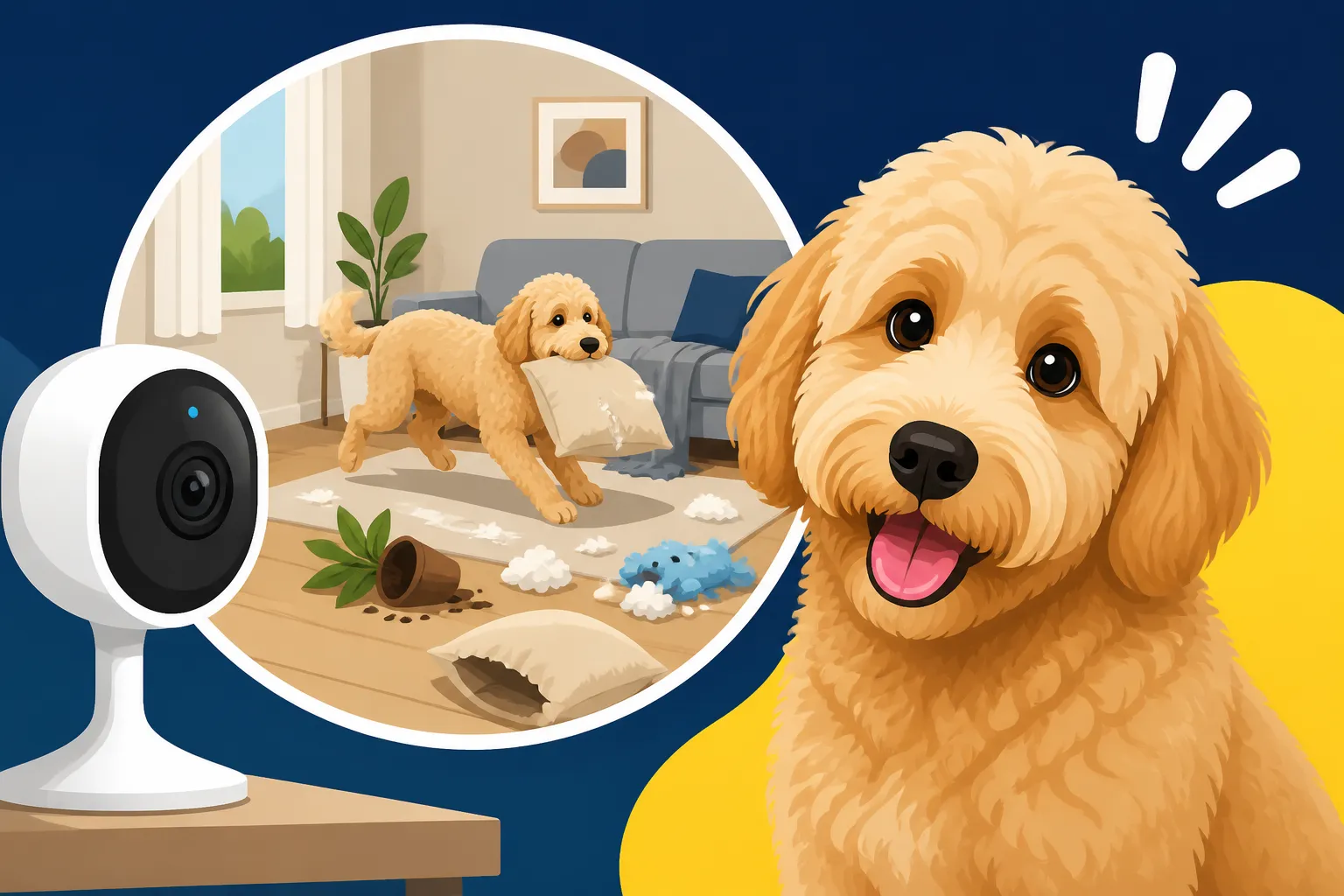
Cameras That Show What a Goldendoodle Does Alone
It’s a common scenario for Goldendoodle parents: you walk through the door after being away, and you’re met with either a whirlwind of excited energy or, perhaps worse, evidence of mischief. Maybe there’s a chewed shoe, a suspicious puddle on the floor, or a neighbor complaining about incessant barking. The problem is, you weren't there. You have no idea what your furry friend was actually doing while you were gone, making it incredibly difficult to address the root cause of these behaviors. This guide is all about pulling back the curtain on your Goldendoodle’s solo adventures, showing you how pet cameras can offer invaluable insight into their alone time and help you create a happier, calmer routine for everyone.
The Hidden World of Your Goldendoodle: Why Monitoring Matters
Our Goldendoodles are often described as "velcro dogs" for good reason – they thrive on companionship and being part of the family. This wonderful trait, however, can sometimes lead to challenges when they're left alone. Without you there, their world can feel a little… empty. And what they do in that emptiness can be a mystery until you return.
Unmasking Separation Anxiety and Destructive Behavior
You love your Goldendoodle's enthusiasm, but it can be heartbreaking to discover they’re struggling when you’re not around. Coming home to chewed-up furniture, scratched doors, or even potty accidents can be frustrating, but it’s crucial to remember that these aren't acts of spite. Often, they are cries for help, signs of significant distress or boredom. Goldendoodle Separation Anxiety From Both Parent Lines is a very real concern for many owners. A camera can show you if your Goldendoodle starts pacing, whining, or even barking incessantly the moment you leave, or if the destruction only begins after an hour of silence.
Imagine coming home to find your favorite throw pillow in tatters. Without a camera, you might assume your Goldendoodle just got bored and decided to redecorate. With a camera, you might see them frantically tearing at the pillow, panting and drooling, immediately after you shut the door. This objective evidence completely changes how you approach the problem, shifting from a punishment mindset to one of compassionate understanding and intervention.
Identifying Boredom Versus True Distress
There's a big difference between a Goldendoodle who is merely bored and one who is experiencing genuine distress. A bored dog might spend some time exploring, then settle down for a nap, occasionally nudging a toy around. They might chew on an appropriate item, or even just stare out the window. This is normal, healthy solo time. A distressed Goldendoodle, however, might exhibit continuous pacing, excessive licking of paws, frantic attempts to escape their crate or room, or non-stop vocalization like howling or barking.
A camera allows you to observe these nuanced behaviors. Is your Goldendoodle just looking for something to do, or are they truly agitated and unable to settle? If you see them napping peacefully for long stretches, that's a good sign. If they spend 80% of their alone time staring at the door or whining, you've got a different issue on your hands. This clarity is vital for understanding The Signs a Goldendoodle Cannot Cope Alone and deciding on the best course of action, whether it's more enrichment or a dedicated training plan for anxiety.
Gaining Insight for Effective Training
You cannot effectively train a behavior you don’t fully understand. Pet cameras provide a "behind-the-scenes" look that a trainer or behaviorist would kill for. They capture real-time, unfiltered reactions to being left alone. This insight allows you to pinpoint exact triggers, measure the duration of problematic behaviors, and understand their intensity.
For example, you might think your Goldendoodle starts barking as soon as you leave, but the footage might reveal they are quiet for the first 20 minutes, and only start barking when the mail carrier comes by. Or perhaps they only start chewing on the baseboards after an hour of calm, suggesting boredom has set in. This specific information is a goldmine for crafting a targeted training plan, rather than just guessing. It means you can focus your efforts precisely where they're needed, which makes training much more efficient and less frustrating for both you and your Goldendoodle.
Types of Pet Cameras: Finding the Right Eyes for Your Home
The market for pet cameras has exploded, offering a range of options from simple monitors to sophisticated interactive devices. Choosing the right one depends on your specific needs, budget, and how much "interaction" you want to have with your Goldendoodle while you're away.
Basic Monitoring Cameras: Simple and Accessible
These are your entry-level options, typically offering live video streaming to your smartphone and often some form of motion detection with alerts. They might record short clips when motion is detected, or allow manual recording. They're excellent for getting started, especially if you just want to see what your Goldendoodle is up to and confirm whether they're settling or panicking. Many reliable and affordable options can be found on platforms like Amazon, making them easily accessible for most pet owners.
The beauty of these cameras lies in their simplicity. You plug them in, connect to Wi-Fi, and typically, you're good to go. They provide that crucial visual evidence without overwhelming you with too many features. They might not have two-way audio, but simply seeing your Goldendoodle's body language – are they relaxed, sleeping, or agitated? – can tell you volumes. For many, this basic level of observation is exactly what's needed to kickstart a training plan for Building Alone Time for a Goldendoodle in Minutes.
Interactive Cameras: Engagement from Afar
If you're looking for more than just passive observation, interactive pet cameras are fantastic. These often include features like two-way audio, allowing you to speak to your Goldendoodle and hear their responses. Some even dispense treats with the press of a button on your phone, offering a positive reinforcement moment from across town. Others come with laser pointers or other simple games to provide mental stimulation.
These cameras are particularly useful for Goldendoodles who might benefit from a brief check-in or a quick distraction during their alone time. Imagine being able to tell your Goldendoodle "good boy" when you see them settling quietly, or tossing them a treat as a reward. This kind of remote interaction can help bridge the gap and reinforce calm behavior, potentially reducing some aspects of separation distress. Just be mindful not to overdo the interaction, as too much remote engagement can sometimes make actual alone time harder.
Advanced Systems: Comprehensive Home Monitoring
For those who want an all-encompassing view of their Goldendoodle’s environment and behavior, advanced systems go beyond simple pet cameras. These might integrate with existing smart home systems, offer continuous recording with cloud storage, pan and tilt capabilities for a wider view, and even environmental sensors to monitor temperature or humidity. They often come with sophisticated motion and sound detection, differentiating between a casual sigh and a distressed whine, or a playful tail wag and a destructive chewing session.
These systems give you a robust record of your Goldendoodle’s time alone, allowing for in-depth analysis of patterns over days or weeks. Some even offer AI features that can send specific alerts like "dog barking" or "person detected," giving you highly relevant notifications. While they come with a higher price tag and often a subscription for full features, the comprehensive data and peace of mind they offer can be invaluable for dedicated Goldendoodle owners tackling complex behavioral challenges.
Here's a quick comparison of typical pet camera features:
| Feature | Basic Monitoring | Interactive Cameras | Advanced Systems |
|---|---|---|---|
| Live Video Stream | Yes | Yes | Yes |
| Motion/Sound Alerts | Basic | Yes | Advanced (AI often) |
| Two-Way Audio | No (often) | Yes | Yes |
| Treat Dispenser | No | Yes (optional) | Yes (optional) |
| Night Vision | Basic | Yes | Advanced |
| Cloud Storage | Limited/Optional | Optional | Standard/Subscription |
| Pan/Tilt | No | Optional | Yes (often) |
| Environmental Sensors | No | No | Yes (optional) |
| Smart Home Integration | No (often) | Optional | Yes |
Using Camera Footage to Inform and Improve Training
Having a camera is just the first step. The real magic happens when you meticulously review the footage and use those observations to tailor your training approach. It’s like having a personal detective for your Goldendoodle’s inner world.
Analyzing Behavior Patterns and Triggers
Once you have your camera set up, commit to reviewing the footage regularly, especially during the initial stages of training. What are you looking for? Start by noting the precise moment you leave and when your Goldendoodle's behavior shifts. Does the barking begin immediately, or after a specific duration? Do they only start destructively chewing after hearing a certain noise, like a delivery truck or a neighbor's dog?
Look for patterns:
- Timing: When do behaviors start and stop? Is there a consistent peak in anxiety?
- Triggers: What events seem to precede the undesired behavior? Is it an external sound, or simply the realization they are alone?
- Intensity: How severe is the behavior? Is it mild whining or full-blown panic?
- Progression: Does the behavior escalate over time, or does your Goldendoodle eventually settle?
For instance, if you consistently see your Goldendoodle, who normally A Goldendoodle That Follows You Room to Room, start whining and pacing within five minutes of your departure, and this escalates into barking within ten, you know you have an immediate-onset separation issue. This kind of precise observation is crucial; it helps you move beyond guesswork and create a plan based on facts.
Tailoring Training Strategies Based on Observations
The insights gained from your camera footage will directly inform your training adjustments. If your Goldendoodle is showing mild restlessness, but eventually settles, you might focus on increasing their duration of alone time gradually, perhaps offering more engaging puzzle toys before you leave. If they are consistently barking at external noises, your training might involve desensitization to those sounds while you are present, or creating a more sound-proofed "den" for them.
For serious separation anxiety, the camera will show you exactly how short your departure window needs to be when you start desensitization training. You'll literally be watching to see when your dog shows the first signs of distress and coming back before they get truly upset. This ensures a positive association with your return. Many online dog training programs, like BAXTER & Bella, even encourage owners to use video feedback. Having the footage allows you to show your trainer exactly what’s happening, leading to more accurate advice and customized exercises for issues like Goldendoodle Impulse Control Exercises when alone.
Measuring Progress and Adjusting as Needed
One of the most encouraging aspects of using pet cameras is the ability to objectively measure progress. Without a camera, you might only notice when things go wrong, but you’d miss all the small victories. Is your Goldendoodle now settling faster? Is the duration of their barking shorter? Are they engaging with their toys for longer periods? The camera provides undeniable proof of these improvements.
This objective data is incredibly motivating, especially when training can feel slow. It allows you to confidently adjust your training plan – perhaps increasing alone time by another minute, or introducing a new challenge. If you see a regression, you can review the footage to understand what might have triggered it. This iterative process of observation, adjustment, and re-observation is key to successfully helping your Goldendoodle cope with being alone. It's a powerful tool to ensure that your efforts to extend their alone time are genuinely helping them feel more secure, rather than just tolerating your absence.
Important Considerations When Choosing a Pet Camera
While the benefits of pet cameras are clear, it’s important to think through a few practical considerations before making a purchase. After all, you want a tool that works seamlessly with your life and effectively helps your Goldendoodle.
Connectivity, Storage, and Privacy
Most pet cameras rely on your home's Wi-Fi network. Ensure your Wi-Fi is strong and reliable enough in the area where you plan to place the camera. Nothing is more frustrating than a constantly buffering or disconnected feed when you're trying to check on your Goldendoodle. When looking on sites like Amazon, pay close attention to reviews regarding connectivity issues.
Consider how footage is stored. Many cameras offer cloud storage, often with a subscription fee, which means your videos are saved online. Others have local storage via an SD card. Cloud storage offers convenience and backup, while local storage ensures your data stays within your home. Privacy is also a significant concern. Choose reputable brands that clearly outline their data encryption and privacy policies. You're bringing a camera into your home, so understanding how your data is handled is paramount.
Camera Placement and Coverage
Strategic placement of your camera is crucial for getting useful footage. Think about where your Goldendoodle spends most of their time when alone. Is it a crate? A specific room? A common "destruction zone"?
- Angle: Position the camera to capture a wide view of the area, including doors, windows, and any furniture or objects your Goldendoodle might interact with.
- Height: Place it high enough to avoid being knocked over or chewed on, but low enough to get a clear view of your Goldendoodle's body language. A bookshelf or a wall mount are often good choices.
- Lighting: Consider how natural light changes throughout the day and ensure the camera's night vision (if it has one) provides a clear picture in low light.
- Multiple Cameras: If your Goldendoodle roams freely in a larger space, you might need more than one camera to cover all potential areas of interest.
Proper placement ensures you don't miss crucial behaviors or environmental triggers, giving you the full picture of your Goldendoodle's solo experience.
Pet-Proofing and Durability
Goldendoodles are clever and curious, and some can be quite persistent when it comes to investigating new objects. If your Goldendoodle is prone to chewing, jumping, or generally being a whirlwind of activity, you need to consider the camera's durability and how you can pet-proof it.
- Out of Reach: Ideally, place the camera where your Goldendoodle simply cannot get to it. Wall mounts or high shelves are usually best.
- Cord Management: Hide or secure any power cords to prevent chewing. Chew-resistant cord covers are a smart investment.
- Robust Design: If the camera must be within reach, look for models made with durable materials that can withstand a curious nudge or even a playful paw.
Remember, the goal is to observe, not to introduce a new chew toy. Taking these preventative measures will protect your investment and ensure continuous monitoring.
Disclaimer
This article is for general informational purposes only and does not constitute professional advice. Laws, prices and regulations vary by location and change over time. Consult a qualified professional for guidance on your specific situation.