Getting a Goldendoodle Puppy to Lie on Its Side
It can be incredibly frustrating when you're trying to perform essential care on your Goldendoodle puppy – like cleaning ears, trimming nails, or giving a quick brush – and they just won't stay still. They squirm, they protest, and sometimes it feels like you need three extra hands! This guide is all about helping you gently and effectively teach your Goldendoodle puppy to lie calmly on its side, a foundational skill that will make grooming, vet visits, and at-home health checks so much easier for both of you.
Why Teaching "Side" is Crucial for Your Goldendoodle's Well-being
Let's be real, a Goldendoodle's fluffy, often curly coat is a huge part of their charm, but it's also a high-maintenance affair. And it's not just the coat; those floppy ears, those furry paws – they all need regular attention. Teaching your puppy to lie calmly on their side isn't just a cute trick; it's a vital life skill that will reduce stress for everyone involved in their care.
The Grooming Table and Preventing Mats
Goldendoodles are notorious for matting, especially behind the ears, in the armpits, and on their belly and legs. If your dog isn't comfortable being handled and lying still on its side, these sensitive areas become almost impossible to reach with a brush or comb. Imagine trying to line brush your Goldendoodle when they're constantly rolling over or standing up. It's a battle, and often, the mats win, leading to uncomfortable and expensive dematting charges at the groomer, or worse, needing to shave them down. Getting them comfortable on their side means you can properly groom their entire body, preventing those painful tangles before they even start. It also makes professional grooming appointments much less stressful for your dog, and for the groomer. Many groomers appreciate clients who have put in this foundational work, as it makes their job safer and more efficient. Remember, Why Goldendoodle Grooming Training Starts Week One isn't just a suggestion, it's a necessity.
Cooperative Care at the Vet and Home Checks
Beyond grooming, the "side" command is invaluable for cooperative care. Think about those routine vet visits where they need to examine your dog's abdomen, check their lymph nodes, or even take a temperature. If your Goldendoodle is already comfortable lying on its side, it makes these procedures much smoother for the vet team and less frightening for your pup. At home, it empowers you to perform regular health checks without a wrestling match. You can easily check for lumps, examine their paw pads, clean their ears, or even administer medication. This skill helps build a dog that trusts being handled, rather than fearing it, turning potentially scary situations into calm, predictable routines. Handling a Goldendoodle's Feet, Face and Ears is a huge part of overall cooperative care.
Building a Foundation of Trust
Training isn't just about commands; it's about building a language and a bond with your dog. When you teach your Goldendoodle to lie on its side using positive reinforcement, you're not forcing them into a position; you're teaching them that cooperating with you leads to good things. This builds immense trust and confidence. They learn that even when you're doing something a little unusual, like holding their paw to trim a nail, they can trust you to be gentle and rewarding. This trust extends to all areas of their life, making them a more confident and resilient companion.
Laying the Groundwork: Before You Ask for "Side"
Before you jump straight into asking your Goldendoodle to flop over, it’s important to have some basic foundational skills in place. Think of it like building a house – you need a solid foundation before you start raising the walls. Without these basics, you might find yourself hitting roadblocks and both you and your puppy getting frustrated.
Mastering "Down" as a Prerequisite
The "down" command is the absolute first step towards "side." Your puppy needs to be comfortable lying completely down before you can expect them to roll over. If your Goldendoodle is still struggling with a solid "down," pause your "side" training and focus there first. Practice "down" in various locations, with different levels of distraction, until it's a reliable behavior. Use high-value treats and praise to make "down" a truly positive experience. Many Goldendoodles are eager to please, so with consistent Positive Reinforcement and Why It Suits a Goldendoodle, they'll pick this up quickly. You can find excellent treat pouches and training treats on platforms like Amazon to keep your rewards handy and appealing.
Creating a Low-Distraction Training Zone
Puppies, especially Goldendoodle puppies, are easily distracted. Their world is a giant playground of new smells, sounds, and sights. To set your puppy up for success, choose a quiet, calm area for your training sessions. This might be a specific corner of your living room, a hallway, or a quiet bedroom. Turn off the TV, put your phone away, and make sure there are no other pets or people wandering through. The goal is to create an environment where your puppy can focus solely on you and the task at hand. As they get better, you can gradually introduce more distractions, but start simple. This focused environment helps them concentrate on the new movements you're teaching.
The Power of High-Value Rewards
What motivates your Goldendoodle puppy? Is it a tiny piece of cheese? A bit of cooked chicken? A squeaky toy? Whatever it is, for "side" training, you want to use something truly irresistible – what we call "high-value rewards." These aren't their everyday kibble; these are the treats that make them go, "Wow, I really want that!" The higher the value of the reward, the more motivated your puppy will be to figure out what you want them to do. Pair these treats with enthusiastic verbal praise ("Yes!" or "Good side!") and gentle petting, but only if they enjoy it. Some puppies get too excited by petting during intense training. Platforms like BAXTER & Bella often have recommendations for excellent training treats that are both healthy and highly palatable, perfect for keeping your Goldendoodle engaged.
Step-by-Step: Guiding Your Goldendoodle into "Side"
Alright, once you've got your "down" solid, your quiet training zone set up, and your irresistible treats ready, it's time to actually teach the "side" command. Remember, patience is key here. Your Goldendoodle puppy isn't trying to be difficult; they're learning a whole new body movement.
Luring with a Treat to the Hip
This is where the magic begins.
- Start with "Down": Ask your Goldendoodle to lie down in front of you.
- Lure to the Shoulder: Hold a high-value treat close to their nose. Slowly move the treat in an arc from their nose towards their shoulder, then gently down towards their hip. As the treat moves, their head should follow, causing their body to naturally shift its weight.
- Encourage the Shift: The goal here is to get them to shift their weight enough so one hip starts to dip and they're lying partially on their side. The moment they shift, even slightly, reward them instantly with the treat and praise.
- Repeat and Refine: Practice this several times. Don't expect a full roll over right away. You're simply rewarding the initiation of the roll – that slight shift of the hips. Each time they shift a little more, reward that.
Remember to keep your movements slow and smooth. Jerky movements can make your puppy nervous or confused. This is a subtle dance between you and your dog, guiding them with the treat to discover the comfortable position.
Gently Encouraging the Roll
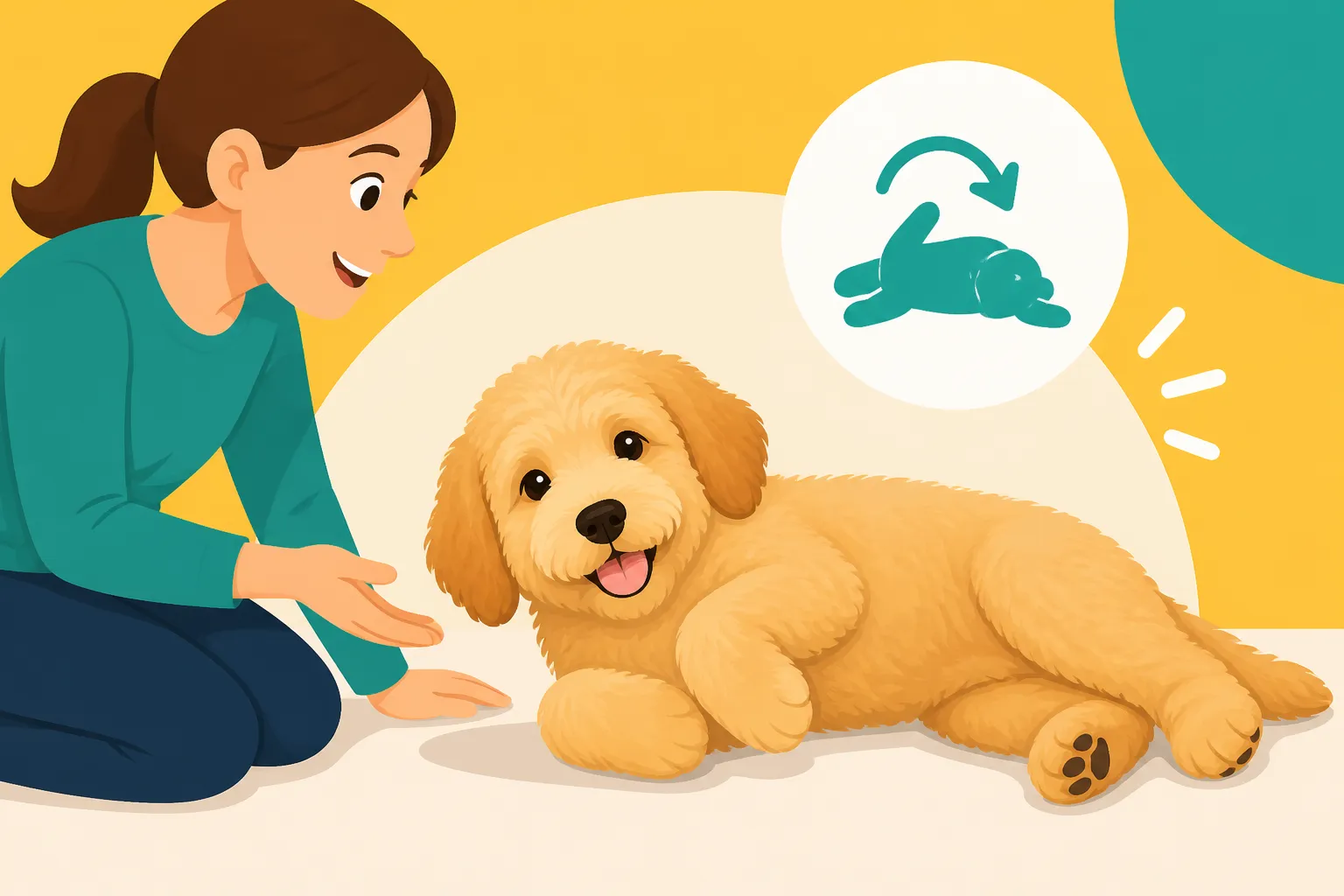
Once your Goldendoodle is reliably shifting its weight and dipping one hip when you lure towards it, it's time to encourage the full roll onto their side.
- From the Shift: With your puppy in a "down" position, lure to the hip again, getting that initial weight shift.
- Continue the Lure: Once their hip is dipped, continue to move the treat in a small, gentle arc past their hip, towards their backbone on the other side. This encourages their head to turn further, and their body to follow, causing them to roll onto their side.
- The "Jackpot": The instant their body is fully on its side, even if it's just for a second, give them a "jackpot" of treats (several small treats in quick succession) and excited praise. This tells them, "THAT'S IT! That's exactly what I wanted!"
- Support if Needed: If your puppy is struggling, you can very gently use your free hand to support their shoulder or hip, just giving them a tiny nudge in the right direction as you lure. Be careful not to force them, as this can create a negative association. It should always feel like their choice to roll over.
This step might take several short sessions. Don't push too hard. End on a positive note, even if it's just for a good "down." Five Minute Goldendoodle Training Sessions are much more effective than one long, frustrating one.
Adding the Verbal Cue and Hand Signal
Once your Goldendoodle is consistently rolling onto its side with the treat lure, it's time to add a verbal cue and a hand signal. This is called "fading the lure."
- Say the Cue First: Just as you start to move the treat towards their hip, say your chosen verbal cue – "Side," "Relax," "Roll Over," whatever works for you. Keep it short and clear.
- Introduce a Hand Signal: While you're saying the cue and luring, simultaneously use a consistent hand signal. This could be a flat hand sweeping across their side, or a finger pointing towards the ground.
- Fade the Lure: Gradually, start making the treat lure smaller and less obvious. You want your puppy to respond to the verbal cue and hand signal before they even see the treat moving to their nose. Eventually, you should be able to give the cue and signal, and they'll roll over without you needing to show the treat at all. The treat still comes as a reward after they perform the action.
- Consistency is Key: Everyone in the household needs to use the same cue words and hand signals. Inconsistent cues will only confuse your Goldendoodle.
This process helps your Goldendoodle understand the command independently of the food. They're learning to associate the words and gestures with the action.
Here's a quick summary of the training progression:
| Step Number | Action | Goal | Reward |
|---|---|---|---|
| 1 | Puppy in "Down" | Comfortable lying down | Treat, praise |
| 2 | Lure to Hip | Shift weight, hip dips slightly | Treat, praise |
| 3 | Continue Lure to Roll | Full roll onto side | Jackpot treats, excited praise |
| 4 | Add Verbal Cue & Hand Signal | Associate cue/signal with action | Treat, praise |
| 5 | Fade Lure | Respond to cue/signal without visible treat | Treat, praise |
Troubleshooting and Advancing the "Side" Command
It's rare for training to go perfectly smoothly every single time. There will be days when your Goldendoodle puppy just isn't "getting it" or seems resistant. That's totally normal! Understanding how to troubleshoot common issues and then advance the command will ensure long-term success.
Dealing with Resistance or Fear
If your Goldendoodle puppy seems resistant, scared, or even playful-nippy during the process, it's crucial to address it calmly.
- Go Back a Step: If they're struggling with the full roll, go back to just rewarding the hip shift. Build their confidence there again.
- Check for Discomfort: Is there something physically uncomfortable about the position? Are they on a hard floor? Could they have a sensitive spot you're touching? Always rule out physical discomfort first. Goldendoodles can carry genetic predispositions to certain joint issues, so any consistent reluctance or pain should be checked by a vet.
- Reduce Pressure: If they're resisting, you might be accidentally putting too much pressure on them. Keep your movements gentle and your voice soft. Make it a game, not a chore.
- Shorten Sessions: Maybe your puppy's attention span is just maxed out. End the session on an easy success (like a good "sit" or "down") and try again later, or tomorrow, with a shorter session.
- Increase Reward Value: If your treats aren't cutting it, find something even more irresistible. Sometimes the reward isn't motivating enough for a more challenging behavior.
- Consider a Professional: If you're consistently hitting a wall, a certified professional dog trainer can observe your interactions and offer personalized advice. Organizations like BAXTER & Bella offer online resources and even one-on-one coaching that could be incredibly helpful.
Remember, patience is a virtue, especially with a young Goldendoodle. They're eager to learn, but sometimes their bodies or brains just need a little more time to catch up.
Practicing in Different Environments
Once your Goldendoodle is reliably performing "side" in your quiet training area, it's time to generalize the behavior. This means practicing it in different places with varying levels of distraction.
- Gradual Increase in Distraction: Start by practicing in another quiet room in your house, then move to a slightly busier area like the kitchen during meal prep (but not so busy they can't focus). Eventually, practice outdoors in your yard, then at a quiet park.
- Different Surfaces: Practice on carpet, tile, grass, and even on the grooming table (if you have one). This helps them understand that "side" means the same thing regardless of where they are or what's under them.
- Vary Your Position: Practice asking for "side" while standing, sitting, or kneeling. This ensures they're responding to the command itself, not just your body language in one specific stance.
This generalization is key to having a dog that can perform the behavior when it really matters, like at the vet's office or during a grooming appointment. Think about how important Training a Goldendoodle Puppy for the Grooming Table is for their comfort.
Integrating "Side" into Daily Routines
The "side" command isn't just for dedicated training sessions; it's a tool you can use every day.
- Grooming Prep: Before you brush, ask for "side." If they comply, reward them before you even start brushing. This sets a positive tone for the grooming session. This is an essential part of Cleaning a Goldendoodle Ear Before It Gets Infected.
- Health Checks: Use it when you need to quickly check their paws after a walk, inspect their belly for tick bites, or even just for a cuddle on the couch.
- "Relax" Time: You can even use it as a cue for calm, quiet time. If you want them to settle down next to you while you're reading, ask for "side."
- Build Duration: Once they're comfortable going into the "side" position, start asking them to stay there for longer periods. Gradually increase the duration by a few seconds at a time, always rewarding them for holding the position. This is particularly useful for longer grooming sessions or vet exams.
By making "side" a part of your daily interactions, you reinforce the behavior and make it second nature for your Goldendoodle. This ongoing reinforcement, even through simple moments, strengthens their understanding and makes them more likely to offer the behavior readily. Remember, consistent positive experiences are what build a well-adjusted, cooperative Goldendoodle.
Disclaimer
This article is for general informational purposes only and does not constitute professional advice. Laws, prices and regulations vary by location and change over time. Consult a qualified professional for guidance on your specific situation.