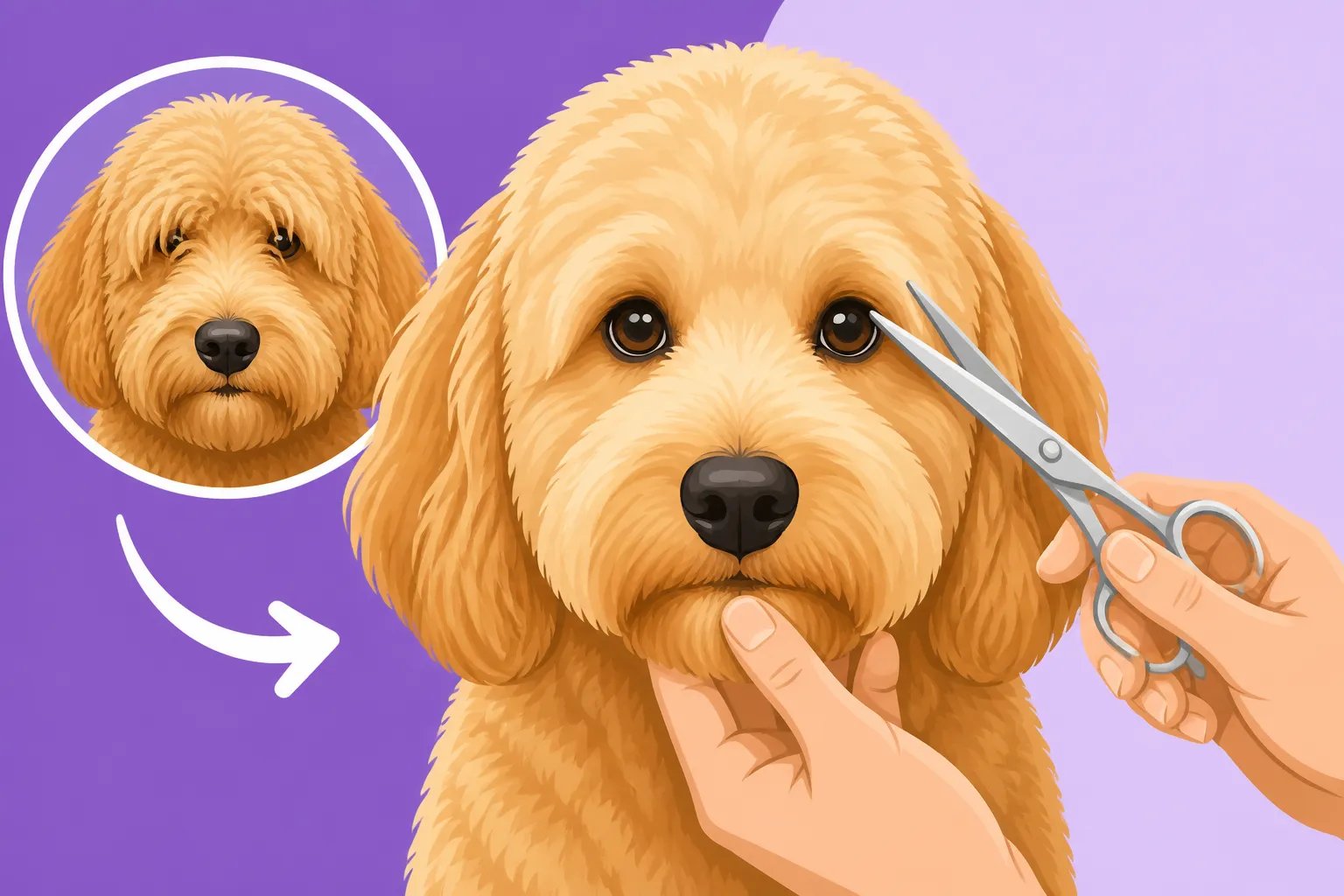
Trimming a Goldendoodle’s Face and Eye Hair
If you've ever found yourself peering through a shaggy curtain of hair trying to meet your Goldendoodle's eyes, you know the struggle is real. That adorable shaggy face, while a huge part of their charm, can quickly become a tangled mess that impacts their vision, comfort, and even hygiene. This guide will walk you through everything you need to know about safely and effectively trimming your Goldendoodle's face and eye hair, helping you keep them looking their best and feeling fantastic.
Understanding the Goldendoodle's Unique Face and Eye Hair Challenges
Goldendoodles are known for their delightful, shaggy, sometimes curly coats, which extend right up to their eyebrows and muzzles. While this "furnished" look is part of what makes them so endearing, it also presents a unique set of grooming challenges, especially around the face and eyes. It's not just about aesthetics; leaving this area untrimmed can lead to real problems for your beloved companion.
The "Furnishings" and Their Growth
Unlike many dog breeds that have short, smooth hair on their faces, Goldendoodles inherit what are called "furnishings" from their Poodle side. These are the longer hairs on their face, eyebrows, and beard that give them that characteristic doodle look. These furnishings grow continuously and can vary dramatically in texture and density depending on the individual dog's genetics, particularly their specific Goldendoodle generation. An F1 Goldendoodle might have a wavier, slightly less dense face coat, while an F1b or Multigen often has a much curlier, denser, and faster-growing beard and eyebrow area.
This constant growth means that without regular trimming, the hair around their eyes can quickly become long enough to obstruct their vision. It can also trap moisture, food particles, and debris, creating a perfect breeding ground for bacteria or yeast. Think about trying to see the world through a dirty, wet mop – that's what your Goldendoodle might be experiencing! Understanding that this isn't just fluffy hair, but a functional part of their coat that needs management, is the first step in successful at-home grooming. You'll also want to consider Why a Goldendoodle Puppy Coat Predicts Nothing when it comes to predicting how dense their adult facial furnishings will become.
Impact on Vision and Hygiene
When the hair around your Goldendoodle's eyes grows too long, it literally acts like blinkers, limiting their peripheral vision. This can make them more prone to startling, bumping into things, or even misjudging distances, which can be unsettling for them. Beyond obstructed vision, long eye hair can rub against the cornea, leading to irritation, redness, and even painful scratches over time. It can also wick tears, creating tear stains that are not only unsightly but can also harbor yeast if kept perpetually damp.
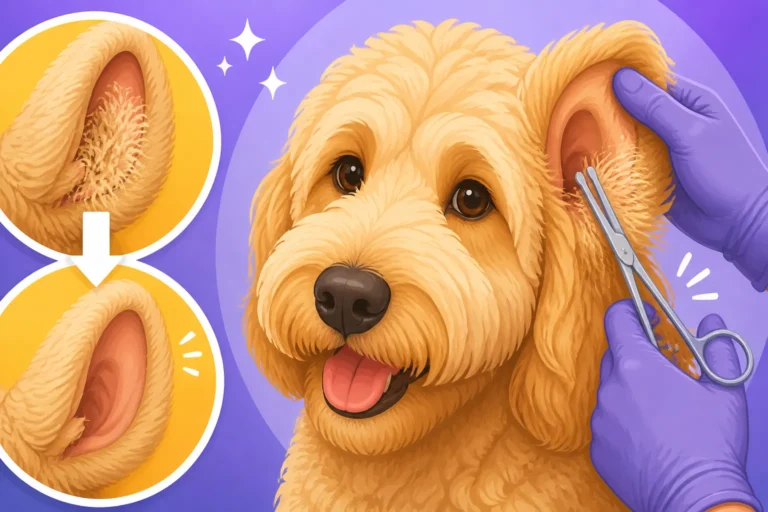
The muzzle and beard area face similar hygiene challenges. After every meal and every drink, your Goldendoodle's beard becomes a collection point for food scraps and water. If not cleaned and dried regularly, this can lead to skin irritation, matting, and an unpleasant odor. Many Goldendoodle owners discover that the beard is the first place to develop mats because it's constantly wet and sticky. Regular trimming makes it far easier to keep these areas clean and dry, drastically reducing the risk of skin issues, infections, and even dental problems if food consistently gets trapped around their mouths. For similar reasons, Goldendoodle Ear Hair and Chronic Infection is another common issue to tackle with regular grooming.
Essential Tools for Safe and Effective Face Trimming
Before you even think about picking up shears near your Goldendoodle's face, having the right tools is paramount. Using inappropriate or dull tools can lead to nicks, discomfort, and a negative grooming experience, making future sessions a battle. Investing in quality grooming tools designed for dogs will make the process safer, easier, and more enjoyable for both of you. You might find a good selection of these grooming essentials on Chewy or Amazon.
Choosing the Right Scissors and Clippers
When it comes to trimming around the delicate face and eye area, safety is your absolute priority. You'll typically need two main types of cutting tools: scissors and, optionally, small clippers.
For scissors, look for blunt-nosed grooming shears. These are specifically designed with rounded tips to minimize the risk of accidental pokes or cuts, especially around the eyes and nose. They usually come in various sizes; a smaller, 4-inch or 5-inch blunt-nosed scissor is ideal for precise work on the face. You might also find thinners or blending shears useful for softening lines, though they are not strictly necessary for basic hygiene trims. Avoid using sharp-pointed human scissors at all costs, as one sudden movement from your dog could lead to a serious injury.
For clippers, a small, quiet, cordless trimmer (often called a "paw trimmer" or "face trimmer") can be incredibly effective, especially for the bridge of the nose, between the eyes, and around the corners of the eyes. These trimmers are usually very quiet, which is a huge bonus for dogs sensitive to noise, and their small size allows for precise work. Make sure the blade is clean, sharp, and cool to the touch. A dull or hot blade can pull hair and cause discomfort or razor burn. Familiarizing your Goldendoodle with Getting a Goldendoodle Used to Clipper Noise from an early age can make these sessions much smoother.
Grooming Combs and Restraint Tools
Beyond cutting tools, a good steel comb is indispensable. You'll want a comb with both fine and wide teeth. The fine-toothed side is perfect for carefully separating the hair around the eyes and making sure there are no tiny mats hiding that could get caught in your scissors. The wide-toothed side helps detangle larger sections of the beard and muzzle hair before you start trimming. Always comb before you cut, as cutting into mats is dangerous and painful.
For restraint, it's not about force, but about safety and stability. For smaller Goldendoodles, simply holding them securely on your lap might suffice if they are calm. For larger or more active dogs, a grooming arm and loop on a sturdy grooming table can be a game-changer. This keeps your dog safely in one spot, preventing them from jumping off or wiggling excessively during delicate facial work. The loop should be snug enough to prevent them from slipping out, but never so tight that it chokes them or causes distress. If you don't have a grooming table, even placing them on a non-slip mat on a sturdy counter or table (with you standing right beside them) can provide a better working height and surface than trying to bend over them on the floor. Remember, the goal is cooperative care, not force. For more general grooming tools, you might want to check out The Slicker Brush and Comb a Goldendoodle Needs.
| Tool Category | Specific Tool | Best Use for Face/Eye Trimming | Key Feature | Safety Tip |
|---|---|---|---|---|
| Cutting Tools | Blunt-nosed Scissors | Around eyes, shaping beard, eyebrows | Rounded tips for safety | Always point tips away from eyes/skin |
| Small Cordless Trimmer | Bridge of nose, corners of eyes, sanitary areas | Quiet, precise, small blade | Ensure blade is cool and clean | |
| Combs | Steel Grooming Comb | Detangling, separating hair, checking for mats | Fine & wide teeth | Comb before cutting to avoid snagging mats |
| Restraint/Handling | Grooming Arm & Loop | Keeping dog steady on a table | Secures dog safely | Snug, but never tight; supervision critical |
| High-Value Treats | Positive reinforcement, distraction | Motivates cooperation | Offer frequently for calm behavior |
Step-by-Step Guide to Trimming Your Goldendoodle's Face
Trimming your Goldendoodle's face doesn't have to be a daunting task. With patience, the right tools, and a calm approach, you can keep their face tidy and ensure their vision is clear. Remember, short, frequent sessions are often better than trying to do everything at once, especially when you're both learning.
Prepping Your Dog and the Work Area
Preparation is key to a smooth grooming session. Start by ensuring your Goldendoodle is relaxed and has recently relieved themselves. A tired dog is often a calmer dog, so a good walk or play session beforehand can be beneficial. Set up your grooming area in a quiet spot free from distractions, like other pets or children. Lay down a non-slip mat or towel on your grooming table or counter to ensure your dog feels secure and doesn't slip.
Before you even pick up scissors, give their entire face, head, and ears a thorough brushing and combing. Use your steel comb to check for any hidden tangles or mats, especially behind the ears, under the chin, and at the corners of the eyes. These areas are prone to matting and trying to cut them without pre-combing can be painful. If you encounter a mat, gently work it out with a detangling spray and your comb, or carefully snip it out if it’s too tight. Make sure to keep some high-value treats handy. These aren't just for good behavior after the trim; they're vital for positive reinforcement during the process, associating grooming with good things. Ollie makes some fantastic freeze-dried treats that many dogs go wild for, perfect for these kinds of focused training moments.
Trimming Around the Eyes and Bridge of the Nose
This is arguably the most critical and delicate part of the facial trim. You need to be extremely careful to avoid injuring their eyes.
- Comb Up: Start by gently combing the hair on the bridge of the nose and above the eyes upwards and outwards. This helps you visualize the length and separate any crisscrossing hairs.
- Between the Eyes: Using your small cordless trimmer (if using), or very carefully with blunt-nosed scissors, trim the hair directly on the bridge of the nose, between the eyes. You want to create a clear path here, but keep it natural-looking. Use short, upward strokes with the trimmer, or point your blunt-nosed scissors away from the eyes, trimming small sections. Many owners find the clippers easier for this small, flat area.
- Above the Eyes (Eyebrows): Comb the hair above each eye straight down over the eye. You want to trim just enough so that the hair doesn't fall into their eyes. Use your blunt-nosed scissors, holding them parallel to the dog's face, with the blunt tips pointing away from the eye. Snip off just the tips that are extending past the eye rim. Don't cut a straight line across; try to follow the natural curve of the brow bone.
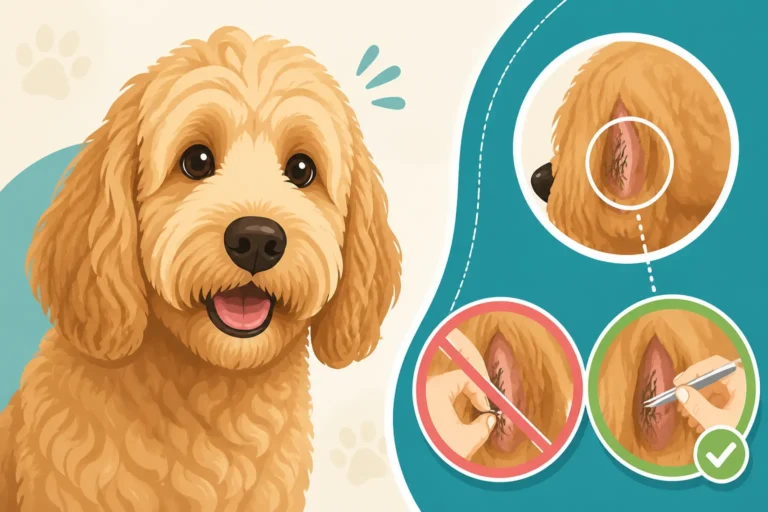
- Corners of the Eyes: This is where tear stains often accumulate. Very gently, using the tips of your blunt-nosed scissors or your small trimmer, carefully clean up any stained or excessively long hair at the inner and outer corners of the eyes. Always keep the blunt tips pointing away from the eye. A small trimmer is often safer here as it reduces the risk of poking. You can lift the hair carefully with your comb to expose the stained area and then snip or trim the very ends. Remember, you're not trying to remove all tear staining with scissors, just the hair that makes it worse. Keeping Hair Out of a Goldendoodle's Eyes is a continuous effort, not a one-time fix.
Throughout this process, take frequent breaks, offer praise, and give treats. If your dog becomes overly anxious, stop and try again later.
Shaping the Muzzle and Cheeks
Once the eye area is clear, you can move on to shaping the muzzle and cheeks. This helps maintain that characteristic Goldendoodle look while also improving hygiene.
- The Muzzle/Beard: The length here is largely a matter of personal preference and how much maintenance you're willing to do. Some owners prefer a longer, shaggier beard, while others opt for a much shorter, neater look to reduce wetness and food collection. Use your blunt-nosed scissors. Comb the beard hair straight down. Hold your hand under the chin as a "safety net" and trim to your desired length. For a more natural look, you can blend the edges. If you're going for a shorter beard, you can use your clippers with a longer guard comb (like a #4 or #5 comb) for a uniform length.
- The Cheeks: This is where the face often starts to get that "fluffy chipmunk" look. Comb the cheek hair outwards. Using your blunt-nosed scissors, trim the hair from the outer corner of the eye down towards the corner of the mouth, following the natural curve of the cheekbone. You're essentially trying to create a clean, rounded shape that frames the face without being too bulky. You can also use thinning shears here to reduce bulk without making it look too chopped.
- Under the Chin: This area also gets wet and can trap food. Comb the hair straight down and carefully trim the hair under the chin to match the length of the beard, ensuring it’s clean and free of tangles. This also helps with air circulation and keeps the area drier.
Always brush and comb through the trimmed areas after each section to check your work and ensure an even blend. Step back frequently to assess the overall shape and balance. It's often better to trim a little at a time and come back for more rather than taking too much off at once.
Common Face Trimming Frustrations and Solutions
Even with the best intentions and tools, trimming a Goldendoodle's face can present challenges. They might wiggle, protest, or just make it incredibly difficult to get those precise snips. It's totally normal to feel frustrated, but remember, consistency and a positive approach will eventually pay off.
Dealing with a Wiggling or Anxious Goldendoodle
A Goldendoodle that won't hold still for face trimming is one of the most common complaints I hear. Their natural exuberance and desire to interact, coupled with the sensitivity of their face, can make them incredibly challenging.
- Start Small and Build Up: Don't expect to do a full facial trim on day one. Begin by simply getting them used to the presence of the tools. Let them sniff the scissors and clippers (unturned off). Touch their face, ears, and muzzle gently without trimming. Pair these positive interactions with lots of praise and high-value treats. As they tolerate more, gradually introduce the sound of the clippers (turned on, but not touching them) and brief touches with the blunt scissors. For a new puppy, this starts with Training a Goldendoodle Puppy for the Grooming Table and simply handling their face.
- Short Sessions are Your Friend: For a wiggly or anxious dog, aim for 2-5 minute sessions, then take a break. You might only get one eye done, or just the bridge of the nose. That's okay! End on a positive note, even if it's just for a small win, like holding still for one snip.
- Distraction and Engagement: A lick mat smeared with peanut butter (xylitol-free, of course!) or plain yogurt, stuck to a wall or the grooming table, can be an absolute lifesaver. This provides a safe, engaging distraction that keeps their mouth busy and their head relatively still. You can find excellent lick mats on Amazon. Some dogs also respond well to a gentle, soothing voice or even calming music.
- Proper Restraint (Not Force): As mentioned earlier, a grooming loop is for safety and stability, not force. If your Goldendoodle is truly fighting and thrashing, forcing them can create a lifelong aversion to grooming and even lead to injury. It might be time to take a step back and work on foundational cooperative care training, or consult with a professional groomer or positive reinforcement trainer for guidance. They can often teach you techniques or work with your dog in a controlled environment.
Preventing Nicks and Irritation
The thought of accidentally cutting your Goldendoodle is terrifying, and preventing nicks and irritation is paramount.
- Always Use Blunt-Nosed Scissors: I cannot stress this enough. These are designed with safety in mind. Even if your dog makes a sudden move, the rounded tips are less likely to cause a deep wound.
- Finger as a Barrier: When trimming around the eyes, use your non-dominant hand to gently place your index finger between the hair you are cutting and your dog's eye. This creates a physical barrier, adding an extra layer of protection.
- Stretch the Skin: Gently stretch the skin taut in the area you are trimming. This flattens the skin, making it less likely to accidentally snip loose skin and also gives you a cleaner cut. This is particularly helpful around the muzzle and under the chin.
- Check Clipper Blades: If using clippers, always ensure the blade is clean, lubricated, and not getting hot. A hot blade can cause uncomfortable razor burn, leading to redness and irritation. Keep a cooling spray for clipper blades handy, or have a spare blade to swap out if one gets too warm.
- Go Slow and Use Small Snips: Never rush. Take small, deliberate snips rather than trying to cut large sections at once. When using clippers, use short, controlled strokes.
- Avoid Irritating Products: After trimming, avoid applying any perfumed or irritating products near their eyes or mouth. If you are cleaning up tear stains, use a dog-specific, tear-stain remover that is gentle and safe for the eye area, or simply a damp cloth. Some dogs have sensitive skin, and products not intended for their face can cause a reaction.
By being meticulous and patient, you can minimize the risks and make face trimming a comfortable, even tolerable, experience for your Goldendoodle.
Maintaining a Tidy Face Between Full Grooms
Professional grooms for a Goldendoodle are typically spaced every 6-8 weeks, but their fast-growing facial hair often needs attention much sooner. Regular at-home maintenance between these appointments is crucial to prevent matting, maintain vision, and keep them comfortable. This isn't just about appearance; it's about their well-being. Keeping up with tasks like Brushing a Goldendoodle Often Enough to Stop Matting will also make these facial touch-ups easier.
Daily Brushing and Spot Trimming
Integrating quick facial grooming into your daily routine can save you a lot of hassle.
- Daily Comb-Through: A quick comb-through of their beard, mustache, and eyebrow area every day is probably the most effective preventative measure. This takes less than a minute. It helps remove any food debris, loosen small tangles before they become full-blown mats, and familiarizes your dog with having their face handled. Pay particular attention to the hair around their mouth after meals and after drinking, as this is where hair gets sticky and prone to matting.
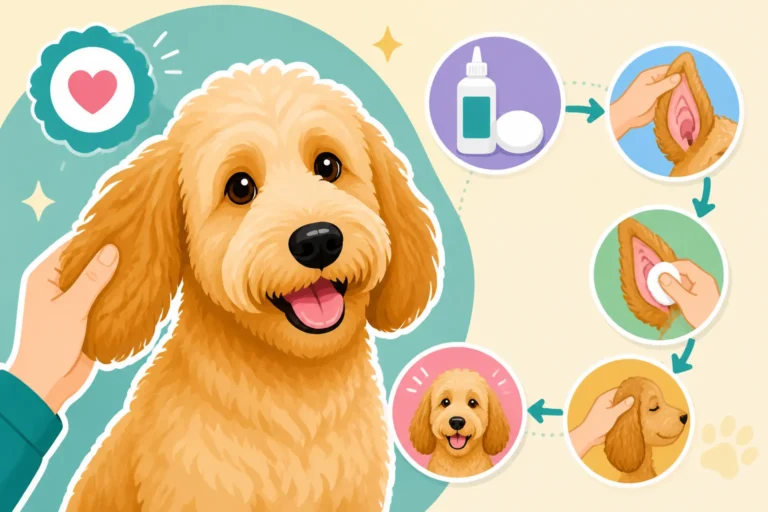
- Weekly Eye Wipes: Many Goldendoodles develop tear stains or crust around their eyes. A gentle wipe with a warm, damp cloth or a vet-approved eye wipe product every day or two can prevent build-up and keep the area clean. This is especially important for dogs with lighter coats where staining is more visible.
- Spot Trimming as Needed: You don't need to do a full trim every week, but keep an eye on how quickly the hair is growing. If you notice hair starting to droop into their eyes, or their beard becoming particularly unruly, a quick spot trim is in order. This might mean just a few snips above the eyes with your blunt-nosed scissors, or a quick pass with the small trimmer on the bridge of the nose. These small touch-ups are far easier to manage than waiting until the hair is completely overgrown and matted. When you are spot trimming, remember the safety tips from the previous section, always prioritizing your dog's safety and comfort.
Addressing Tear Stains and Wet Beards
Tear stains and perpetually wet, smelly beards are common Goldendoodle nuisances, but they are manageable with consistent care.
- Managing Tear Stains: Tear stains are caused by porphyrins, a pigment in tears and saliva, which turn reddish-brown when exposed to air. While some staining is genetic or due to eye conformation, long hair that wicks tears makes it worse. Trimming the hair around the eyes short, as discussed, is the first step. For existing stains, there are various dog-safe tear stain removers available on sites like Chewy or Amazon. Consistency is key with these products; they won't work overnight. Also, ensure your dog has clean drinking water (filtered water can sometimes help), and consider if any environmental allergens might be making their eyes watery.
- Dealing with Wet Beards: The Goldendoodle beard is a magnet for water, which can lead to staining, matting, and sometimes a yeasty odor under their chin.
- Post-Drink Dry: After your Goldendoodle drinks, gently blot and dry their beard with a towel. This small habit makes a huge difference.
- Snoods or Bandannas: For particularly wet drinkers, a snood (a fabric tube worn over their ears and beard) can keep their beard dry while they drink. Some owners also tie a light bandanna around their neck, which absorbs some of the drips.
- Ceramic or Stainless Steel Bowls: Plastic bowls can harbor bacteria and contribute to yeast growth, which can exacerbate beard issues. Switching to ceramic or stainless steel bowls, and cleaning them daily, is a good hygiene practice.
- Trim Shorter: If the wet beard issue is chronic, consider keeping the beard area trimmed shorter. While it changes their appearance, it drastically improves hygiene and reduces the risk of skin irritation or fungal infections. Just as Goldendoodle Ear Care Under All That Hair is vital, so is managing the constantly damp facial hair.
Consistent care, even in small doses, is the secret to a happy, healthy, and well-groomed Goldendoodle face. It turns potential problems into manageable routines, ensuring your Goldendoodle can see clearly, eat cleanly, and sport that adorable face without discomfort.
Disclaimer
This article is for general informational purposes only and does not constitute professional advice. Laws, prices and regulations vary by location and change over time. Consult a qualified professional for guidance on your specific situation.