Why a Goldendoodle Mats in a Week Without Brushing
It’s a frustration many Goldendoodle owners know all too well: you brush your beloved pup diligently one day, only to find stubborn mats seemingly appear out of nowhere just a few days later. It feels like you just can't keep up, and it's not just annoying – it can be genuinely painful for your dog. This guide will dive deep into why Goldendoodle coats mat so quickly, what factors accelerate the process, and how you can get ahead of those pesky tangles to keep your Goldendoodle comfortable and looking their best.
The Unique Goldendoodle Coat: A Recipe for Rapid Matting
Goldendoodles are adored for their luscious, often curly or wavy coats, which are a beautiful blend of their Golden Retriever and Poodle heritage. However, this unique combination is precisely why their fur is so prone to matting. It's not just "fluffy hair"; it's a complex structure designed to entangle.
The Double-Edged Sword of Furnishings
One of the most defining characteristics of a Goldendoodle's coat is what we call "furnishings." These are the longer hair on their face, eyebrows, and beard, which give them that adorable, shaggy "doodle" look. This trait comes directly from their Poodle side and is what makes them appear low-shedding to many. However, these furnishings, along with the softer body hair, have a different texture than a Golden Retriever's coat. Instead of falling out easily, the shed hair gets trapped within the surrounding live coat.
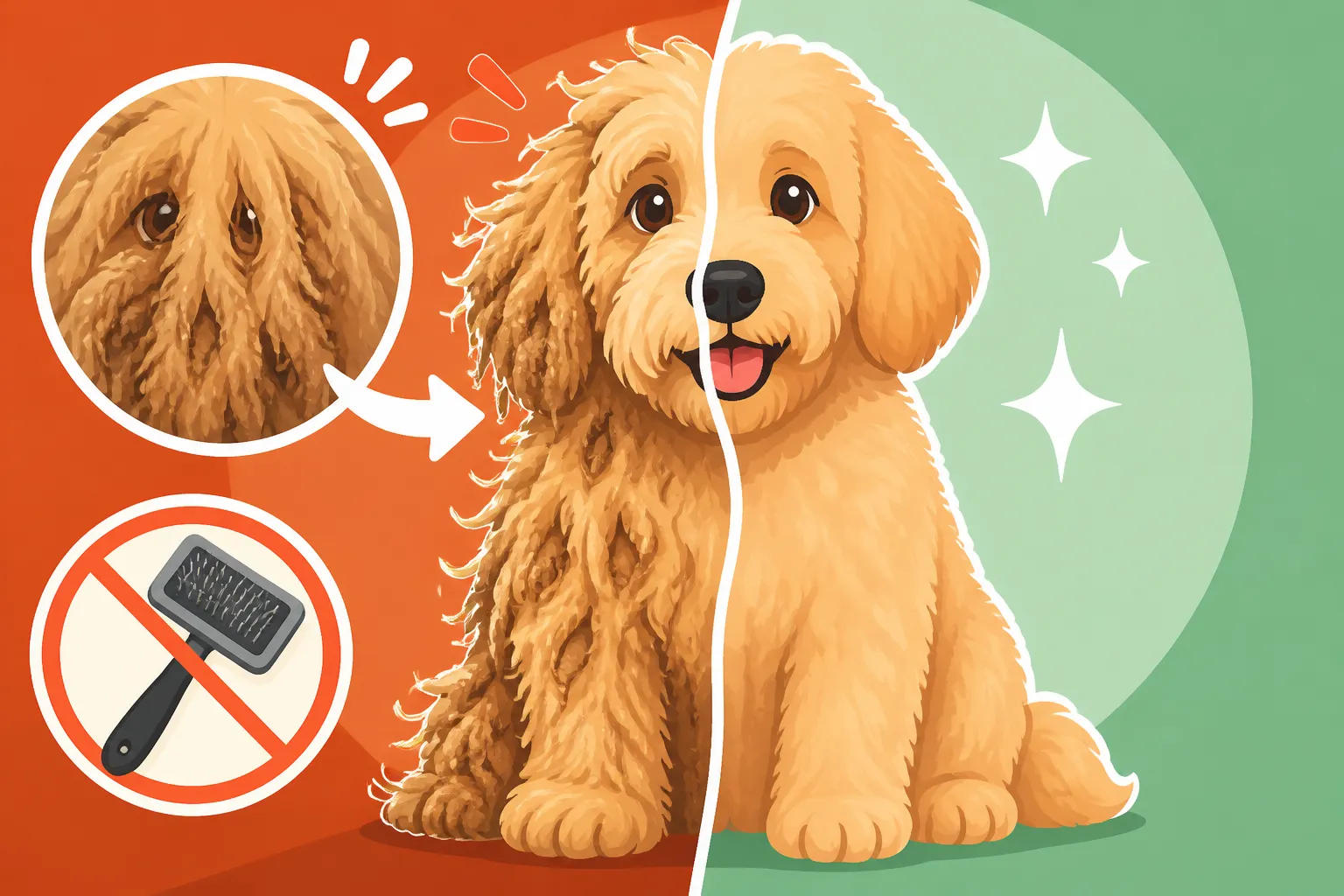
Imagine a fishing net: every time a piece of debris or shed hair gets caught, it creates a snag. If left unchecked, these snags quickly pull in more hair, tighten with movement, and before you know it, you have a solid knot. This dense, non-shedding (or low-shedding) quality, while great for allergy sufferers, is the primary reason Why Goldendoodle Matting Is Almost Always Preventable with diligent care, but also so prevalent without it. Without regular brushing, the trapped shed hair and environmental debris will inevitably weave together, forming painful, tight mats that pull on your dog's skin.
The Different Coat Textures and Their Matting Potential
Not all Goldendoodle coats are created equal, and their texture plays a huge role in how quickly they mat. There are generally three main coat types you’ll encounter, and each has its own challenges. Understanding The Three Goldendoodle Coat Types and How to Tell Them is crucial for tailoring your grooming approach.
- Wavy/Fleece Coat: This is perhaps the most common and often sought-after coat type, characterized by soft, flowing waves. While beautiful, this coat type still has that Poodle-like quality of trapping shed hair. The waves themselves provide ample surface area for hair to intertwine, making it prone to matting if not brushed regularly. It's often easier to manage than a super curly coat, but don't let its apparent softness fool you into thinking it's mat-proof.
- Curly/Wool Coat: This coat strongly resembles a Poodle's coat – dense, tight curls that are typically very low-shedding. While fantastic for allergy sufferers, these curls are mat magnets. Each curl acts like a tiny spring, drawing in shed hair and tangles with incredible efficiency. Even a single day without a thorough line brush can see tiny knots forming, especially in high-friction areas. These coats require the most diligent and frequent brushing to prevent severe matting.
- Straight/Hair Coat: Less common, this coat type can sometimes resemble a Golden Retriever's straighter, flatter fur. While it may shed more than the other types, which can actually help prevent some matting by allowing shed hair to fall out, it can still mat, particularly if it has any underlying wave or undercoat. The challenge here is that owners might assume it's like a Golden's coat and requires less brushing, only to find mats forming close to the skin.
| Goldendoodle Coat Type | Description | Matting Potential | Grooming Frequency |
|---|---|---|---|
| Wavy (Fleece) | Soft, flowing waves; most common. | High | Daily to Every Other Day |
| Curly (Wool) | Dense, tight curls; low shedding. | Very High | Daily, sometimes twice daily |
| Straight (Hair) | Straighter, flatter; may shed more. | Medium to High | Every Other Day to 2-3x/week |
The Mechanics of Matting: How Tangles Turn into Trouble
Mats don't just "appear"; they're the result of a physical process where hair fibers get tangled and then compacted. It's like taking a handful of string and twisting it tighter and tighter until it becomes a dense knot. Once a mat starts, it grows exponentially.
Friction, Moisture, and Debris: The Perfect Storm for Mats
Several factors work together to create the ideal conditions for mat formation in a Goldendoodle's coat:
- Friction: This is perhaps the biggest culprit. Every time your dog moves, rubs against furniture, plays with other dogs, or wears a collar, the hair fibers rub against each other. This friction causes the tiny scales on each hair shaft to lock together, forming tangles. Think about how a piece of yarn gets fuzzy and knotted if you rub it repeatedly.
- Moisture: Wet hair is a mat's best friend. Whether it's from a bath, rain, snow, or even just humidity, moisture causes the hair shaft to swell. As it dries, especially if left to air dry without being brushed and blow-dried thoroughly, the hairs shrink and intertwine, cementing any existing tangles into tight mats. A damp coat is far more susceptible to matting than a dry one. This is why properly drying a Goldendoodle is just as important as brushing, if not more so, after a bath.
- Debris: Goldendoodles love to explore, and their coats are fantastic at picking up souvenirs. Twigs, leaves, burrs, dirt, grass seeds – all these foreign objects get caught in their fluffy fur and act as anchors for mats. Even something as simple as dust or sand from a walk can contribute to tangles. These bits of debris become embedded, pulling the hair together and starting the matting process.
- Shedding: While Goldendoodles are often marketed as "low-shedding" or "non-shedding," they do still shed hair. The difference is that this shed hair doesn't fall out readily; instead, it gets trapped within the active coat. As more and more dead hair accumulates, it becomes a tangled mess, pulling on the healthy hair and creating dense mats. This is particularly noticeable during The Goldendoodle Coat Change at Eight to Twelve Months, when their softer puppy fur transitions to a denser adult coat. During this period, daily brushing is absolutely critical.
High-Traffic Zones: Where Mats Love to Hide
Mats aren't evenly distributed across your Goldendoodle's body. They tend to form in specific areas where there's more friction or a higher concentration of fine hair. These are the "hot spots" you need to pay extra attention to during your grooming routine.
- Behind the Ears: This is a classic matting zone. The hair behind the ears is often finer and softer, making it prone to tangles. Plus, movements of the head and ears create constant friction. Owners often miss this spot because it's out of sight. These mats can quickly become large, painful clumps that pull on delicate skin.
- Armpits and Groin: These areas experience immense friction from your dog's legs moving, and the skin folds can also contribute to tangling. The hair here is also typically very fine and dense. Mats in these sensitive zones can restrict movement and cause chafing and skin irritation. Armpit and Collar Mats on a Goldendoodle are some of the most common and uncomfortable.
- Under the Collar/Harness: Any area where a collar, harness, or even a dog sweater sits creates constant rubbing. The pressure and friction compress the hair, making it easy for tangles to form. Always remove collars and harnesses for brushing, and be sure to thoroughly brush the hair underneath where these items sit. Mats Under a Goldendoodle Harness Strap are a frequent issue.
- Paws and Between Toes: The hair between your Goldendoodle's paw pads can collect dirt, burrs, and moisture, leading to mats that make walking uncomfortable and can even cause infections. Regular trimming of this hair is essential.
- Tail Base and Hocks: The tail often swishes and rubs, and the hocks (the joint on the back leg) bend and flex, causing friction that can lead to matting, especially in longer-coated Goldendoodles.
Beyond Brushing: Other Factors That Accelerate Matting
While lack of brushing is the primary cause, several other common practices (or lack thereof) can significantly speed up the matting process, turning a minor tangle into a severe problem almost overnight.
Improper Bathing and Drying Techniques
Bathing your Goldendoodle is essential for cleanliness, but if done incorrectly, it can be a matting disaster. Simply getting a Goldendoodle wet without thoroughly brushing out every single tangle beforehand is like pouring glue into knotted string. The water causes existing tangles to tighten and clump together, making them far worse and almost impossible to brush out once dry.
After shampooing, rinsing thoroughly is vital. Any residue left in the coat can become sticky and contribute to tangling. But the real game-changer is the drying process. Letting a Goldendoodle air dry, especially a curly or wavy one, is an open invitation for mats. As the wet hair dries, it shrinks and twists, cementing any tangles into hard, tight mats against the skin. You absolutely must Drying a Goldendoodle Coat Properly with a high-velocity force dryer (or even a regular hairdryer on a cool setting, keeping it moving) while line brushing the coat section by section, ensuring it's completely dry down to the skin. Even slightly damp spots can lead to immediate matting.
Collars, Harnesses, and Clothing: Unseen Culprits
We love to dress our dogs in cute sweaters or equip them with comfortable harnesses for walks, but these items can be major contributors to matting. Any accessory that sits on your Goldendoodle's coat for extended periods creates friction.
- Collars: A flat buckle collar, if left on constantly, will rub the hair around the neck, especially under the chin and behind the ears, causing mats. If your dog wears a collar all the time, consider a rolled leather or satin-lined collar, and always remove it when they are home and supervised, and definitely for brushing.
- Harnesses: While often a great choice for walks, harnesses, especially those that fit snugly around the chest and armpits, are notorious for causing mats. The straps constantly rub against the sensitive skin in these Armpit and Collar Mats on a Goldendoodle areas. If your Goldendoodle wears a harness regularly, lift it after every walk to check for tangles and brush the areas underneath daily. Consider a well-fitting Y-front harness design that minimizes rubbing.
- Dog Clothing: Sweaters, jackets, or even elaborate costumes, while adorable, can cause significant friction and matting, especially around the leg joints, chest, and belly. If your Goldendoodle wears clothes, ensure they are not too tight or too loose, and limit wear time. Always brush thoroughly before and after wearing any dog attire.
Environmental Elements: Burrs, Mud, and More
Goldendoodles are active, curious dogs who love to explore. Unfortunately, the great outdoors is full of things that latch onto their coats and create mats.
- Plant Debris: Burrs, foxtails, sticky seeds, and even just dry leaves and twigs can become firmly embedded in a Goldendoodle's coat. These items are like tiny anchors that immediately start pulling hair into a knot. A quick run through a grassy field can result in multiple mats. Always check your Goldendoodle thoroughly after outdoor adventures, paying close attention to their legs, belly, and tail, and remove any debris immediately.
- Mud and Dirt: A good romp in the mud is a Goldendoodle's delight, but it's a groomer's nightmare. Mud, once dried, turns into a sticky, gritty substance that cements hair together. If your Goldendoodle gets muddy, let the mud dry, then try to brush out as much loose dirt as possible before bathing. Remember the rule about bathing a matted dog – pre-brush first!
- Snow and Ice: In winter, snow can accumulate in balls and clump in their fur, especially between the paw pads. As the snow melts and refreezes, it can pull and tangle the hair. Consider protective boots for snowy walks and always dry and brush your dog thoroughly after being out in the elements. Snowballs Caught in a Goldendoodle Coat can be painful if left to melt and mat.
Your Daily Defense: Preventing Mats Before They Start
The good news is that rapid matting is largely preventable with the right tools and a consistent routine. It's about proactive care, not reactive emergency grooming.
The Non-Negotiable Brushing Routine
For most Goldendoodles, especially those with wavy or curly coats, brushing needs to be a daily affair. Yes, daily. For some, even twice a day, particularly if they have a very dense wool coat or are going through the coat change. Think of it less as a chore and more as a bonding time with your dog, essential for their comfort and health.
The key technique is called "line brushing." This isn't just a surface brush; it's about getting down to the skin. You essentially part the hair in sections, similar to how a human brushes long hair, and brush from the skin out.
How to Line Brush:
- Start with your Goldendoodle lying down or standing comfortably. Use plenty of praise and treats to make it a positive experience. You can find high-value training treats on sites like Chewy.
- Section the hair. Start at the bottom of a leg or flank. Use one hand to hold the top layers of hair up and out of the way.
- Brush a small section of hair. With your other hand, use a slicker brush to brush a small section, working from the skin outwards. Make sure you can see the bristles reaching the skin.
- Work your way up. Once that section is tangle-free, drop a little more hair from the section you're holding up and repeat. Work in horizontal lines across the body, or small sections down a leg.
- Follow with a metal comb. After brushing a section with the slicker, run a fine-toothed metal comb through the same section. If the comb glides smoothly from root to tip, you're good. If it snags, go back with the slicker brush. This is where Why a Comb Finds Goldendoodle Mats a Brush Misses becomes clear.
This method ensures you’re not just brushing the top layer of hair, but actually preventing tangles from forming close to the skin where they are most painful and difficult to remove.
The Right Tools for the Job
Having the correct grooming tools makes all the difference. Investing in quality tools will save you time, frustration, and potentially costly trips to the professional groomer for dematting. You can easily find these essential items on online retailers like Amazon or Chewy.
- Slicker Brush: This is your primary weapon against mats. Look for one with fine, bent wire bristles. It’s excellent for removing tangles and loose hair. The Slicker Brush and Comb a Goldendoodle Needs is a deep dive into specific models and what to look for.
- Metal Comb: A good quality, sturdy metal comb with both wide and narrow teeth is crucial. It’s used to check your work after using the slicker brush and to gently work out smaller tangles.
- Detangling Spray: These sprays can help lubricate the hair, making it easier to brush through tangles without causing pain. Look for dog-specific detanglers. Detangler Sprays That Help a Goldendoodle can be a lifesaver.
- Blunt-nosed Scissors: For very small, tight mats that cannot be brushed out, sometimes carefully snipping into the mat (never across the skin!) can help loosen it. However, extreme caution is needed, and if unsure, consult a professional.
- Clippers: For severe matting, especially large mats against the skin, professional clippers with safety blades are necessary. If your dog is severely matted, a trip to a professional groomer is often the safest and most humane option. Do not attempt to shave out large, tight mats at home without proper training, as it’s easy to cut the skin.
Smart Grooming Habits Beyond the Brush
Beyond daily brushing, a holistic approach to grooming will keep your Goldendoodle’s coat in top condition.
- Regular Professional Grooming: Even with diligent home grooming, professional grooming every 6-8 weeks is highly recommended. Professional groomers have specialized equipment (like high-velocity dryers) and expertise to keep the coat healthy and mat-free, and they can catch issues you might miss. Consider Goldendoodle Grooming Every Six Weeks Adds Up as a necessary part of your budget.
- Proper Bathing: As discussed, brush before bathing. Use a good quality dog shampoo and conditioner. Rinse thoroughly. And always force dry and brush simultaneously until completely dry.
- Maintain Shorter Hair in Problem Areas: Ask your groomer to keep the hair in high-friction areas (armpits, groin, behind ears, paw pads) a bit shorter. This significantly reduces matting potential in these areas without altering the overall look of your Goldendoodle's coat. Regular trimming of Hair Growing Inside a Goldendoodle Ear Canal can also prevent ear infections and reduce matting risks there.
- Address Diet and Hydration: A healthy coat starts from within. A balanced diet rich in omega fatty acids can contribute to healthy skin and coat, making it less prone to dryness and breakage, which can exacerbate matting. Ensure your Goldendoodle has constant access to fresh water.
- Quick Checks After Play: After a romp in the woods, a trip to the dog park, or even just rolling around in the yard, do a quick visual and tactile check of your Goldendoodle’s coat for any burrs, twigs, or new tangles. Removing them immediately prevents them from becoming full-blown mats.
By understanding why your Goldendoodle’s coat mats so quickly and implementing a consistent, proactive grooming routine, you can ensure your furry friend stays comfortable, healthy, and happy, free from the pain and irritation of matted fur.
Disclaimer
This article is for general informational purposes only and does not constitute professional advice. Laws, prices and regulations vary by location and change over time. Consult a qualified professional for guidance on your specific situation.