The Slicker Brush and Comb a Goldendoodle Needs
Oh, the Goldendoodle coat! It’s a thing of beauty, a fluffy, curly, or wavy wonder that brings so much joy. But let's be real, it can also be a source of immense frustration when mats start to creep in, seemingly overnight. You bought a Goldendoodle expecting that dreamy, low-shedding coat, and now you're faced with what feels like a daily battle. Many of us have been there, staring at a tangled mess and wondering if we have the right tools, or if we're even using them correctly. This guide is all about cutting through the confusion and getting you equipped with the essential slicker brush and comb that your Goldendoodle absolutely needs to stay happy, healthy, and mat-free.
Why a Slicker Brush is Your Goldendoodle's Best Friend
You might walk into a pet store or browse online and feel utterly overwhelmed by the sheer number of brushes available. There are pin brushes, bristle brushes, rakes, mitts… it’s a lot! But for a Goldendoodle, with their unique Poodle-derived coats, the unsung hero, the absolute cornerstone of your grooming kit, is the slicker brush. Without it, you’re often just brushing the surface, leaving a whole world of trouble brewing underneath.
Getting Down to the Skin: The Slicker's Purpose
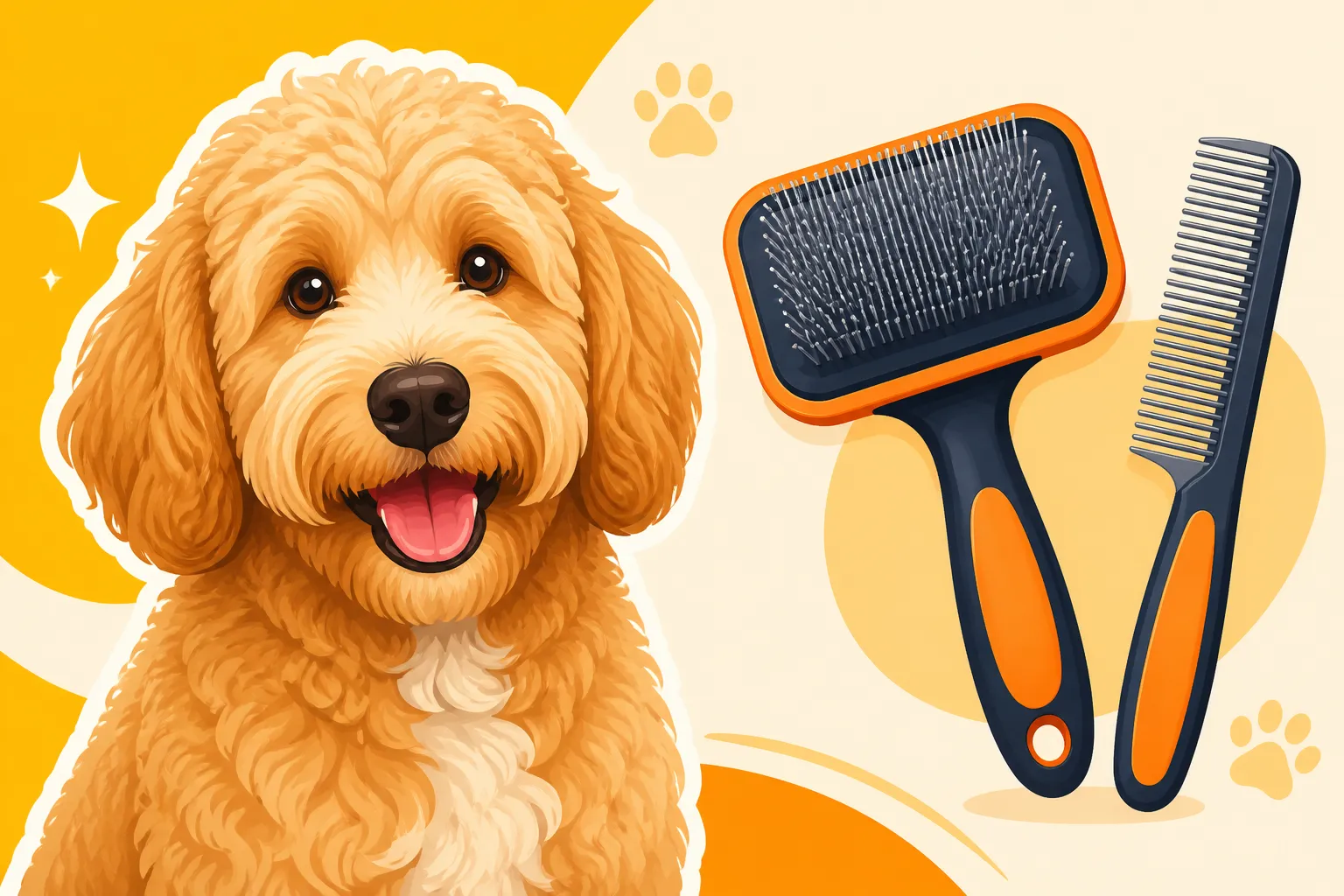
Imagine a dense forest, and you're trying to clear out the fallen leaves and twigs. A rake would skim the top, but you need something that can penetrate all the way to the soil. That's what a slicker brush does for your Goldendoodle's coat. It’s designed with a flat or slightly curved head covered in fine, short, angled wire pins. These pins are flexible enough to glide through the dense coat, separating individual hairs and gently pulling out loose fur and any budding tangles before they turn into solid mats.
Many Goldendoodle owners, especially new ones, might use a softer bristle brush, thinking they're being gentle. While those brushes are fine for a quick shine on a short-coated dog, they don't do anything for the dense undercoat or the length of a Goldendoodle's hair. You might brush for ten minutes, and your dog looks great on the surface, but underneath, the hairs are still tightly packed, ready to bond together and form a mat. The slicker brush is specifically engineered to reach deep into the coat, ensuring that you're actually getting to the root of the matting problem. It’s about prevention and thoroughness, ensuring every single hair is separated.
Choosing the Right Slicker Brush for Your Goldendoodle
Not all slicker brushes are created equal, and choosing the right one can make a huge difference in your grooming routine and your dog's comfort. The key factors to consider are the size of the brush head, the flexibility of the pins, and the handle ergonomics.
For most Goldendoodles, especially those with wavy or curly coats, you’ll want a slicker brush with medium to firm pins. If the pins are too soft, they won't have enough rigidity to penetrate the dense coat effectively. If they're too stiff or sharp, they can scratch your dog's skin, which is the last thing you want. You'll find a vast selection on sites like Chewy or Amazon, often with reviews that can help guide your choice. Pay attention to the pin density too; a brush with more pins per square inch will be more effective at catching loose hair and separating tangles.
The size of the brush head should correspond roughly to the size of your Goldendoodle. A standard Goldendoodle will benefit from a larger brush head, allowing you to cover more surface area efficiently. For a mini Goldendoodle, a smaller head gives you more control around delicate areas like armpits and behind the ears, where mats love to form. Look for a brush with a comfortable, non-slip handle. Grooming can take time, and a good handle will save your wrist and hand from fatigue. Some popular brands offer different sizes and handle designs, so don't be afraid to try a couple to see what feels best for you and your dog.
The Indispensable Comb: Your Mat Detector
You’ve just spent a good chunk of time with your slicker brush, painstakingly working through your Goldendoodle’s coat, section by section. You feel like you’ve done a thorough job, and your dog looks fluffy and amazing. This is precisely the moment you need to reach for your comb. The comb isn't an optional extra; it's the ultimate litmus test for whether you've truly brushed your Goldendoodle down to the skin. If the comb doesn't glide through, you're not done yet, and a mat is likely forming.
The Crucial Role of a Stainless Steel Comb
This is where many Goldendoodle owners get tripped up. They slicker brush, and then they stop. But a slicker brush, no matter how good, can sometimes leave micro-tangles or small knots that will quickly coalesce into a full-blown mat. A sturdy, stainless steel comb is your mat detector, your final quality control check. Why a Comb Finds Goldendoodle Mats a Brush Misses is because its rigid teeth, unlike the flexible pins of a slicker, will catch on any resistance.
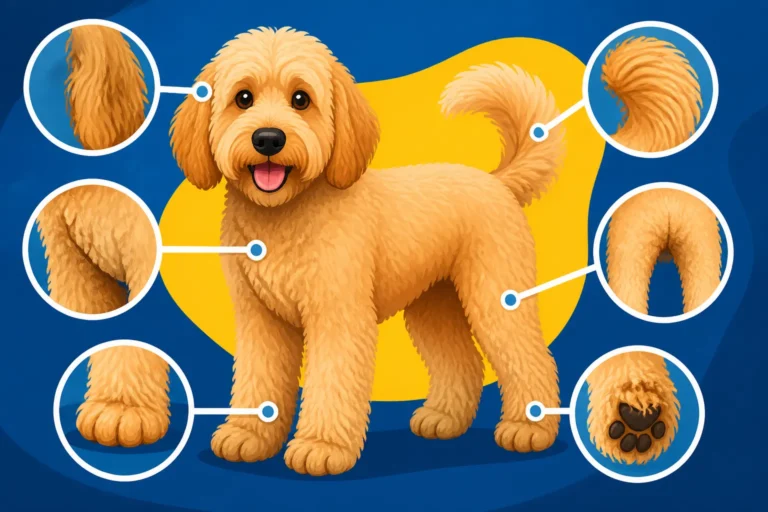
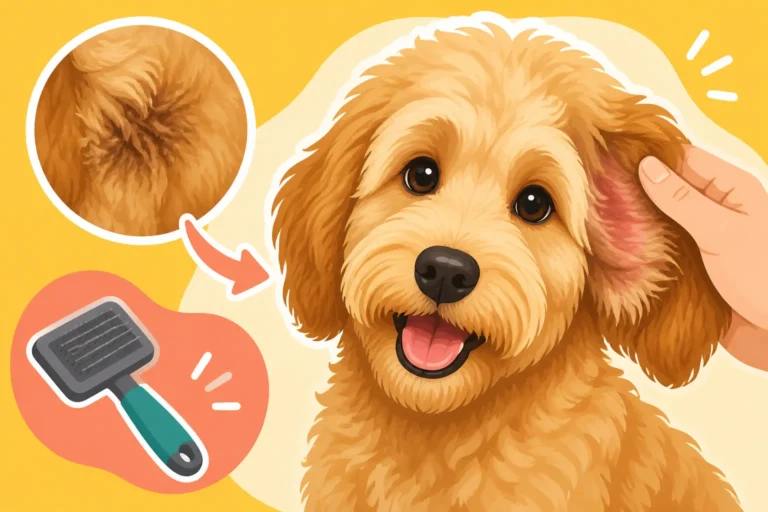
You'll want a comb that has both wide and narrow-set teeth. The wide-toothed side is perfect for the initial pass after brushing, helping to ensure larger sections are clear. The narrow-toothed side is essential for checking those notorious matting hotspots: behind the ears, in the armpits, around the collar area, and on the feathered legs and tail. These are the places where friction is highest, and mats form most readily. Behind the Ears and the First Goldendoodle Mats are often just waiting to start, and a good comb will find them. A cheap plastic comb simply won't cut it; it won't have the durability or the fine-toothed precision you need to truly check the coat. A good metal comb will last a lifetime if cared for properly.
How to Use the Comb Effectively After Brushing
Using the comb effectively is all about technique, not just brute force. It's a follow-up to your slicker brushing, not a replacement for it. Think of it as proofreading your grooming work.
After you've thoroughly slicker brushed a section of your Goldendoodle’s coat, take your stainless steel comb and start at the very tip of the hair, gently working your way down to the skin. You should be able to slide the comb all the way through the hair, from tip to root, without catching or snagging. If the comb stops or pulls, that’s your signal: there’s a tangle or mat hiding in that spot. Don't force it through! Go back to that section with your slicker brush, applying a detangling spray if needed (Detangler Sprays That Help a Goldendoodle), and gently work out the tangle with short, soft strokes, always brushing away from the skin.
It’s crucial to use the technique known as "line brushing." This involves parting the hair in small sections, holding the unbrushed hair out of the way, and brushing from the skin outwards, then combing to check your work. Repeat this process, moving across the dog’s body in small, manageable "lines." This ensures you're not missing any areas. You'd be surprised how easily mats can hide in places like the sensitive Armpit and Collar Mats on a Goldendoodle or even Mats Under a Goldendoodle Harness Strap. This methodical approach, checking each section with the comb, is what truly prevents those horrible, painful mats from forming.
| Tool Type | Primary Purpose | Key Features | Best Used For |
|---|---|---|---|
| Slicker Brush | Removes loose hair, separates strands, prevents superficial mats | Fine, angled wire pins; flat or curved head; various sizes | Daily/every-other-day brushing; penetrating dense coats |
| Stainless Steel Comb | Detects mats, untangles small knots, ensures full penetration | Wide and narrow teeth; solid metal construction | Final check after brushing; working out minor tangles; delicate areas |
Beyond the Basics: Other Tools and When You Might Need Them
While the slicker brush and comb are your primary weapons against Goldendoodle mats, there are a few other tools that can either enhance your routine or become necessary in specific situations. Understanding their role can save you time, frustration, and potentially a hefty dematting fee at the groomer.
Detangling Sprays and Conditioners
Think of detangling sprays and leave-in conditioners as your grooming lubricants. They reduce friction, making it easier for your slicker brush and comb to glide through the coat. For Goldendoodles with particularly long, dense, or mat-prone coats – or during the dreaded "coat change" phase around 8-12 months – these products are invaluable. They can prevent static, moisturize the hair, and make working through minor tangles much less stressful for both you and your dog.
You apply a detangling spray before brushing, focusing on areas where tangles are common or where the coat feels dry. Gently mist the section you're about to brush, let it sit for a moment, and then proceed with your slicker brush and comb. Many owners swear by specific detangling sprays, often available alongside other grooming products on Chewy or at your local pet supply store. These aren't just for making your dog smell good; they're functional tools that help maintain coat integrity and prevent breakage. Consider using a good quality conditioner after baths to help keep the coat hydrated and less prone to tangling in the first place.
Dematting Tools – Use with Caution!
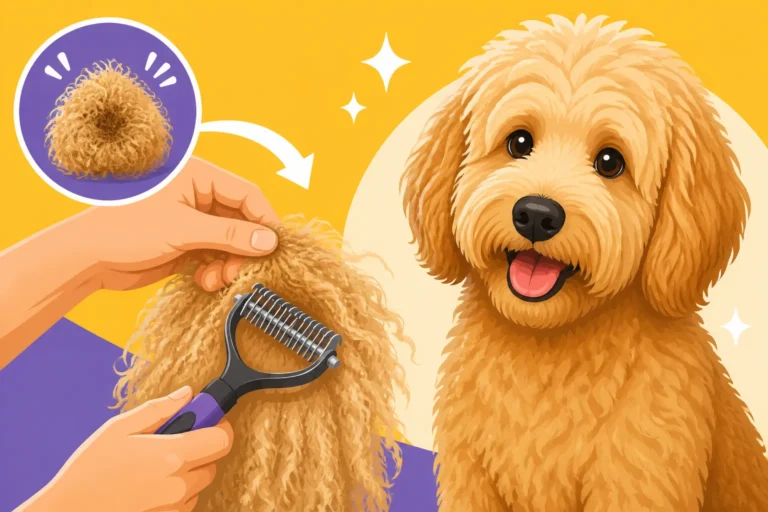
Dematting tools, such as rakes with sharp, curved blades or specialized dematting combs, are often marketed as solutions for tough mats. While they can be effective, they come with a huge caveat: they should be used with extreme caution, and ideally, by a professional groomer. These tools work by cutting through or ripping apart mats, and if used incorrectly, they can pull on the skin, cause discomfort, or even injure your Goldendoodle.
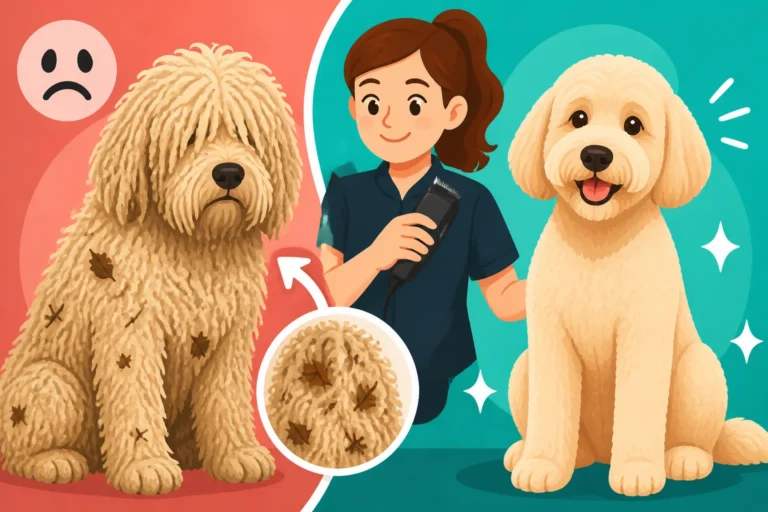
For the average Goldendoodle owner, relying on a dematting rake usually means the grooming routine has already fallen behind. It's far better to prevent mats with consistent slicker brushing and combing than to resort to tools that can be painful. If you find your Goldendoodle has a significant mat that you cannot gently work out with your slicker brush, comb, and detangling spray, your best bet is to take them to a professional groomer. They have the expertise and the right tools to safely remove mats without causing unnecessary pain or skin irritation. Remember, Whether a Dematting Rake Hurts a Goldendoodle depends heavily on technique and mat severity. Prevention is always superior to intervention when it comes to mats.
Making Grooming a Positive Experience
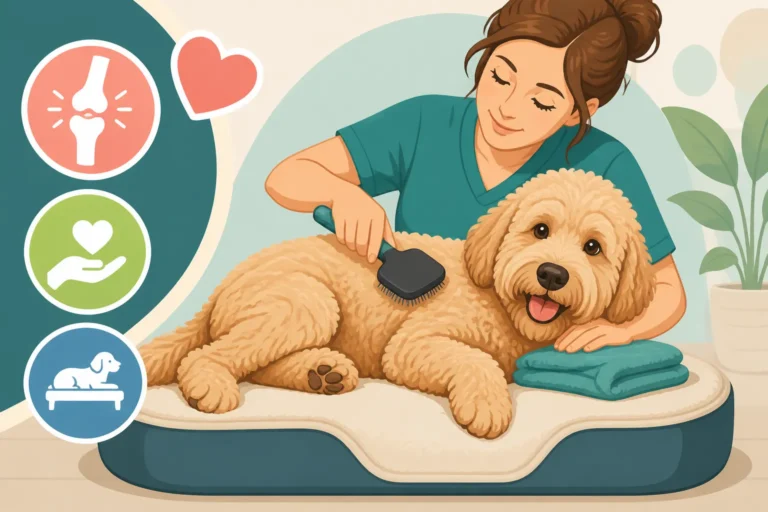
Grooming isn't just about keeping your Goldendoodle looking sharp; it's a vital part of their health and comfort. Regular, positive grooming sessions strengthen your bond and allow you to check for skin issues, lumps, or parasites. Making it a good experience from the start is paramount.
Starting Early and Making It Fun
The earlier you introduce grooming tools and routines to your Goldendoodle puppy, the better. Even before their adult coat comes in, start with short, positive sessions. Let them sniff the slicker brush and comb. Give them treats when they tolerate a few strokes. Make it a game! Why Goldendoodle Grooming Training Starts Week One is simple: puppies are more impressionable, and positive early experiences lay the groundwork for a lifetime of cooperative grooming.
Focus on praise and high-value treats. Keep sessions brief – literally a minute or two – and gradually increase the duration as your puppy becomes more comfortable. If your puppy starts to get squirmy or bite at the brush, take a break. You want them to associate grooming with good things, not with being restrained or uncomfortable. Build up their tolerance to having their paws, ears, and tail handled, as these are all areas that require frequent attention.
Consistency is Key for a Happy Goldendoodle
The single most important factor in keeping your Goldendoodle mat-free and happy is consistency. It's far easier to spend 10-15 minutes every day or every other day brushing your dog than to spend an hour trying to de-mat a neglected coat. Brushing a Goldendoodle Three Times a Week is a good minimum for many, but for those with curlier coats or during coat change, daily might be necessary. Neglecting the coat, even for a few days, can lead to painful, skin-tight mats. Why a Goldendoodle Mats in a Week Without Brushing is because those loose hairs and natural oils quickly bind together, especially with movement and friction.
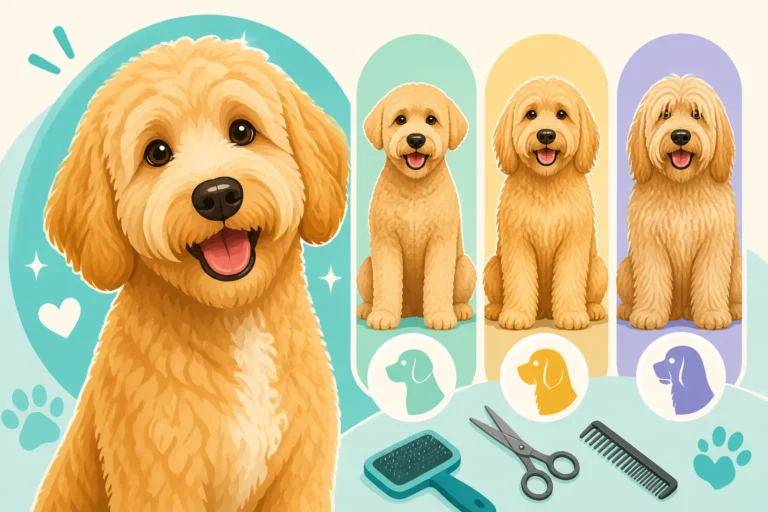
Your Goldendoodle’s coat type—whether it’s flat, wavy, or curly—will also influence your grooming schedule. The Three Goldendoodle Coat Types and How to Tell Them will give you a better idea of how prone to matting your particular pup might be. Curly, wool-like coats typically require the most frequent brushing. If you keep up with the daily or near-daily brushing and combing, you'll not only prevent painful mats but also reduce shedding in your home and build a wonderful routine with your dog. Remember, professional grooms are also essential every six to eight weeks to maintain coat health and keep things trimmed, so Goldendoodle Grooming Every Six Weeks Adds Up to a beautiful, comfortable pup.
Disclaimer
This article is for general informational purposes only and does not constitute professional advice. Laws, prices and regulations vary by location and change over time. Consult a qualified professional for guidance on your specific situation.