Goldendoodle Growth Plates by Size Category
Bringing a Goldendoodle puppy home is an absolute joy, filled with boundless energy and adorable antics. But underneath all that fluff and playful exuberance, their little bodies are undergoing rapid development, and one crucial aspect often overlooked is the delicate state of their growth plates. Many new owners are completely unaware of these vulnerable areas in their puppy's bones, leading to accidental injuries that can have long-term consequences. This guide aims to demystify Goldendoodle growth plates, explain why they're so important, and equip you with practical knowledge to protect your growing companion, ensuring they develop into a healthy, robust adult.
Understanding Goldendoodle Growth Plates and Their Role
When you look at a Goldendoodle puppy, you see a bundle of rapidly growing energy. What you don't see are the incredibly important, but also incredibly vulnerable, areas at the ends of their long bones called growth plates, or physes. Think of them as soft, cartilaginous areas where new bone cells are constantly forming, allowing the bones to lengthen as your puppy grows. These aren't fully calcified bone yet; they're more like soft spots, much weaker than the ligaments and tendons surrounding them, or even the mature bone itself. This makes them particularly susceptible to injury during your Goldendoodle's developmental stage.
For a Goldendoodle, with its mixed heritage of active Golden Retrievers and athletic Poodles, understanding these growth plates is paramount. Both parent breeds are prone to certain orthopedic issues, and while the Goldendoodle might benefit from some hybrid vigor, it doesn't make their growth plates invincible. A seemingly minor tumble, a hard landing from a jump, or repetitive strenuous activity can easily damage these soft areas. Unlike a sprain, a growth plate injury might not be immediately obvious, or its full impact might only manifest months or even years later, potentially leading to stunted growth in a limb, a crooked leg, or even premature arthritis. Knowing when these vital structures are open and when they've safely closed is a critical piece of information for any responsible Goldendoodle parent, influencing everything from their exercise routine to potential spay/neuter timing.
Growth Plate Closure Times by Goldendoodle Size Category
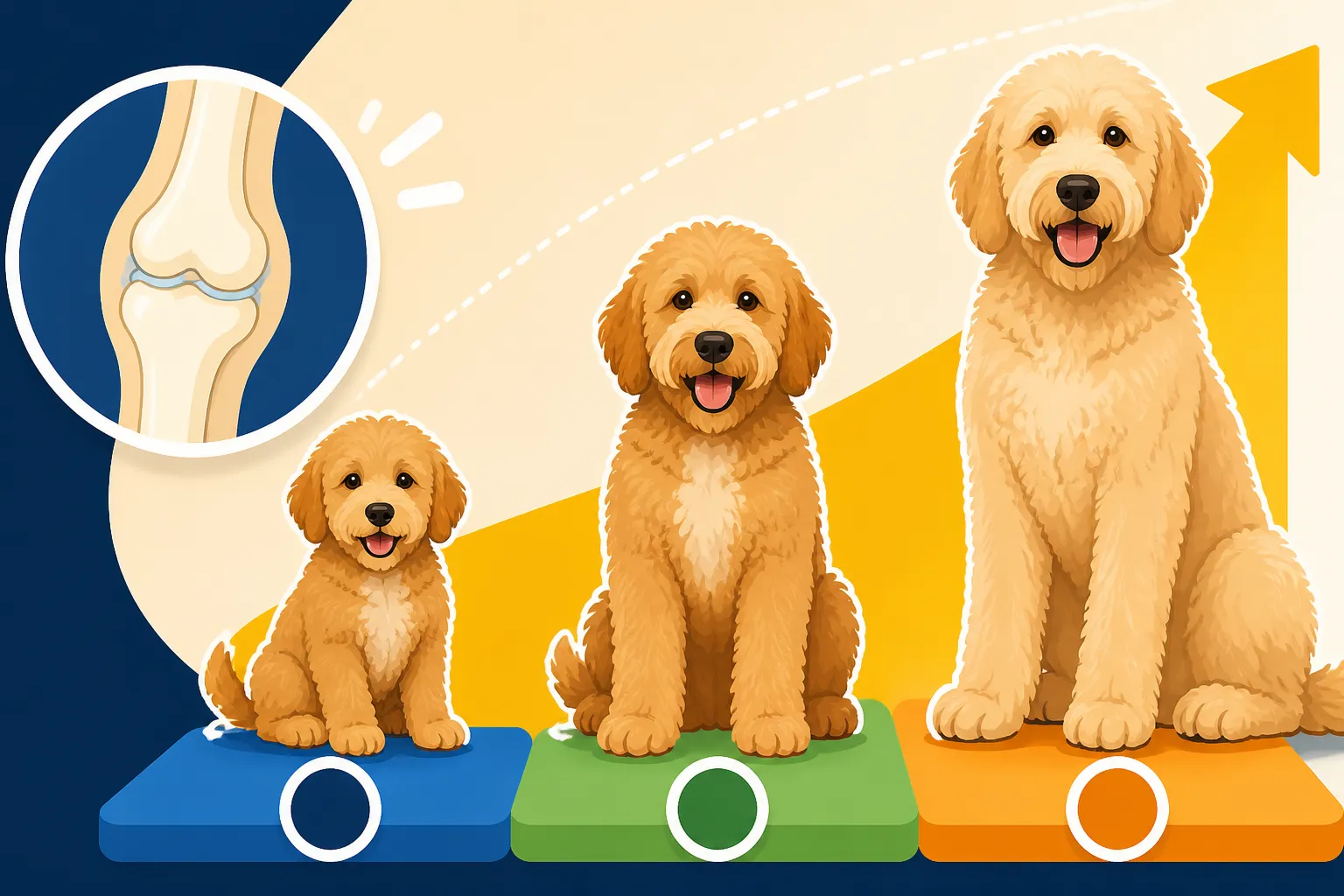
The timing of growth plate closure isn't a one-size-fits-all scenario, especially when you consider the wide range of Goldendoodle sizes. Generally speaking, smaller dogs tend to have their growth plates close earlier than larger dogs. Since Goldendoodles come in Standard, Medium, Mini, and Toy sizes, their growth plate development will naturally follow these trends, meaning you'll need to tailor your puppy care to their projected adult size. These are general guidelines, of course, and every dog is an individual, but they give us a solid framework.
Standard Goldendoodle Growth Plate Closure
For Standard Goldendoodles, which can reach anywhere from 50 to 90 pounds, their growth plates are typically the last to fully close. You're generally looking at a window of 14 to 18 months, and sometimes even a little longer for very large males. This extended period means that Standard Goldendoodle puppies remain vulnerable to growth plate injuries for a longer time compared to their smaller counterparts. During these critical months, their bodies are undergoing immense change, gaining significant weight and height. The sheer mass of a Standard Goldendoodle puppy, combined with their often exuberant play style, can put considerable stress on these still-developing joints and bones. This is why careful management of their activity, especially avoiding high-impact activities like intense fetching on hard surfaces, jumping off furniture, or running long distances, is so crucial. A growth plate injury in a large breed can lead to significant orthopedic problems that require extensive intervention later in life, sometimes even costly surgeries that can run into the thousands, making a comprehensive pet insurance plan from providers like Healthy Paws a wise investment from puppyhood.
Medium Goldendoodle Growth Plate Closure
Medium Goldendoodles, usually weighing between 35 and 50 pounds, fall into an intermediate category. Their growth plates typically close slightly earlier than Standard Goldendoodles, usually between 12 and 16 months of age. While this offers a somewhat shorter window of extreme vulnerability, it's still a significant period during which caution is advised. These dogs still possess plenty of energy and enthusiasm, often reaching impressive speeds and heights in their jumps. The temptation to let them participate in more strenuous activities might be higher because they seem more "grown-up" than a small puppy, but their bones are still in a delicate state. Think about a medium Goldendoodle zooming around a dog park, abruptly changing direction or colliding with another dog. These are exactly the kinds of scenarios that can lead to a growth plate fracture. Even seemingly innocent activities like repetitive stair climbing or long, forced walks on a leash should be limited until you have confirmation from your veterinarian that the growth plates have fused.
Mini and Toy Goldendoodle Growth Plate Closure
Mini Goldendoodles (25-35 pounds) and Toy Goldendoodles (under 25 pounds) generally see their growth plates close earliest, often between 8 and 12 months. Some very small Toy Goldendoodles might even finish growth a little before 8 months. While this shorter developmental period means less time for vulnerability, it doesn't mean you can throw caution to the wind. These smaller Goldendoodles are often perceived as more fragile, and while they might not have the sheer mass of a Standard Goldendoodle, their bones are still susceptible to injury. A fall from a sofa or bed, an awkward landing from a jump, or a misstep during vigorous play can still cause a fracture. Also, because they are smaller, it’s easier for them to get underfoot, increasing the risk of an accidental injury from a human. Even though they mature faster, understanding their physical limits and providing safe play environments is just as vital as for their larger cousins. This rapid growth and delicate phase are part of why discussing Neuter Timing That Depends on Goldendoodle Size with your vet is so important, as early spay/neuter can sometimes affect bone development and growth plate closure.
Here's a quick reference table for Goldendoodle growth plate closure times by size category:
| Goldendoodle Size Category | Typical Adult Weight (approx.) | General Growth Plate Closure Age (approx.) | Key Considerations for Activity |
|---|---|---|---|
| Toy | Under 25 lbs | 8 – 10 months | Delicate bones, prone to injury from falls, careful handling required. |
| Mini | 25 – 35 lbs | 8 – 12 months | Still vulnerable to falls and rough play, ensure safe environments. |
| Medium | 35 – 50 lbs | 12 – 16 months | Active but still developing, limit high-impact activities and repetitive stress. |
| Standard | 50 – 90+ lbs | 14 – 18+ months | Longest period of vulnerability, strict control of jumping, running on hard surfaces, and forced exercise. Monitor Goldendoodle Weight and the Load on Its Joints. |
Factors Influencing Closure
Beyond size, several factors can influence the precise timing of growth plate closure. Genetics certainly play a role; some lines simply mature faster or slower. Nutrition is also critical. A diet formulated for large breed puppies, for instance, is designed to support slow, steady growth rather than rapid weight gain, which can be detrimental to developing joints. Over-nutrition leading to rapid growth or obesity can put undue stress on open growth plates, increasing the risk of injury. Conversely, malnutrition can impair proper bone development.
Lastly, and perhaps most contentiously, the timing of spay or neuter can also be a factor. While the exact impact is still debated and research is ongoing, some studies suggest that removing sex hormones before growth plates have naturally closed might delay closure, potentially leading to longer limb bones and altered joint angles. This could theoretically increase the risk of certain orthopedic issues like Cruciate Ligament Tears in a Jumping Goldendoodle later in life. This is why many veterinarians now recommend waiting until a Goldendoodle is closer to skeletal maturity (i.e., when growth plates have closed) before performing spay/neuter, especially for larger individuals. It's a complex decision that should always be made in close consultation with your trusted veterinarian, weighing the pros and cons for your individual dog.
Protecting Goldendoodle Growth Plates During Development
Understanding when your Goldendoodle's growth plates are open is only half the battle; the other half is actively protecting them. This isn't about coddling your puppy or preventing them from playing, but rather about guiding their activity in a way that promotes healthy, strong skeletal development. It’s about being a mindful guardian during their crucial growing months.
Appropriate Exercise Levels for Puppies
Puppies, especially Goldendoodles, are bursting with energy, and it's easy to assume that more exercise is always better. However, when growth plates are open, controlled exercise is key. This means no forced running, no long jogs, and definitely no marathon fetch sessions where your puppy is launching itself repeatedly after a ball. Think short, frequent play sessions on soft, forgiving surfaces like grass or dirt. Let them explore, sniff, and play at their own pace. If they decide to lie down and rest, let them! Their body is telling them what they need. A good rule of thumb is about five minutes of structured exercise per month of age, twice a day. So, a four-month-old Goldendoodle puppy might get two 20-minute sessions of gentle play or walking. This is covered in more detail in our guide on Goldendoodle Exercise at Every Life Stage.
Over-exercising a puppy can not only exhaust them but also put undue stress on their developing joints and growth plates. Instead of long walks, focus on mental stimulation with puzzle toys or short, fun training sessions. This tires them out without the physical impact. When they are very young, even something as simple as a slow walk around the block is often enough. Remember, they're not miniature adults; their bodies simply aren't built for high-intensity, repetitive motion yet.
Avoiding High-Impact Activities
This is perhaps the most critical aspect of protecting growth plates. High-impact activities are anything that involves jarring movements, hard landings, or repetitive stress. This includes:
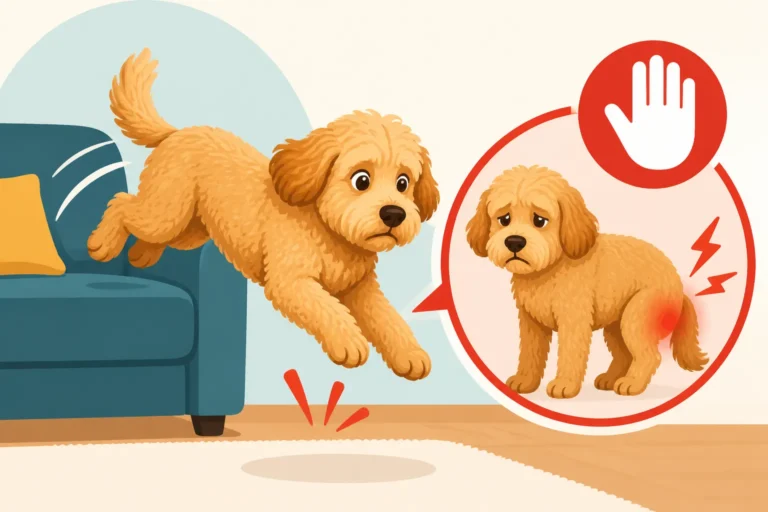
- Jumping off high furniture: Your sofa, bed, or even a porch step can be too high for a puppy's developing joints. Teach them to wait for help or use ramps. This is why we often stress Why a Goldendoodle Should Not Jump Off Furniture.
- Repetitive stair climbing: While an occasional stair climb is fine, repeatedly running up and down a full flight of stairs can put a lot of strain on their front and rear limbs. Carry smaller puppies, or limit access to stairs until they're older.
- Aggressive, high-speed fetch on hard surfaces: Concrete, asphalt, or even packed dirt can be incredibly unforgiving when a puppy is running at full speed and stopping abruptly or sliding. Stick to soft grass.
- Roughhousing with much larger or older dogs: While socialization is important, ensure play is appropriate. A large, boisterous adult dog can easily accidentally injure a puppy's delicate limbs. Supervise all play.
- Agility training involving jumps or weave poles: While Goldendoodles are smart and athletic, save formal agility training for after growth plates have fully closed. Basic obstacle work (like tunnels or low walks) can be fine, but consult a professional trainer for guidance.
These activities, if done frequently, can lead to microtraumas that accumulate, or even acute fractures. Such injuries are not only painful but can permanently alter the bone's growth, leading to lameness, arthritis, or requiring complex surgeries. The costs for such interventions can be staggering, so early prevention is truly the best medicine.
Nutritional Considerations
Proper nutrition supports overall healthy growth, including the development of strong bones and joints. For a Goldendoodle puppy, especially a Standard or Medium size, feeding a high-quality large breed puppy food is often recommended. These formulas are specifically designed to promote slower, more controlled growth, preventing the rapid weight gain that can put excessive strain on developing growth plates and increase the risk of orthopedic issues like Goldendoodle Hip Dysplasia at 15 to 20 Percent or Goldendoodle Elbow Dysplasia From Both Parent Breeds.
Avoid overfeeding your puppy or supplementing with excessive calcium or vitamins unless specifically instructed by your veterinarian. More is not always better when it comes to supplements, and an imbalance can be just as detrimental as a deficiency. Your veterinarian can help you interpret a Goldendoodle Puppy Growth Chart by Size and ensure your dog is on a healthy trajectory, suggesting specific brands or feeding amounts appropriate for your Goldendoodle's projected adult size.
Importance of Vet Check-Ups
Regular veterinary check-ups throughout your Goldendoodle's puppyhood are absolutely crucial. Your vet can monitor your puppy's growth, assess their gait, and discuss appropriate activity levels based on their current stage of development. While an X-ray is the only definitive way to confirm growth plate closure, it's typically not done routinely unless there's a suspected injury or a specific reason. However, your vet can provide educated guesses based on your puppy's age, breed, and physical exam.
Don't hesitate to reach out to your vet if you notice any limping, lameness, reluctance to play, or unusual swelling in a limb. Early diagnosis and treatment of a growth plate injury can make a significant difference in the outcome. Having a pet insurance policy, like those offered by Healthy Paws, can provide immense peace of mind, knowing that if an accident happens or an orthopedic issue arises, a large portion of the veterinary costs could be covered. This allows you to focus on getting your Goldendoodle the best possible care without the added financial stress. They are also a great resource for understanding Goldendoodle Joint Health by Size Category.
When to Be Extra Cautious
There are certain periods and situations when you should be particularly vigilant about protecting your Goldendoodle's growth plates:
- During growth spurts: Just like human teenagers, puppies go through awkward growth spurts where their coordination might be a bit off, and their bones are lengthening rapidly, making them even more vulnerable.
- After intense play: Always check your Goldendoodle for any limping or discomfort after a vigorous play session, even if it seemed appropriate.
- Any signs of lameness: Even a subtle limp that seems to come and go should be investigated by a veterinarian, as it could indicate a minor growth plate injury or another developing orthopedic issue.
- After any fall or accidental impact: If your Goldendoodle takes a tumble, especially a hard one, keep a close eye on them for the next 24-48 hours. If you observe pain, swelling, or lameness, a vet visit is in order.
- In very active environments: When taking your Goldendoodle puppy to new places, like a friend's house or a new park, be extra cautious about unfamiliar terrain, stairs, or interactions with unknown dogs.
By being proactive and informed, you can significantly reduce the risk of growth plate injuries and help ensure your Goldendoodle grows up with healthy, strong bones, ready for a lifetime of happy, active adventures.
Disclaimer
This article is intended for informational purposes only and is not a substitute for professional veterinary advice. Always consult with your veterinarian regarding your Goldendoodle's specific health, diet, and exercise needs.