Brushing a Goldendoodle Often Enough to Stop Matting
Oh, the Goldendoodle coat! It's undeniably one of their most charming features – soft, fluffy, and just begging for cuddles. But if you're a Goldendoodle owner, you know that this beautiful coat comes with a significant challenge: matting. Those adorable curls and waves are notorious for tangling into painful knots if not properly cared for. This guide is here to walk you through everything you need to know about brushing your Goldendoodle often enough to stop matting in its tracks, making grooming a bonding experience rather than a battle.
The Matting Menace: Understanding Why Goldendoodles Mat So Easily
Let's be real, Goldendoodle matting isn't just an aesthetic issue; it's a serious comfort and health concern for your beloved companion. Many new Goldendoodle parents are completely unprepared for the sheer density and texture of their dog's coat, and the speed at which it can go from fluffy to felted. It's a common frustration, and you're certainly not alone in feeling overwhelmed by it.
The Unique Goldendoodle Coat Trap
The Goldendoodle's coat is a fascinating blend, inheriting traits from both the Golden Retriever and the Poodle. While purebred Golden Retrievers have a dense double coat that sheds a lot, and Poodles have a single, non-shedding but continuously growing coat, the Goldendoodle gets a bit of both. This often results in a soft, wavy, or curly coat that traps shed hair instead of releasing it. Imagine trying to brush out a sweater made of Velcro – that's often what it feels like to manage a Goldendoodle coat. The shed hairs get interwoven with the growing hairs, and if not removed regularly, they form dense, painful mats right against the skin. This unique combination is precisely Why Goldendoodle Matting Is Almost Always Preventable with consistent effort, but without it, it's a recipe for disaster.
Moreover, the "hypoallergenic" promise often associated with Goldendoodles, while appealing, can sometimes mislead owners into thinking their dog's coat is low maintenance. While many Goldendoodles do shed less than a Golden Retriever, their hair still grows and eventually needs to be removed. It just doesn't fall out on your furniture; it stays tangled in the coat. This trapped hair, combined with the natural oils from their skin and any environmental debris, creates a perfect storm for mat formation. The longer the coat, the more surface area there is for these shed hairs to intertwine and bind together, making regular and thorough brushing absolutely non-negotiable for their comfort and health.
How Mats Form and Why They Hurt
Mats typically start small, perhaps just a little tangle where the collar rubs, or a minor knot behind an ear. But these small tangles are like tiny magnets, attracting more loose hair, dirt, and moisture. With every shake, roll, and cuddle, these small tangles tighten, growing larger and denser. They pull on your Goldendoodle's delicate skin, causing irritation, redness, and sometimes even open sores. It's a bit like having your hair constantly tugged at – uncomfortable at best, and excruciating at worst. Imagine a stubborn dreadlock forming right on your scalp, constantly pulling as you move. That's the pain your dog feels.
When mats become severe, they can restrict blood flow, hide parasites, and even lead to skin infections due to lack of air circulation and trapped moisture. They can make simple movements painful, affecting your dog's ability to play, run, or even lie down comfortably. A Goldendoodle who suddenly seems lethargic or avoids being touched might be suffering from hidden mats. These aren't just cosmetic issues; they are serious health concerns that require immediate attention. That's why understanding how they form is the first step in preventing this painful problem for your furry friend.
The Right Tools for the Job: What Every Goldendoodle Owner Needs
You wouldn't try to build a house with a butter knife, right? The same goes for grooming your Goldendoodle. Having the correct tools isn't just helpful; it's absolutely essential for effective and comfortable brushing. Skimping on tools will lead to frustration for both you and your dog, and ultimately, to more mats. Investing in quality grooming tools from the start will save you a lot of heartache (and potentially vet bills) down the line.
Essential Brushes and Combs
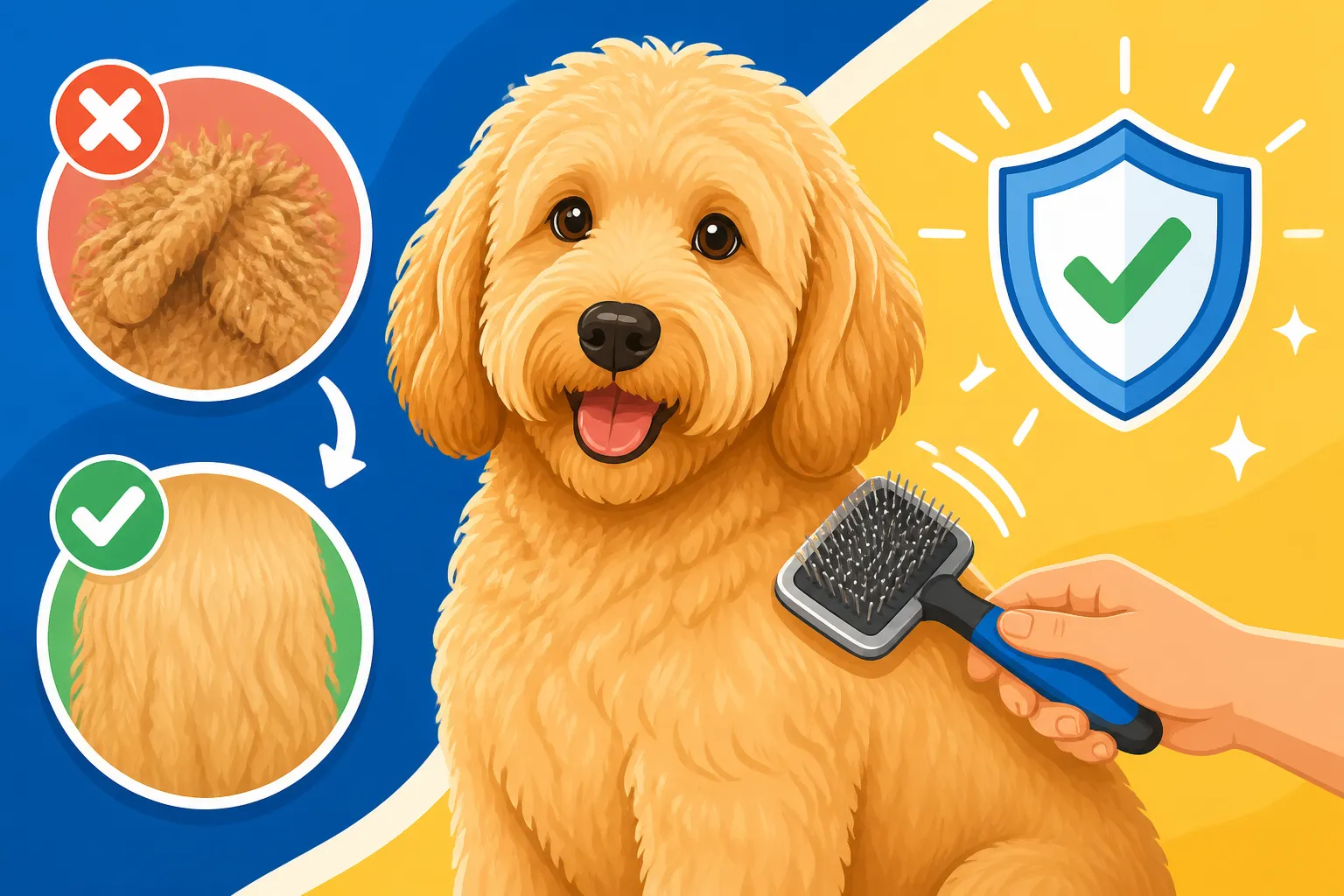
When it comes to brushing a Goldendoodle, you need a dynamic duo: a good quality slicker brush and a sturdy metal comb. These aren't optional; they are your bread and butter for mat prevention. The slicker brush, with its fine, wire bristles, is designed to separate and detangle the fur, reaching down to the skin without scratching it. Look for one with a comfortable handle and durable pins. For example, you can often find highly-rated slicker brushes on Amazon with reviews from other Goldendoodle parents. This brush will do the heavy lifting of fluffing the coat and pulling out loose hair.
The metal comb is equally, if not more, important. It's your "mat detector" and your "finisher." After you've gone over an area with the slicker brush, the comb is what truly confirms that all tangles have been removed down to the skin. A good metal comb usually has two different teeth densities – wider teeth on one end for initial passes and narrower teeth on the other for fine-tuning and checking for small knots. Make sure the teeth are smooth and not sharp, to avoid irritating your dog's skin. You'll find many suitable options at pet supply stores or online retailers like Chewy, often in a "greyhound" style which is fantastic for Goldendoodle coats. These two tools, used together, are a powerful defense against matting, as detailed in The Slicker Brush and Comb a Goldendoodle Needs.
Supporting Products for Mat Prevention
Beyond the essential brushes, a few supporting products can make a world of difference in your grooming routine. A good detangling spray is a lifesaver, especially for those stubborn little knots or for working through areas that tend to mat quickly. These sprays help to lubricate the hair, allowing tangles to slip apart more easily and reducing static, which can also contribute to matting. You simply spritz a little on a matted area before you start brushing, let it sit for a moment, and then gently work through the tangle.
Another crucial item is a high-quality dog-specific shampoo and conditioner. While brushing is paramount, a well-conditioned coat is less prone to tangles. A good conditioner smooths the hair cuticle, making it slicker and harder for hairs to snag onto each other. This is especially important during baths, as wet hair can tangle very easily. Never just shampoo and rinse; always follow up with a good conditioner designed for dogs with long, curly coats. You might even consider a leave-in conditioner for extra protection between baths. Having a small pair of blunt-nosed scissors on hand for carefully snipping out very small, superficial mats that absolutely cannot be brushed out is also wise, but always exercise extreme caution and only do so if you can clearly see skin beneath the mat to avoid injury.
The Art of Line Brushing: A Step-by-Step Guide
Brushing a Goldendoodle isn't about just running a brush over the top of their coat. That's a rookie mistake that leaves mats hidden underneath, creating a felted layer that's impossible to penetrate. The secret to effective mat prevention is a technique called "line brushing." It ensures you're reaching all the way down to the skin, where most mats truly begin.
Preparing Your Goldendoodle for Brushing
Before you even pick up a brush, set the stage for success. Find a quiet, comfortable spot where your Goldendoodle can stand or lie down for an extended period. A grooming table is ideal because it saves your back and clearly defines "grooming time" for your dog, but a non-slip mat on the floor or a sturdy, elevated surface can work too. Make sure you have all your tools within easy reach: slicker brush, metal comb, detangling spray, and maybe a few treats. Yes, treats! Brushing should be a positive experience.
Start with a calm demeanor and offer a treat or two. If your Goldendoodle is a puppy, getting them accustomed to being handled from an early age is vital. Gently touch their paws, ears, and tail. This desensitization will pay dividends as they grow. Why Goldendoodle Grooming Training Starts Week One is not just a suggestion, it's a golden rule. Begin by checking their entire body for any visible mats, paying close attention to known trouble spots like behind the ears, armpits, and under the collar. If you find any large, tight mats, you might need to apply a detangling spray and gently try to work them out before starting the main brushing, or even consider a professional groomer if they're too severe.
Mastering the Line Brushing Technique
Line brushing is a methodical approach that ensures you cover every inch of your Goldendoodle's body, from head to tail, down to the skin. Here's how to do it:
- Section by Section: Start at the bottom of your Goldendoodle (like their leg or belly) and create a horizontal "part" in their fur. Hold the upper section of fur up and out of the way with one hand, exposing a small strip of skin and the roots of the hair below it.
- Brush the Line: With your other hand, take your slicker brush and brush down the exposed strip of hair, starting at the skin and brushing outwards. Make sure the pins of the slicker brush are making contact with the skin (gently, of course) but not scratching it. Brush repeatedly in this small section until it feels completely smooth and tangle-free.
- Comb to Check: Once you've brushed the section with the slicker brush, take your metal comb and slowly comb through the same section. The comb should glide effortlessly through the hair from skin to tip. If the comb snags, you've found a tangle! Go back with your slicker brush and work that spot until the comb passes through smoothly. This step is critical, as the comb confirms your work.
- Move Up: Once that bottom strip is completely clear, drop a small amount of the held-up fur down, creating a new, slightly higher line. Repeat the brushing and combing process on this new section.
- Systematic Coverage: Continue this process, moving methodically across your Goldendoodle's body – from the bottom up on their legs, chest, and sides, and from the top down on their back and tail, always creating a "line" and working through it. This systematic approach, as detailed in Line Brushing a Goldendoodle Section by Section, ensures no area is missed.
This technique takes time, especially when you're first learning, but it's the most effective way to prevent matting and maintain a healthy coat. Remember, patience is key. If your Goldendoodle gets antsy, take a short break, offer a treat, and then resume.
Beyond the Basics: Targeting Trouble Spots and Preventing Recurrence
While line brushing the entire coat is crucial, certain areas on a Goldendoodle's body are practically mat magnets. These spots require extra vigilance and often a slightly different approach to keep them tangle-free. Ignoring them, even with a diligent full-body brush, is a surefire way to develop problems.
Common Matting Zones
Every Goldendoodle owner quickly learns that mats have their favorite hideouts. These are typically areas of high friction or where the coat is particularly fine and dense:
- Behind the Ears: This is probably the number one trouble spot. The hair here is usually softer, finer, and tangles easily with head movements, scratching, and collar friction. Always check Behind the Ears and the First Goldendoodle Mats first when you start brushing.
- Armpits and Groin: These areas experience constant friction from movement. When your Goldendoodle walks, runs, and plays, the hair in their armpits and groin rubs against itself and their skin, creating mats. These can be very painful and restrict movement.
- Under the Collar/Harness: If your Goldendoodle wears a collar or harness for extended periods, the constant rubbing can quickly felt the hair underneath. Make sure to remove their collar/harness during brushing and thoroughly comb these areas. Armpit and Collar Mats on a Goldendoodle are particularly insidious because they are often out of sight.
- Tail and Rear: The tail swings, drags, and often gets wet or dirty. The hair on the "pants" (the back of the hind legs) is also long and thick, making it prone to tangles, especially after potty breaks.
- Paws and Between Toes: Moisture, dirt, and friction from walking can cause mats between their paw pads, leading to discomfort and even infections. Keeping the hair trimmed here is also part of prevention.
- Beard/Muzzle: If your Goldendoodle has prominent furnishings, the hair around their mouth and chin can easily get tangled with food, water, and drool. Regular cleaning and gentle combing are necessary.
When you're line brushing, give these areas extra attention. Work slowly, use detangling spray if needed, and always finish with your metal comb to ensure complete freedom from tangles.
Daily Habits to Keep Mats Away
Brushing isn't a once-a-week task for most Goldendoodles; it needs to be a regular habit. The more often you can gently work through their coat, the less likely severe mats are to form. Think of it as preventative medicine for their fur!
- Daily Mini-Sessions: Even if you can't do a full line brush every single day, aim for daily "mini-sessions" focused on the common matting zones. Five to ten minutes dedicated to behind the ears, armpits, and under the collar can prevent a much longer, more difficult brushing session later. This consistency is your best defense against dreaded tangles.
- Post-Activity Checks: After a romp in the park, a swim, or even just a particularly enthusiastic play session, give your Goldendoodle a quick once-over. Burrs, sticks, and dirt can easily get embedded in their coat, and wet hair mats much faster. A quick comb-through after these activities can prevent small snags from becoming major mats.
- Collar & Harness Breaks: If possible, remove your Goldendoodle's collar or harness when they're at home and supervised. This reduces constant friction on their coat and allows those areas to breathe.
- Drying Thoroughly: After baths or swims, ensure your Goldendoodle's coat is completely dry. Leaving a Goldendoodle coat damp is an open invitation for mats to form and tighten as it dries. Use a powerful dog dryer if you have one, or even a human hairdryer on a cool setting, brushing as you dry.
- Regular Grooming Appointments: Even with diligent home care, professional grooming appointments every 6-8 weeks are essential. Your groomer has specialized tools and expertise to maintain the coat length and prevent mats that you might miss. This isn't a sign of failure in your home grooming; it's a partnership.
By integrating these small habits into your daily routine, you'll find that managing your Goldendoodle's coat becomes much less daunting and far more enjoyable for both of you.
Goldendoodle Coat Types and How They Influence Brushing Needs
One of the beautiful, yet sometimes challenging, aspects of Goldendoodles is the variety in their coats. Not all Goldendoodle coats are created equal, and understanding your dog's specific coat type is key to tailoring an effective brushing routine. What works for a wavy-coated Goldendoodle might not be enough for a super curly one.
Flat, Wavy, and Curly Coats Explained
Goldendoodles can exhibit a range of coat types, generally falling into three categories, though there's often a spectrum in between:
- Flat/Straight Coat: This coat type is less common and tends to resemble more of the Golden Retriever parent. It's typically straight or slightly wavy, often with less of the characteristic "furnishings" (beard and eyebrows). While it might seem easier to manage, it can still be prone to shedding and matting if not brushed regularly, especially during seasonal coat changes. It's often the easiest to brush, but don't get complacent! Being able to tell Telling a Flat Goldendoodle Coat From a Wavy One is important for managing expectations.
- Wavy/Fleece Coat: This is arguably the most common and sought-after Goldendoodle coat. It's soft, typically low-shedding, and has gentle waves or loose curls. This "fleece" texture is delightful but can be a matting nightmare. The waves easily intertwine and trap loose hair. This coat type requires consistent, thorough line brushing to prevent tangles from forming deep within the waves.
- Curly/Wool Coat: This coat most closely resembles that of the Poodle parent. It's dense, tight, and curly, often described as "wool-like." While it's usually the least shedding type, it is the most prone to matting. The tight curls act like tiny springs, easily knotting together and holding onto any shed hair. If you have a curly-coated Goldendoodle, daily brushing is often non-negotiable to prevent mats from cementing to the skin. Recognizing Identifying a Curly Wool Goldendoodle Coat means you're signing up for serious daily brushing.
Understanding your Goldendoodle's specific coat type, which sometimes isn't fully evident until after their puppy coat change, will dictate the frequency and intensity of your brushing routine.
Adjusting Your Routine for Each Coat Type
Once you've identified your Goldendoodle's coat type, you can fine-tune your grooming strategy.
- Flat/Straight Coat: Even with a straighter coat, daily brushing is still recommended, especially if it's long. Focus on thorough slicker brushing to remove shed hair and prevent tangles, followed by combing. Pay attention to areas of friction, as even straight hair can mat under collars or in armpits. These Goldendoodles may benefit from less frequent full professional grooms, but regular trims to keep length manageable are still a good idea.
- Wavy/Fleece Coat: This coat type absolutely requires consistent attention. Aim for at least every other day line brushing, with daily spot checks on high-friction areas. During periods of high activity, or when the weather is damp, increase your brushing frequency. You'll likely need professional grooming every 6-8 weeks to keep the length manageable and to address any small mats you might have missed. A good detangling spray will be your best friend.
- Curly/Wool Coat: This is the most demanding coat. Daily, thorough line brushing is often necessary. If neglected for even a few days, tight mats can form very quickly and become extremely difficult to remove. Many owners with wool-coated Goldendoodles opt for a shorter haircut (often called a "puppy cut" or "kennel cut") to make daily maintenance more manageable. Professional grooming every 4-6 weeks is often essential for these coats to prevent severe matting. Remember, even with a short cut, daily combing is still required to prevent the short curls from felting.
No matter the coat type, the general principle remains: consistency is key. A little bit of effort frequently is far more effective and less stressful than trying to tackle large, painful mats after weeks of neglect.
| Goldendoodle Coat Type | Brushing Frequency (Minimum) | Professional Grooming (Recommended) | Key Considerations |
|---|---|---|---|
| Flat/Straight | Every 2-3 days | Every 8-10 weeks | Less prone to severe matting, but still sheds and can tangle. Focus on removing loose hair and checking friction spots. |
| Wavy/Fleece | Every other day | Every 6-8 weeks | Most common type, very prone to matting. Requires consistent line brushing and detangling spray. |
| Curly/Wool | Daily | Every 4-6 weeks | Most prone to matting, even with shorter cuts. Daily, thorough line brushing is crucial. Shorter cuts often make maintenance easier. |
Incorporating Brushing into Your Daily Routine: Making it a Positive Experience
Let's face it, grooming can feel like a chore, but it doesn't have to be. For your Goldendoodle, a consistent and positive brushing routine can transform it from something they tolerate to something they actually look forward to. It's all about building good habits and trust.
Making Brushing a Positive Experience
No one wants to force their dog into something unpleasant, especially not daily. The goal is to make brushing an enjoyable, bonding activity.
- Start Early and Gentle: If you have a Goldendoodle puppy, start grooming training immediately. Even short sessions, just a minute or two, touching their paws, ears, and using a soft brush, can build positive associations. Always pair it with high-value treats and praise. Puppyhood is the ideal time to teach them to accept handling and develop cooperative care skills.
- Short and Sweet Sessions: Don't try to tackle the entire coat in one go if your dog is resistant. Break it down into smaller, manageable sessions. Maybe one day you focus on the legs and belly, the next on the back and tail. Keep sessions brief, especially at first, ending on a positive note before your dog gets fed up.
- High-Value Rewards: Treats, treats, treats! Have a stash of your Goldendoodle's favorite treats ready. Reward them for calm behavior, for allowing you to brush a section, or simply for standing still. Positive reinforcement is incredibly powerful. Some owners even use long-lasting chews or lick mats (spread with peanut butter or a pet-safe paste, often available on Ollie) to keep their Goldendoodle distracted and happy during longer sessions.
- Speak Softly and Reassure: Your tone of voice matters. Stay calm, speak in soothing tones, and reassure your dog throughout the process. If they get nervous, take a break, offer comfort, and then try again. Never scold or punish them for being difficult; that will only make them dread brushing even more.
- Establish a Routine: Dogs thrive on routine. Try to brush your Goldendoodle at the same time each day or every few days. This consistency helps them understand what to expect and can reduce anxiety. Perhaps it's after their morning walk, or during your evening unwind time.
By making brushing a pleasant and predictable part of their day, you're not just preventing mats; you're strengthening the bond you share with your Goldendoodle.
The Importance of Consistency
We've touched on it before, but it bears repeating: consistency is the absolute cornerstone of Goldendoodle coat care. It's far easier to prevent mats than to remove them. A few minutes of brushing several times a week is infinitely more effective and less painful than one long, arduous session trying to detangle weeks of neglect.
Think of it this way: a small knot is easy to brush out. But if that knot is left for days or weeks, it collects more hair, tightens, and becomes a dense, painful mat that may require shaving. And once a mat forms, it pulls on the skin, causing pain and making your dog resistant to future brushing, creating a vicious cycle. Why a Goldendoodle Mats in a Week Without Brushing isn't an exaggeration; it's a reality for many.
Consistency isn't just about preventing mats; it's also about building tolerance. The more frequently you handle your Goldendoodle's coat, the more accustomed they become to the sensation of brushing. This makes them more cooperative for professional grooming appointments, vet visits, and even quick checks for burrs after a hike. It contributes to their overall well-being and reduces stress for everyone involved. So, pick a schedule, stick to it, and reap the rewards of a happy, tangle-free Goldendoodle.
When to Call for Professional Help: Recognizing When Mats Are Beyond Home Care
Despite your best efforts, sometimes mats happen. Life gets busy, a spot gets missed, or a particularly adventurous outing results in a tangled mess. It's crucial to know when a mat is too severe for home removal and when it's time to call in the professionals. Trying to tackle large, tight mats yourself can cause significant pain, skin injury, and damage your dog's trust.
Recognizing Severe Matting
How do you know if a mat is beyond your capabilities? Here are some signs:
- Density and Size: If a mat is thick, hard, and extends over a large area, especially if it's close to the skin, it's probably too severe for home removal. These mats often feel like felt or even concrete.
- Skin Involvement: If the mat is pulling the skin taut, causing redness, irritation, or if you can't easily see skin beneath the mat, it's deeply rooted. Trying to brush these out will cause immense pain and could tear the skin.
- Dog's Reaction: If your Goldendoodle shows extreme pain, snapping, growling, or trying to bite when you attempt to touch a mat, stop immediately. Their reaction is a clear sign that the mat is causing significant discomfort.
- Restricted Movement: Mats that form in the armpits, groin, or around joints can severely restrict movement. If your Goldendoodle is limping, walking stiffly, or reluctant to move due to matting, professional help is urgently needed.
- Smell or Discharge: If you notice any foul odor, discharge, or signs of infection (like pus or swelling) coming from under a mat, it's a medical emergency that requires a vet, and then likely a groomer to remove the coat safely.
When you encounter severe matting, remember that your Goldendoodle's comfort and well-being come first. It's okay to admit a mat is beyond your skill set. That's what professional groomers are for.
Working with Your Groomer
A good groomer is an invaluable partner in Goldendoodle coat care. If you find severe matting, don't try to hide it or be embarrassed. Be honest with your groomer about the situation.
- Pre-Booking Communication: When booking your appointment, let the groomer know your dog has severe mats. This allows them to allocate extra time and be prepared with the right tools. Sometimes, a severely matted dog might need a longer appointment or even a sedation if the mats are too painful to remove while awake (though this is rare and only in extreme cases, usually coordinated with a vet).
- The Shave Down: Be prepared for the groomer to recommend shaving your Goldendoodle. This isn't a punishment; it's often the only humane way to remove severe matting without causing extreme pain or injury. A full shave allows the skin to breathe and heal, and gives you a fresh start. Yes, it might look a little shocking at first, but your dog will feel immense relief. As described in How Matting Adds Hundreds to a Goldendoodle Year, dematting severely matted dogs can incur significant surcharges, and a shave-down is often the more cost-effective and humane option.
- Post-Grooming Plan: Discuss with your groomer how to prevent future matting. They can offer advice on tools, techniques, and frequency based on your dog's specific coat and lifestyle. They might recommend adjusting your home routine or booking more frequent appointments. Establishing a regular schedule, perhaps Booking a Goldendoodle Groom Six Weeks Out, is essential after a shave down to maintain the coat as it grows back.
- Regular Maintenance: Think of your groomer as a collaborator. They handle the big cuts and ensure the coat is reset, but your daily home brushing is what sustains that work. A professional groom is not a magic bullet that makes daily brushing obsolete; it’s a foundation upon which your regular care builds.
Ultimately, your groomer wants what's best for your Goldendoodle's comfort and health. Don't hesitate to reach out to them when you're facing a matting challenge.
The Bigger Picture: Brushing as Part of Overall Goldendoodle Care
Brushing your Goldendoodle is more than just a battle against mats; it's an integral part of their overall health and well-being. It's a chance to connect with your dog, check for health issues, and ensure they're comfortable from nose to tail.
Brushing as Part of Overall Health
Regular brushing contributes to your Goldendoodle's health in several ways that extend beyond just a tangle-free coat:
- Skin Health: Brushing stimulates blood circulation to the skin, which promotes healthy skin cell turnover. It also helps distribute natural skin oils throughout the coat, keeping it moisturized and shiny, and preventing dryness or irritation. It's a natural massage that supports their largest organ.
- Early Detection of Issues: As you brush, you're performing a mini-health check. You'll feel for any lumps, bumps, hot spots, ticks, fleas, or skin irritations that might otherwise go unnoticed under their thick coat. Catching these issues early can prevent them from becoming more serious. For example, you might discover Lumps Under a Goldendoodle Coat You Cannot See during a thorough brush.
- Reduced Shedding (for those that shed): Even low-shedding Goldendoodles will have some loose hair. Regular brushing removes these shed hairs before they have a chance to fall out around your house or get trapped and form mats. For Goldendoodles with straighter, more Golden Retriever-like coats, this is especially important.
- Improved Hygiene: Brushing helps to remove dirt, debris, and allergens from your Goldendoodle's coat, keeping them cleaner and potentially reducing environmental allergens in your home. This is particularly beneficial for active dogs who love to roll in everything.
- Bonding and Trust: Consistent, gentle brushing builds trust and strengthens the bond between you and your Goldendoodle. It's a quiet, tactile interaction that reinforces your relationship and makes them more comfortable with handling in general.
- Mental Stimulation and Relaxation: For many dogs, a calm brushing session can be incredibly relaxing and even meditative. It provides a consistent, predictable routine that can reduce anxiety and offer a moment of quiet connection in their day.
It's clear that brushing is not just about aesthetics; it's a vital component of holistic Goldendoodle care, contributing to their physical comfort, hygiene, and emotional well-being.
Long-Term Coat Care Goals
Your Goldendoodle's coat will evolve, especially during the dreaded "coat change" phase. Their puppy fluff will transition into their adult coat, which can be a particularly challenging time for matting.
- Navigating the Coat Change: Most Goldendoodles go through a significant coat change between 8 and 12 months of age. During this period, their soft puppy fur starts shedding and gets entangled with their coarser, denser adult coat. This is when matting can become extreme. Understanding When a Goldendoodle Starts Blowing Its Puppy Coat is crucial, as is implementing Daily Brushing Through a Goldendoodle Coat Change to get through this phase without resorting to a full shave. You'll likely need to increase brushing frequency dramatically during these months.
- Maintaining Desired Length: Decide on a coat length that works for your lifestyle and your Goldendoodle's comfort. Longer coats are beautiful but demand more frequent brushing. Shorter cuts are easier to maintain but still require consistent combing to prevent felting. Discuss options with your groomer to find a happy medium.
- Adapting to Seasonal Needs: Consider the seasons. A slightly shorter cut might be more comfortable in summer to prevent overheating, especially for curly-coated Goldendoodles, but you still need to protect them from sunburn. In winter, a longer coat provides insulation, but it also picks up more snow and slush, which can lead to mats if not promptly removed.
- Conditioning is Key: Don't underestimate the power of a good conditioner. Whether it's a rinse-out conditioner after a bath or a leave-in spray between grooms, keeping the coat moisturized and slippery will reduce tangles and make brushing easier. Think of it like taking care of your own hair; a well-conditioned mane is much easier to manage. This is exactly why a Goldendoodle needs a conditioner in their routine.
Ultimately, effective Goldendoodle coat care is a lifelong commitment. It requires patience, consistency, the right tools, and a willingness to adapt as your dog grows and their coat changes. But the reward – a happy, healthy, comfortable Goldendoodle who loves to be touched – is absolutely priceless.
Disclaimer
This article is for general informational purposes only and does not constitute professional advice. Laws, prices and regulations vary by location and change over time. Consult a qualified professional for guidance on your specific situation.