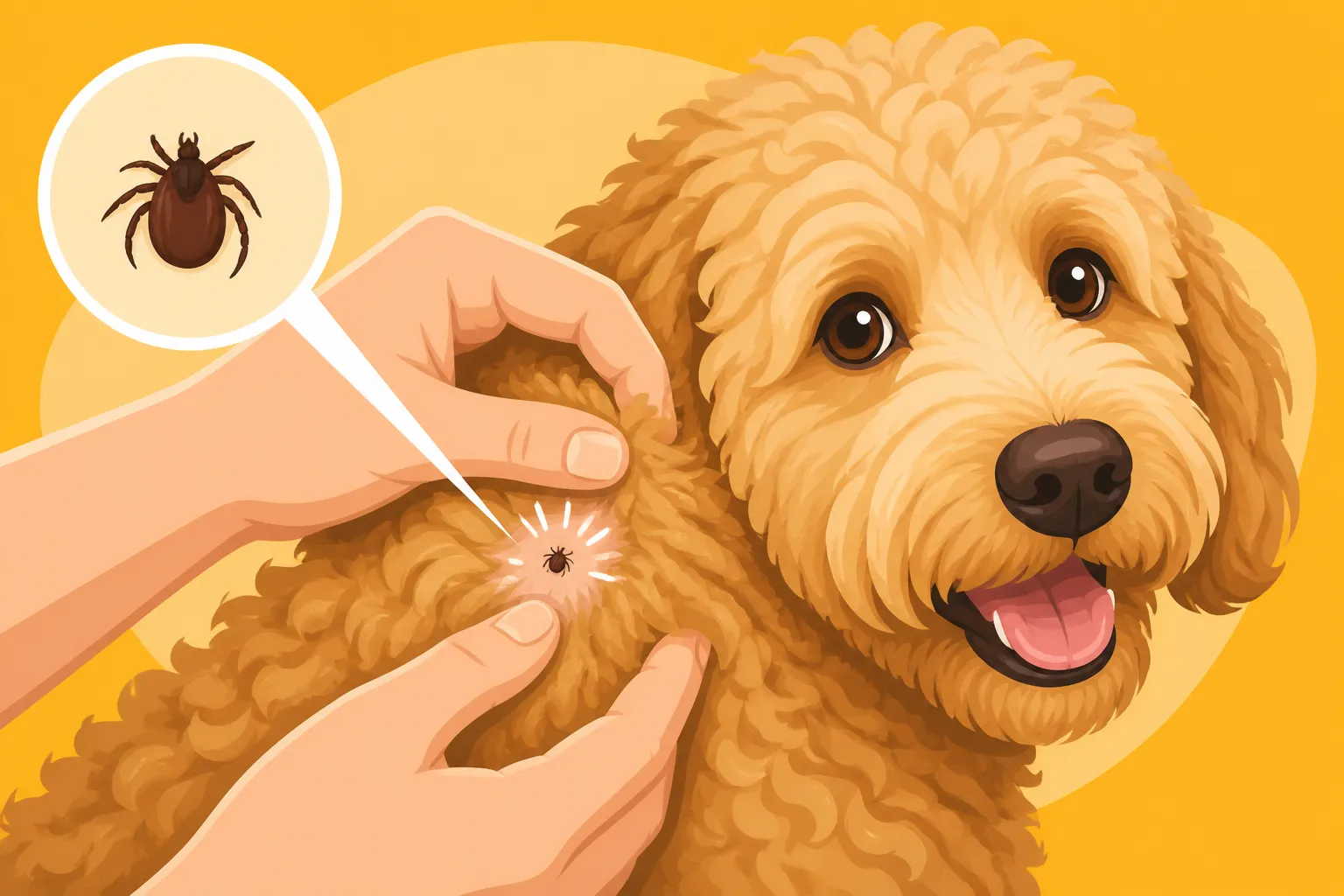
Checking a Goldendoodle for Ticks Under Curls
Oh, the Goldendoodle! They're such joyful, shaggy bundles of love, aren't they? But all that glorious, soft, curly hair that makes them so endearing also creates a fantastic hiding spot for something far less adorable: ticks. It's a real frustration for us Goldendoodle parents, trying to ensure those creepy crawlies aren't burrowed deep within their dense coats, especially after a romp in the park or a hike in the woods. This guide is all about giving you the practical steps and peace of mind to confidently check your Goldendoodle for ticks, no matter how floofy they are.
The Challenge of the Goldendoodle Coat for Tick Checks
Let's be honest, those beautiful Goldendoodle coats are a double-edged sword when it comes to tick season. While we adore their low-shedding (or non-shedding, depending on the generation) qualities and their teddy bear look, their dense, often curly or wavy hair makes tick detection a genuine hunt. It's not like checking a smooth-coated dog where a tick practically stands out like a sore thumb. For Goldendoodle owners, it requires a bit more dedication and a systematic approach.
Why Those Curls Are a Tick's Best Friend
Imagine being a tiny tick, just looking for a warm, protected place to settle down for a meal. A Goldendoodle's coat, with its intricate curls and thick undercoat, is practically a luxury resort. Ticks can easily burrow down, clinging to the skin, and become almost invisible beneath layers of soft hair. They're masters of camouflage, and the Goldendoodle's coat gives them ample opportunity to remain hidden until they've had their fill and are ready to drop off. This is why a quick once-over isn't enough; you need to get your hands right down to the skin. This challenge only emphasizes the importance of Brushing a Goldendoodle Often Enough to Stop Matting, as a well-maintained coat is easier to check.
The Illusion of a Clean Coat
Sometimes you might look at your Goldendoodle after a walk and think, "Yep, looks clean!" But the truth is, a tick the size of a poppy seed or even smaller could be latched on, completely undetectable from a casual glance. This illusion of a clean coat can lead to a false sense of security, especially if your dog has a particularly dense or woolly type of Goldendoodle coat. You might see a little dirt or a burr caught in the hair, but the tiny, dark speck that is a tick could be hiding just inches away. Knowing The Three Goldendoodle Coat Types and How to Tell Them can help you understand which areas might be particularly tricky for your dog's specific fur type. Regular, thorough checks are your best defense against missing these unwelcome hitchhikers.
Your Step-by-Step Guide to a Thorough Tick Check
Okay, so we know it's a challenge, but it's not insurmountable. The key is to be methodical and diligent. Think of yourself as a detective, searching for clues. You'll need a good setup and a calm dog.
Gathering Your Tick-Checking Toolkit
Before you even start, make sure you have everything you need. This isn't a task you want to pause halfway through because you forgot something crucial. Here’s a little checklist to get you started:
| Item | Purpose | Where to Find It (Example) |
|---|---|---|
| Good Lighting | Essential for seeing tiny ticks, especially on dark coats. | Desk lamp, bright room |
| Tick Removal Tool | Safely extracts ticks without squeezing. Specialized hooks or tweezers. | Pet stores, Amazon |
| Gloves (optional) | Protects your hands, though ticks rarely jump to humans. | Pharmacy, Chewy |
| Rubbing Alcohol/Jar | For killing and disposing of removed ticks. | Grocery store |
| Treats | Keep your Goldendoodle calm and cooperative. | Your pantry, Ollie |
| Comb/Fine-toothed brush | Helps part hair and find small ticks. | Pet store, Amazon |
Having a designated tick-checking spot, perhaps near a window or with a good lamp, can make a huge difference. Don't forget those tasty treats to make the experience positive for your Goldendoodle!
The Head-to-Tail Search Strategy
This is where the detective work really begins. You need to systematically go over every inch of your Goldendoodle's body, section by section. It's not a race; it's a careful inspection.
- Start at the Head: Gently part the hair around their muzzle, under their chin, and especially around their ears. Goldendoodle Ear Care Under All That Hair is crucial for health anyway, and it's a prime tick spot. Ticks love soft, thin skin. Check inside the ear flaps and down into the ear canal opening. Look around their eyes and on their eyelids too.
- Move to the Neck and Collar Area: This is another favorite spot because the collar can offer a bit of protection for a tick from brushing or scratching. Run your fingers against the grain of the fur, feeling for any bumps or lumps.
- Inspect the Chest and Legs: Work your way down their front legs, paying close attention to the armpits. These are warm, moist areas that ticks adore. Then, move to their chest and belly. Remember that ticks can often be found between toes and pads, so lift each paw and carefully examine the webbing and paw pads. Trimming Hair Between Goldendoodle Paw Pads can make this easier.
- Back and Tail: Continue along their back, running your hands slowly and deliberately through their coat, feeling for any anomalies. Don't forget to check under their tail and around the anal area, as these are often overlooked.
- Recheck Common Hiding Spots: Even after a full pass, pay extra attention to those notorious tick hotspots: ears, armpits, groin, between toes, and around the tail base. Ticks are stealthy and sometimes only reveal themselves after a second, more focused look. If your Goldendoodle has just been for some Goldendoodle Exercise for Body and Mind in tall grass, these spots are even more critical.
As you go, use your fingers to feel for any small bumps or scabs. A tick can feel like a small bump, a skin tag, or a scab. If you feel something, gently part the hair to get a good look. If it's a tick, it will usually be firmly attached to the skin.
What to Do When You Find a Tick
Finding a tick can be unsettling, but staying calm is important. Don't panic and just try to pull it off, as you might leave parts of the tick behind.
- Stay Calm and Grab Your Tool: Get your tick removal tool. If you don't have one, fine-tipped tweezers can work in a pinch, but be very careful. Remember, the goal is to remove the entire tick, including its head, without squeezing its body. Squeezing can inject more harmful bacteria into your dog.
- Position the Tool: Place the removal tool as close to your dog's skin as possible, grasping the tick's head where it enters the skin. Don't twist or yank suddenly.
- Pull Straight Up or Twist: Depending on the tool, you'll either pull straight upwards with steady, even pressure, or twist gently. Tick hooks often require a gentle twist. The tick should release its grip. It might take a few seconds, so be patient.
- Dispose of the Tick Safely: Once removed, drop the tick into a small jar with rubbing alcohol to kill it. Avoid crushing it with your fingers. You might want to save the tick in the jar with a date for a few days, just in case your vet asks to see it if your dog develops symptoms of a tick-borne illness.
- Clean the Area: Clean the bite area on your Goldendoodle with antiseptic or soap and water. Keep an eye on the spot for a few days. Redness or swelling could indicate an infection or a reaction, in which case a vet visit is warranted.
Beyond the Check: Prevention and Ongoing Vigilance
While thorough tick checks are paramount, they should really be part of a larger strategy to protect your Goldendoodle. Prevention is always better than cure, especially when it comes to the nasty diseases ticks can carry.
Year-Round Tick Prevention Is Non-Negotiable
This is one area where you simply cannot cut corners. Ticks aren't just a summer problem; they can be active in temperatures above freezing, meaning they're a year-round threat in many regions. Talk to your veterinarian about the best preventative options for your Goldendoodle. There are many highly effective products available today, from topical treatments and oral medications to collars. Brands like Chewy and your local vet clinic will offer a range of products.
A quick chat with your vet will help you choose the right product based on your dog's lifestyle, local tick prevalence, and any potential health considerations. Consistent use of these preventatives is your primary line of defense. Skipping a month or extending the period between doses leaves your Goldendoodle vulnerable. Also, remember that even with preventatives, ticks can still attach; the preventative often works by killing them after they attach, so checks are still vital. For more details, see Goldendoodle Flea and Tick Prevention by Weight.
Recognizing the Signs of Tick-Borne Illness
No one wants to think about their beloved Goldendoodle getting sick, but being aware of the symptoms of tick-borne diseases is crucial for early detection and treatment. Ticks can transmit diseases like Lyme disease, Anaplasmosis, Ehrlichiosis, and Rocky Mountain Spotted Fever, among others. Symptoms can vary but often include:
- Lethargy: Your normally energetic Goldendoodle suddenly seems tired and uninterested in play.
- Lameness or Shifting Leg Lameness: This is a classic sign of Lyme disease, where your dog might limp on one leg, and then another, seemingly at random.
- Fever: Your dog feels warm to the touch, or their nose is dry and hot.
- Loss of Appetite: They might turn their nose up at their usual delicious food from Ollie.
- Swollen Joints: You might notice swelling, especially in their knees or elbows.
- Swollen Lymph Nodes: These can be felt in the neck, armpits, or groin area.
- General Malaise: Just a general feeling that your dog isn't quite themselves.
- Vomiting or Diarrhea: While many things can cause these, they can sometimes be associated with tick-borne illnesses. Pay attention if your Goldendoodle Vomiting and When It Matters or has Goldendoodle Diarrhea Lasting More Than Two Days.
If you notice any of these signs, especially after finding a tick on your Goldendoodle, contact your veterinarian immediately. Early diagnosis and treatment are key to a good outcome.
Making Tick Checks a Routine Part of Your Grooming
The best way to ensure you don't miss any ticks is to integrate the checking process into your regular Goldendoodle grooming routine. This doesn't have to be a separate, intimidating task. Think of it as an extension of brushing or cuddle time.
- Daily or After Outdoor Adventures: If you live in a tick-heavy area or your Goldendoodle loves exploring tall grasses and wooded trails, a quick, but thorough, daily check is highly recommended. After every walk, hike, or playtime in a potentially tick-infested area, make it a habit to do a mini-check, focusing on the most common hiding spots.
- During Brushing Sessions: When you're Grooming a Goldendoodle at Home Between Appointments, use your slicker brush and comb to not only remove mats and loose hair but also to help you part the fur and feel for ticks. This makes the process more efficient and less stressful for both of you. You're already getting down to the skin with your comb to prevent mats; just extend that focus to tick detection.
- Build a Positive Association: From puppyhood, make these checks a positive experience. Use treats, gentle praise, and calm handling. This way, your Goldendoodle will be much more cooperative, associating the handling with good things, rather than a scary inspection. This is similar to the patience needed for Goldendoodle Vaccination and Puppy Health Checks.
By making tick checks a normal, expected part of your routine, you'll increase your chances of finding and removing ticks quickly, minimizing the risk of disease transmission and keeping your Goldendoodle happy and healthy.
Disclaimer
This article is for general informational purposes only and does not constitute professional advice. Laws, prices and regulations vary by location and change over time. Consult a qualified professional for guidance on your specific situation.