Kneecap Grades One Through Four in a Goldendoodle
It’s utterly heartbreaking when your bouncy, happy Goldendoodle suddenly starts limping or holding up a back leg, leaving you worried and searching for answers. This guide dives deep into patellar luxation, commonly known as a slipped kneecap, explaining the four different grades your Goldendoodle might be diagnosed with, what each grade means for their health, and how to best support your beloved companion.
Understanding Goldendoodle Patellar Luxation
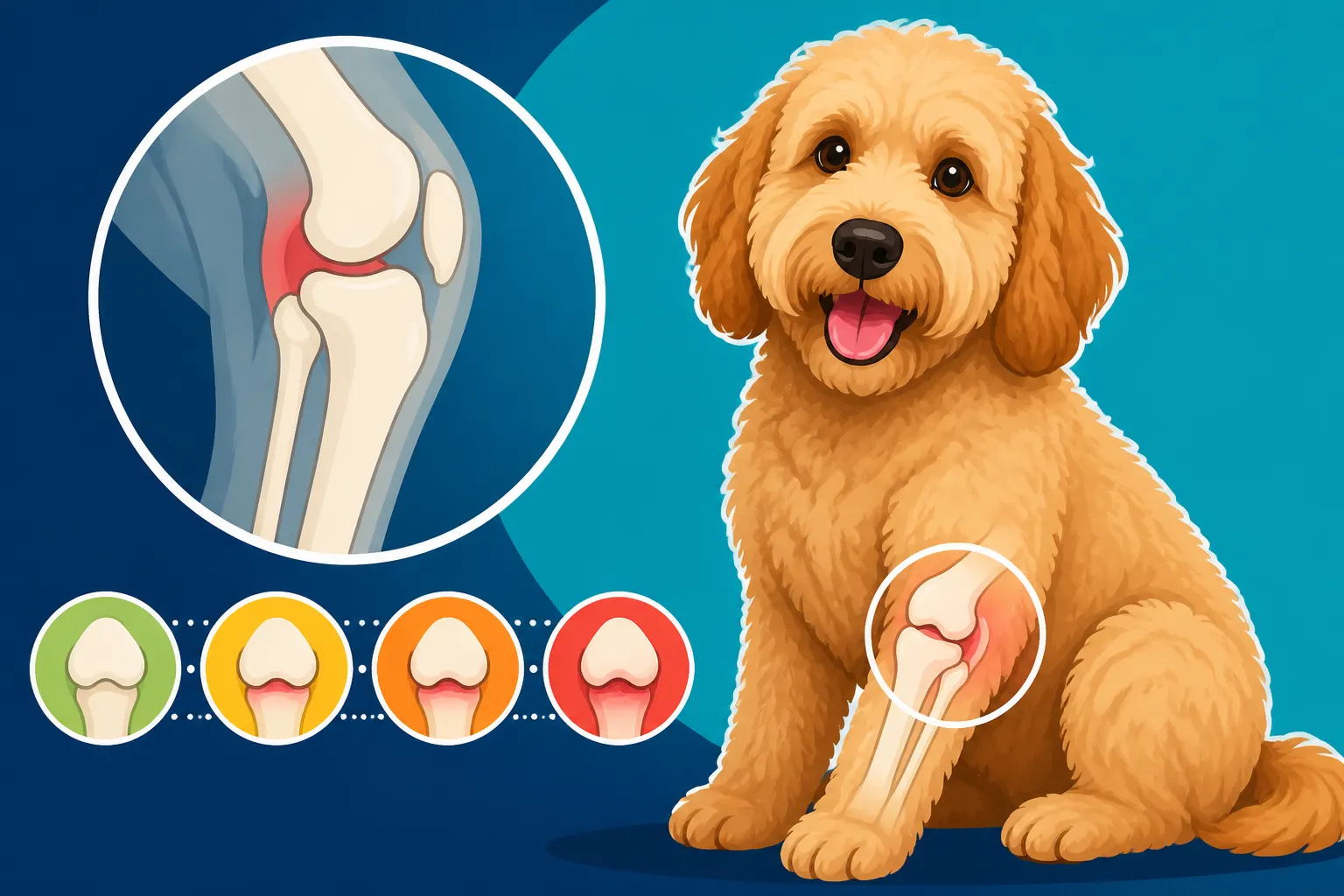
The patella, or kneecap, is a small bone that sits in a groove at the end of the thigh bone (femur), protected by ligaments and muscles. It’s meant to slide smoothly up and down this groove when your dog walks or runs, acting as a pulley system for leg extension. When the patella slips out of this groove, either to the inside (medial luxation) or outside (lateral luxation) of the leg, it’s called patellar luxation. This condition is incredibly common in many smaller dog breeds and can definitely impact our Goldendoodles, especially the smaller varieties.
What Exactly is a Luxating Patella?
Imagine a train running on a track. The kneecap is the train, and the groove on the femur is the track. In a healthy knee, the train stays perfectly on its rails, allowing for smooth movement. With patellar luxation, that train derails. Sometimes it pops back on quickly, causing a momentary skip or hop. Other times, it stays off the track, leading to more consistent lameness and pain. This misalignment can be caused by congenital factors – meaning your Goldendoodle was born with shallow grooves or misaligned leg bones – or it can develop over time due to trauma, although congenital factors are far more common in breeds like the Poodle, which Goldendoodles inherit a lot from.
It’s not just a minor inconvenience; a luxating patella can lead to cartilage damage, inflammation, and eventually, arthritis if left unaddressed. The constant rubbing and misalignment stress the joint components, leading to wear and tear that can really impact your dog's quality of life. This is one of those frustrating health issues that often stem from the genetic lottery, particularly affecting the smaller Goldendoodles who inherit their stature and bone structure from their Poodle lineage.
Why Goldendoodles Are Susceptible
Goldendoodles, particularly the Mini and Toy varieties, can inherit a predisposition to patellar luxation from their Poodle parentage. While Golden Retrievers can experience joint issues like Goldendoodle Hip Dysplasia at 15 to 20 Percent, patellar luxation is more closely associated with smaller breeds. The genetic make-up contributing to smaller size often involves more delicate bone structures and shallower patellar grooves. This means that a cute, cuddly Mini Goldendoodle puppy might unknowingly be carrying genes that will lead to kneecap problems later in life.
It's a common concern when considering Patellar Luxation in a Mini Goldendoodle specifically, but even larger Goldendoodles aren't completely immune, especially if they have a Poodle parent from a line with a history of the condition. Responsible breeders should be performing health testing on both parents to screen for such orthopedic issues, but unfortunately, not all do. The varying genetic contributions from two different breeds also mean a wider spectrum of potential outcomes for Goldendoodle Joint Health by Size Category, making it less predictable than in purebred dogs with established breed club health schemes.
The Four Grades of Patellar Luxation in Goldendoodles
Veterinarians classify patellar luxation into four grades, with Grade 1 being the mildest and Grade 4 the most severe. This grading system helps determine the best course of action and what you can expect in terms of symptoms and prognosis for your Goldendoodle.
Grade 1: The Mildest Cases
In Grade 1 luxation, your Goldendoodle's kneecap slips out of its groove only occasionally, often spontaneously reducing (popping back into place) on its own. You might notice a subtle skip in their step or a brief moment where they hold one back leg up for a few strides before returning to normal. Many owners don't even realize their dog has a Grade 1 luxation until a vet finds it during a routine physical exam.
This grade typically doesn't cause consistent pain or severe lameness. However, even mild luxation can contribute to premature arthritis over time due to the subtle, repetitive trauma to the joint. For a Goldendoodle with Grade 1 luxation, observation is often recommended, along with proactive joint support measures like appropriate exercise, maintaining a healthy weight to reduce load on the joints, and potentially supplements. While surgery isn't usually necessary at this stage, it's crucial to monitor for any progression.
Grade 2: More Frequent Issues
With Grade 2 luxation, the kneecap still slips out of place intermittently, but it does so more frequently than in Grade 1, and it might not always reduce on its own. Your Goldendoodle might need to flex or extend their leg in a specific way to get the kneecap back into position, or you might even be able to gently manipulate it back yourself. The limping or "bunny hopping" becomes more pronounced and noticeable, especially after periods of rest or strenuous activity.
Dogs with Grade 2 luxation often experience discomfort and can develop muscle atrophy in the affected limb if they're consistently favoring it. At this stage, your vet will discuss options that might include conservative management with anti-inflammatory medication and physical therapy, or even prophylactic surgery, especially if the luxation is becoming more consistent and causing significant pain. The goal is to prevent further damage to the joint and improve your Goldendoodle's comfort and mobility.
Grade 3: Persistent Dislocation
Grade 3 is where things become significantly more challenging for your Goldendoodle. The kneecap is luxated most of the time, meaning it's almost always out of its groove, but it can still be manually pushed back into place by your vet. However, once released, it will quickly pop back out. At this stage, the limping is constant, and your Goldendoodle will likely walk with a crouched stance, often with their toes turned inward, as their body tries to compensate for the unstable knee.
Dogs with Grade 3 luxation experience chronic pain, and the structural changes within the knee joint are more pronounced. The groove itself might be very shallow or deformed, and the surrounding ligaments and muscles can be stretched or tightened. Surgery is almost always recommended for Grade 3 cases to correct the underlying anatomical issues and provide stability, aiming to restore proper function and alleviate persistent discomfort. Without intervention, their quality of life can be severely impacted, and the risk of Goldendoodle Arthritis After the Age of Eight significantly increases in the affected joint.
Grade 4: Severe, Constant Displacement
Grade 4 is the most severe form of patellar luxation, characterized by a kneecap that is permanently luxated and cannot be manually reduced. It's completely out of its groove, and the groove itself is often flattened or even non-existent, making it impossible for the kneecap to sit properly. Your Goldendoodle will likely have severe lameness, often struggling to put weight on the affected leg at all. They might even appear bow-legged or knock-kneed due to the chronic skeletal deformities.
Dogs with Grade 4 luxation are in constant pain and have severely impaired mobility. Their muscles can be significantly atrophied, and they may struggle with basic movements. Surgical intervention is absolutely necessary to attempt to reconstruct the joint, though it can be complex and may not always restore full function. The goal is to improve comfort and some degree of mobility. This is a truly debilitating condition that highlights the importance of early diagnosis and intervention for the milder grades to prevent such severe progression.
Diagnosing and Managing Patellar Luxation in Your Goldendoodle
Navigating a patellar luxation diagnosis can feel overwhelming, but understanding the process and your options empowers you to make the best decisions for your Goldendoodle.
How Vets Diagnose the Condition
Diagnosing patellar luxation typically starts with a thorough physical examination by your veterinarian. They will manually manipulate your Goldendoodle's knee joint, feeling for any instability or slippage of the kneecap. They'll extend and flex the leg, rotating it gently, to try and induce the luxation and determine its direction (medial or lateral). This hands-on assessment is crucial for assigning the initial grade. Your vet will be looking for that characteristic "pop" or "slip" and how easily it occurs and reduces. They might even try to see if your Goldendoodle exhibits the characteristic "skip" while walking in the exam room.
Beyond the physical exam, X-rays are often recommended to visualize the skeletal structures of the knee and hip. While X-rays don't directly show the kneecap slipping, they can reveal the severity of any bone deformities, such as a shallow patellar groove (trochlear groove) or bowing of the long bones, which predispose the kneecap to luxate. They also help rule out other concurrent orthopedic issues, like hip or elbow dysplasia, which can sometimes present with similar lameness. In some complex cases, your vet might suggest more advanced imaging like CT scans or MRI, particularly if surgery is being considered, to get a detailed view of all soft tissues and bony structures involved.
Treatment Options Across the Grades
Treatment for patellar luxation depends heavily on the grade, your Goldendoodle's age, overall health, and your specific lifestyle. For Grade 1 luxation, conservative management is usually the first approach. This involves keeping your Goldendoodle at a healthy weight – a crucial factor as Goldendoodle Weight and the Load on Its Joints can exacerbate the problem – ensuring moderate, controlled exercise, and sometimes dietary supplements like glucosamine and chondroitin. You might also consider specific Joint Support Dosed to Goldendoodle Size Category to help maintain cartilage health.
For Grade 2 luxation, the decision becomes more nuanced. If the luxation is frequent, painful, or impacting quality of life, surgical correction might be recommended. This often involves deepening the trochlear groove, realigning the patellar tendon, and sometimes correcting any angular deformities of the femur or tibia. Grades 3 and 4 almost always require surgery due to the severe pain and debilitating nature of the condition. The goal of surgery is to stabilize the kneecap, reduce pain, and prevent further arthritic changes. Recovery from surgery involves strict rest, pain management, and often physical rehabilitation to regain strength and mobility. The costs associated with such surgeries, like Kneecap Surgery Priced for a Twenty Pound Goldendoodle, can be substantial, making it important to plan ahead.
Living with a Goldendoodle with Patellar Luxation
If your Goldendoodle has been diagnosed with patellar luxation, especially in the milder grades, managing their condition at home is key to preventing progression and maintaining comfort. This means being diligent about their exercise routine – avoiding activities that involve excessive jumping or twisting, which can encourage the kneecap to slip. Instead, focus on controlled walks on even surfaces and perhaps swimming, which is low-impact. Maintaining an ideal body weight cannot be stressed enough; even a few extra pounds put immense strain on compromised joints.
Supplements, under veterinary guidance, can also play a supportive role. Omega-3 fatty acids, glucosamine, and chondroitin can help reduce inflammation and support joint health. Creating a safe home environment, perhaps with ramps instead of stairs or non-slip rugs on slick floors, can also make a big difference for their long-term comfort and safety, especially for a Why a Goldendoodle Should Not Jump Off Furniture. Regular veterinary check-ups are essential to monitor the condition, adjust pain management if needed, and assess for any signs of worsening. Even with surgery, continued management and care will be necessary to ensure your Goldendoodle lives their happiest, most comfortable life.
| Grade | Description | Symptoms | Treatment Approach |
|---|---|---|---|
| 1 | Intermittent luxation, self-reducing | Occasional skip/hop, often unnoticed | Conservative (weight management, exercise control, supplements) |
| 2 | Frequent luxation, may require manipulation | More noticeable limping/hopping, discomfort, muscle atrophy | Conservative or surgical, depending on severity and pain |
| 3 | Almost constantly luxated, manually reducible | Consistent lameness, crouched stance, chronic pain | Surgical correction strongly recommended |
| 4 | Permanently luxated, non-reducible | Severe lameness, inability to bear weight, constant pain, deformities | Complex surgical intervention necessary |
The Financial Side of Goldendoodle Kneecap Issues
Dealing with a Goldendoodle's health issues, particularly chronic ones like patellar luxation, often brings a significant financial component into the picture. It's a reality check that nobody wants, but it's crucial to address.
Considering Insurance for Joint Conditions
One of the most valuable tools for managing the unexpected costs of veterinary care, especially for conditions that might require surgery or long-term medication, is pet insurance. While Goldendoodles aren't recognized by traditional kennel clubs, most pet insurance providers, including Healthy Paws, will still cover them. It's vital to enroll your Goldendoodle in a policy before any signs of patellar luxation appear, as it's almost universally considered a pre-existing condition if diagnosed prior to enrollment or during a waiting period. This means if your vet notes a Grade 1 luxation at your puppy's first check-up, that particular condition might not be covered by a new policy.
Researching different providers and their coverage details, especially regarding orthopedic conditions, is key. Some policies might have specific waiting periods for joint issues, or varying reimbursement rates and deductibles. Knowing the typical Goldendoodle Insurance Premiums by Size can help you budget, but understanding what those policies actually cover, and what The Goldendoodle Conditions Insurers Exclude is even more important. Having a good insurance plan, such as one from Healthy Paws, can turn a potentially crippling multi-thousand-dollar surgery bill into a manageable deductible and a percentage of the remaining cost, providing immense peace of mind.
Long-Term Care Costs and Prevention
Even if surgery isn't immediately necessary, the long-term care for a Goldendoodle with patellar luxation can still add up. This includes regular veterinary check-ups, potential pain management medication, and supplements. Preventative care, even before a diagnosis, is a sound investment. Choosing a high-quality diet that supports joint health, maintaining your Goldendoodle's ideal weight, and ensuring they get appropriate, non-strenuous exercise are all cost-effective ways to support their overall well-being and potentially delay or reduce the severity of joint issues.
Physical therapy, hydrotherapy, or even acupuncture might be recommended by your vet as part of a conservative management plan, especially if your Goldendoodle is struggling with pain or mobility. These specialized treatments, while beneficial, do add to the overall expense. The best defense is always a good offense: proactive care, watchful monitoring for any changes in gait or behavior, and open communication with your veterinarian. This comprehensive approach, combined with the financial cushion of a good pet insurance policy like those offered by Healthy Paws, can help you provide the best possible care for your Goldendoodle throughout their life.
Disclaimer
This article is for general informational purposes only and does not constitute professional advice. Laws, prices and regulations vary by location and change over time. Consult a qualified professional for guidance on your specific situation.