Learning to Groom Your Own Goldendoodle
The cost of keeping a Goldendoodle looking its best can feel like a never-ending expense, often causing real stress for owners who just want their furry family member to be comfortable and clean. If you've found yourself staring at another sky-high grooming bill, wondering if there's any other way, you're in the right place. This guide will walk you through everything you need to know about learning to groom your own Goldendoodle at home, from the tools you’ll need to the techniques that will save your sanity—and your budget.
The Harsh Reality of Goldendoodle Grooming Costs
Let's be honest, Goldendoodles are adorable, friendly, and shed-averse (mostly!), but they are not cheap to maintain, especially when it comes to their coats. Many new owners quickly discover that while the puppy price is a one-time hit, the grooming bills are a recurring punch to the wallet. It's not just a matter of aesthetics; regular grooming is vital for your Goldendoodle's health and comfort, preventing painful mats and skin issues.
Professional Grooming Expenses Add Up Fast
A trip to a professional groomer for a Goldendoodle isn't just a quick trim; it's often a multi-hour affair involving bathing, drying, brushing out, clipping, and nail trimming. The price for a full-service groom can range anywhere from $80 to $150 Goldendoodle groom, and that's for a standard size Goldendoodle with a well-maintained coat. If you have a larger dog, a very curly coat, or if your Goldendoodle is particularly challenging on the table, those prices can climb even higher. Multiply that by the recommended grooming schedule of every six to eight weeks, and you're easily looking at several hundred, if not over a thousand, dollars a year. This consistent outflow is why so many Goldendoodle owners eventually consider taking the clippers into their own hands.
Think about it: in a year, you might spend the equivalent of a major household appliance on keeping your Goldendoodle tidy. Many owners budget diligently for food, vet visits, and even treats from places like Chewy, but then get blindsided by the sheer volume of grooming expenses. This financial strain is a significant factor in why some Goldendoodles end up in rescue, given up by owners who simply couldn't keep up with the demands of their coat. Learning to groom at home isn't just about saving money; it's about providing consistent care that ensures your dog's well-being without breaking the bank.
Why Matting Means More Expensive Grooms
One of the biggest drivers of those eye-watering grooming bills is matting. Goldendoodle coats, especially the wool and fleece types, are incredibly prone to matting if not brushed regularly and thoroughly. Mats are tight tangles of hair that pull on the skin, causing discomfort, pain, and even skin infections beneath them. When a professional groomer encounters a matted dog, they often have two choices: painstakingly try to de-mat the coat, which is time-consuming and painful for the dog, or shave the dog down completely. Both options come with a significant surcharge.
These $20 and $60 Goldendoodle dematting surcharges are not just because it takes more time, but because it's hard, careful work that puts stress on the groomer and the dog. In severe cases, a matted coat can be so tight that it restricts movement, cuts off circulation, and creates a breeding ground for bacteria. Your groomer might even refuse service or require a vet check first if the matting is extreme. By learning to groom your Goldendoodle at home, even if you still use a professional for full haircuts, you can keep the coat mat-free between appointments, dramatically reducing your costs and improving your dog's comfort. This proactive approach is key to managing your Goldendoodle’s overall care, impacting not just your wallet but also their health.
Gathering Your Home Grooming Arsenal
Before you even think about picking up a pair of scissors, you need the right tools. Trying to groom a Goldendoodle with inadequate equipment is like trying to bake a cake without an oven – frustrating, messy, and ultimately unsuccessful. Investing in quality grooming tools will make the process easier, safer, and more effective for both you and your dog. Don't skimp here; good tools are an investment that pays for itself quickly when you consider what you're saving on professional grooming.
Essential Brushes and Combs for Every Coat Type
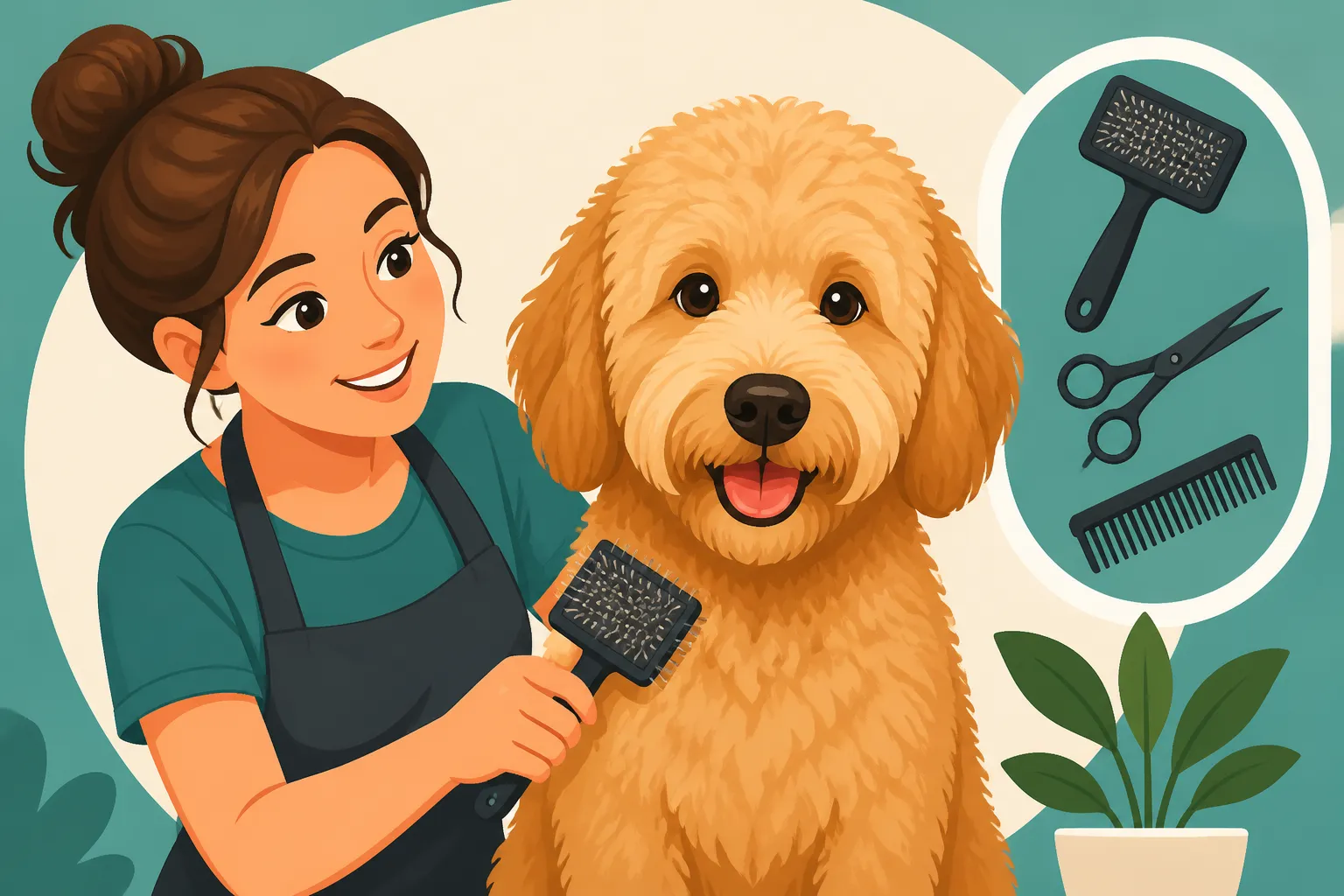
Goldendoodle coats come in a few different types: straight, wavy (fleece), and curly (wool). Each type can be prone to matting, so a thorough brushing routine is your first line of defense. You'll need more than just one brush! A good The slicker brush and comb a Goldendoodle needs are absolutely non-negotiable for anyone serious about home grooming.
- Slicker Brush: This brush has fine, wire bristles that are angled to grab loose hair and small tangles. It's excellent for overall coat maintenance and for line brushing. Make sure you get one with protected tips to avoid scratching your dog's skin. Brands like Chris Christensen's Big G or Big K are popular for their effectiveness, though more budget-friendly options exist on sites like Chewy.
- Metal Comb: A good quality metal comb with both wide and narrow teeth is crucial. After using the slicker brush, the comb is what truly confirms that you've gotten all the way down to the skin and removed any hidden mats. The wide teeth are great for initial detangling, while the narrow teeth ensure thoroughness. Why a comb finds Goldendoodle mats a brush misses is because it can reach deeper into the coat and provide tactile feedback on where tangles remain. You'll use this comb constantly, especially in mat-prone areas like behind the ears, armpits, and under the collar.
- Dematting Tool (Optional, with caution): If you encounter small, stubborn mats, a dematting rake or comb can be useful. However, use these with extreme care. They have sharp blades designed to cut through mats, but if used improperly, they can pull on the skin, cause discomfort, or even injure your dog. Often, a good pair of blunt-nosed scissors and careful cutting into the mat (not across the skin) is safer for smaller tangles.
Choosing the Right Clippers and Blades
This is where many home groomers get nervous, and understandably so! Clippers are a significant investment, and using them correctly takes practice. You can't just grab human clippers; dog clippers are designed with stronger motors and specific blades to handle dense, often dirty pet hair without overheating or pulling.
For a Goldendoodle, you'll want a heavy-duty, professional-grade clipper. Look for models with a brushless motor, as these are more powerful and run cooler and quieter. Brands like Wahl, Andis, or Oster are industry standards. A cordless option offers more flexibility, but ensure it has a good battery life. You'll also need a variety of blades:
- #10 Blade: This is your basic, safe blade for sanitary trims, paw pads, and usually for starting out. It leaves hair about 1/16th of an inch long.
- Clipper Guide Combs: These plastic or metal attachments fit over your #10 or #30 blade (depending on the comb set) to leave a longer length of hair. This is how you achieve the desired "teddy bear" cut or a longer, fluffier look. Start with longer combs (like 1/2 inch or 1 inch) until you gain confidence.
- #30 or #40 Blade (Optional, with extreme caution): These are very short blades, used for surgical prep and extremely matted dogs. They get very close to the skin and can cause irritation if not used correctly. Stick to a #10 for sensitive areas unless you are experienced.
- Coolant Spray: Clippers and blades can get hot, especially with thick Goldendoodle hair. A coolant spray helps dissipate heat and keeps the blades lubricated.
- Blade Oil: Essential for lubricating your blades before, during (if needed), and after each grooming session to keep them running smoothly and prevent rust.
Remember, sharp blades are safer than dull ones, as dull blades can pull and snag, causing pain. Consider having an extra set of your most used blades on hand.
Shampoos, Conditioners, and Drying Tools
Proper washing and drying are just as important as brushing and clipping. A Goldendoodle's thick coat needs specific products and techniques to prevent skin issues and matting.
- Dog-Specific Shampoo: Never use human shampoo on your dog. Dog shampoos are pH-balanced for canine skin and often contain ingredients to help detangle or soothe sensitive skin. Look for a good quality, gentle shampoo. Some popular brands include Earthbath, TropiClean, or those offered through Chewy's various pet lines.
- Conditioner: This is absolutely vital for a Goldendoodle! Conditioner helps to smooth the hair cuticles, making the coat easier to brush and less prone to matting. It also adds moisture back to the skin and coat. Don't skip this step.
- High-Velocity Dryer (Force Dryer): This is perhaps the most overlooked, yet crucial, piece of equipment for home Goldendoodle grooming. A force dryer isn't just a regular hairdryer; it blasts air at high speeds, quickly drying the coat while simultaneously "straightening" out the curls and blowing out loose undercoat. Force dryers for home Goldendoodle grooming are essential to prevent mats from forming as the coat dries, and to achieve that fluffy, professional look. Using a regular human hairdryer is often ineffective and can even burn your dog's skin. Brands like B-Air or K-9 Fluff Dryers are excellent investments.
- Grooming Table with Arm (Optional but recommended): A sturdy grooming table elevates your dog to a comfortable working height, saving your back. The grooming arm with a noose keeps your dog safely on the table, preventing them from jumping off and potentially injuring themselves. This is invaluable for maintaining control and focus during the grooming process.
Mastering the Basics of Goldendoodle Coat Care
With your arsenal ready, it's time to dive into the techniques. Remember, patience is key, especially in the beginning. Your Goldendoodle will pick up on your anxiety, so try to remain calm and make it a positive experience. Start with short sessions and gradually increase the duration as your dog gets more comfortable.
The Art of Line Brushing and Dematting
Line brushing is the most effective way to prevent and remove mats in a Goldendoodle's thick coat. It ensures you're brushing all the way down to the skin, not just skimming the top layer.
How to Line Brush:
- Section the Coat: Start by parting the hair against the growth, typically on your dog's side or leg. Hold the unbrushed hair up and out of the way.
- Brush in Sections: Using your slicker brush, brush a small section of hair downwards, starting from the skin and working your way out. You should see the skin as you brush.
- Work Your Way Up: As you brush, move your hand down the dog's body, releasing small sections of hair to brush until you've covered the entire area. Imagine you're drawing a "line" across the body with each section you release.
- Follow with a Comb: After slicker brushing a section, run your metal comb through it. If the comb glides smoothly from root to tip, you're good. If it snags, go back with the slicker brush until the comb passes through easily. This step is critical; why a comb finds Goldendoodle mats a brush misses cannot be overstated. Mats often hide close to the skin.
- Focus on Mat-Prone Areas: Pay extra attention to common trouble spots: behind the ears, in the armpits, under the collar or harness, on the chest, and the tail. These areas are prone to tangles due to friction and moisture. Behind the ears and the first Goldendoodle mats often form here, as do armpit and collar mats on a Goldendoodle.
- Regularity is Key: For most Goldendoodles, brushing a Goldendoodle three times a week is the minimum to prevent major matting. Some, especially during the coat change at 8-12 months, may need daily brushing.
Dealing with Mats:
If you encounter a mat, don't just pull at it. This is painful for your dog.
- Small Mats: Try to gently tease them apart with your fingers, then use the narrow teeth of your metal comb.
- Stubborn Mats: Hold the hair close to the skin to minimize pulling, and carefully use the tip of a blunt-nosed scissor to cut into the mat, creating smaller sections, then try to brush those out. Never cut across a mat parallel to the skin, as it's very easy to accidentally cut the skin.
- Severe Matting: If the mat is too tight or large, it's safer to carefully shave under it with your clippers and a #10 blade, ensuring the blade is always between the mat and the skin. If you're unsure, consulting a professional groomer is always best for severe cases, even if you do the rest of the grooming yourself.
Bathing and Drying Your Goldendoodle Properly
Bathing a Goldendoodle is not just about getting them clean; it's a critical step in preventing mats and preparing the coat for clipping. A dirty or improperly dried coat will mat almost instantly when wet or brushed.
Bathing Process:
- Pre-Bath Brush: THOROUGHLY brush and comb your Goldendoodle before the bath. Any existing mats will tighten when wet and become impossible to remove. This is the golden rule: never bathe a matted dog.
- Wet the Coat: Use lukewarm water and completely saturate the coat down to the skin.
- Shampoo: Apply a generous amount of dog-specific shampoo. Lather it in, paying attention to all areas, but avoid rubbing the coat vigorously, which can create tangles. Instead, gently squeeze the shampoo through the coat.
- Rinse Thoroughly: This is crucial. Any shampoo residue left in the coat can irritate the skin and lead to matting. Rinse until the water runs clear and you no longer feel any slickness on the hair.
- Condition: Apply a good quality conditioner, ensuring it penetrates the entire coat. Let it sit for a few minutes as per product instructions, then rinse thoroughly. Conditioner helps smooth the cuticle, making it easier to brush and less prone to matting.
- Squeeze Out Excess Water: Before removing your dog from the tub, gently squeeze as much water as you can from the coat.
Drying Process (The most important step for mat prevention!):
- Towel Dry: Use highly absorbent towels to pat and squeeze out as much water as possible. Avoid rubbing vigorously, which can create tangles.
- Use a High-Velocity Dryer: This is non-negotiable for a Goldendoodle. Set your force dryer to a moderate heat (or cool air, if preferred) and high velocity.
- Start drying from the back of the dog, working in sections.
- Use one hand to hold the nozzle and the other to brush the hair as you dry. Line brush as you dry to ensure the hair is straight and tangle-free as it dries. This process takes time, but it’s the most effective way to get a smooth, mat-free finish. Drying a Goldendoodle down to the skin is your goal.
- Make sure the entire coat, especially the undercoat, is bone dry. Why a damp Goldendoodle coat mats faster is because the water causes the hairs to clump together, and any movement before complete drying will create tangles that are much harder to remove later.
- Final Comb-Through: Once completely dry, do a final comb-through with your metal comb to ensure no damp spots or missed tangles.
Trimming Nails, Paws, and Sanitary Areas
These smaller, but no less important, details are often overlooked but contribute significantly to your dog's comfort and hygiene.
- Nail Trimming: Overgrown nails can cause pain, deform your dog's paws, and even lead to joint problems over time. Use sharp, dog-specific nail clippers (guillotine or scissor style) or a Dremel tool.
- Hold your dog's paw firmly. Locate the quick, the pink part inside the nail that contains blood vessels and nerves. For white nails, it's easier to see. For black nails, just take off small tips at a time.
- Clip just below the quick, at a 45-degree angle. If you accidentally cut the quick, don't panic! Use styptic powder to stop the bleeding.
- Trim nails regularly, ideally every 2-4 weeks. If you start this early, your Goldendoodle will be much more accustomed to it. You can learn more about trimming Goldendoodle nails at home in detail.
- Paw Pad Hair: Hair grows between your Goldendoodle's paw pads, which can collect dirt, debris, and moisture, leading to matting, infections, or loss of traction.
- Use a #10 blade on your clippers to carefully trim the hair flush with the paw pads. Be extremely cautious not to nick the delicate webbing between the toes. This helps prevent Goldendoodle paw pad hair and slipping on hard floors.
- Sanitary Trim: This involves trimming the hair around your Goldendoodle's anus and genitals. Long hair in these areas can get soiled and become a hygiene issue.
- Use a #10 blade to carefully trim the hair around the anus in a circular motion.
- For females, trim the hair around the vulva. For males, trim the hair around the penis, often referred to as the "pee-pee patch." Always pull the skin taut to avoid nicks. This is a quick and simple trim that makes a huge difference in cleanliness.
Tackling the Goldendoodle Haircut at Home
Once you've mastered brushing, bathing, and drying, you're ready for the main event: the haircut. This is where your clippers and guide combs truly come into play. It takes practice, so don't expect perfection on your first try! Remember, hair grows back.
Understanding Different Goldendoodle Haircut Styles
While professional groomers can achieve intricate styles, for home grooming, most owners aim for a functional and comfortable cut. The most popular home haircut for a Goldendoodle is a variation of the "teddy bear cut" or a simple all-over shorter trim.
- The Teddy Bear Cut: This is characterized by leaving the hair on the body relatively short (usually 1/2 to 1 inch), while leaving the face, head, and sometimes the tail slightly longer and shaped to give a soft, rounded, "teddy bear" appearance. This style is practical because it keeps the body clean and tangle-free, while maintaining the Goldendoodle's charming, fluffy look. The length that gives a Goldendoodle a teddy bear head usually involves hand-scissoring, which is the trickiest part.
- Sporting or Summer Cut: This is a much shorter, all-over cut, often done with a shorter guide comb (like a #5 or #7 blade, leaving 1/8 to 1/2 inch of hair). It's great for active dogs, hot weather, or owners who want minimal maintenance. Just be mindful of Goldendoodle summer cuts and sunburn if you go too short, especially on light-colored dogs.
- Puppy Cut: While it sounds like a specific style, "puppy cut" often just means a relatively short, uniform length all over. It's often the easiest for beginners because it doesn't require complex shaping.
No matter the style, your goal is a comfortable, healthy dog. You're not aiming for a show dog look on your first few attempts, but rather a functional and neat trim.
Step-by-Step for a Basic All-Over Trim
For your first haircut, aiming for a consistent, all-over length is the easiest approach. This is often referred to as a "puppy cut" or a simple, short trim.
- Start with a Clean, Dry, Mat-Free Dog: Seriously, if your dog isn't brushed out and thoroughly dry, your clippers will snag, pull, and leave an uneven, choppy mess.
- Choose Your Guide Comb: For an all-over trim, select a guide comb that leaves the desired length. For most Goldendoodles, starting with a 1/2-inch or 3/4-inch comb is a good compromise between short and easy to manage.
- Start from the Neck and Work Back:
- Begin clipping on the top of the neck, moving the clippers smoothly in the direction of hair growth.
- Use long, even strokes. Don't press too hard, let the clippers do the work.
- Overlap your strokes slightly to ensure even coverage.
- Work your way down the back, sides, and belly. Be extra careful around folds of skin, elbows, and hocks. Always pull the skin taut with your free hand to prevent nicks.
- Legs: Clip down the legs, again, following the direction of hair growth. For a more blended look, you can sometimes use a slightly longer guide comb on the legs or blend carefully with scissors.
- Tail: You can either clip the tail to the same length as the body or leave it slightly longer for a plume-like effect. If clipping, clip from the base of the tail to the tip, following the natural fall of the hair.
- Check for Evenness: Step back frequently to assess your work. Feel with your hands for uneven patches. Go over areas again if needed, ensuring the coat is smooth and even.
Safely Trimming Face, Ears, and Tail
These are the most sensitive and visible areas, requiring a delicate touch.
- Face: For a basic clean face, many owners will clip the hair around the eyes and muzzle slightly shorter using a shorter guide comb (like a 1/4-inch) or carefully with blunt-nosed scissors.
- Eyes: Use blunt-nosed scissors to carefully trim any hair that could fall into your dog's eyes. Hold the hair up and snip parallel to the floor, away from the eye itself. Be extremely cautious.
- Muzzle/Beard: For the classic Goldendoodle "beard," you'll usually leave it longer and shape it with scissors. If you want a shorter, cleaner look, you can use a clipper with a longer guide comb and trim down the sides of the muzzle. Avoid clipping too close around the sensitive whiskers. Practicing face and beard handling on a Goldendoodle from a young age is crucial for making this task manageable.
- Ears: Goldendoodle ears are prone to mats and infections.
- Outer Ear: You can trim the hair on the outer ear flap to the same length as the body or leave it slightly longer and shape it with scissors.
- Inner Ear: Hair growing inside a Goldendoodle ear canal can trap moisture and debris, leading to infections. While some people pluck ear hair, it's a controversial topic. Many vets and groomers advise against routine plucking unless the dog has recurring infections, as it can irritate the skin. Instead, focus on keeping the hair around the ear canal entrance trimmed short with scissors or a #10 blade to improve airflow. Regularly cleaning a Goldendoodle ear every week is important regardless of plucking.
- Tail: As mentioned, you can clip the tail to match the body or leave a longer plume. If leaving a plume, use thinning shears or scissors to shape it into a natural, feathered look. Always lift the tail to trim the underside, similar to the sanitary trim.
Remember, the key is small snips and gentle strokes. If you're unsure, it's better to leave it a bit longer and try again next time.
Building a Positive Grooming Routine and Troubleshooting
Grooming isn't just a chore; it's an opportunity to strengthen your bond with your Goldendoodle. Approaching it with patience and positive reinforcement will make it a more pleasant experience for everyone involved.
Desensitization and Positive Reinforcement for Happy Grooms
A Goldendoodle that tolerates, or even enjoys, grooming didn't happen by accident. It's the result of consistent positive exposure from a young age.
- Start Early: Begin handling your Goldendoodle puppy's paws, ears, tail, and face from the moment they come home. Make it a daily routine, even if it's just for a few seconds. This is part of training a Goldendoodle puppy for the grooming table.
- Introduce Tools Gradually: Let your dog sniff and explore the grooming tools (brushes, combs, clippers off). Reward calm curiosity with high-value treats (like small pieces of cooked chicken, cheese, or even small dollops of something tasty from Ollie if you use them for training).
- Clipper Desensitization: Turn the clippers on away from your dog, letting them get used to the sound. Gradually bring them closer, rewarding calm behavior. Start by touching the clippers (off, then on) to their back, then legs, eventually working up to sensitive areas. Desensitising a Goldendoodle to clippers is a process, not a one-time event.
- Short, Frequent Sessions: Instead of one long, overwhelming session, do several short ones throughout the week. Even five minutes of brushing or nail handling with rewards can make a big difference. This helps build a positive association.
- High-Value Rewards: Have plenty of your dog's favorite treats on hand. Praise and treats should flow freely for any cooperation, no matter how small.
- Breaks are Okay: If your dog gets stressed or restless, take a short break. Never force them or make grooming a punishment. You want them to associate grooming with good things.
Handling Common Grooming Challenges
Even with the best intentions, you're bound to run into a few bumps in the road.
- The Squirmy Goldendoodle: If your dog won't stand still, consider using a grooming table with an arm and a noose. This provides a safe, elevated workspace and helps prevent them from wriggling away. Shorten your sessions and increase rewards for standing calmly. You might need to teach a "stay" command specifically for the grooming table.
- Fear of the Dryer: The noise and force of the dryer can be intimidating. Start by drying only a small, less sensitive area (like a paw) on a low setting, with lots of treats and praise. Gradually increase the intensity and area over several sessions. Ear protection designed for dogs can also help.
- Clipper Nips/Cuts: It happens, especially when you're starting. Always keep your blades sharp and well-oiled. Pull the skin taut when clipping, especially around joints and loose skin. If a small nick occurs, apply styptic powder and a gentle compress. If it's more serious, contact your vet. Remember, a high-quality pet insurance plan, like one from Healthy Paws, can be invaluable for unexpected vet visits, even for grooming mishaps.
- Matting Continues: If your dog is still matting despite your efforts, revisit your brushing technique. Are you line brushing all the way to the skin? Are you using the metal comb to check your work? Are you brushing often enough? Sometimes, a slightly shorter haircut can also help manage matting if you're struggling to keep up with a longer coat.
When to Call in a Professional Even When You DIY
Learning to groom your own Goldendoodle is incredibly rewarding, but it's important to know your limits. There are times when calling a professional groomer is the safest and best option, even if you do most of the work yourself.
- Severe Matting: If your Goldendoodle gets severely matted, especially with painful skin irritation underneath, a professional groomer (or even a vet groomer) is best equipped to safely shave down the coat without injuring your dog. Trying to tackle extreme matting at home can cause significant pain and stress.
- Aggression or Extreme Anxiety: If your Goldendoodle becomes aggressive, fear-reactive, or extremely anxious during grooming, it's time to seek professional help. A good professional groomer has experience with nervous dogs and can use techniques to make the experience less stressful. They might also suggest working with a veterinary behaviorist.
- Specialty Cuts: While you can do a great job with a basic all-over trim, achieving specific, breed-standard cuts (if you were aiming for something intricate, though less common for Goldendoodles) or elaborate shaping might be beyond the scope of home grooming tools and skills.
- Skin Issues: If you notice persistent skin redness, rashes, bumps, or sores while grooming, it's best to consult your veterinarian. These could be signs of allergies, infections, or other underlying health issues that need medical attention. Keeping your Goldendoodle's coat healthy through consistent home care can also help you spot these issues sooner.
- Annual "Reset": Even if you do most of your dog's grooms, some owners like to schedule one or two professional grooms a year. This allows a fresh start, ensuring the coat is thoroughly evened out and any missed spots are caught. It can be a great way to maintain the overall health and appearance of your Goldendoodle's coat, while still saving a significant amount of money throughout the year.
Learning to groom your own Goldendoodle is a journey, not a destination. You'll improve with every session, and your dog will become more comfortable with the routine. The money you save is a fantastic bonus, but the real reward is the bond you build and the comfort and health you provide for your beloved companion.
Disclaimer
The information provided in this article is for general informational purposes only and is not a substitute for professional veterinary or grooming advice. Always consult with a qualified veterinarian or professional groomer for any specific health concerns, serious matting, or aggressive grooming behaviors. Goldendoodle grooming requires patience and practice, and individual dogs may react differently to various techniques.